

Quick Answer: Slick back hairstyles push the hair straight back from the forehead using pomade, gel, or clay. The 25 styles below cover every length, hair type, and fade variation each with a specific barber phrase and maintenance schedule so you know exactly what to ask for.
The slick back haircut is not one style. It’s a direction hair swept back off the face and how far you take it depends on your hair type, the sides, the product, and the finish. Get those four things right and it holds. Get one wrong and it falls flat before noon.
What Are the Best Slick Back Hairstyles for Men?
The best slick back style is the one that matches your hair type and how much daily upkeep you’re willing to do not the photo you saved. The 25 styles below are organised by variation type, not by rank. Work through the face shape and hair type tables after the gallery to narrow down your best fit.
1. Classic Slick Back
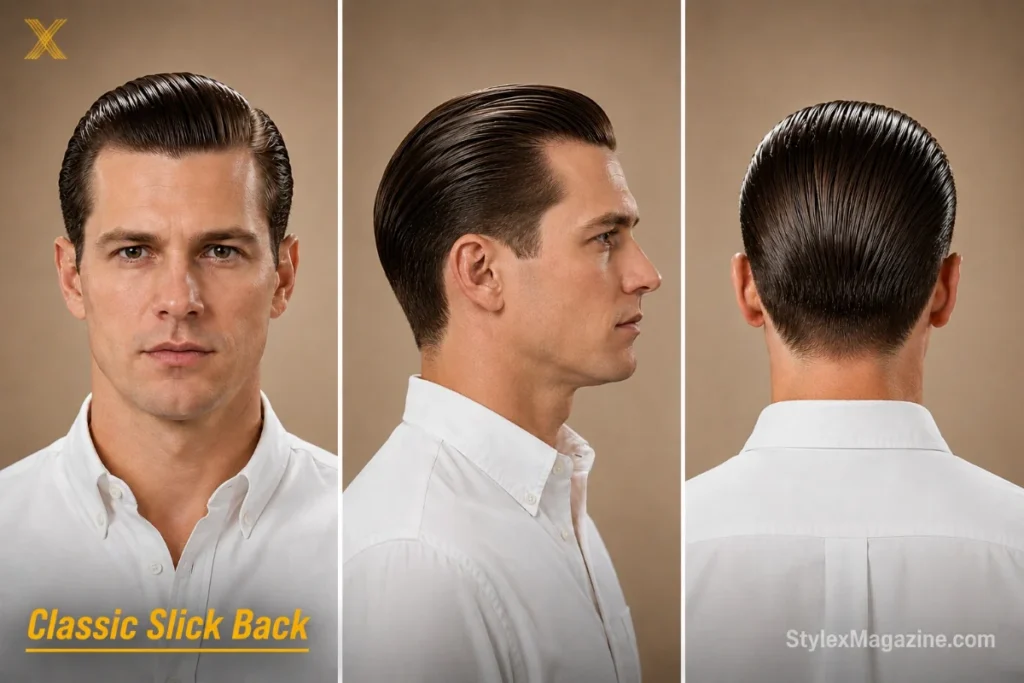
Medium-length hair combed straight back with a water-based pomade, sides tapered but not faded. No tricks, no texture just clean, controlled hair lying flat against the head. The reference point is the 1950s barbershop, which is exactly where this version belongs. Don Draper wore it. Gordon Gekko wore it. It still works.
Best for: Oval and square faces. Straight to slightly wavy hair, medium density.
Tell your barber: “Three to four inches on top, taper the sides without a fade I want a clean classic slick back.”
Maintenance: Every 4 weeks.
2. Slick Back Low Fade
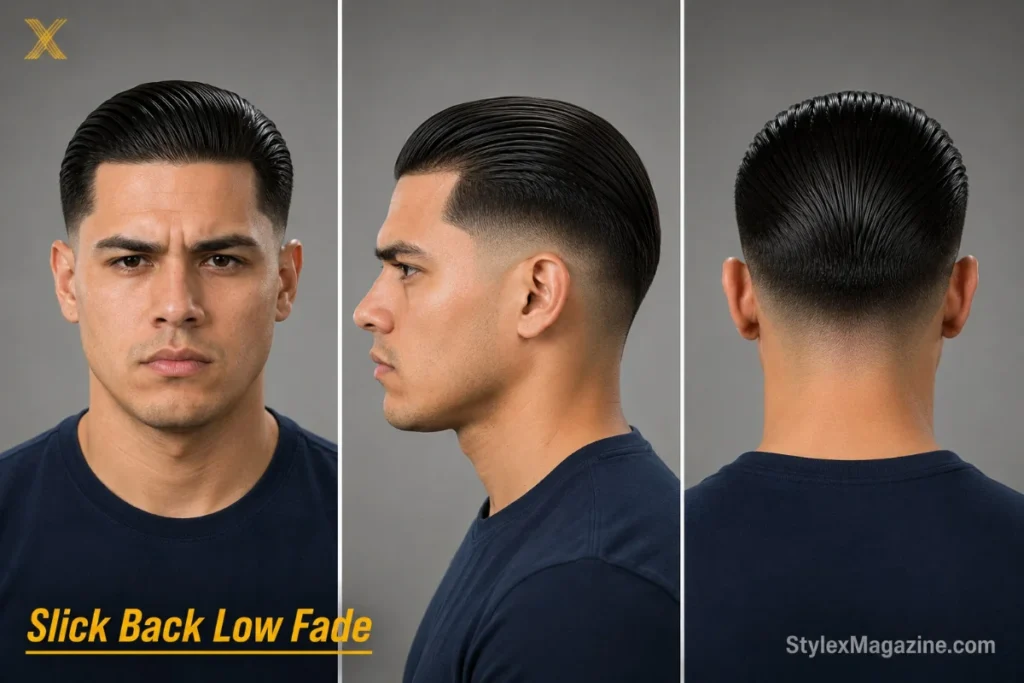
The top stays slicked back while a low fade haircut brings the sides down from just above the ear to the neckline. The result is cleaner than a taper and sharper than the classic version, without the aggression of a high fade. Most barbers default to this when a client asks for a slick back with “something modern” on the sides.
Best for: Oval, square, and diamond faces. Most hair types.
Tell your barber: “Slick back on top with a low fade blend it clean from just above the ear.”
Maintenance: Every 3 weeks.
3. Slick Back Mid Fade
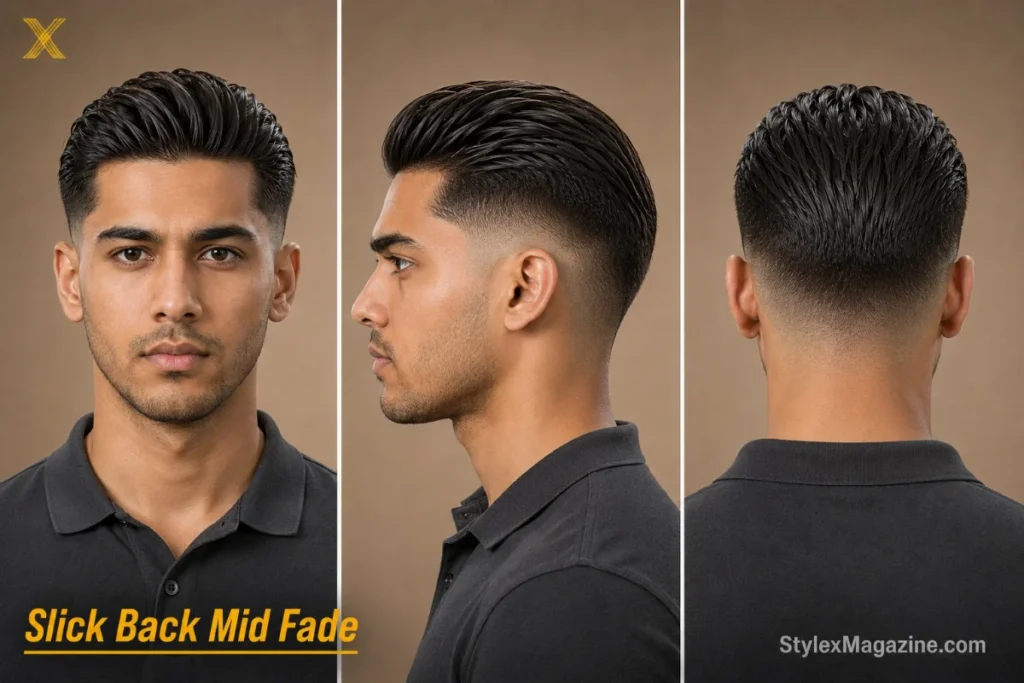
The fade starts at the temple rather than just above the ear, creating more visual contrast between the length on top and the cropped sides. This is the most-requested version in modern barbershops. The mid point sits high enough to look sharp, low enough to stay appropriate in most professional settings.
Best for: Oval, square, and rectangular faces. Straight to wavy hair.
Tell your barber: “Slick back on top, mid fade on the sides starting at the temple — keep it tight.”
Maintenance: Every 2–3 weeks.
4. Slick Back High Fade
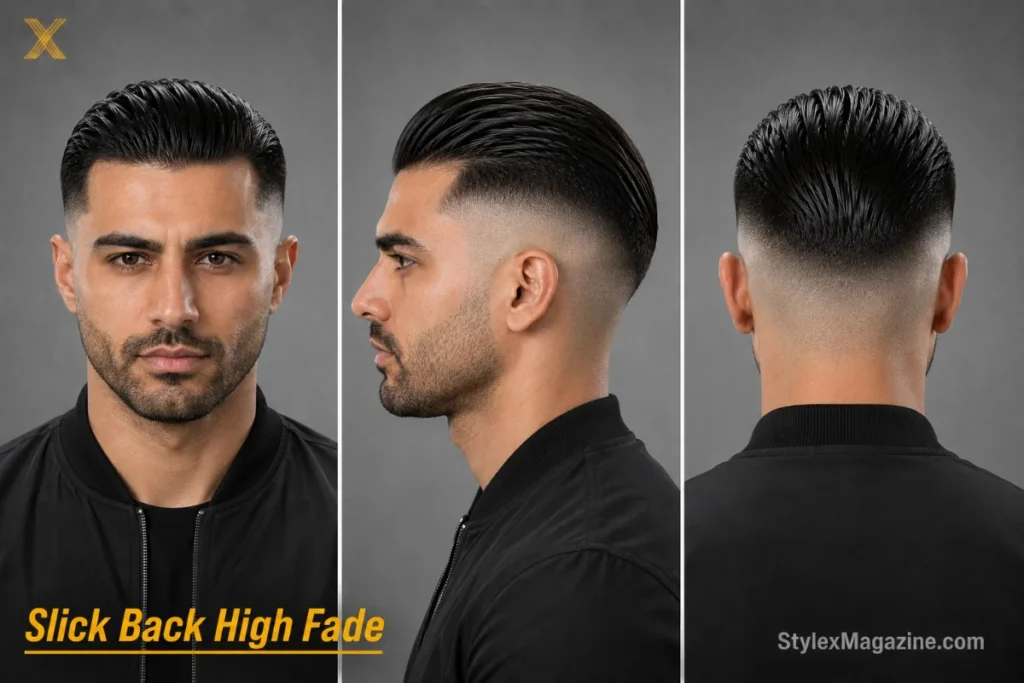
The fade begins above the temple, leaving only the hair on the crown area long enough to slick back. The contrast is sharp — this version is less office and more barbershop. Pairs well with a beard, which balances the severe transition between the cropped sides and the longer top.
Best for: Oval and diamond faces. Medium to thick straight hair.
Tell your barber: “Slick back with a high fade — start the fade above the temple, keep the top at three inches minimum.”
Maintenance: Every 2 weeks.
5. Slick Back Undercut
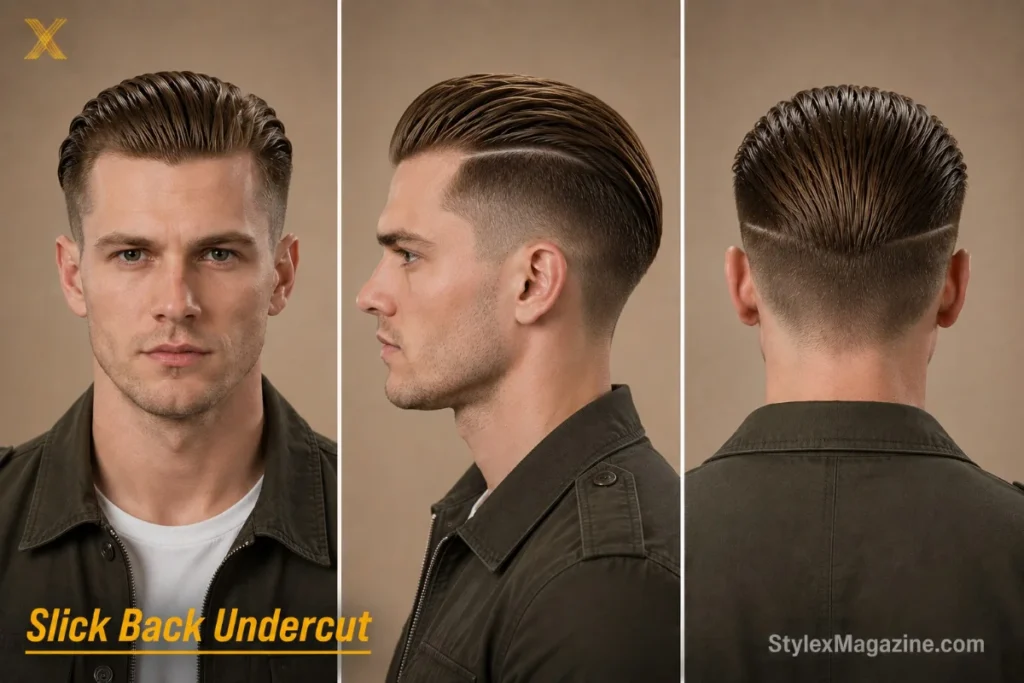
The sides are disconnected cut short with a hard, visible line rather than blended. The contrast is more extreme than any fade version and gives the style its signature edge. Arthur Shelby in Peaky Blinders, Brad Pitt in Fury the disconnected undercut became its own cultural reference point. Works best on thick hair that holds enough weight on top to lie flat.
Best for: Oval and oblong faces. Thick, straight hair.
Tell your barber: “Disconnected undercut on the sides one length, hard line. Leave the top long enough to slick straight back.”
Maintenance: Every 3–4 weeks. The disconnected line blurs faster than a fade.
6. Slick Back Taper
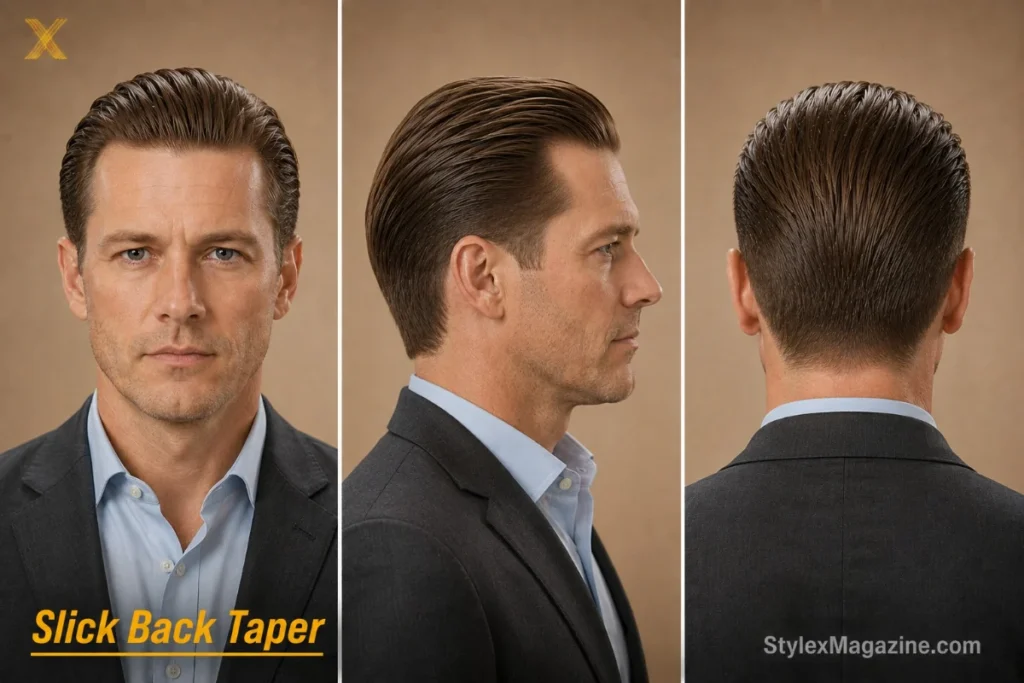
A taper shortens the hair gradually toward the neckline without blending to skin. The transition is subtler than a fade and grows out more cleanly — which makes it the right choice for professional settings where a mid or high fade would read as too barbershop-heavy. If you work somewhere with a strict dress code, this is the version to ask for.
Best for: Oval and rectangular faces. All hair types.
Tell your barber: “Slick back on top, taper on the sides — not a fade. Clean at the neckline.”
Maintenance: Every 4 weeks.
7. Slick Back Drop Fade
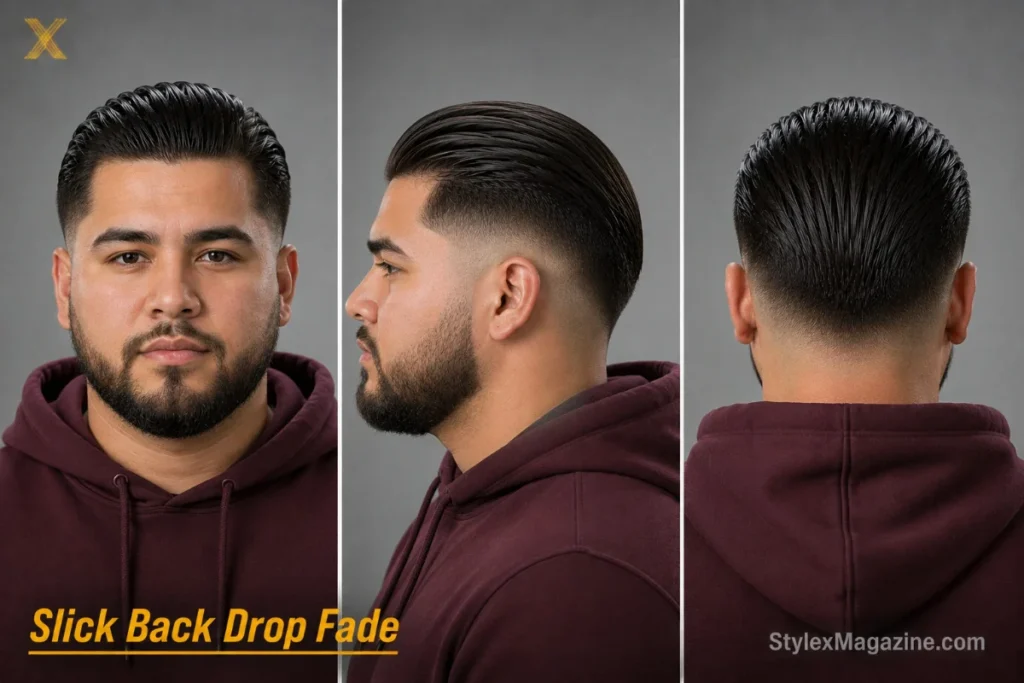
The fade follows the curve of the head, dropping lower behind the ear rather than cutting straight across. That curved line softens the overall shape and suits rounder or wider faces where a straight horizontal fade adds unwanted width. The drop also creates a natural transition into a beard line if you’re keeping one.
Best for: Round and diamond faces. Medium to thick hair.
Tell your barber: “Slick back on top, drop fade on the sides curve it behind the ear, not straight across.”
Maintenance: Every 2–3 weeks.
8. Wet Look Slick Back
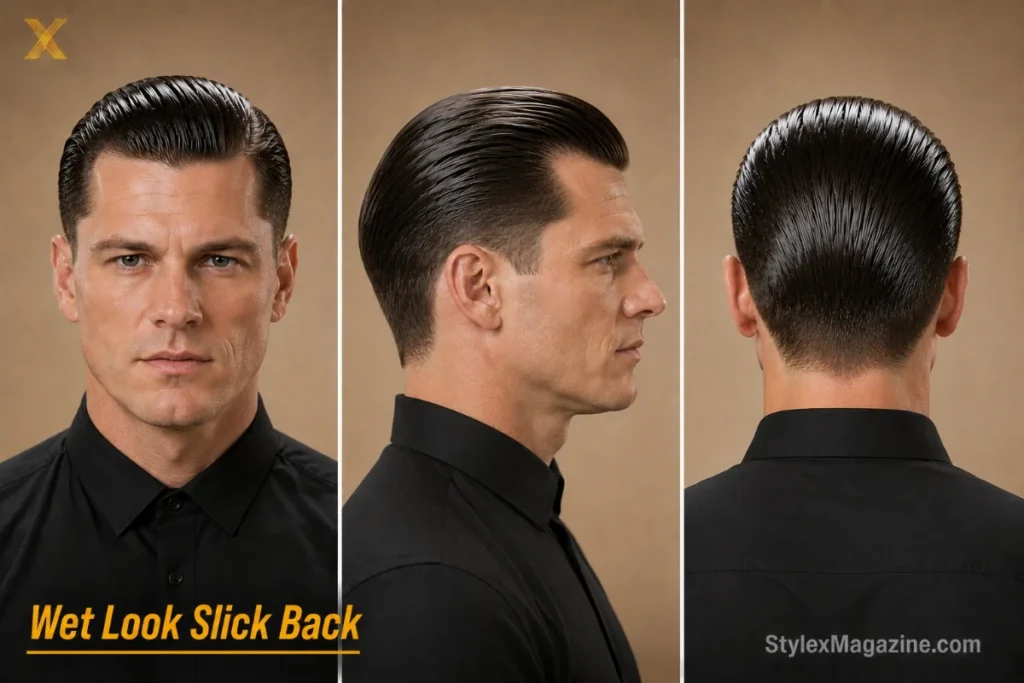
High-shine finish on damp hair using a water-based gel or glossy pomade, combed flat. The top reflects light — this is the formal version. Black tie, job interview, wedding. The most common mistake is applying product to dry hair it clumps and separates instead of lying flat. Always start with towel-dried, damp hair.
Best for: Square and oval faces. Fine to medium straight hair.
Tell your barber: “Leave the top at three inches, clean taper on the sides — I’ll be finishing it wet.”
Maintenance: Every 3–4 weeks for the cut. Re-style daily with gel on damp hair.
9. Textured Slick Back
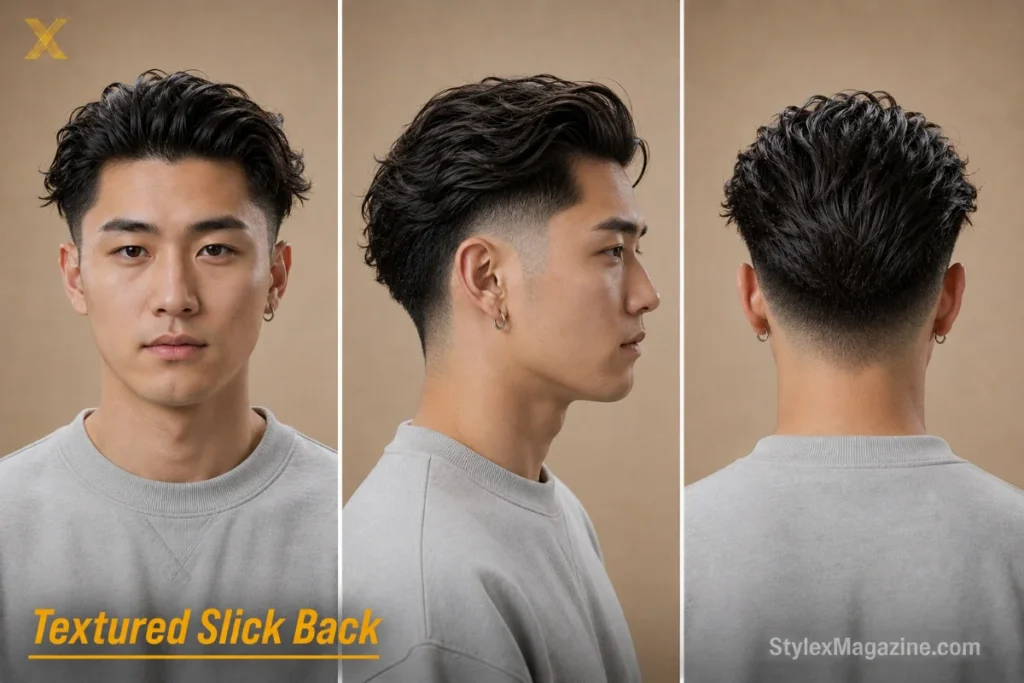
Also called the brush-back. Hair is pushed back with the fingers rather than combed flat, finished with a matte clay or texture paste. The result has movement, root volume, and no mirror shine. Wear it to work, wear it out the finish doesn’t read as overdressed or underdressed in either setting.
Best for: Round and oval faces. Wavy or naturally textured hair.
Tell your barber: “Slick back with texture not a wet look. Keep the front slightly longer so there’s something to push back.”
Maintenance: Every 3–4 weeks.
10. Long Slick Back
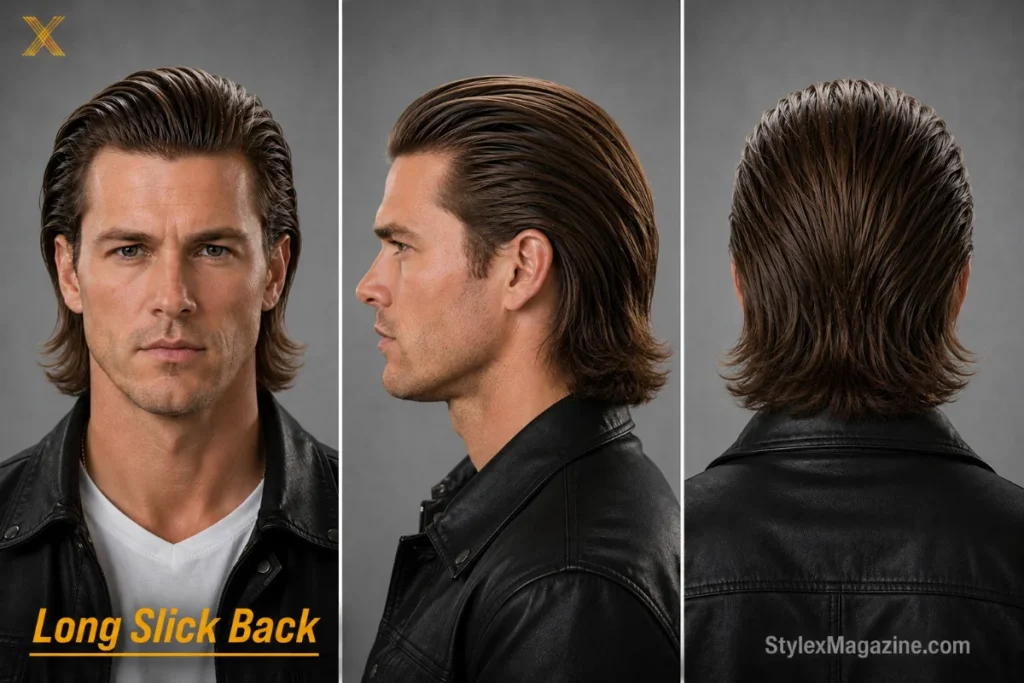
Hair on top reaching 5 to 7 inches, swept back and blow-dried for direction, held with a medium-hold pomade. The sides stay longer too — a low taper rather than a fade keeps the proportions balanced. Jax Teller in Sons of Anarchy is the reference. It demands daily maintenance: long hair needs conditioning to stay manageable and blow-drying to hold the direction.
Best for: Oval and oblong faces. Thick, straight or wavy hair.
Tell your barber: “Growing it out for a long slick back — low taper on the sides only, just clean up the ends.”
Maintenance: Every 5–6 weeks. Daily styling required.
11. Medium Slick Back
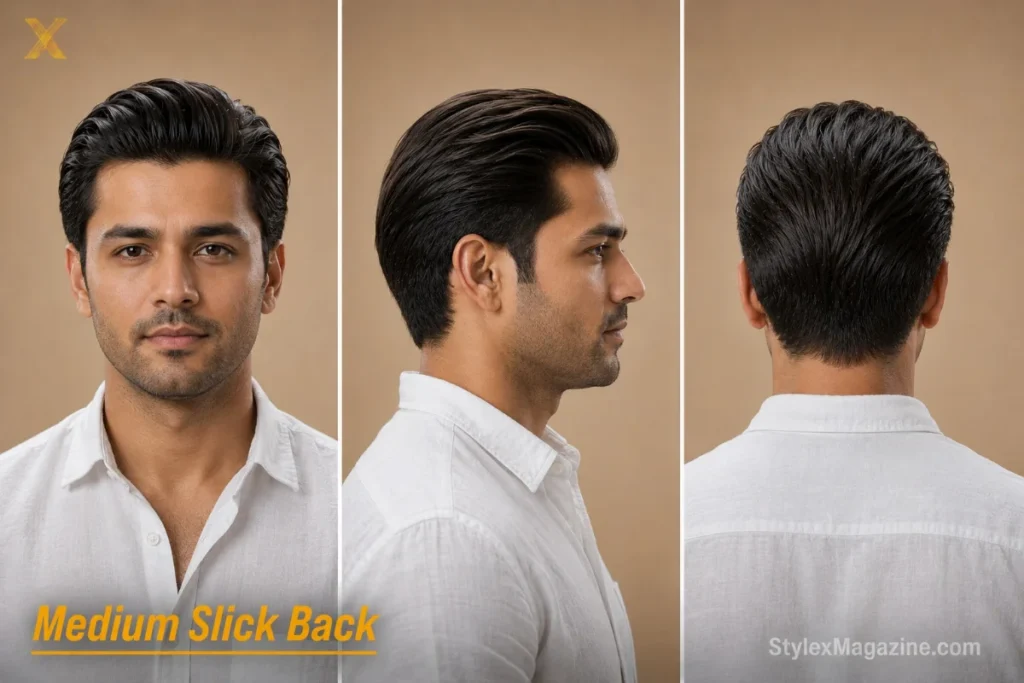
Around 3 to 4 inches on top — the practical middle ground. Enough length to hold the swept-back shape without reaching for a blow dryer every morning. The sides are lightly tapered. This is the default version for men who want the look without managing it daily.
Best for: Most face shapes. Most hair types.
Tell your barber: “Three to four inches on top, light taper on the sides — medium slick back.”
Maintenance: Every 3–4 weeks.
12. Short Slick Back
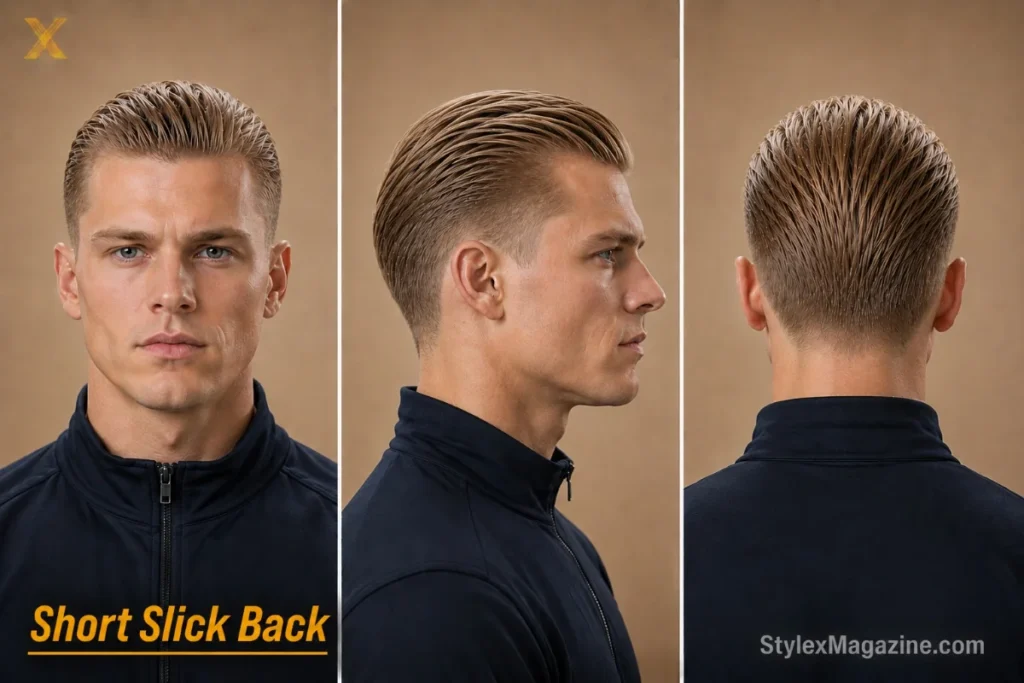
Around 2 to 2.5 inches on top. Just enough to push back, but less weight means a stronger hold product is needed to keep it in place. The cut grows out cleanly without looking neglected lower commitment than most fade versions, and the easiest entry point into the style.
Best for: Oval and square faces. Fine to straight hair.
Tell your barber: “Leave about two inches on top, tight taper on the sides — short slick back.”
Maintenance: Every 3 weeks.
13. Slick Back with Beard
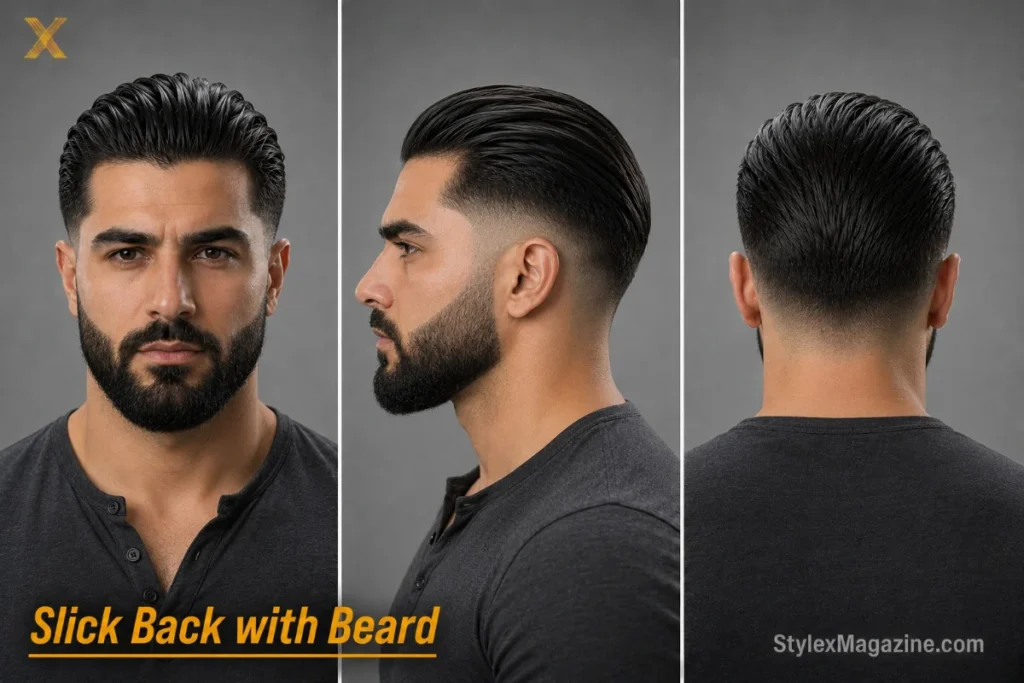
The beard adds a lower anchor that balances the height on top. Without it, a slick back with tight sides can look top-heavy on certain face shapes. With a full beard or short boxed beard, the proportions hold. Keep the beard lines as sharp as the haircut — a clean slick back with an untrimmed beard kills the effect.
Best for: Oval, square, and diamond faces. All hair types.
Tell your barber: “Slick back with a mid fade — I’m keeping a beard so blend the fade tight at the jaw.”
Maintenance: Hair every 3 weeks. Beard every 1–2 weeks.
14. Slick Back for Curly Hair
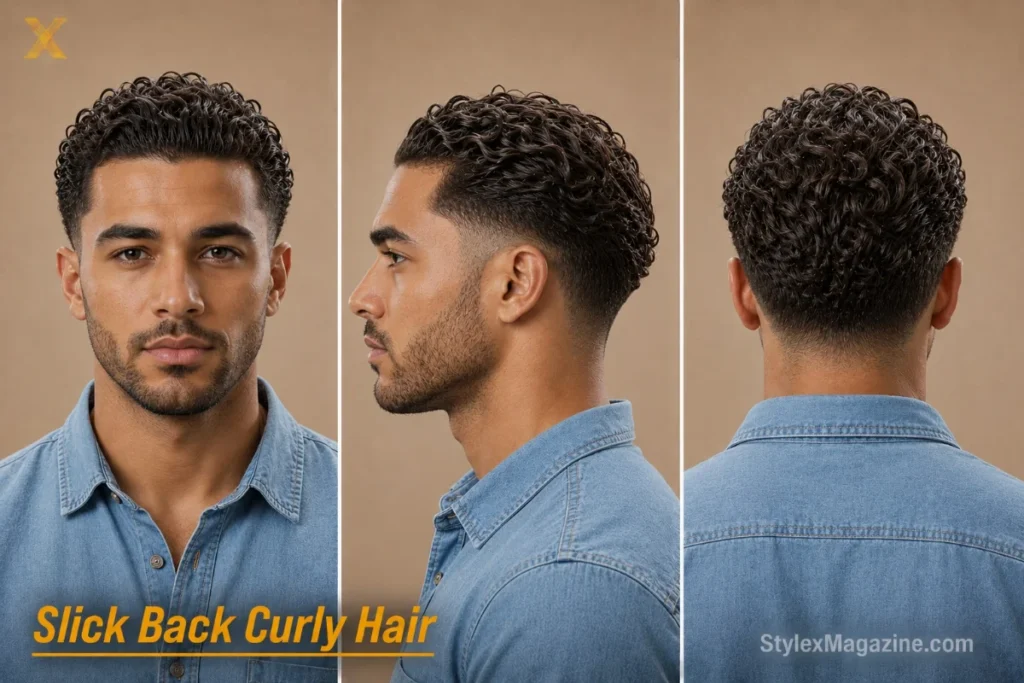
The curls don’t disappear they get directed. A curl-defining cream or strong-hold gel on damp hair, then push the curls straight back rather than combing them flat. The result keeps volume and texture while achieving the swept-back direction. If it looks stiff or crunchy, too much product was used.
Best for: Oval and square faces. Naturally curly hair, type 2C to 3B.
Tell your barber: “Leave the curls long enough on top to push back curly slick back, not a flat wet look.”
Maintenance: Every 3–4 weeks. Re-style between cuts with water and curl cream.
15. Slick Back for Wavy Hair
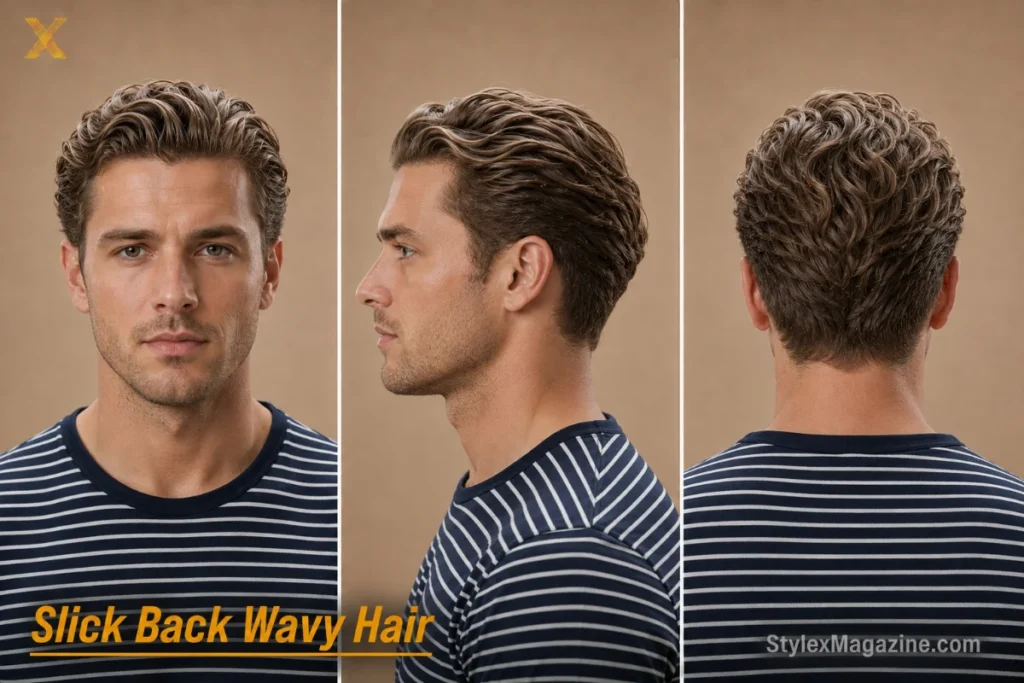
Wavy hair moves in the right direction naturally — it pushes back without the resistance that straight or curly hair can present. A lightweight mousse or sea salt spray on damp hair, blow-dried back, keeps wave definition without flattening it. Of all hair types, wavy hair is the easiest to slick back.
Best for: Oval and oblong faces. Type 2A to 2C wavy hair.
Tell your barber: “Three to four inches on top for a wavy slick back — taper the sides, leave the top natural.”
Maintenance: Every 4 weeks.
16. Slick Back for Thin Hair
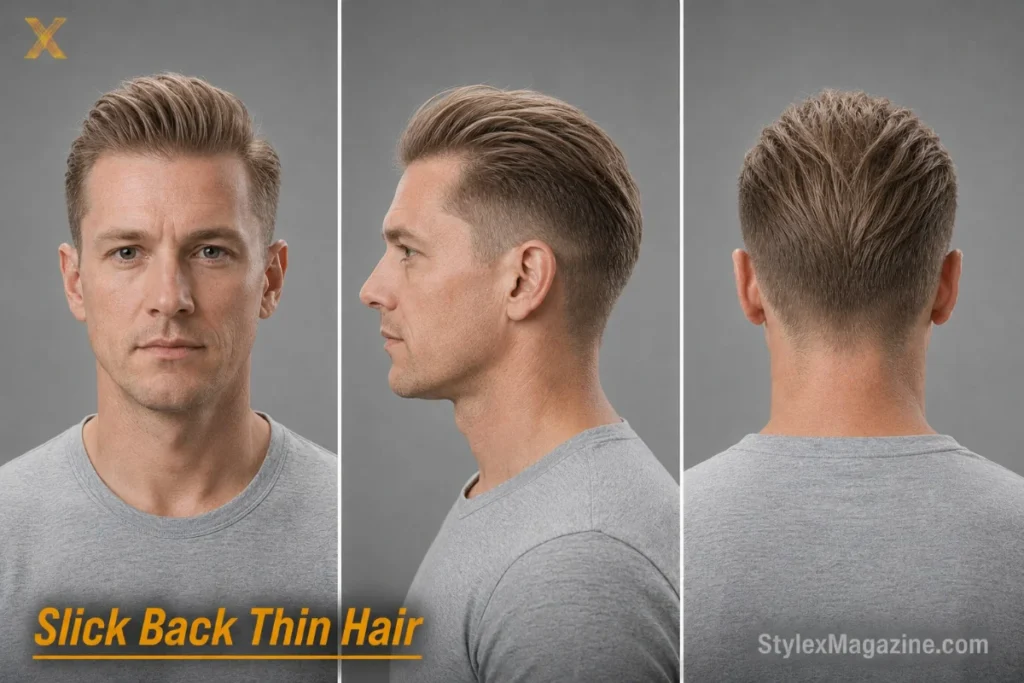
Thin hair collapses under gel weight. The fix is a volumising matte cream on damp hair, blow-dried back with a round brush to build root lift before it sets. Keeping the sides cut tighter than usual makes the top look denser by contrast. Gel makes thin hair appear flat and greasy avoid it entirely.
Best for: Oval and oblong faces. Fine or thinning hair.
Tell your barber: “Keep the top at three inches for a slick back tighter on the sides so the top reads fuller.”
Maintenance: Every 3 weeks. Tight sides need frequent refreshing.
17. Slick Back for Receding Hairline
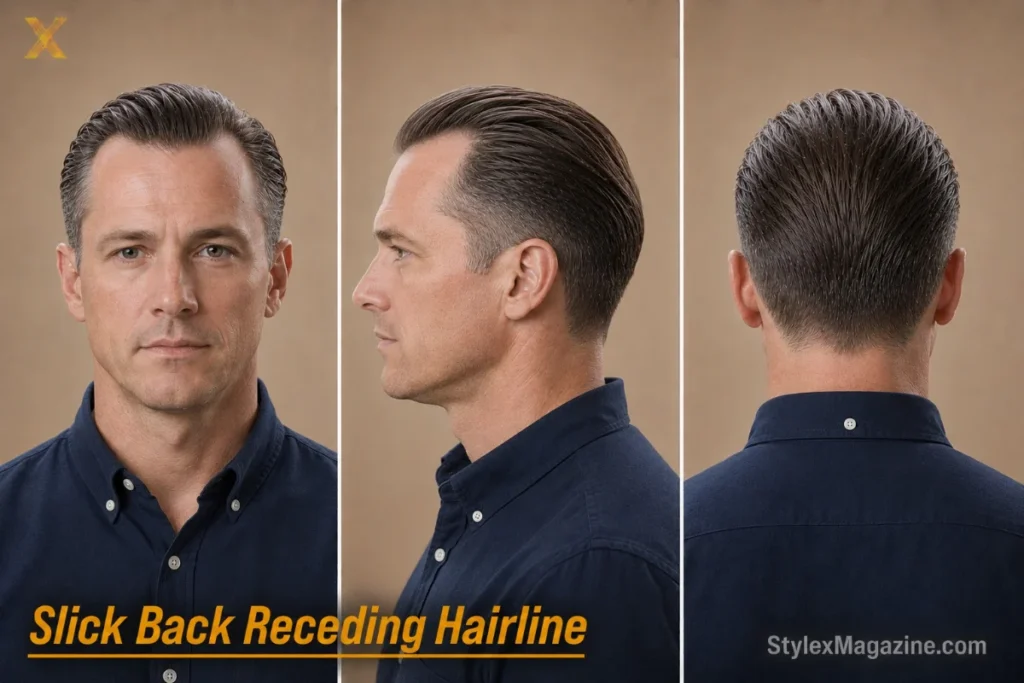
The slick back works with a receding hairline only when you stop trying to disguise it. Building volume at the temples draws attention to exactly what you’re working around. Keep the top flat and even, use a matte medium-hold pomade rather than gel, and let the hairline recede naturally. The style has enough presence to carry itself without distraction.
Best for: Any face shape with a receding hairline.
Tell your barber: “Slick back — flat and even on top, don’t try to cover the hairline.”
Maintenance: Every 3–4 weeks.
18. Slick Back for Black Men
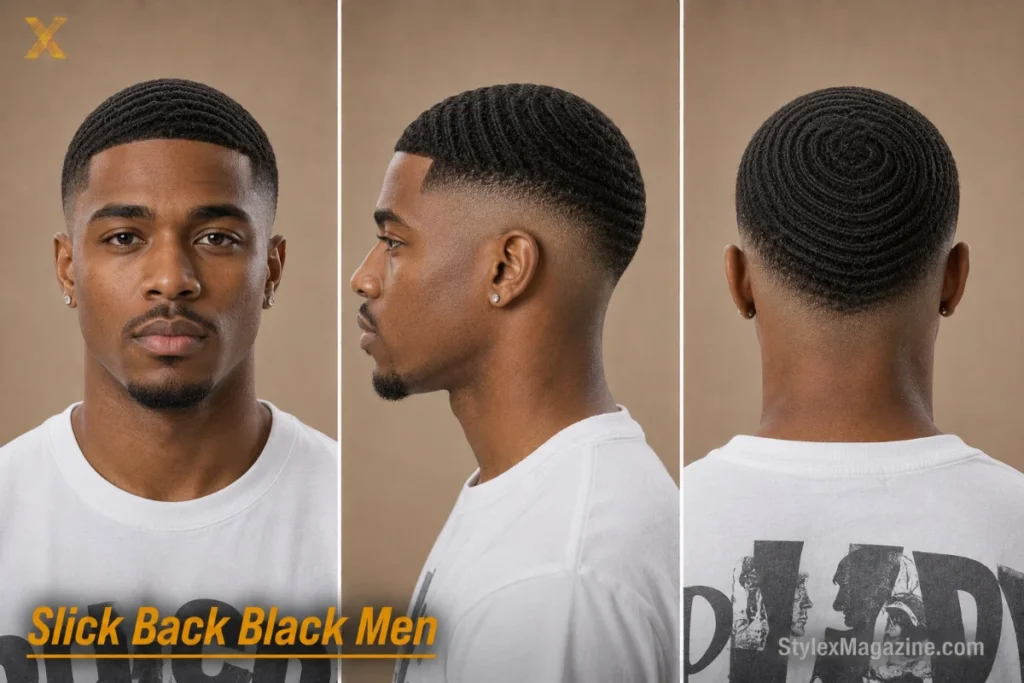
Works across hair types from 3C to 4C. For looser curl patterns, a strong-hold curl cream pushed back gives clean direction. For tighter coils, a wave brush with pomade lays the hair down and trains it back over several weeks of consistent brushing. A skin or high fade on the sides frames the top cleanly and keeps the contrast sharp.
Best for: Oval and square faces. Type 3C to 4C hair.
Tell your barber: “Slick back on top — high fade or skin fade on the sides. I’ll be brushing the top back daily.”
Maintenance: Every 2 weeks for the fade. Daily brushing required to maintain direction.
19. Middle Part Slick Back
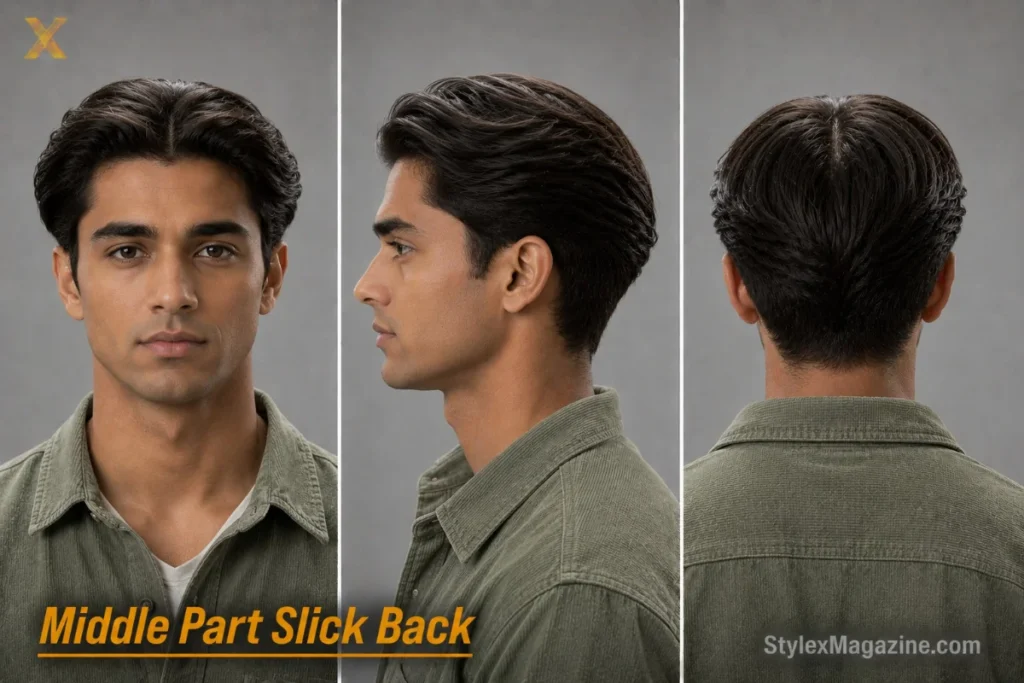
The hair is divided at the centre and swept back on both sides rather than straight back from the forehead. The result sits between a slick back and a curtain fringe. A medium-hold pomade keeps the part clean without locking it rigid. The hair needs enough natural movement to hold the centre division throughout the day without constant re-parting.
Best for: Oval and heart faces. Straight or slightly wavy hair.
Tell your barber: “Middle part slick back — parted at the centre, swept back on each side.”
Maintenance: Every 3–4 weeks.
20. Slick Back Side Part
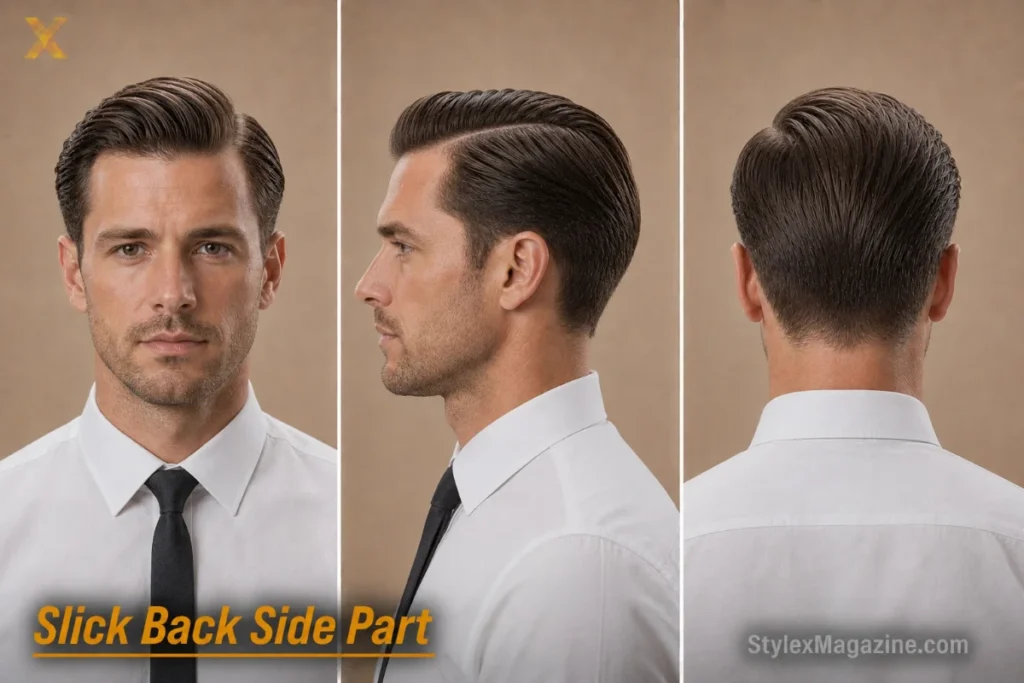
The hair is pushed back but defined by a side part rather than straight back from the forehead. One side sits slightly longer and higher, which creates a subtle asymmetry that suits most face shapes. This is the Mad Men version — the most office-appropriate of the 25. A medium-hold pomade keeps the part clean without making the finish look wet.
Best for: Oval, rectangular, and square faces. Straight, medium-density hair.
Tell your barber: “Side part slick back — clean part on the left, taper on the sides, top at three to four inches.”
Maintenance: Every 4 weeks.
21. Slick Back Hard Part
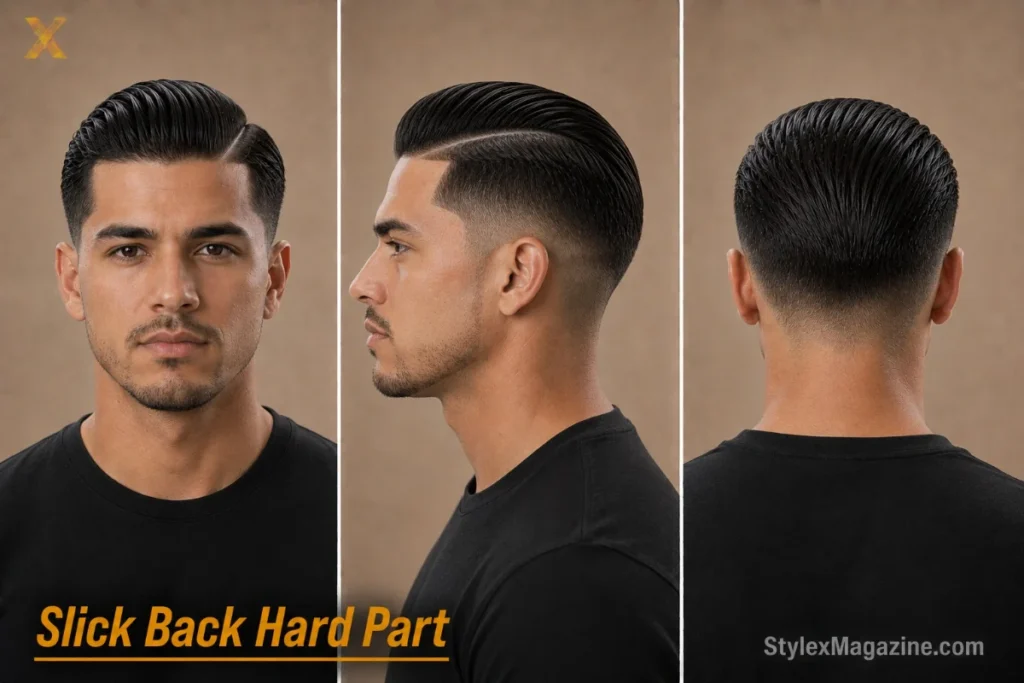
A razor line is shaved into the scalp, creating a precise boundary between the longer top and the fade below. The line adds definition without changing the slick-back silhouette useful when the standard version reads too plain on your hair. The razor line blurs within two weeks and needs regular upkeep to stay sharp; factor that into your maintenance schedule.
Best for: Square and oval faces. Medium-density straight hair.
Tell your barber: “Slick back with a hard part — razor the line on the left side, mid fade below.”
Maintenance: Every 2–3 weeks.
22. Slick Back with Volume
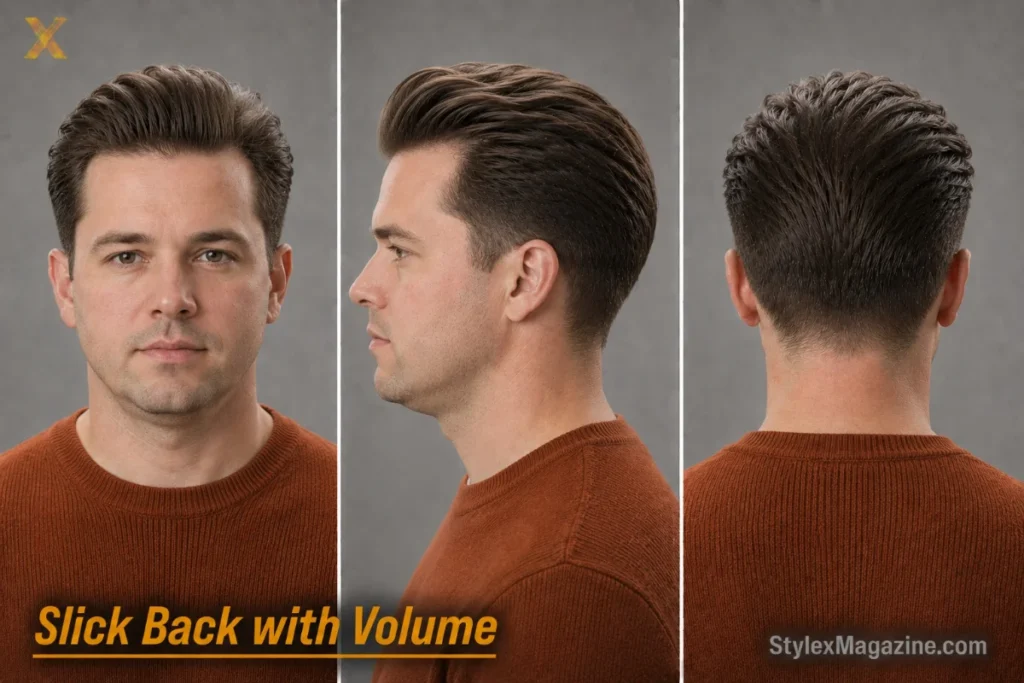
Hair is pushed back but allowed to sit higher at the crown rather than lying flat. The front lifts slightly — closer to a low pompadour in shape but without the dramatic height. A root-lifting spray or volumising mousse on damp hair before blow-drying builds the lift. This version suits round faces where a flat slick back spreads the silhouette sideways.
Best for: Round and heart faces. Medium to thick straight hair.
Tell your barber: “Slick back with volume at the crown — pushed back but sitting high, not flat.”
Maintenance: Every 3–4 weeks.
23. Slick Back Man Bun
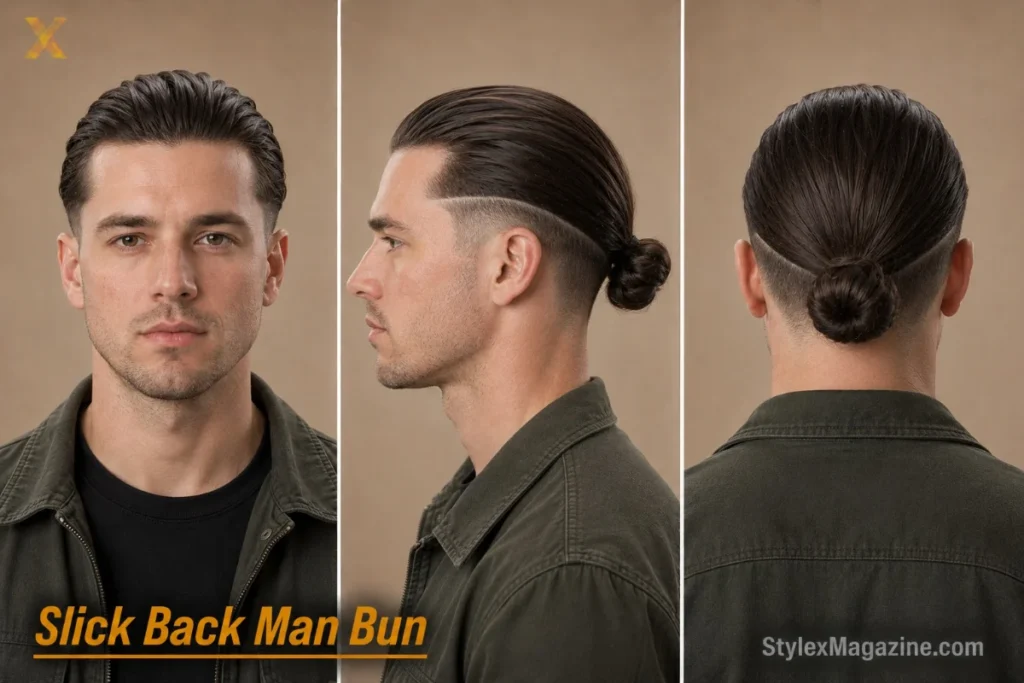
Long hair slicked back and tied into a low bun at the nape or crown. The sides can be undercut for more contrast or tapered for a more conservative result. The man bun keeps length off the face while maintaining the swept-back silhouette and it gives long hair a defined shape rather than just pulling it back out of the way.
Best for: Oval and oblong faces. Long, thick or straight hair.
Tell your barber: “Slick back man bun — undercut or taper on the sides, leave the top long enough to pull back.”
Maintenance: Every 5–6 weeks.
24. Slick Back Flow
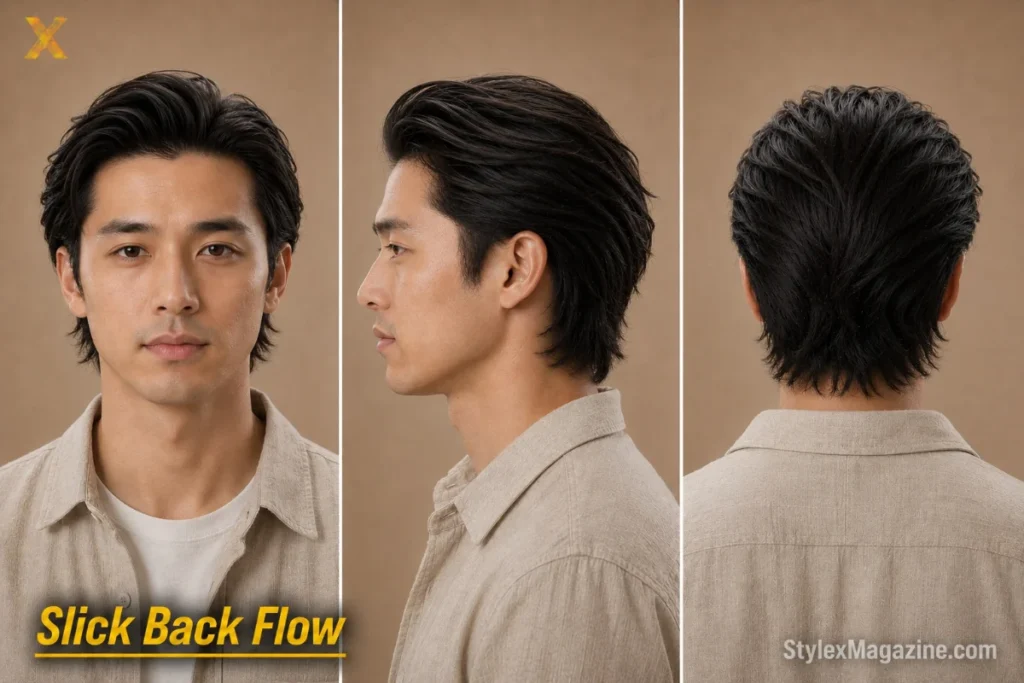
Longer than the medium version but worn loose rather than held flat. The key difference from the long slick back is product and intention no pomade pulling the hair taut, no blow-dry precision. A lightweight styling cream gives enough direction without control. The sides stay longer with a low taper, and the hair moves as you move. This is the version for men growing their hair out who want shape without committing to daily styling.
Best for: Oval and oblong faces. Straight to wavy hair.
Tell your barber: “Slick back with natural flow — low taper on the sides, leave the top long enough to move.”
Maintenance: Every 4–5 weeks.
25. Modern Slick Back
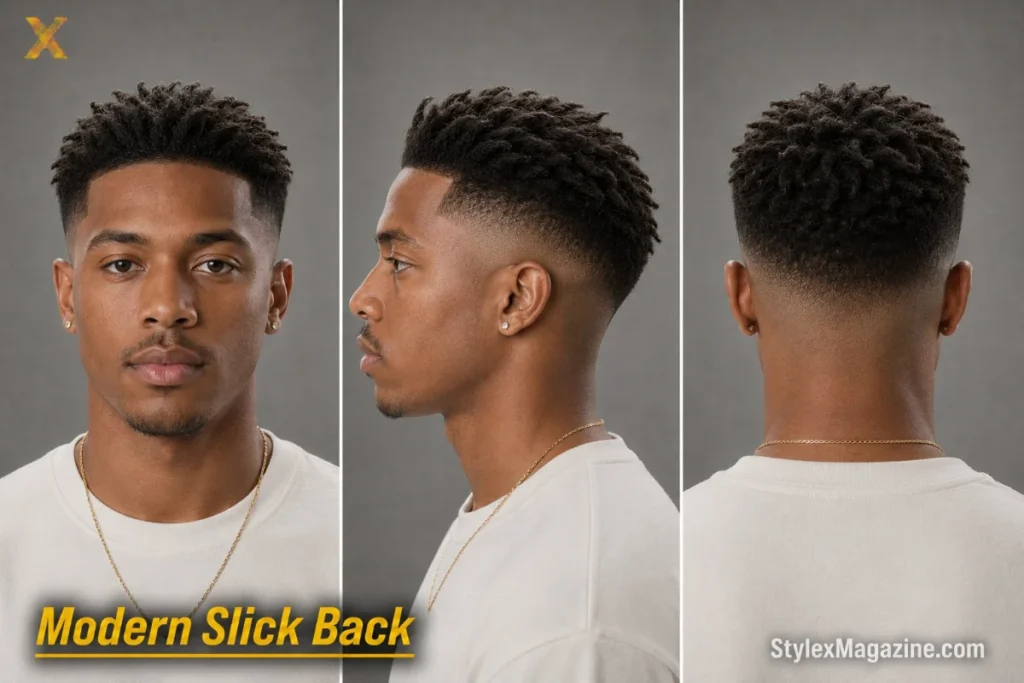
The current barbershop default. High or skin fade on the sides, matte finish on top with texture rather than high gloss. Less formal than the classic, sharper than the textured version — it sits in the middle and suits most ages, face shapes, and daily contexts without adjustment. A matte clay applied after blow-drying back gives the finish. Most barbers would start here with a first-timer.
Best for: Oval and square faces. Straight to wavy hair.
Tell your barber: “Modern slick back — high fade on the sides, matte finish on top with texture, not slicked flat.”
Maintenance: Every 2–3 weeks.
How Do You Choose the Right Slick Back Style?
Match the slick back haircut to your hair type first, then adjust for face shape and upkeep willingness.
By Face Shape
| Face Shape | Best Styles | Avoid |
|---|---|---|
| Oval | Any variation — most forgiving shape | Nothing |
| Square | Classic, Wet Look, Low/Mid Fade, Modern | Excessive crown volume |
| Round | Drop Fade, Volume, Side Part, Textured | Flat top versions that widen the silhouette |
| Oblong / Rectangular | Wavy, Medium, Side Part, Flow | Styles that add height at the crown |
| Heart | Middle Part, Taper, Side Part | High fade without a beard |
| Diamond | Drop Fade, With Beard | Straight fade without beard to balance jaw |
By Hair Type
| Hair Type | Best Styles | Product |
|---|---|---|
| Straight | Classic, Wet Look, Hard Part, Short, Modern | Pomade or gel |
| Wavy | Textured, Flow, Medium, Wavy-specific | Mousse or sea salt spray |
| Curly | Curly version, Modern | Curl cream, strong-hold gel |
| Fine / Thin | Thin hair version, Short, Taper | Volumising matte cream — never gel |
| Thick | Undercut, Long, Man Bun | Medium-hold pomade or styling cream |
FAQ
Is a slick back professional enough for an office?
Yes — the taper, side part, and classic versions are the safest for formal environments. High fades and undercuts read as more casual. The finish matters too: matte is more subdued than a wet gel look.
What is the difference between a slick back and a comb over?
A slick back goes straight back from the forehead. A comb over moves hair to one side, usually with a defined part. They use the same length requirement but create different silhouettes — the slick back sits symmetrical, the comb over leans.
Does hair need to be wet or dry to slick back?
Damp — not wet, not dry. Wet hair dilutes the product and loses hold as it dries. Dry hair resists the product and clumps. Towel-dry first, apply product while hair is still damp, then comb or blow-dry into place.
How do you keep a slick back from falling forward?
Two things: product strength and blow-dry direction. Blow-dry the hair straight back before applying pomade — this sets the root direction. A strong-hold product maintains it. If the hair still falls, the roots haven’t been trained in the right direction yet.
Can a slick back work with short hair?
At 2 inches it’s possible, but 3 inches gives enough weight to stay in place without constant re-styling. Below 2 inches the hair won’t lie back reliably regardless of product.
Does a slick back work at any age?
Yes. Slick back hairstyles adapt across ages depending on which variation you choose — the classic and side part versions suit older men because they read as polished rather than trendy. The modern version with a matte finish and fade works across most ages. High skin fades tend to read younger.

Other Articles


[…] Slick Back Haircuts […]
[…] Slick Back Haircuts […]