
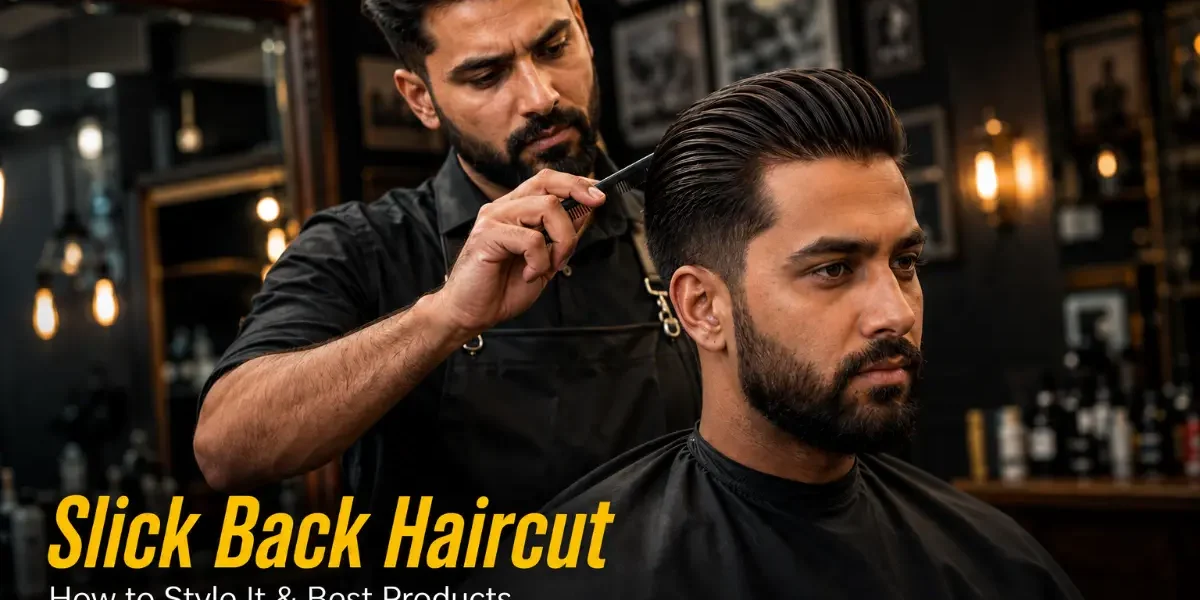

Quick Answer A slick back haircut combs the hair straight back from the forehead with no side part. Minimum 3 inches on top required. Pomade or clay applied to damp hair, combed back in one direction, holds the style through the day.
A third of the chairs in any busy barbershop are turning out some version of a slick back. It survives a work day, dresses up for a wedding, and takes five minutes once the technique is familiar. Most men get the idea right and the execution wrong wrong product, wrong amount, wrong hair moisture level.
What Is a Slick Back Haircut?
A slick back haircut directs the hair on top straight backward, away from the forehead, rather than to either side. The sides are usually tapered or faded short, while the top stays longer to carry the backward direction. The style dates to the 1920s as a practical businessman’s cut, then took on a sharper identity in the 1950s through the pompadour and ducktail variations worn by James Dean and Elvis Presley both built on the same backward direction, with added volume up top. The modern version drops most of that height and shine, keeping the core backward sweep.
What Is the Difference Between a Slick Back and a Comb Over?
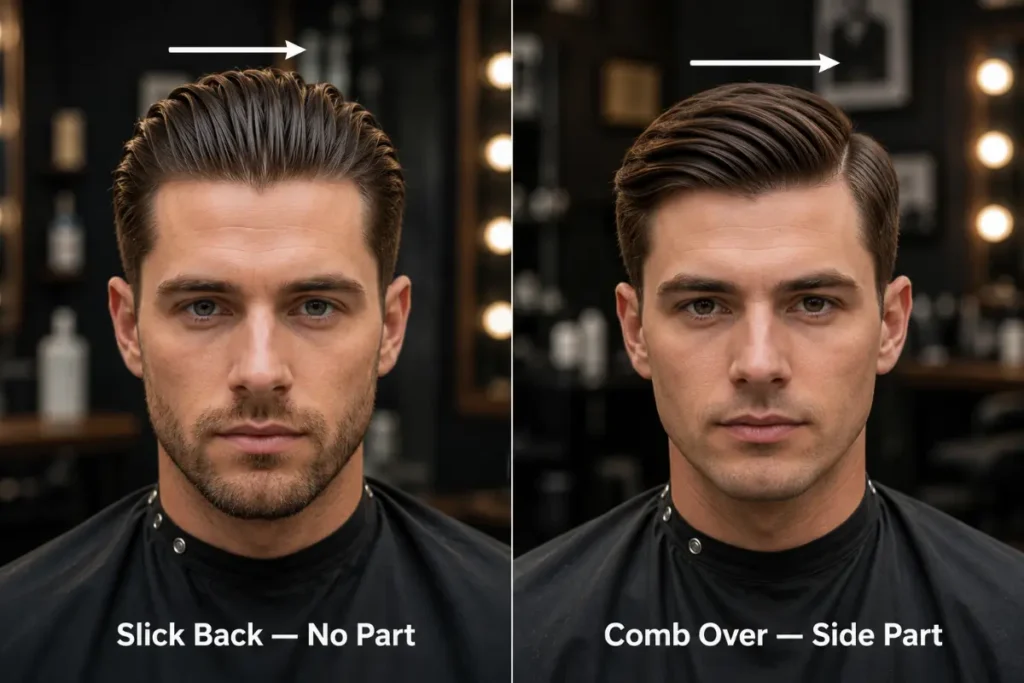
A slick back combs hair straight back with no part. A comb over parts the hair to one side and combs it laterally across the head. That direction backward versus sideways determines which face shapes each style suits and how formal each one reads. The full breakdown of both styles side by side is in the comb over haircut guide.
What Are the Types of Slick Back?
Slick back haircuts fall into five main variations, separated mostly by what happens on the sides and how much polish goes into the top.
Classic Slick Back — Full backward sweep, high-shine pomade, no fade or undercut on the sides — just tapered. The version every other slick back is built from.
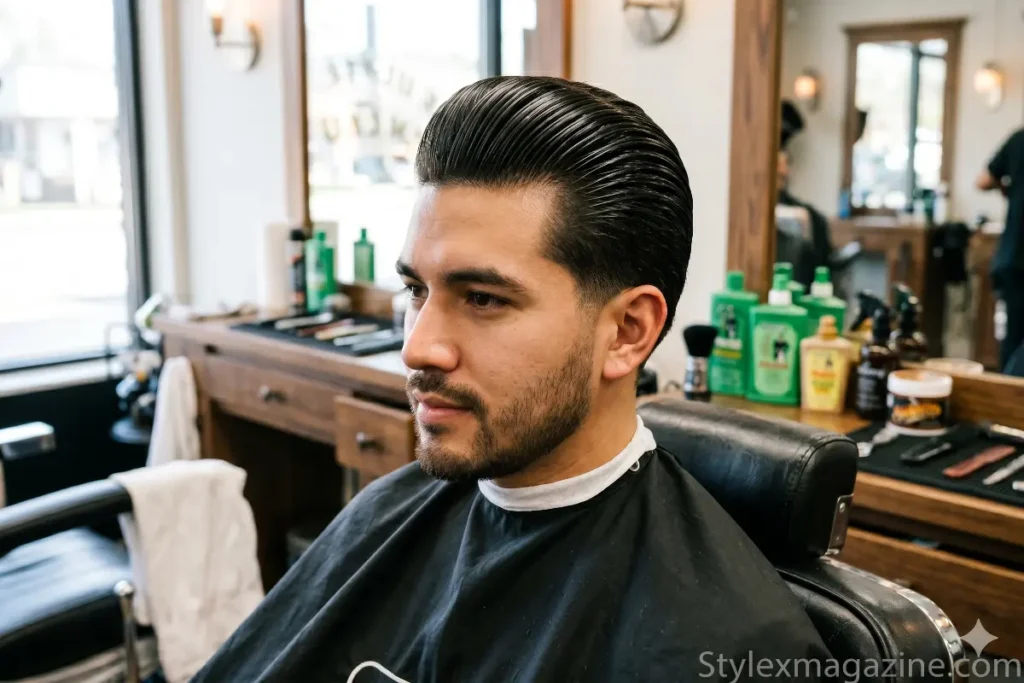
Slick Back with Fade — Faded sides at low, mid, or high height paired with the same backward direction on top. The most common modern request.
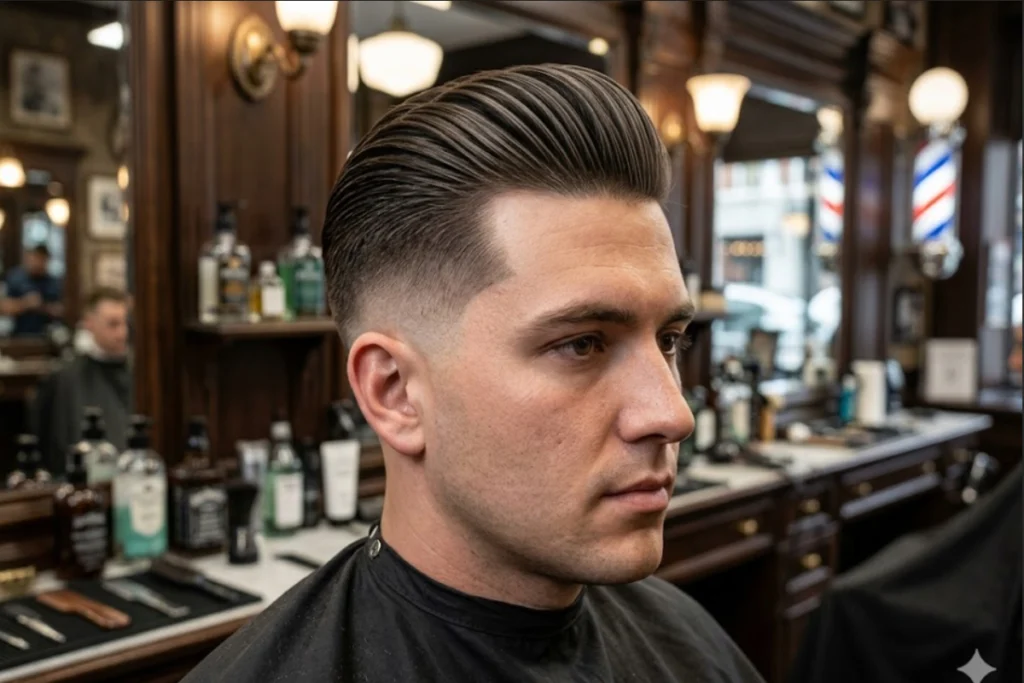
Slick Back Undercut — Sides clipped very short with a hard disconnect rather than a gradual fade, against a fuller backward-swept top. Sharper contrast than a fade version.
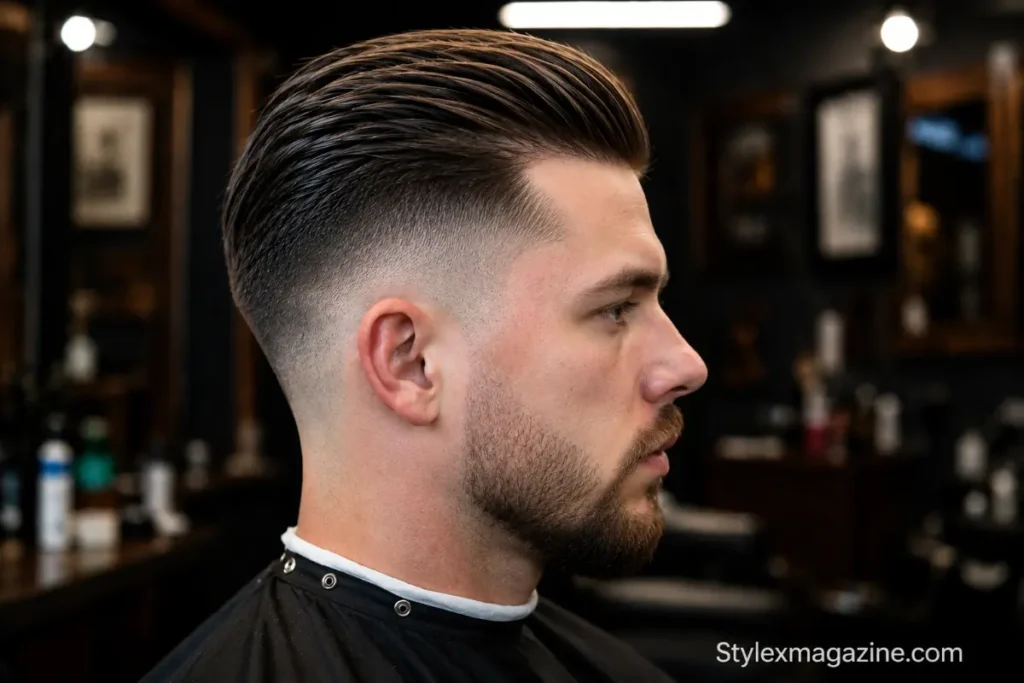
Mid-Length / Side-Part Slick Back — Longer hair brushed up and back, then worked into a soft side part rather than straight back. Less severe than a full slick back.
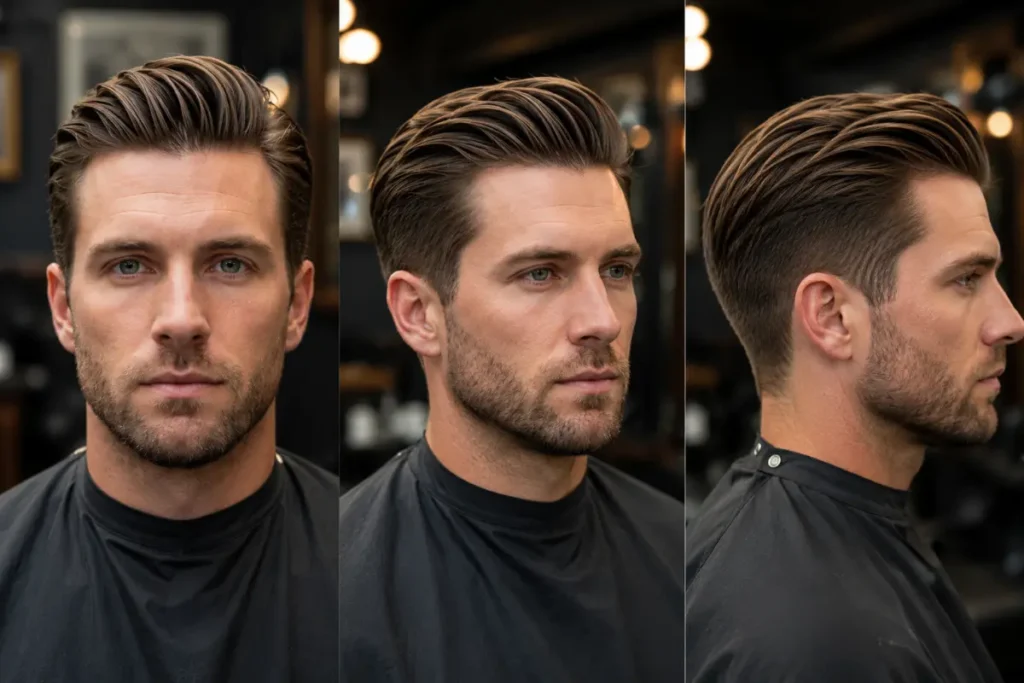
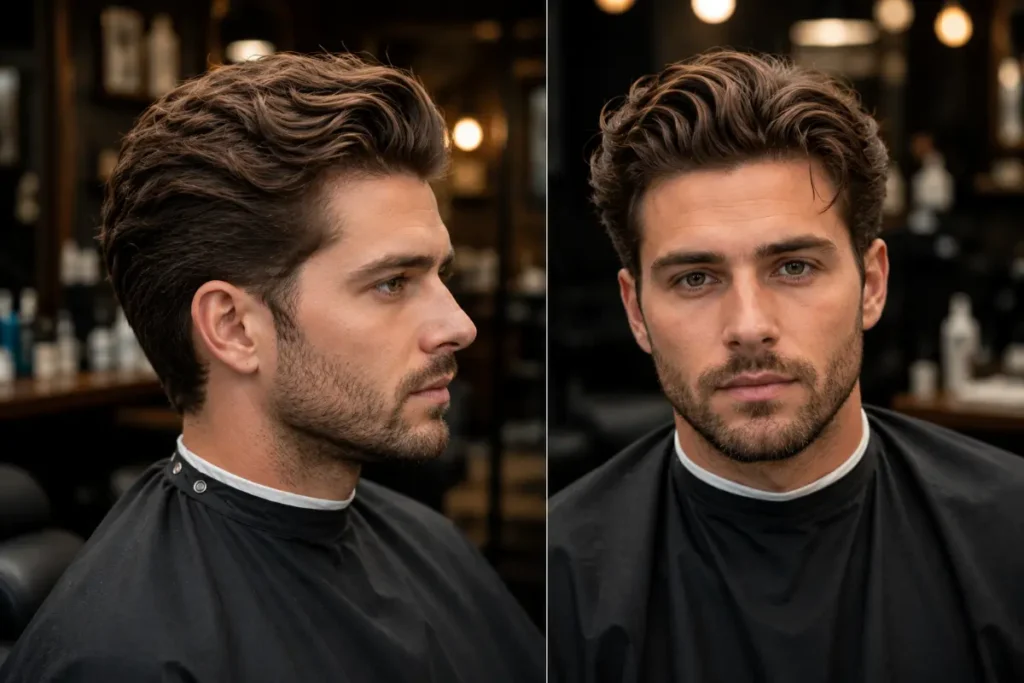
Modern/Textured Slick Back — Matte clay finish, looser movement, less polish than the classic version. Suits casual settings better than formal ones.
Once you know which technique suits you, browse 25 slick back hairstyles for men to see how each style looks in practice.
Is a Slick Back Right for Your Face Shape?
Face shape determines how much volume you want on top long faces need less height, round and square faces benefit from more.
| Face Shape | Guidance |
|---|---|
| Long / Oblong | Keep the top close to the scalp — added height makes the face look longer |
| Round / Heart / Square | Add loft on top — balances the width of the face |
| Oval | Any version works |
Which Hair Type Works Best for a Slick Back?
Straight and medium-density hair holds a slick back with the least effort very thick or fine hair both need adjustments to product and technique.
| Hair Type | Note |
|---|---|
| Straight | Sharpest, cleanest hold |
| Wavy | Needs more product, slightly textured finish |
| Curly | Possible with diffused drying and a strong-hold cream |
| Thick (low to medium density) | Holds shape well |
| Very thick (high density) | Harder to control needs a stronger-hold product |
| Fine / Thin | Light product only heavy product flattens it further |
How Do You Slick Back Your Hair?
Damp hair, a small amount of product worked through evenly, then combed back in one direction.
- Wash and towel-dry until damp not dripping, not dry.
- Take a dime-sized amount of product and rub it between your palms to emulsify it before touching your hair.
- Apply from roots through to ends, working from the back of the head toward the front.
- Comb straight back with a fine-tooth comb. A rounded-prong comb reduces snagging and static.
- For more volume, blow-dry with a round brush before the final comb-through. Set with a light hairspray if you need it to hold through a long day.
What’s the Biggest Mistake Men Make with a Slick Back?
Applying product to hair that’s still wet rather than damp. Wet hair dilutes the product before it can do its job — the style loosens by midday and starts looking greasy rather than sharp. Towel-dry properly first.
A second habit worth watching: pulling hair back tightly with heavy product, day after day. Over time that tension can stress the hairline. Keep the technique consistent, but ease off the tightness on the days you don’t need maximum hold.
What Products Work Best for a Slick Back?
A pomade, clay, or cream each gives a different finish, regardless of which brand makes it.
- Pomade — oil-based gives the strongest hold and highest shine, best for the classic version. Water-based holds nearly as well and washes out easier.
- Clay — matte finish, medium hold. Suits the modern or textured slick back best.
- Cream — lightweight, flexible hold. Best on fine or wavy hair where heavier product would weigh it down.
How Long Does Your Hair Need to Be for a Slick Back?
Minimum 3 inches on top. Below that, hair doesn’t have enough weight to lie flat against the backward direction it stands up instead of sweeping back. 4 to 6 inches gives more flexibility for volume and a looser, more textured finish.
What Should You Tell Your Barber?
Specify the version and the length you want to keep on top that’s the only detail that changes between variations.
- Classic: “Slick back — leave at least 3 inches on top, taper the sides, I’ll style it myself.”
- With fade: “Slick back on top — low or mid fade on the sides.”
- Undercut: “Slick back on top, undercut the sides — short clipper, no fade, hard line.”
FAQ
Is a slick back haircut professional?
Yes. It’s one of the most consistently appropriate styles for office and formal settings — clean, controlled, and low-key.
Can curly hair be slicked back?
Yes, with the right approach. Diffuse dry on low heat first, then use a strong-hold cream rather than a thin pomade. A flat iron pass can help on very tight curl patterns.
Does a slick back work for thin hair?
Yes, with a lighter product. Heavy pomade or clay weighs fine hair down further. A lightweight cream or light-hold pomade keeps volume without flattening it.
How often do you need a haircut to maintain a slick back?
Every 3–4 weeks for the classic version. Every 2–3 weeks if you’re wearing it with a fade or undercut, since the sides grow out faster than the top.
Is slicking your hair back every day bad for it?
Not inherently, but daily tight styling with heavy product can stress the hairline over time. Use a gentle technique and don’t overload on product every single day.

Other Articles

31 Best Comb Over Fade Haircut Styles For Men in 2026
No Comment! Be the first one.