
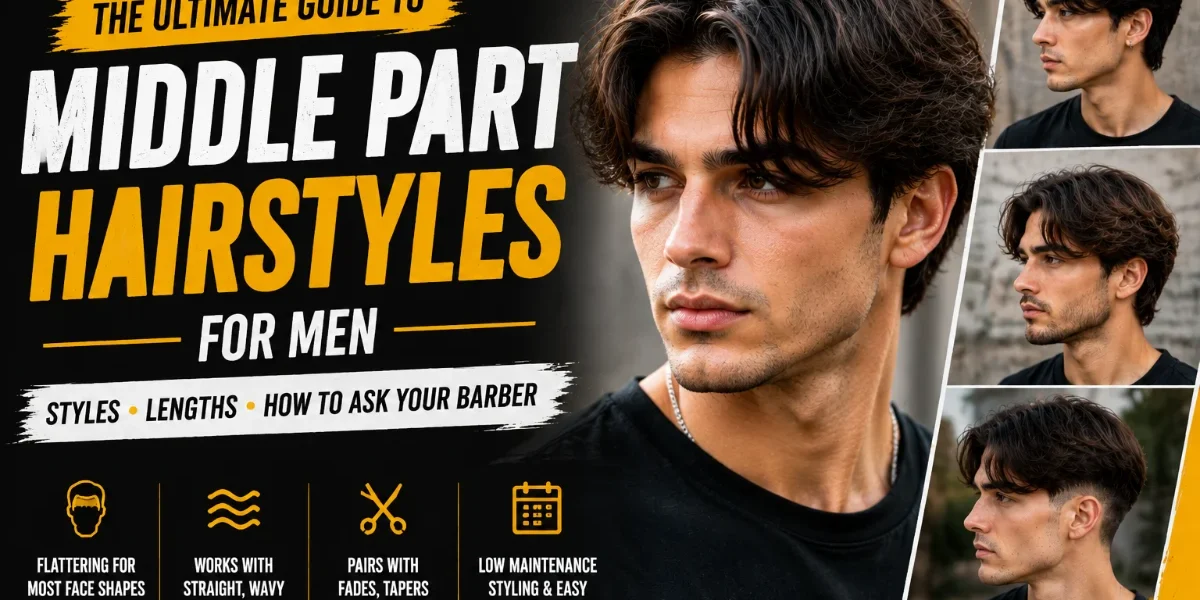

The middle part splits hair evenly down the centre, framing the face with curtain-style fringe. It suits oval and round faces best, works across straight, wavy, and curly textures, and pairs with fades, tapers, or scissor-cut sides.
The middle part also called the curtain haircut has been cycling through men’s style since the 1990s. Among middle part haircuts, the curtain remains the most requested in my chair. K-pop, TikTok, and Gen Z brought it back harder than DiCaprio ever did. The modern version runs lighter on product, heavier on texture, and works with more hair types than the slicked 90s original. The middle part hair men wear today looks nothing like what DiCaprio wore in 1997.
I’ve organized the styles below by hair length so you find what works for you without scrolling past 40 options that don’t. Each one includes what to ask your barber and who should skip it.
What Are the Best Middle Part Hairstyles for Men?
The best middle part styles include curtain bangs, the middle part fade, the textured flow, and the Korean two block the right one depends on your hair length, texture, and how much contrast you want on the sides.
Below, I’ve grouped every style by the length you need on top. Short styles start at four inches. Long styles need seven or more.
SHORT STYLES (4–5 Inches on Top)
A short middle part keeps things clean and low-effort — four to five inches on top is enough to split and style.
Short Curtain Bangs
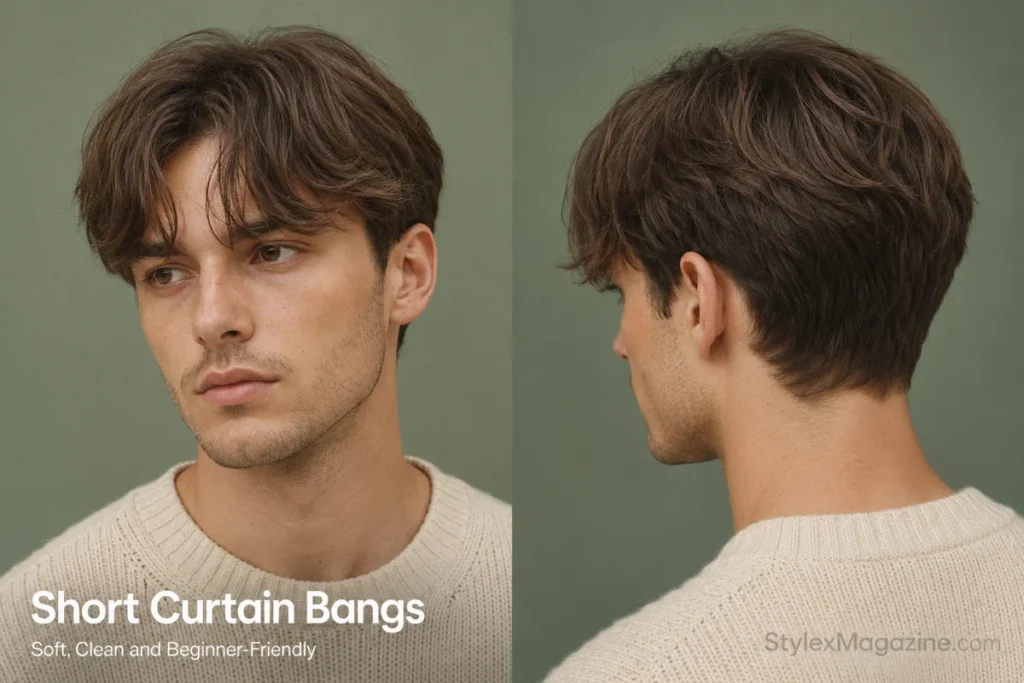
Hair type: Straight, wavy | Styling tip: Air-dry with a light matte paste — no blow-dryer needed
The most popular short middle part men ask for and the entry point for middle parts. The fringe falls just to the eyebrows with scissor-cut sides blended into the top. No clippers, no hard lines. This is the cut I start most first-timers on because it grows out cleanly at four to five weeks without looking neglected.
Best face shapes: Oval, round, heart
Best hair textures: Straight, wavy
Ask for four to five inches on top with scissor-cut sides blended into the fringe. Skip clippers unless you want a taper at the neckline only.
Skip this if your hair is very fine and won’t hold a part without heavy product.
Middle Part Fade
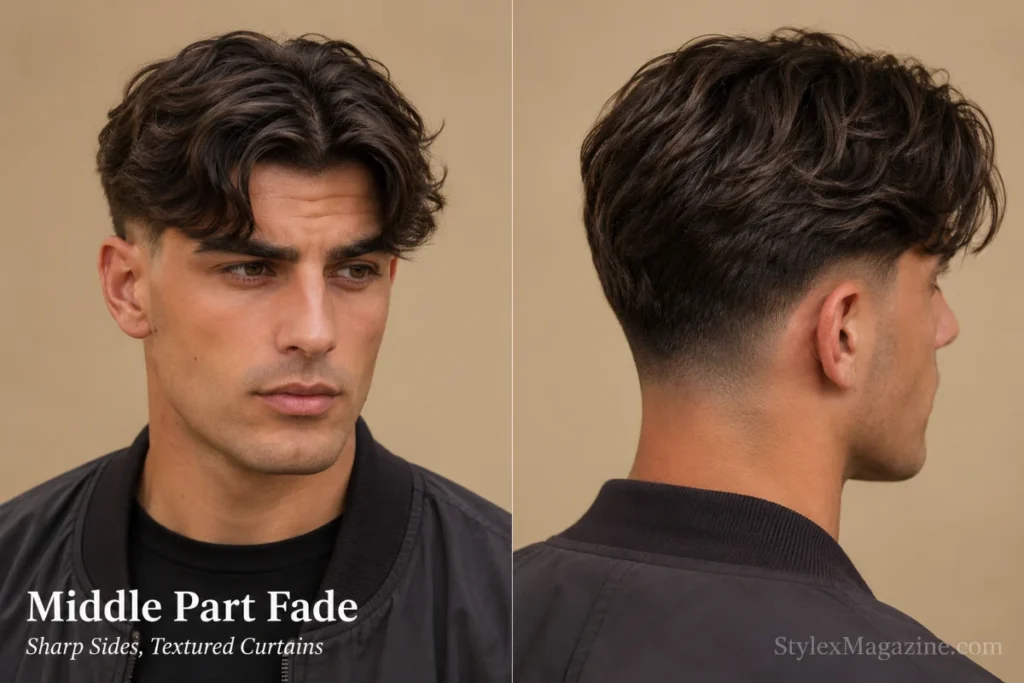
Celebrity: Timothée Chalamet | Styling tip: Matte clay on the fringe, nothing on the fade
Sharp contrast between a clean fade haircut on the sides and longer curtain fringe on top. The fade adds structure that looks professional while the middle part keeps things current.
Best face shapes: Square, oval
Best hair textures: Straight, wavy, thick
Tell your barber you want a low fade starting at a number one guard, blending up into the longer top with a natural centre part. Expect touch-ups every two to three weeks — fades grow out fast.
Skip this if you want low-maintenance. Fades need regular upkeep to stay clean.
Blunt Cut Middle Part
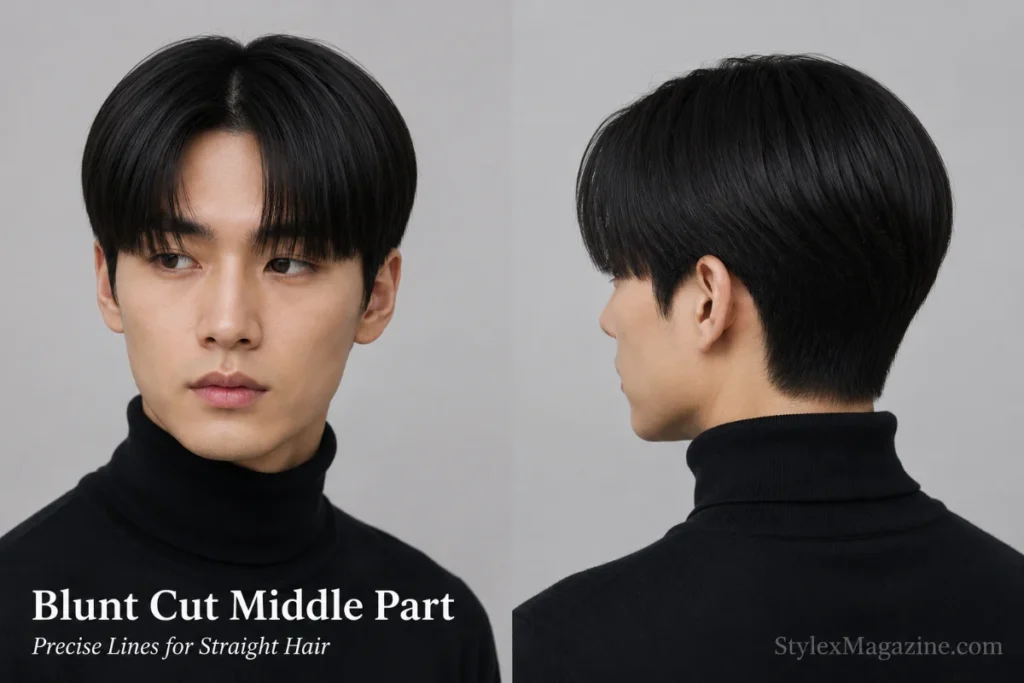
Hair type: Straight only | Styling tip: Matte paste for a sharp finish — avoid anything with shine
Precision defines this cut. The fringe sits at one uniform length with no layering, creating a sharp, intentional line when parted. A small amount of matte paste keeps the ends in place without adding weight.
Best face shapes: Oval, oblong
Best hair textures: Straight, thick straight
I’d recommend asking for a one-length fringe with clean, blunt ends and sides cut entirely with scissors. The barber should point-cut the very tips for slight softness without breaking the blunt line.
Skip this if you have wavy or curly hair. The blunt line won’t hold and the cut looks unfinished.
E-Boy Middle Part
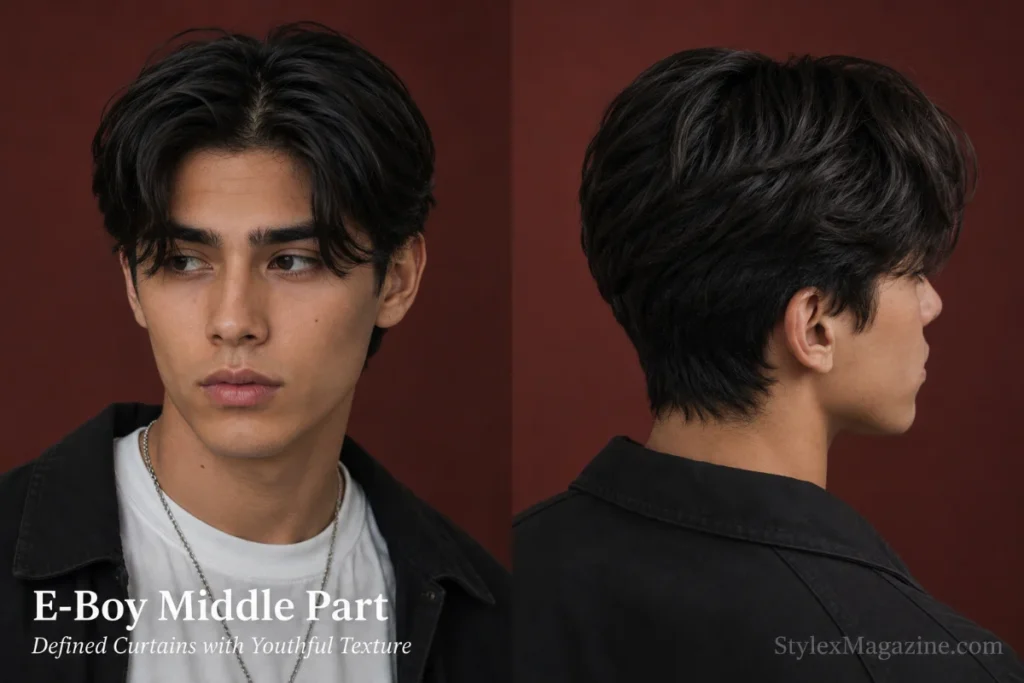
Celebrity: Chase Hudson | Styling tip: Light pomade or water — texture, not shine
The TikTok default. A defined centre part with curtain fringe sitting slightly slicked or textured. Light pomade or even just water gives hold without making it look wet.
Best face shapes: Oval, heart
Best hair textures: Straight, wavy
“Five inches on top, natural sides, clean curtain fringe” — that’s all your barber needs, and a clean curtain fringe. Keep the sides blended — no hard disconnect.
Skip this if you’re over 30 and in a corporate setting. It looks young by design.
MEDIUM STYLES (5–7 Inches on Top)
Classic Curtains
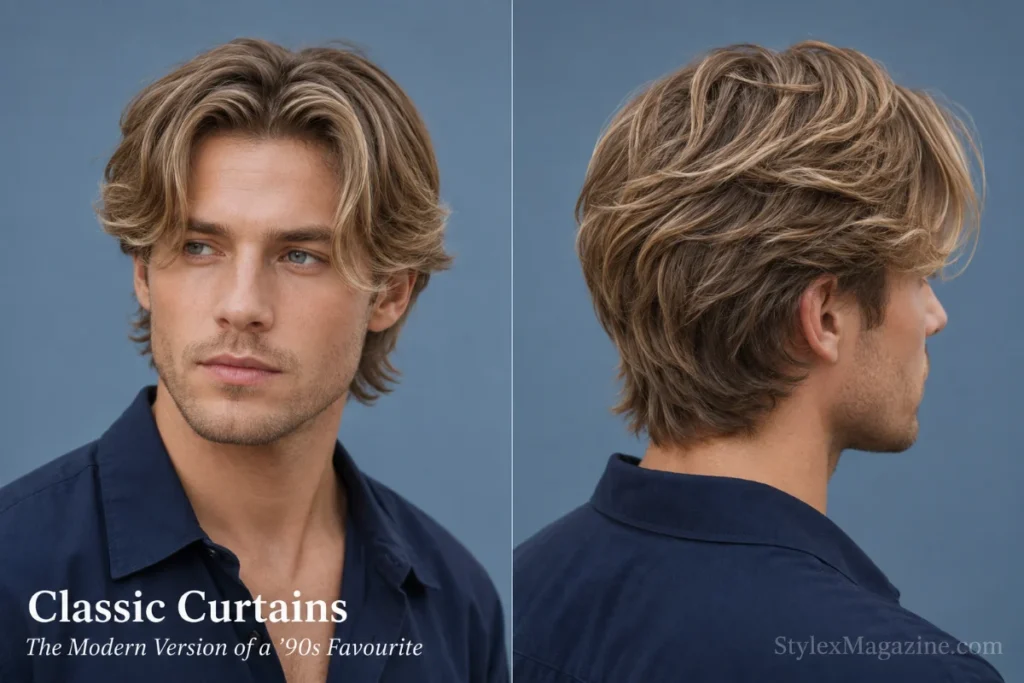
Celebrity: Leonardo DiCaprio (1990s) | Hair type: Straight, wavy, thick
The one most guys picture when they hear “middle part.” The fringe lands at the cheekbones with soft layers through the top. The modern version uses lighter product and more texture than the 90s slicked original.
Best face shapes: Oval, round, heart
Best hair textures: Straight, wavy, thick
Ask your barber for curtain bangs landing at the cheekbones, soft layers through the top, and sides blended with scissors. A sea salt spray adds enough texture without stiffness.
Textured Middle Part
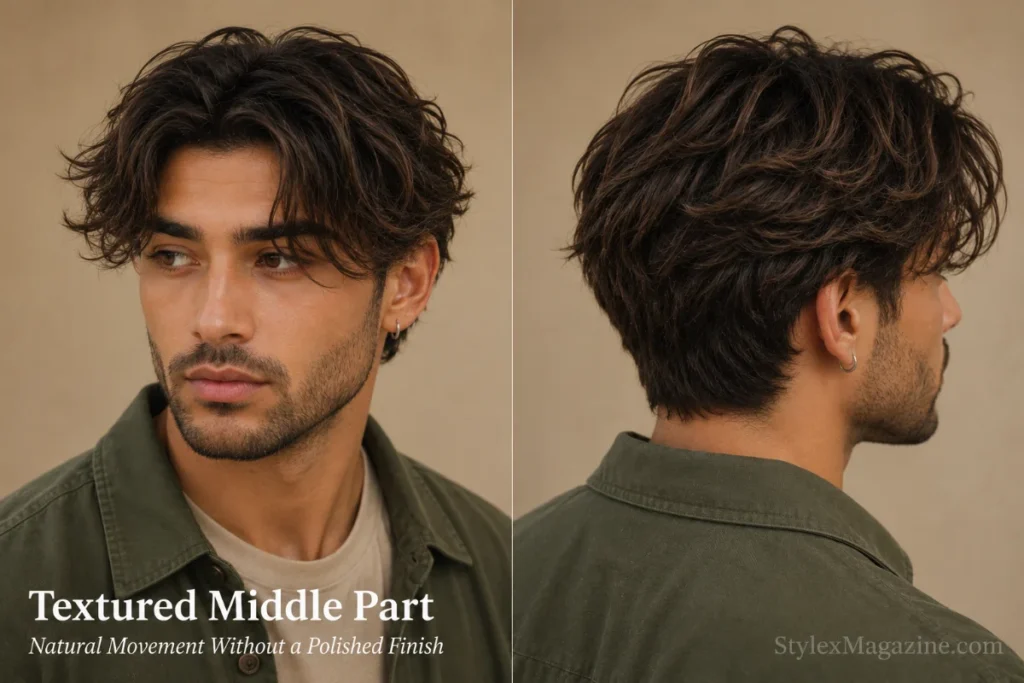
Hair type: Wavy (ideal), straight with product | Styling tip: Sea salt spray or texture clay — not both
Where the middle part stops looking “done” and starts looking natural. Choppy layers create piece-y separation with natural separation and depth. This is the best middle part for guys with naturally wavy hair because the texture does the styling work.
Best face shapes: All — layers adjust to any face shape
Best hair textures: Wavy, straight with product, thick
A centre part with choppy layers for separation and a lived-in finish is the brief. Avoid heavy product — sea salt spray or a small amount of texture clay is enough.
Skip this if you want a polished, formal look. This looks casual.
Korean Middle Part
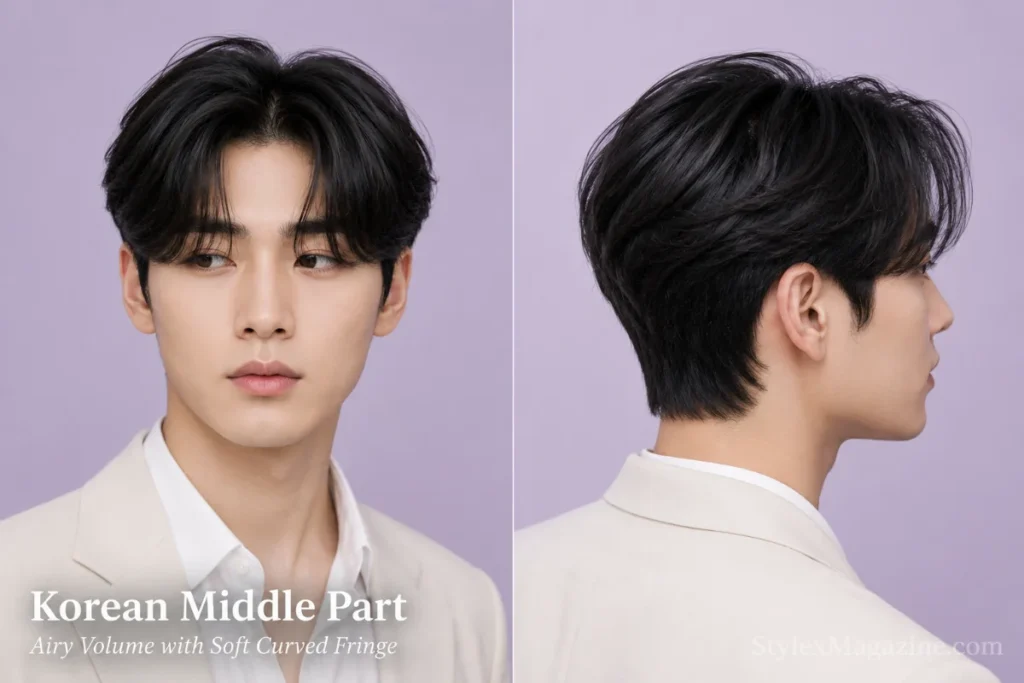
Celebrity: K-pop idols | Styling tip: Blow-dry with directional shaping — lightweight mousse, not clay
The most requested salon style among younger men right now. Softer and airier than Western curtains, with clean edges and a subtle curve at the fringe ends. Volume at the crown separates this from a standard middle part.
Best face shapes: Oval, round
Best hair textures: Straight, thick straight (especially Asian hair)
This cut needs blow-drying with a round brush to get the lift right. Lightweight mousse at the roots before drying gives volume. Heavy clays kill the airy silhouette.
Skip this if you have curly or very wavy hair. The soft, airy shape needs straight texture to hold.
Middle Part with Taper
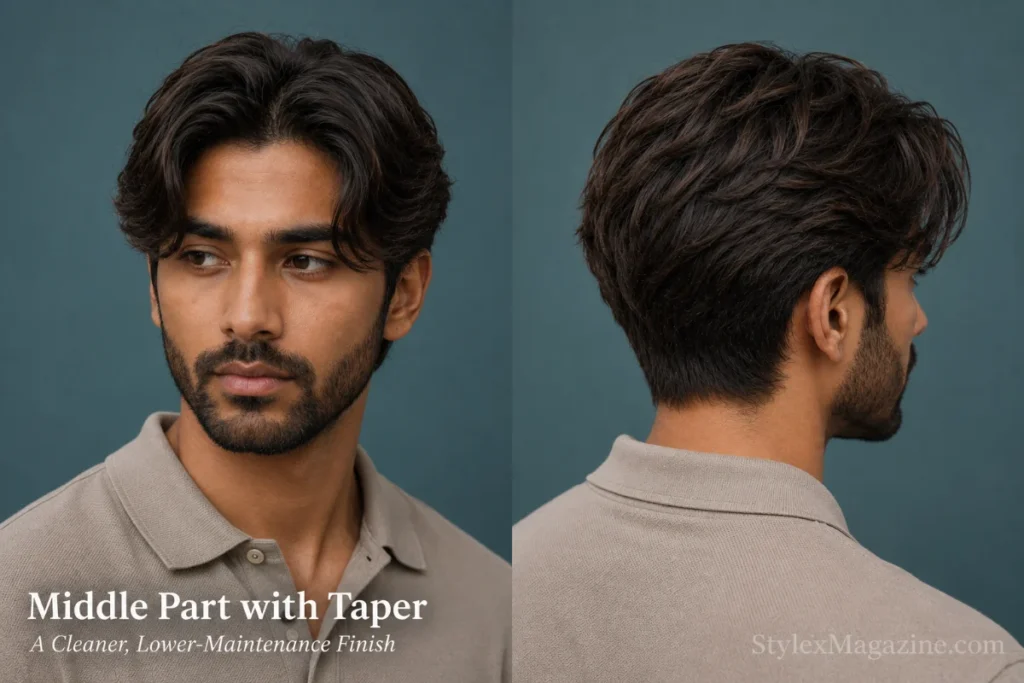
Hair type: All textures | Styling tip: Styling cream for a natural, flexible hold
The middle part taper is the grown-up version of the middle part fade. A gradual taper gives shape without sharp contrast and grows out cleaner four to five weeks between cuts instead of two to three.
Best face shapes: All
Best hair textures: All
For a low taper middle part, tell your barber: scissor blend on the sides into five to six inches on top. No clippers above a number three guard.
Messy Curtains
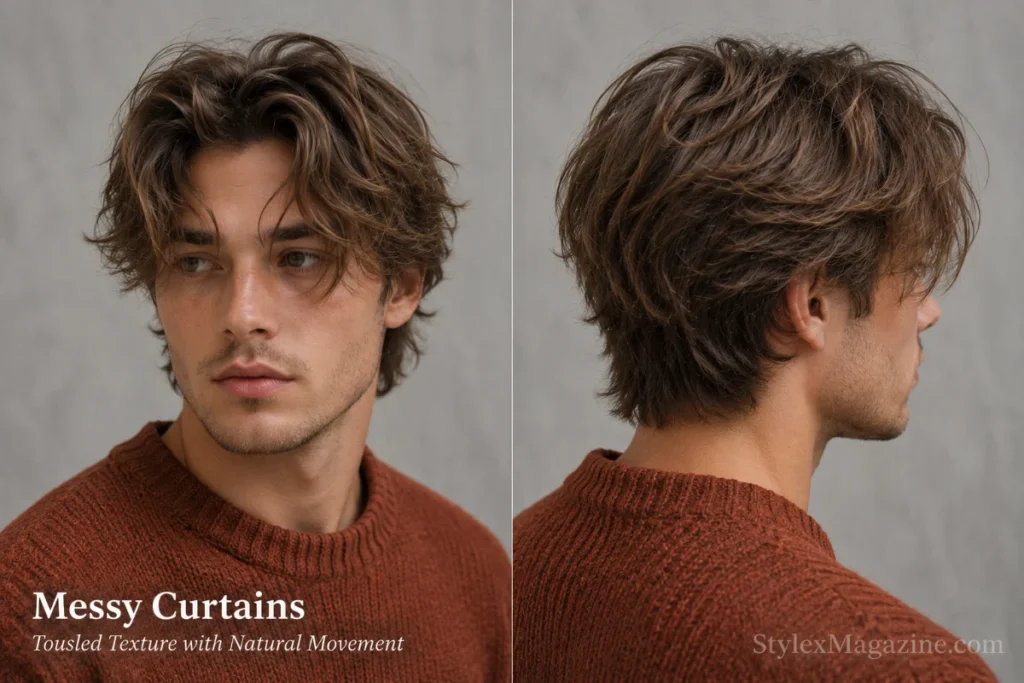
Hair type: Wavy (ideal), curly | Styling tip: Sea salt spray on damp hair, then scrunch and air-dry
Where the middle part meets the shag haircut influence. The fringe sits longer with tousled, intentional texture. This works best when hair has natural movement forcing messy texture on straight hair with product looks artificial.
Best face shapes: Oval, round, heart
Best hair textures: Wavy, curly
Go longer on the curtain fringe with textured layers. The barber should point-cut the ends for a rougher edge, not a clean blunt line.
Skip this if you have straight, fine hair. It’ll look limp, not messy.
Middle Part Undercut
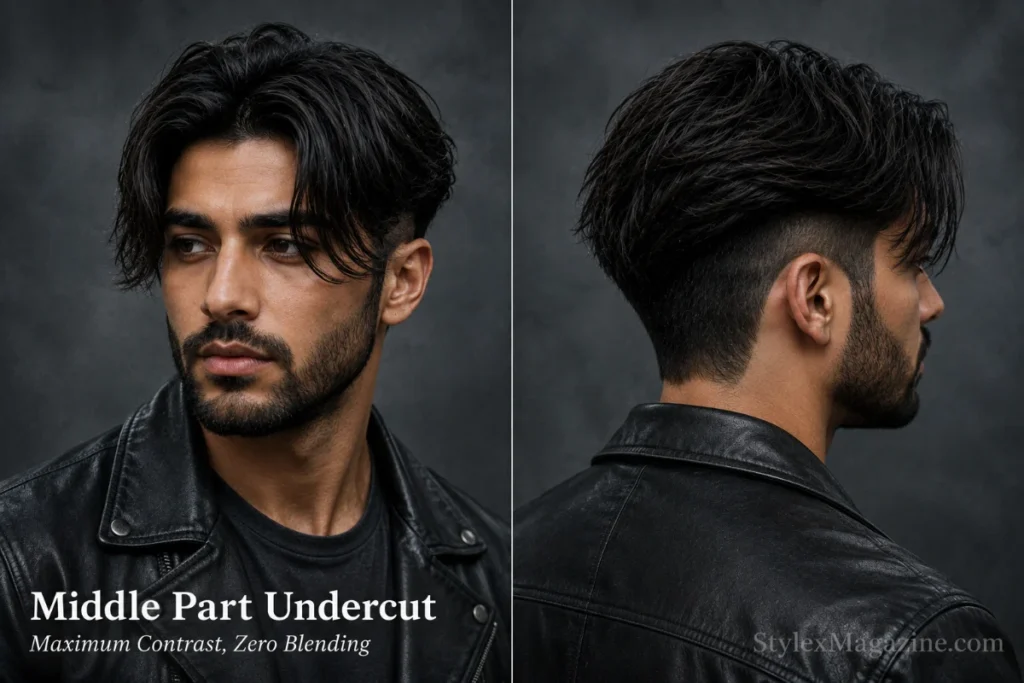
Styling tip: Sea salt spray plus matte clay on top | Hair type: Straight, wavy, thick
Maximum contrast. Sides disconnected at a number one or number two guard with a long fringe on top. No blending the fringe IS the hairstyle. When it works, it’s sharp. When it doesn’t, it’s awkward.
Best face shapes: Round (elongates), oval
Best hair textures: Straight, wavy, thick
Five to six inches on top with a curtain fringe and a disconnected undercut at a number one to number two guard on the sides.
Skip this if you want something subtle. This is a statement cut.
Two Block Middle Part
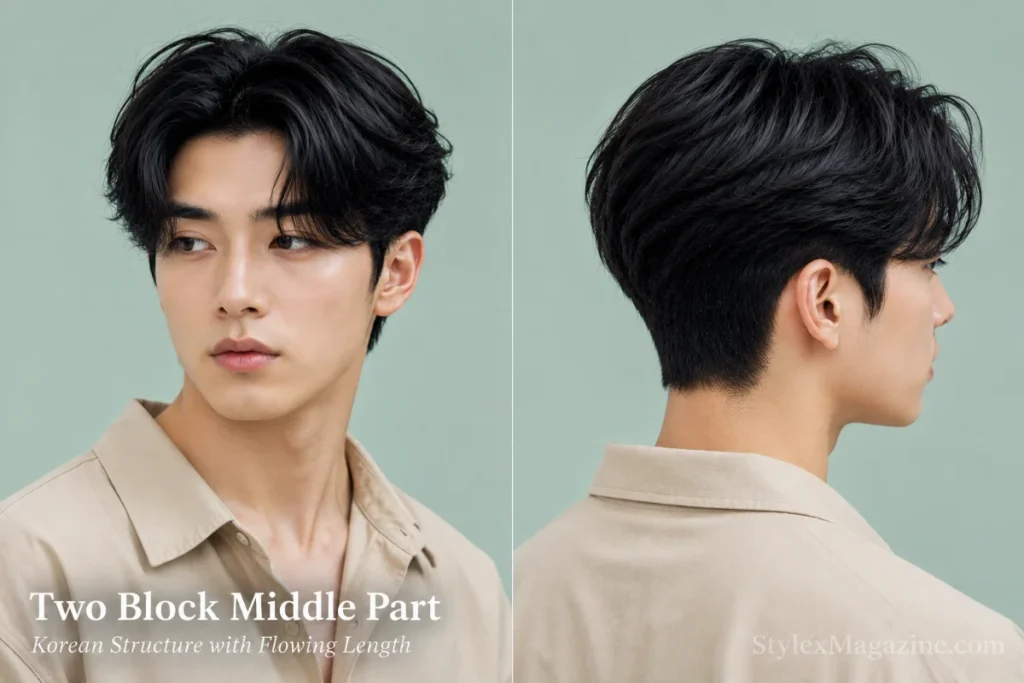
Celebrity: K-pop inspired | Hair type: Straight, thick (especially Asian hair)
The Korean undercut cleaner and more refined than a Western disconnected cut. Sharp contrast between short sides and a flowing top. Growing in salon demand alongside K-pop influence.
Best face shapes: Oval, round
Best hair textures: Straight, thick
Ask for a two block haircut with a middle part, disconnected short sides, and six or more inches on top flowing naturally. Blow-dry upward at the roots for lift.
Skip this if you have very thin hair. This cut needs density on top for the contrast to work.
LONG STYLES (7+ Inches on Top)
Middle Part Flow Curtains
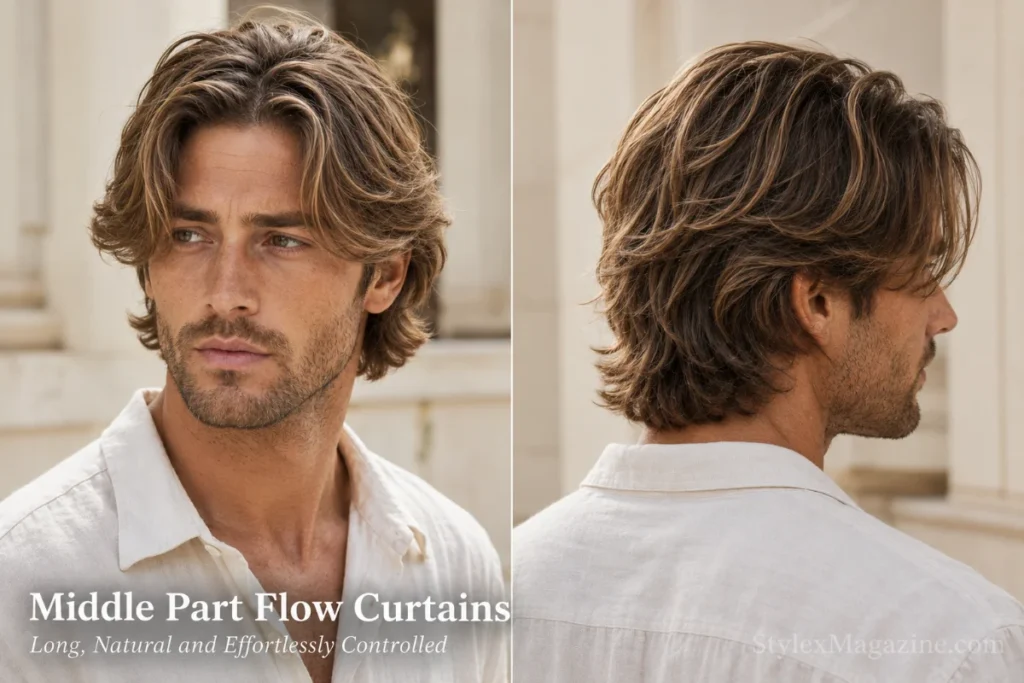
Celebrity: David Beckham (long hair era), Chris Hemsworth | Hair type: Straight, wavy, curly
Hair past the ears that naturally falls into a centre part. Low daily maintenance — the length does the work. But high maintenance for hair health. Trims every six to eight weeks and monthly conditioning keep ends from splitting.
Best face shapes: Oval, oblong
Best hair textures: Straight, wavy, curly — all work at this length
Keep the layering minimal to preserve weight — ends only. Styling cream keeps length soft.
Skip this if your workplace leans conservative. Long flow doesn’t suit every professional environment.
Curly Middle Part
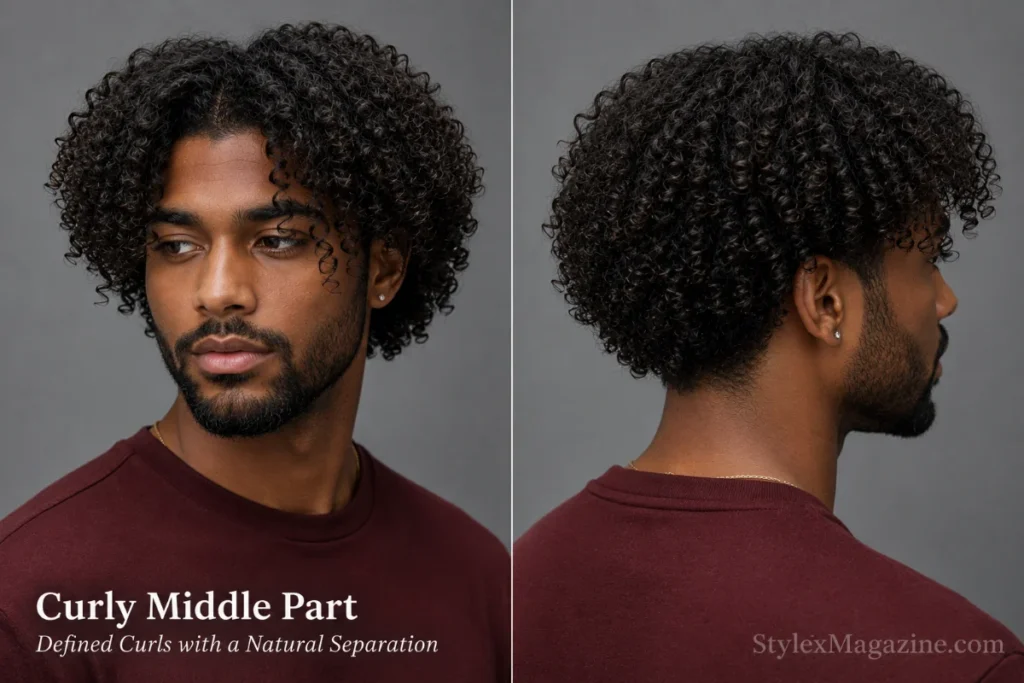
Hair type: Curly, coiled | Styling tip: Curl cream on wet hair, diffuser on low heat — never brush dry
The part line sits softer on curly hair — more of a natural separation than a sharp line. Without curl cream and a diffuser, the style falls apart. Brushing dry curls destroys the pattern.
Best face shapes: Round, oval
Best hair textures: Curly, coiled
Ask your barber to shape curls to fall evenly from a centre part with layers for definition. Tell them not to remove too much bulk — curly middle parts need volume to frame the face properly.
Skip this if you want a defined, sharp part line. Curls blur the line naturally, and that’s the point.
Middle Part Perm
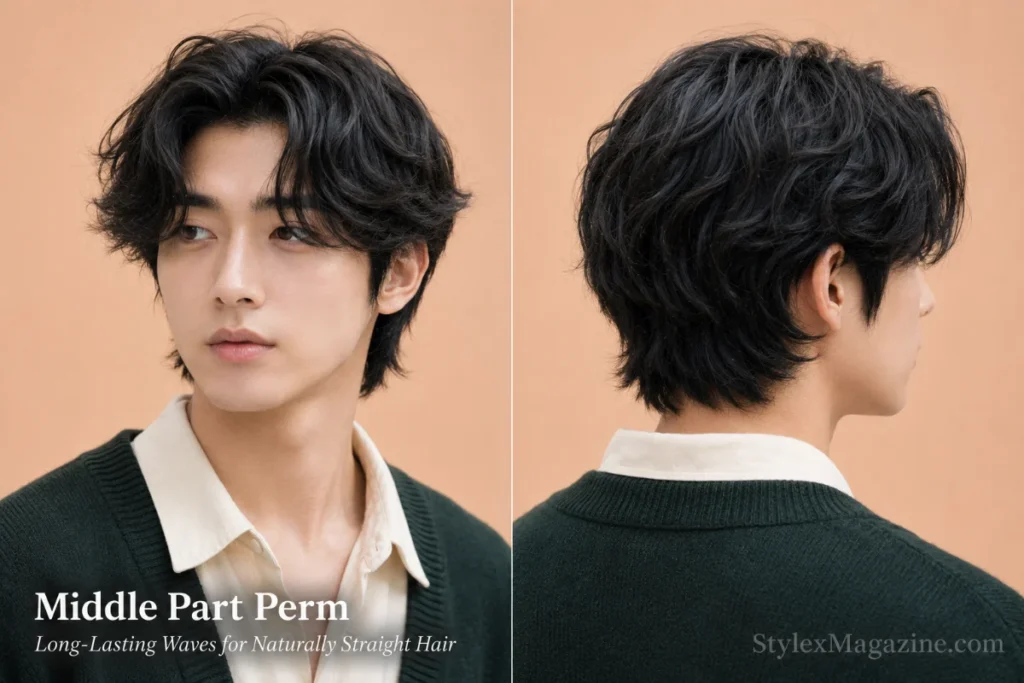
Styling tip: Curl cream, no brushing once dry | Hair type: Permed (originally straight)
How straight-haired guys get the textured curtain look without daily effort. Korean-style perms create loose waves or soft curls that hold a middle part naturally. The perm does the structural work.
Best face shapes: Oval, round
Best hair textures: Chemically permed (originally straight)
Ask your stylist for a Korean-style perm with a middle part, loose waves or soft curls, and the longer top with a natural centre part. Expect touch-ups every four to six months as the perm grows out.
Skip this if you already have natural wave or curl. You don’t need chemical processing.
SPECIALTY STYLES
Wolf Cut Middle Part
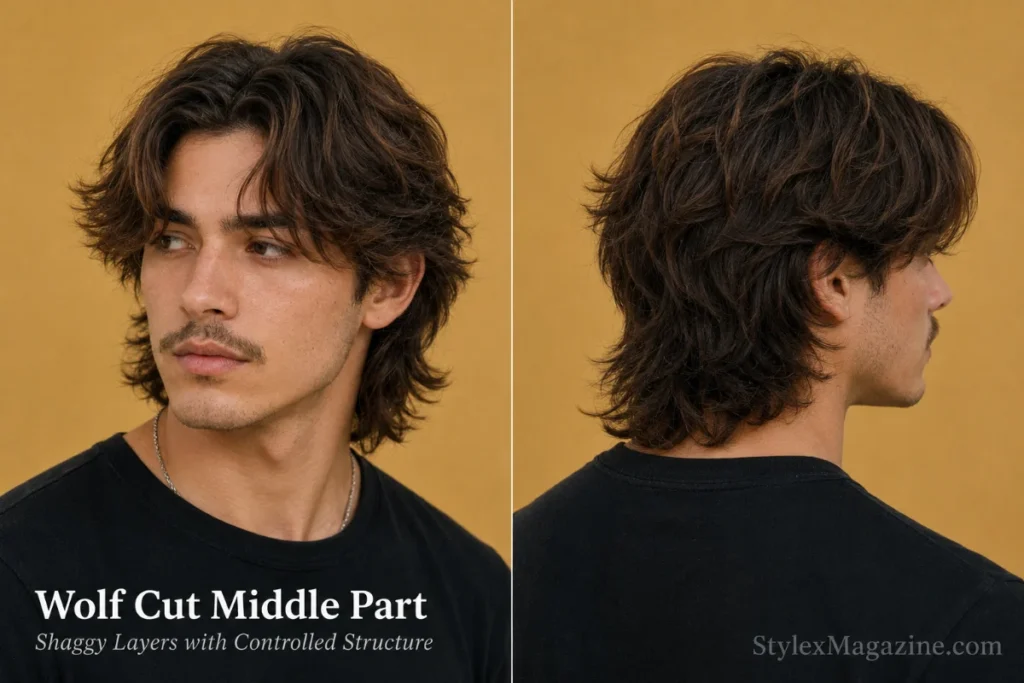
Styling tip: Texture powder at the roots — not heavy product | Hair type: Wavy (ideal), straight with product
The wolf cut version of the middle part. More structured than a full wolf cut, more textured than standard curtains. Texture powder at the roots gives lift without weight.
Best face shapes: Oval, round
Best hair textures: Wavy, straight with texture product
The request is simple: wolf cut with a middle part, shaggy layers throughout, and six to seven inches on top. The barber should keep the ends tapered, not blunt.
Slick Back Middle Part
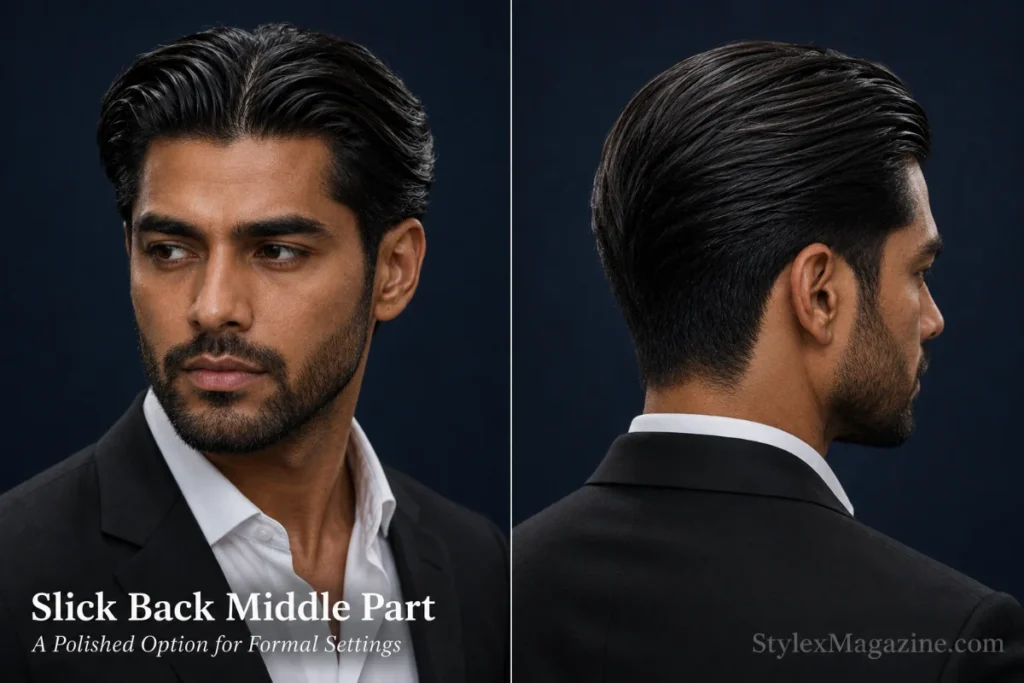
Celebrity: Brad Pitt | Styling tip: Pomade for hold and shine — apply on damp hair, comb backward
The formal option. A centre part with hair swept backward into a polished finish. Pomade gives the hold and shine this style needs. This is the middle part you wear to events — structured enough to look intentional, distinct enough from a standard slick back to stand out.
Best face shapes: Square, oval
Best hair textures: Straight, wavy
A low fade or clean taper on the sides paired with enough length on top gives the right foundation. Ask the barber to leave enough length to slick back from a centre part.
Middle Part Braids
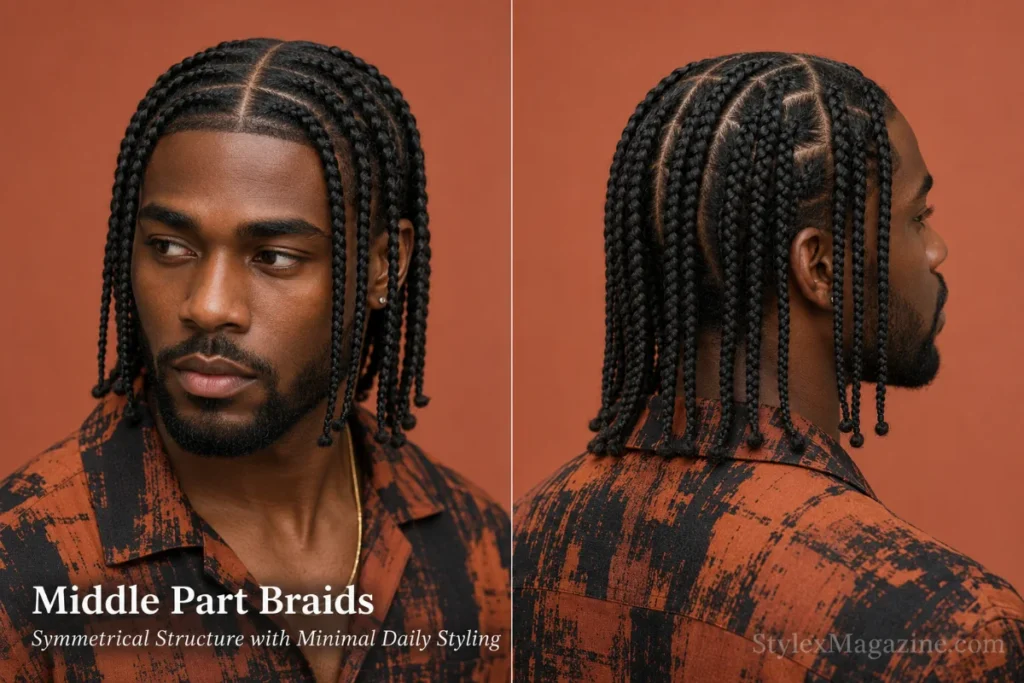
Hair type: Coiled, textured, thick | Styling tip: Argan oil for smooth, nourished braids
The most structured middle part. A clean centre part with symmetrical cornrows or box braids requires braiding skill or a professional braider. Once braided, daily maintenance drops to near zero — touch up every four to six weeks.
Best face shapes: All
Best hair textures: Coiled, textured, thick
Celebrity: A$AP Rocky wears this with mid-length braids hanging from a sharp centre part. Hydrating argan oil keeps the braids smooth between sessions.
Middle Part Mullet
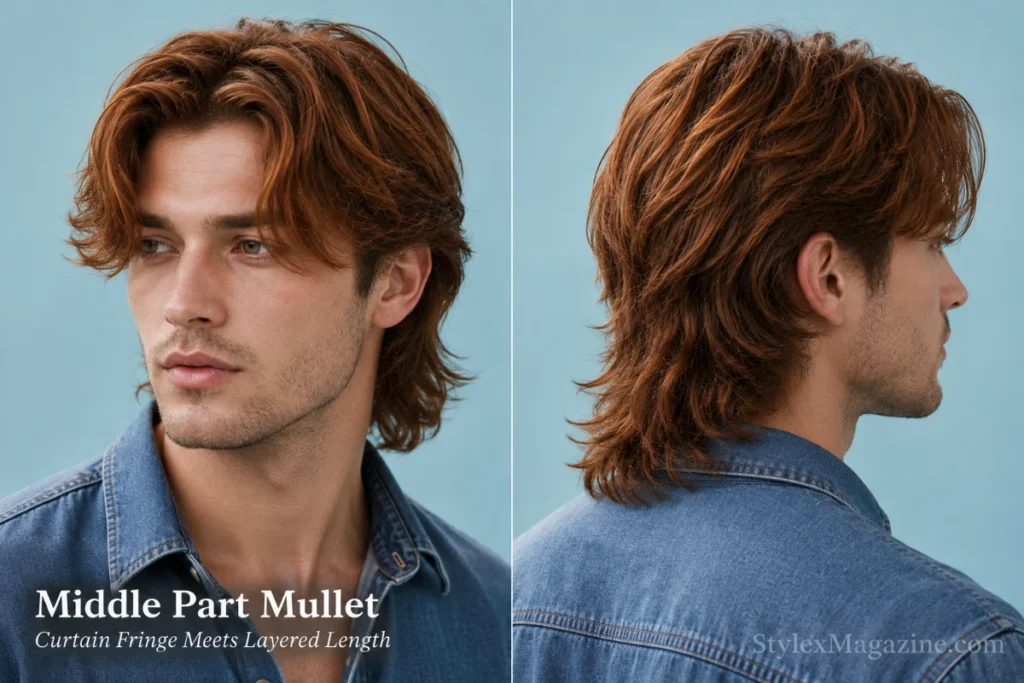
Styling tip: Texture clay for separation in the back | Hair type: Straight, wavy
Polarizing but trending. The curtain fringe makes the mullet more wearable than the traditional version. Tapered sides bridge front and back.
Best face shapes: Oval, oblong
Best hair textures: Straight, wavy
“Curtain fringe in front, layered length in the back, tapered sides connecting the two.” The barber should keep the transition clean, not choppy.
Skip this if you’re not ready for a conversation-starter haircut.
Which Middle Part Suits Your Face Shape?
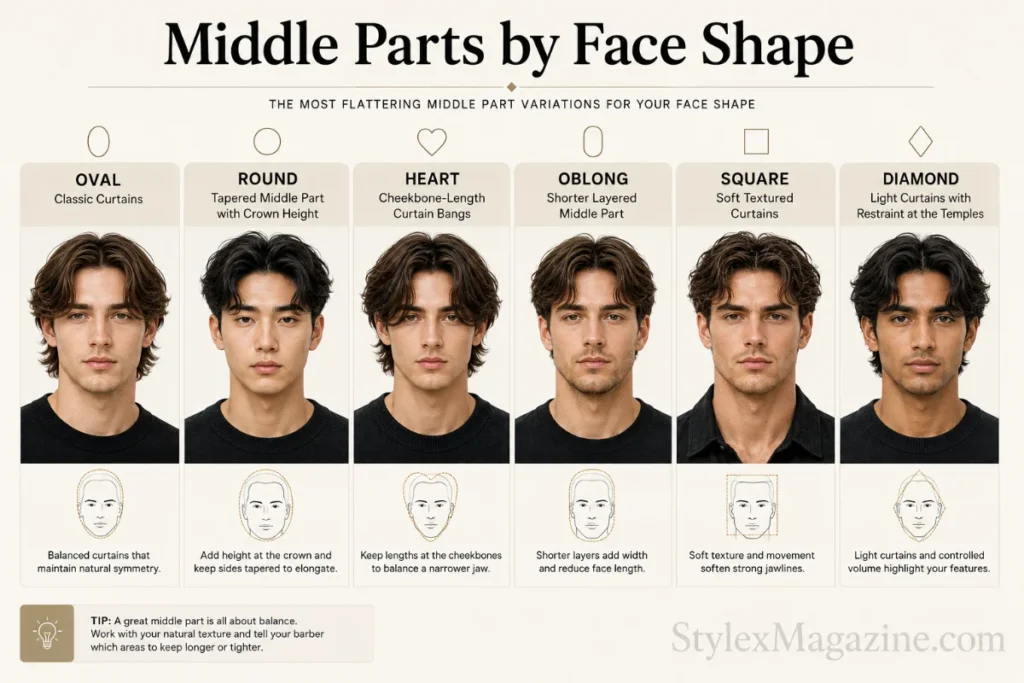
Oval and round faces suit middle parts best. Oval faces can wear any variation on this list. Round faces benefit from styles with volume on top — the height adds visual height.
Heart-shaped faces work with curtain bangs at cheekbone length. The fringe softens a wider forehead.
Oblong faces need shorter middle parts with layers. Long flow styles elongate the face further — the opposite of what you want. Keep the fringe at eyebrow to cheekbone length.
Square faces suit softer variations with layers. Avoid blunt cuts that mirror the jaw’s angular lines. If the middle part emphasizes your jawline too much, a side part may suit you better.
Diamond faces work with soft curtains. Avoid heavy volume at the temples — width already sits at the cheekbones. Keep sides tapered and fringe light.
According to Matrix’s professional face shape guide, symmetrical face shapes respond best to centre parts because the even division reinforces natural balance. For any middle part hair male look, face shape determines which variation lands and which falls flat.
Which Hair Type Works Best with a Middle Part?
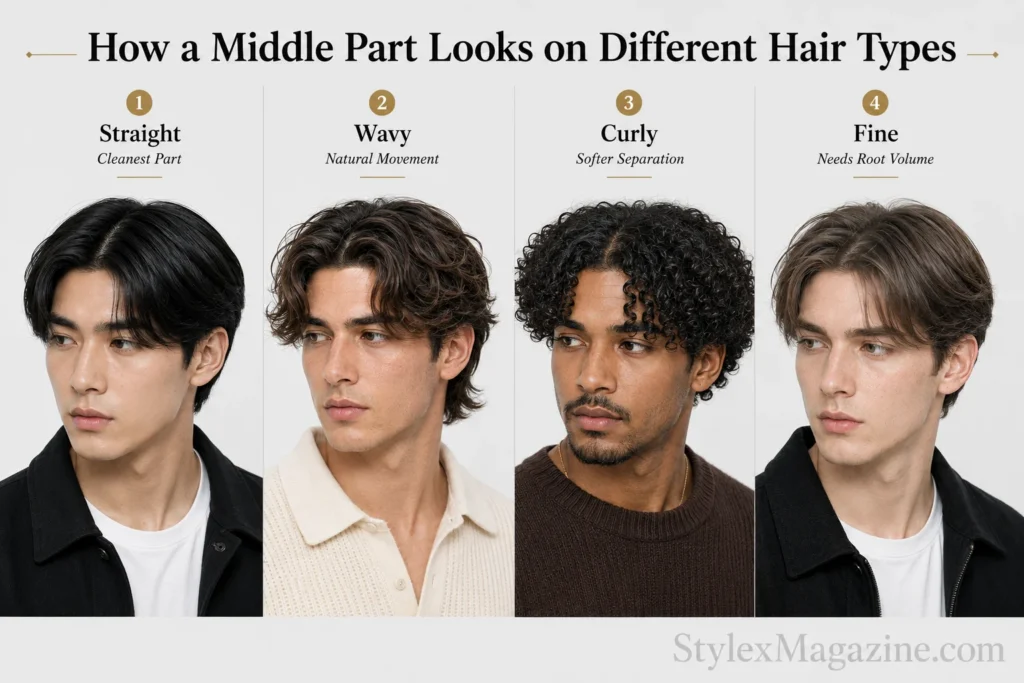
Straight hair creates the cleanest part line and needs the least styling effort. It falls into place and holds position all day.
Wavy hair adds natural movement that straight hair needs product to achieve. Sea salt spray enhances what’s already there.
Curly hair produces a softer, blurred part line — more of a natural separation. Curl cream and a diffuser on low heat maintain the pattern. Never brush dry.
Thick hair holds a middle part well but may need layers to remove bulk. Without layering, thick curtains sit heavy against the face.
Fine hair needs volume at the roots. Texture powder gives the illusion of thickness. Avoid heavy clays or pomades — they collapse fine hair within an hour.
How Do You Maintain a Middle Part?
Maintenance depends on the side treatment, not the middle part itself. Every middle part mens haircut needs upkeep on the sides — the parting on top takes care of itself.
Fade combinations need a touch-up every two to three weeks. By three weeks a fade loses definition.
Taper and scissor-cut styles last four to five weeks before needing a trim. The grow-out looks intentional longer than a fade.
Long flow styles need a trim every six to eight weeks — ends only. Skipping trims leads to split ends that make the curtains look rough rather than lived-in.
For daily product, use sea salt spray for texture, matte clay for hold, or styling cream for smoothness. The biggest mistake is using too much. If your fringe doesn’t swing when you turn your head, you’ve overdone it.
For a full step-by-step styling and training guide, see how to get a middle part haircut.
FAQ
Does a middle part work for receding hairlines?
A centre part draws attention to the middle of the forehead rather than the temples. But if recession is noticeable, a textured fringe or side part covers better.
How long does it take to train hair for a middle part?
Two to three weeks of consistent parting while damp. Blow-dry in the new direction daily. Clipping hair in place while it dries accelerates training. For the full process, see how to get a middle part haircut.
Can you get a middle part with a cowlick?
Yes, but only if the cowlick isn’t at the centre of your hairline. A cowlick off to one side actually helps because it pushes hair away from the part. A dead-centre cowlick fights the split — your barber may need to cut extra weight into that section to force it down.
Does a middle part make your face look wider?
It can. The horizontal split draws the eye outward. If you already have a wide face, adding volume at the sides makes it worse. Counter this with a taper or fade on the sides and more height on top.
What happens if you get a middle part with the wrong face shape?
The cut amplifies what your face shape already does. A long face looks longer. A wide forehead looks wider. A strong jawline looks blockier. None of these are dealbreakers — but choosing the right variation for your face shape prevents the cut from working against you.
Should you get a middle part if your hair parts naturally to one side?
You can, but expect a training period. Hair that’s been parting to one side for years resists a centre split for the first two to three weeks. Blow-drying in the new direction while damp is the fastest way to retrain it.

Other Articles
How to Get a Middle Part Haircut? Step-by-Step Guide
Curly Hairstyles for Men: Every Type & Style Explained
No Comment! Be the first one.