
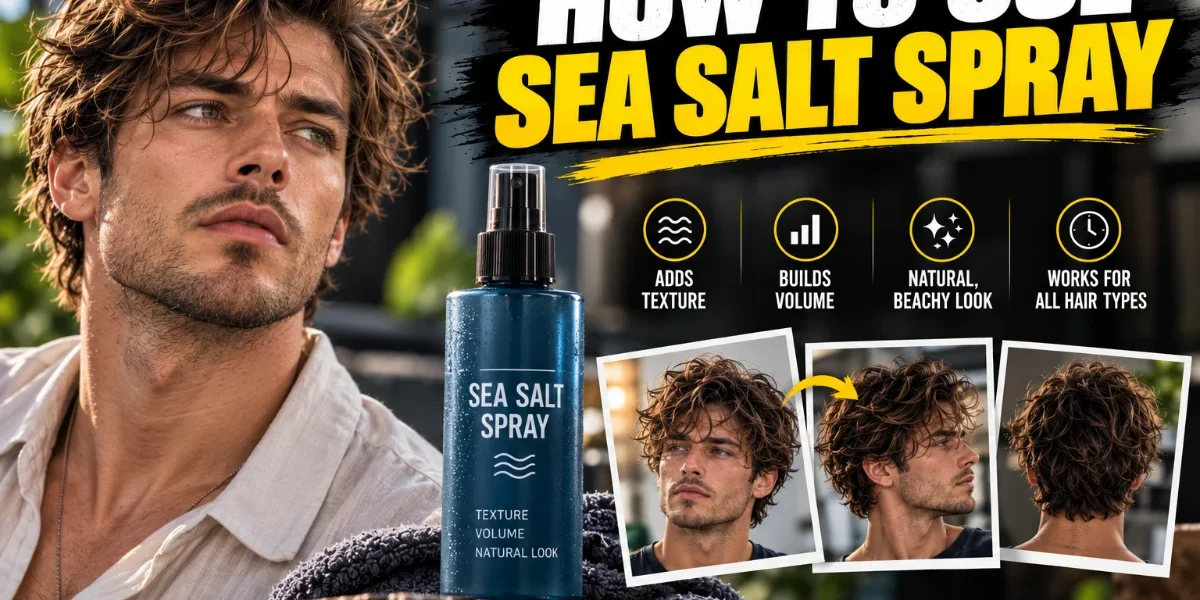

Quick Answer: Shake the bottle. Spray 3-5 spritzes onto towel-dried hair from 6-10 inches away, targeting roots and mid-lengths. Scrunch with your fingers. Air dry for a natural finish or blow dry with a diffuser for more volume. Do not spray on soaking wet hair, do not skip the scrunching step, and do not over-apply. Two spritzes too many turns texture into crunch.
Sea salt spray is the simplest product in a man’s kit and the easiest to use incorrectly. The margin between textured and crunchy is two spritzes. Most men I see in the shop either soak their hair with it or barely use enough to notice, and both groups walk out unsatisfied with the same product that works perfectly when applied correctly.
Sea salt spray works by roughening the hair cuticle and drawing moisture out of the shaft, which creates grip, texture, and separation. According to the Cleveland Clinic, salt water strips the hair’s natural moisture and oils, which is exactly what creates that textured, matte finish but also why overuse leads to dryness and breakage. Quality formulas offset this with hydrating ingredients like glycerin and aloe vera. The technique below gets you the texture without the damage.
How Do You Apply Sea Salt Spray Step by Step?
Step 1: Start with clean, towel-dried hair. Wash with shampoo (skip conditioner if you want maximum grip). Towel dry until about 70-80% dry. Damp but not dripping. Damp hair distributes the spray evenly and absorbs the salt for a stronger set.
Step 2: Shake the bottle. Every time. Sea salt and other ingredients separate between uses. An unshaken bottle sprays water first and dumps concentrated salt in the next few pumps.
Step 3: Hold 6-10 inches from your head and spray. Closer than 6 inches soaks one spot with too much product. Further than 10 inches disperses the spray into the air before it reaches your hair. Start with 3 spritzes for short hair, 4-5 for medium, and 5-6 for thick or long hair.
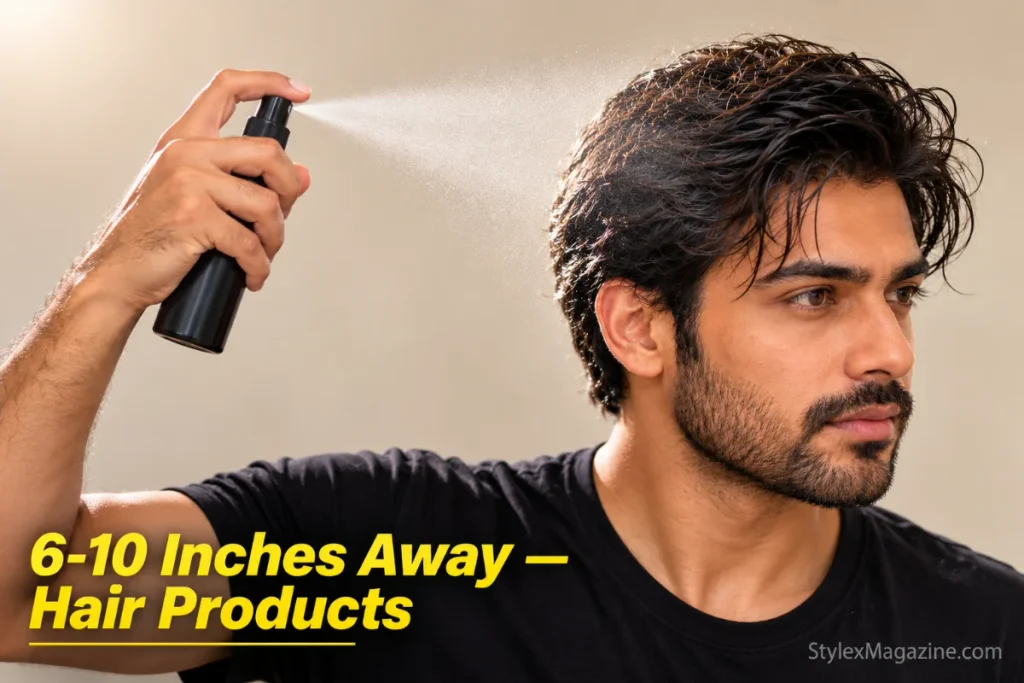
Step 4: Target roots and mid-lengths. Spray into the root area and the middle of your hair, not the ends. Your ends are already the oldest, driest part of the shaft. Let the product work from the middle down. For extra volume, lift sections and spray underneath.
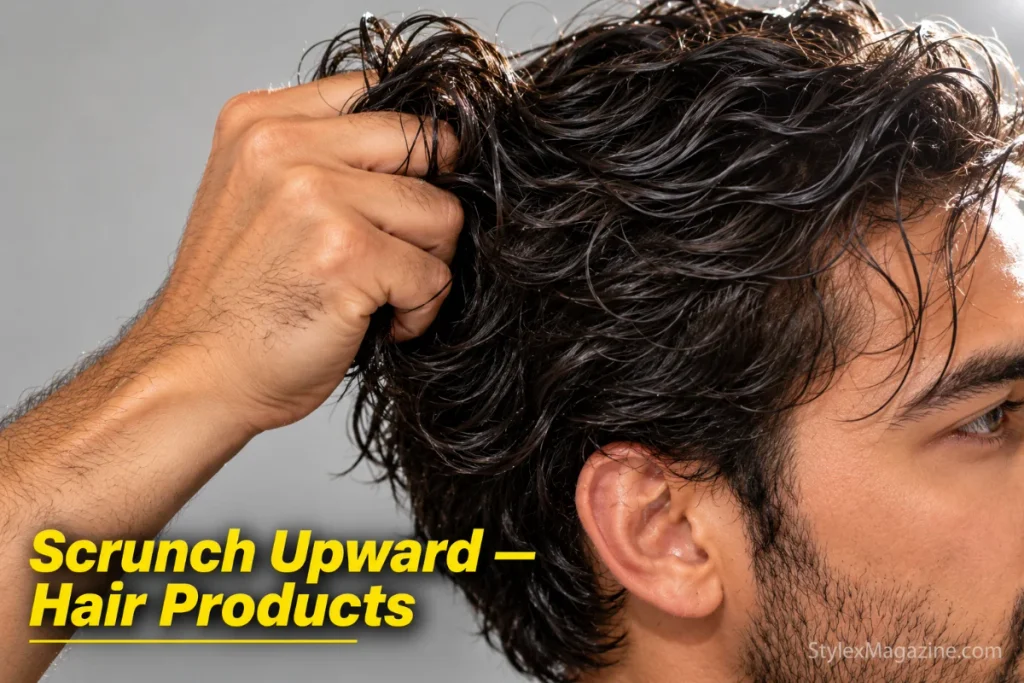
Step 5: Scrunch and work through with fingers. Close your fist around sections of hair and squeeze upward from the ends toward the roots. This crumpling motion creates waves and separation. Skip this step and the spray sits on the surface without activating the texture.
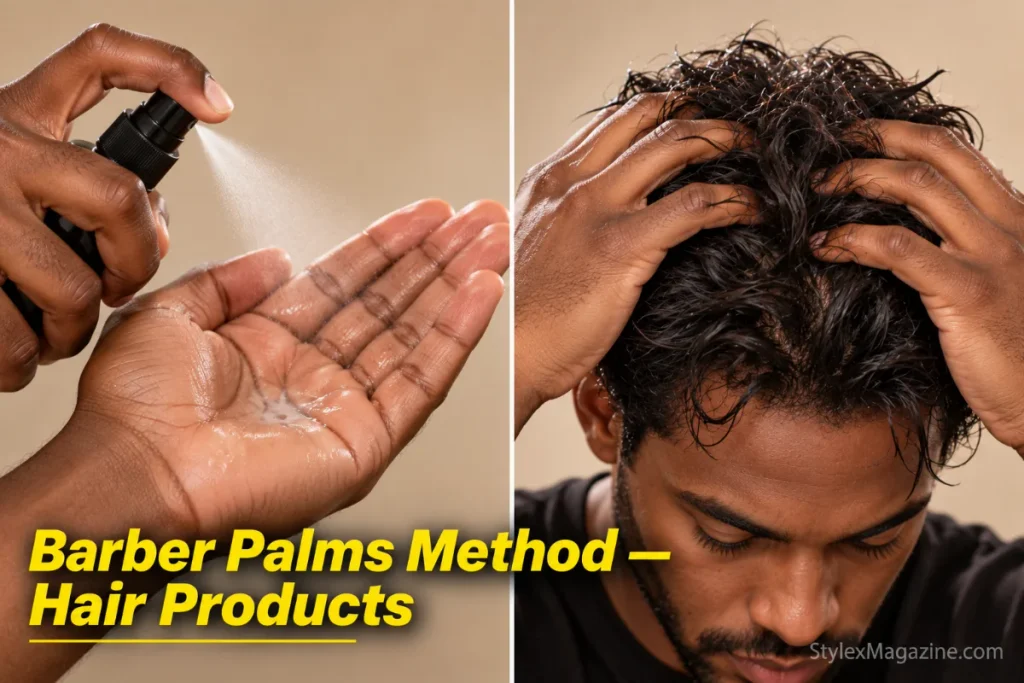
Barber alternative: spray into your palms first, rub your hands together, then rake through your hair by hand. This gives more controlled, even distribution than spraying directly onto the head and prevents over-saturating one area.
Step 6: Choose your drying method. Air drying gives a softer, looser, more natural finish. Blow drying with a diffuser on low heat gives more volume and faster results. If you use a regular blow dryer nozzle, point it upward at the roots while scrunching to lock lift into place.
Step 7: Break apart with fingers once dry. After drying, run your spread fingers through the hair to separate any sections that clumped together during the drying process. Do not comb. A comb smooths out the texture you just built.
How Do You Use Sea Salt Spray on Different Hair Types?
Straight hair: 2-3 spritzes on damp hair. Scrunch lightly for piecey texture and slight bend. Sea salt spray will not create curls in straight hair, but it adds dimension and removes the flat, limp look. For the full range of straight hair styles, see thick straight hair haircuts.
Wavy hair: The natural match. Apply 4-6 spritzes on damp hair, scrunch upward from the ends. Diffuse on low heat for defined waves, or air dry for relaxed beachy texture. Wavy hair responds to salt spray better than any other type because it already has the raw material the spray needs to work with.
Curly hair: Apply to very wet hair (70% moisture or higher) to prevent dryness. Use more product than on straight or wavy hair. Scrunch and twist sections to enhance the curl pattern. Pair with a leave-in conditioner if your curls run dry, because salt is dehydrating and curly hair is already prone to dryness. Never comb or brush after applying. See curly hairstyles for men for styling ideas.
Fine or thin hair: Use as a pre-styler on damp hair before blow drying. The salt creates body, grit, and the illusion of thickness without weighing fine strands down the way pomade or clay does. Start with 2 spritzes. Fine hair responds to less product, and over-application makes thin strands look stringy rather than textured.
Thick hair: Apply liberally and work section by section. Thick hair absorbs more product without crunching. Concentrate spray on mid-lengths and use a comb for even distribution through dense hair. Follow with clay or pomade for added hold if needed.
What Styles Can You Create with Sea Salt Spray?

Beachy Waves: Apply 4-5 spritzes to damp medium-length hair. Scrunch upward, twist random sections for variation, and air dry. The classic sea salt spray use case.
Textured Crop: Spray on damp short-to-medium hair, work through with fingertips for a choppy finish, air dry. The salt creates the gritty separation that defines a crop. See messy hairstyles for men for crop variations.
Messy Quiff: Apply to damp hair, blow dry while pushing the front up and back, then break apart the shape with fingers for a tousled finish.
Surfer Tousle: Apply liberally to damp longer hair, twist small sections while wet, diffuse on low heat. Gritty, defined, with serious movement.
Middle Part Flow: Spray lightly on damp hair, part down the center, let each side fall naturally. The salt keeps curtains in place without weighing them down. See middle part hairstyles for variations.
How Do You Layer Sea Salt Spray with Other Products?
Sea salt spray works alone, but it pairs stronger with a finishing product on top.
Sea salt spray + hair clay: Spray on damp hair first for a textured base, air dry or blow dry, then apply clay for hold and definition. The salt creates a rough surface that gives clay more grip. Covered in detail in the how to use hair clay guide.
Sea salt spray + pomade: Spray first for texture, dry, then layer a light pomade for shine and control. The spray prevents the pomade from sitting flat. Best for slick backs and side parts that need body underneath the polish. See the how to use pomade guide.
Sea salt spray + texture powder: Apply spray first, dry completely, then dust texture powder at the roots for extreme lift and grit. The strongest volume combination in this cluster.
Sea salt spray + hair wax: Spray first for a rough, gritty base, dry fully, then apply a pea-sized amount of matte wax for locked piece separation. The spray gives the wax more surface grip than clean hair alone. See the how to use hair wax guide.
As a second-day refresher: Mist 1-2 spritzes on dry, day-old hair and scrunch to reactivate texture and movement without a full wash.
How Often Should You Use Sea Salt Spray?
Salt is naturally dehydrating. It works by pulling moisture from the hair shaft, and repeated daily use without conditioning can leave hair brittle and straw-like over time.
| Hair Type | Recommended Frequency | Notes |
|---|---|---|
| Oily or fine | Daily is fine | Salt absorbs excess oil, actually benefits oily scalps |
| Normal | 3-4 times per week | Alternate with non-salt styling days |
| Dry or damaged | 1-2 times per week | Always pair with a moisturizing conditioner or leave-in |
| Color-treated | 1-2 times per week | Use sulfate-free, alcohol-free formulas to protect color |
If your hair starts to feel brittle or straw-like, scale back frequency and add a weekly deep conditioning treatment. On heavy-use days, rinse your hair with plain water before bed to clear residual salt from the shaft and scalp.
What Are the Most Common Sea Salt Spray Mistakes?
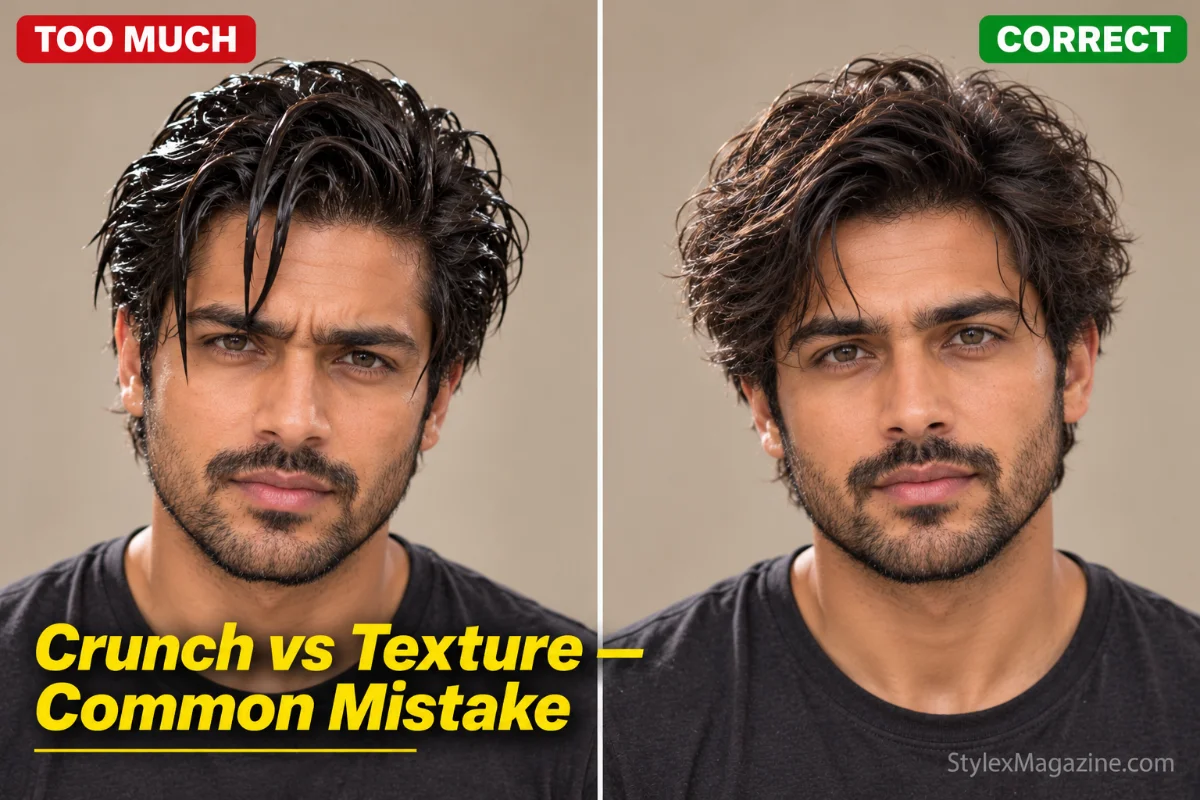
1. Over-applying and creating crunch. The spray dried stiff and your hair feels like a helmet. The fix: mist your hair with plain water and work through with your fingers to soften the salt coating. Stylists recommend reactivating with water rather than adding more product on top. Prevent it by starting with fewer spritzes and building up.
2. Spraying soaking wet hair. Excess water dilutes the salt and weakens the product. Towel dry to 70-80% damp first. The spray needs a semi-dry surface to grip and concentrate.
3. Spraying too close to the scalp. Holding the bottle closer than 6 inches dumps product in one concentrated patch. You get uneven texture: stiff in one spot, unstyled everywhere else. Hold at arm’s length and sweep across.
4. Skipping the scrunch. Spraying and walking away does nothing. The scrunching motion is what creates the waves and separation. Without it, the spray just dries flat on the hair surface.
5. Spraying only the top. If you spray only the visible top layer, the hair underneath has no texture or grip to hold the shape. Lift sections and spray underneath, especially on thick or long hair.
FAQs
Can you use sea salt spray on dry hair?
The effect is more subtle than on damp hair, but it works for two situations: refreshing second-day hair with a light mist and scrunch, and adding a touch of grit to an already-styled look that needs more separation. Start with fewer spritzes on dry hair because the product sits on the surface rather than absorbing into the strand.
Does sea salt spray cause hair loss?
No. Salt spray does not damage follicles or affect hair growth. The Cleveland Clinic notes that salt water dries the hair shaft but does not impact the follicle itself. Sustained overuse without conditioning can cause breakage from dryness, but breakage is not the same as follicle-driven hair loss. Wash it out and condition regularly to prevent cumulative dryness.
Is sea salt spray bad for colored hair?
The salt itself does not strip color. Harsh additives (sulfates, high alcohol content) in cheap formulas can fade dye over time. Use a sulfate-free, alcohol-free sea salt spray on color-treated hair, and limit frequency to 1-2 times per week.
What is the difference between sea salt spray and texturizing spray?
Sea salt spray uses actual salt minerals to create gritty, natural texture with a matte finish. Texturizing spray is a broader category that includes salt-free formulas using polymers or resins for a softer, less drying hold. Salt spray gives grittier, rougher texture. Non-salt texturizing sprays give softer, smoother texture without the dehydrating effect.
Can sea salt spray replace gel or pomade?
For casual, textured, natural-looking styles, yes. Salt spray provides light-to-medium hold with matte texture. For high-hold, polished, or structured styles (slick backs, pompadours, sharp side parts), salt spray alone is not strong enough. Layer it under pomade or clay for those looks.
How long does a sea salt spray style last?
All day in most conditions if applied correctly. The texture holds through normal activity but softens with sweat, rain, or high humidity. Oil-heavy hair types lose hold faster because the natural oils break down the salt’s grip. If the style drops by mid-afternoon, a quick 1-2 spritz refresh on dry hair and a re-scrunch brings the texture back without a full wash.

Other Articles

How to Use Hair Wax? The 30-Second Styling Window Most Men Miss
How to Use Hair Clay? Step-by-Step Guide for Every Hair Type


[…] Sea salt spray is a pre-styler, not a hold product. Salt swells the hair shaft and roughens the surface so pieces grip each other. Details in how to use sea salt spray. […]
[…] a root product to the top only. Mousse for fine hair, sea salt spray for wavy, a leave-in for curly. Nothing on the […]