
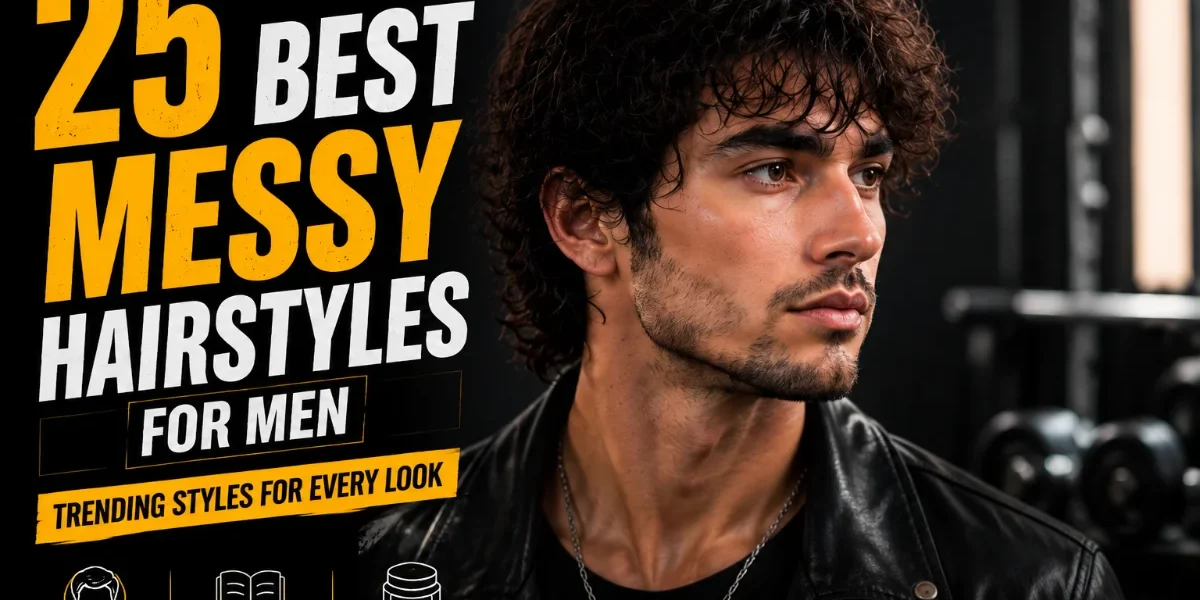

Quick Answer: A messy hairstyle for men is a textured, tousled cut where the disorder is shaped by the barber, not by skipping appointments. Clean sides, a textured top, matte finish, and natural fall define the look. Messy hairstyles work across all hair types and lengths, making them a top barbershop request in 2026.
Messy hair and sloppy hair are not the same thing. A good messy cut has shape underneath the disorder: the barber places layers, removes weight, and builds separation into the cut so it looks undone on purpose. That foundation is what lets you towel dry, scrunch once, and walk out the door looking put together.
The approach is less structured than a shaggy haircuts for men, where the layers follow a tighter plan, but it still requires a barber who knows where to cut and where to leave length. Below are 25 variations, plus barber tips, the five rules that separate messy from sloppy, common mistakes, and maintenance by length.
Best Messy Hairstyles for Men
Twenty-five messy styles covering every length, hair type, and setting.
1. Messy Fringe
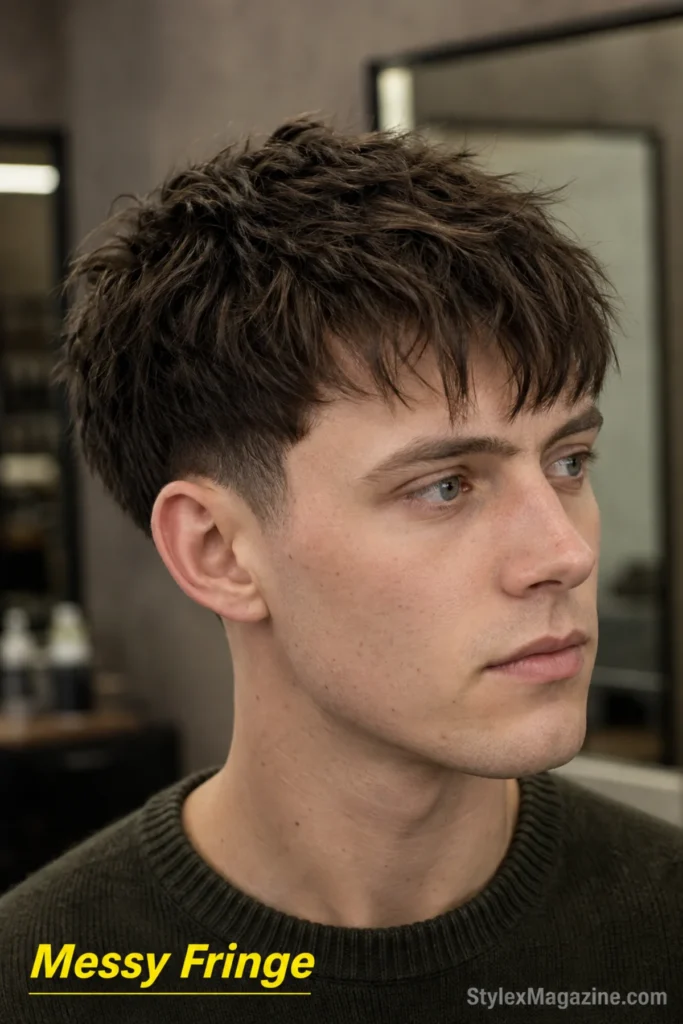
Short textured layers falling naturally across the forehead. The safest entry point into messy hair. Straight and wavy hair hold this shape best. Oval and round faces benefit from the way the fringe breaks up the forehead. Matte clay worked through with fingers, fringe pushed slightly off-center for a natural landing.
2. Messy Quiff
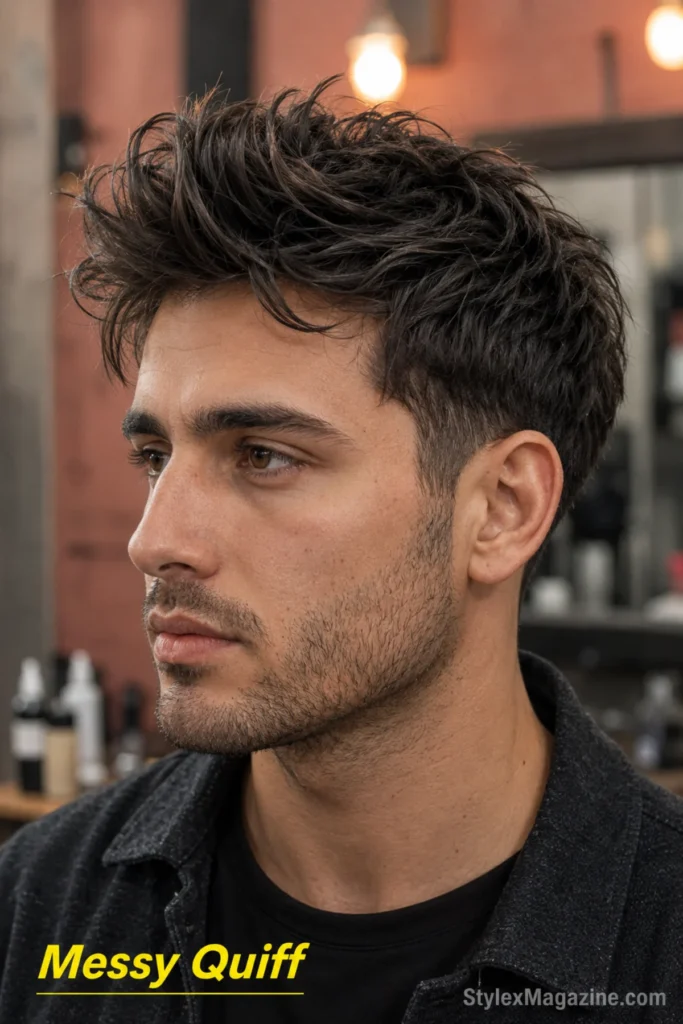
Lifted top with undone, relaxed height instead of a polished quiff shape. The mess softens the formality. Thick and wavy hair hold the lift without collapsing. Round faces gain structure from the added height. Blow-dry upward with fingers, finish with a light-hold paste to keep the shape soft.
3. Messy French Crop
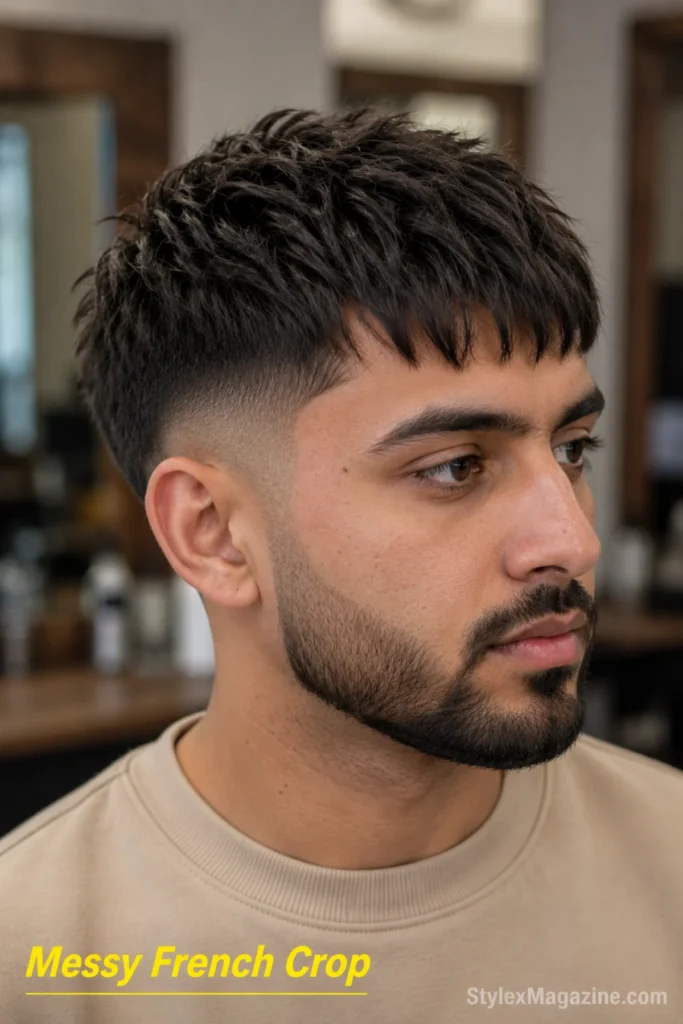
Short choppy top styled forward with a broken, textured fringe instead of a blunt line. Suits large foreheads and thinning hair because the fringe covers without looking forced. Oval and square faces. Texture powder tapped into the roots for grip, styling clay pinched through the fringe ends.
4. Messy Taper Fade
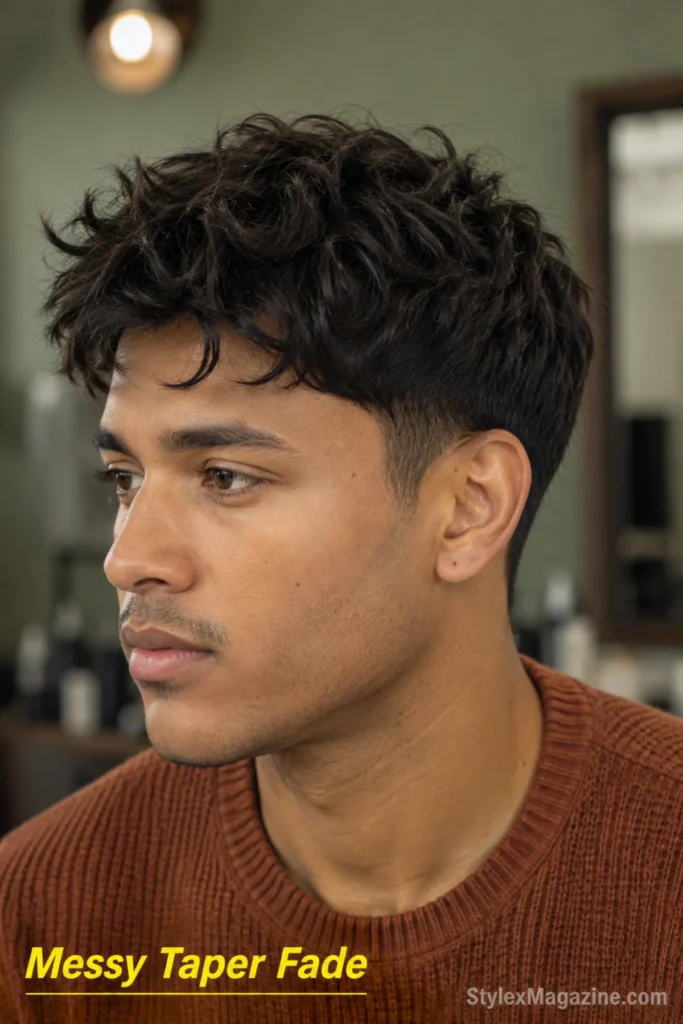
Clean tapered sides with a textured, loosely styled top. The taper civilizes the mess enough for work settings while keeping personality up top. The most requested messy hairstyles for men who split time between the office and the weekend. Most face shapes handle it. Styling clay on the layers, faded edges provide the structure.
5. Messy Flow
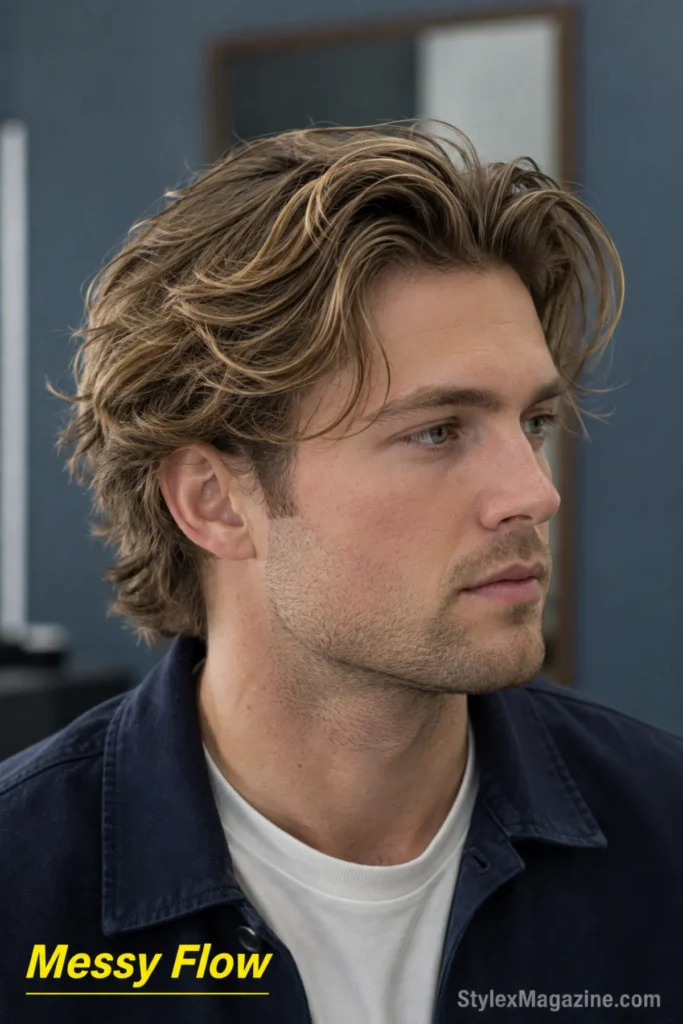
Medium-length hair falling naturally with loose tousles and soft layering. The “bro flow” with deliberate disorder. Thick and wavy hair suit this best because the natural body fills the shape without product. Oval and heart faces. Finger-scrunch with a light cream on damp hair, let it air dry completely.
6. Messy Curtains
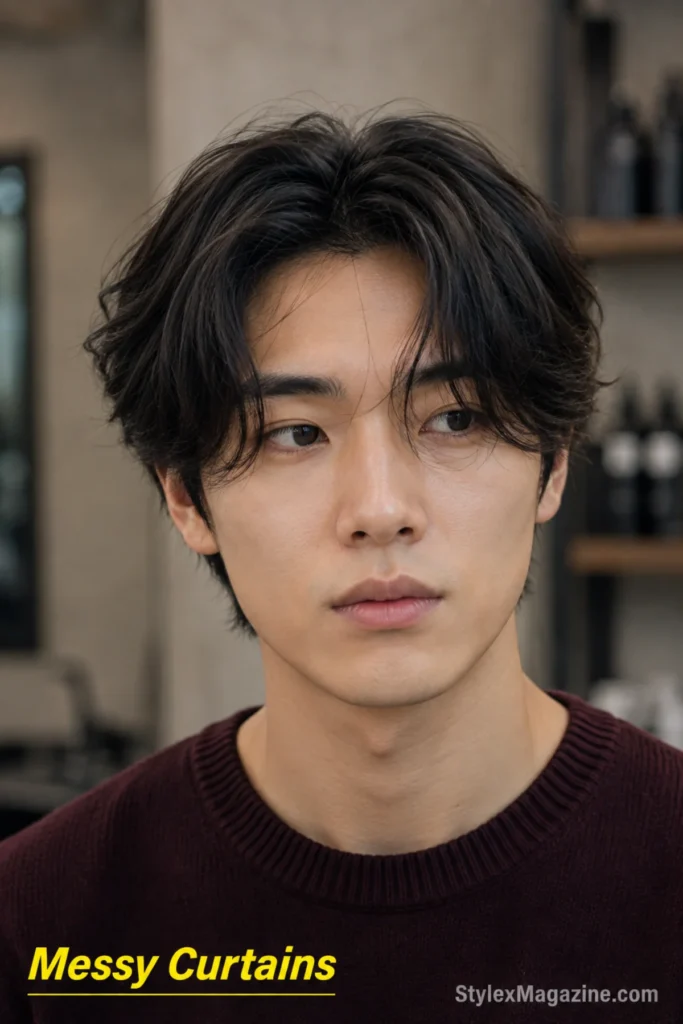
Center-parted medium layers falling to each side of the face with relaxed, undone movement. Less structured than a standard curtain cut. The center split softens the forehead and lengthens round faces. Popular with boys and teens for its easy, face-framing shape. Dry with a round brush away from the part, light styling cream for hold.
7. Messy Layered Cut
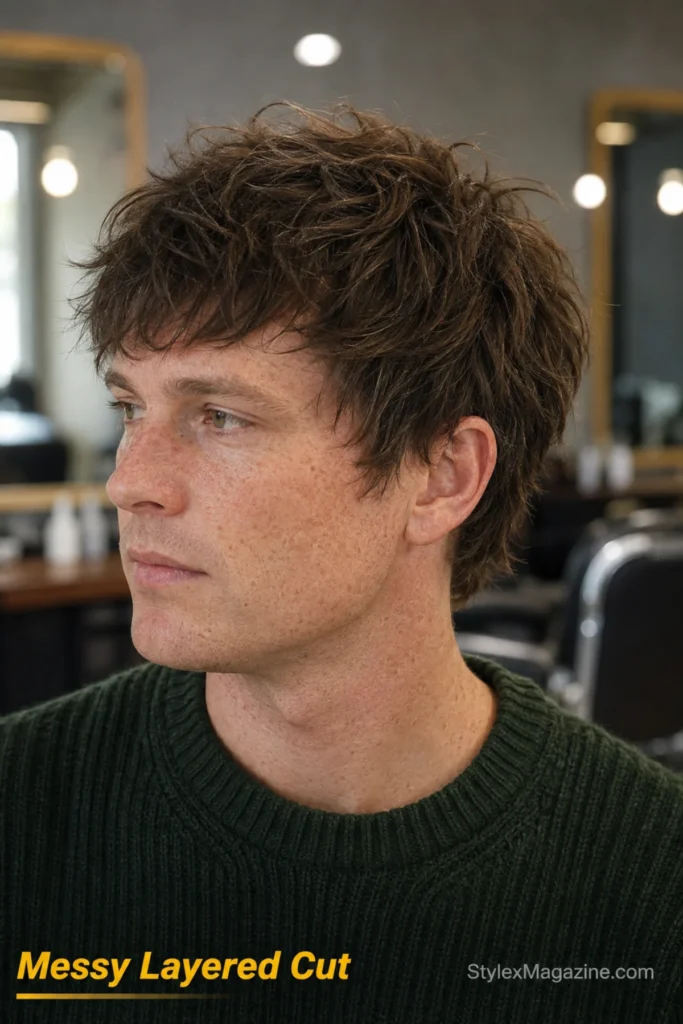
Soft layers throughout the top, sides, and back with a relaxed fringe over the forehead. The all-around messy cut that works at every length and suits every face shape. No specific hair type requirement. Towel dry, scrunch in sea salt spray, and leave it alone. This cut does the work on its own.
8. Short Messy Hair
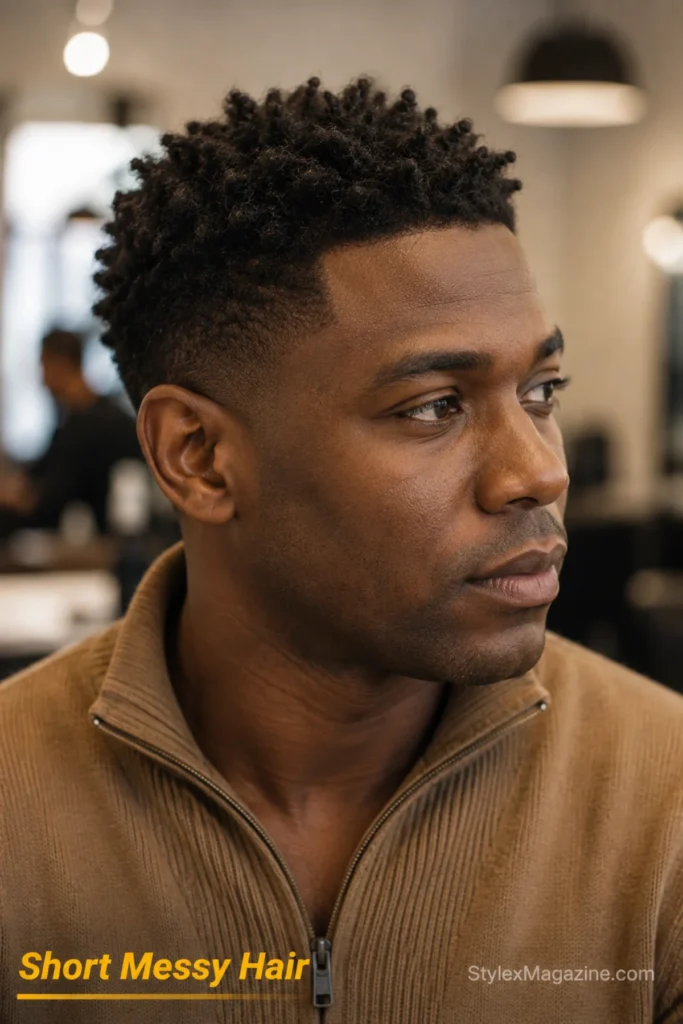
Cropped length with uneven choppy layers on top and blended shorter sides. The lowest-maintenance messy option. Works for boys, teens, and men in active jobs where hair needs to stay out of the way. Most face shapes. Towel dry and pinch a small amount of matte clay through the top. Under two minutes, done.
9. Medium Messy Hair
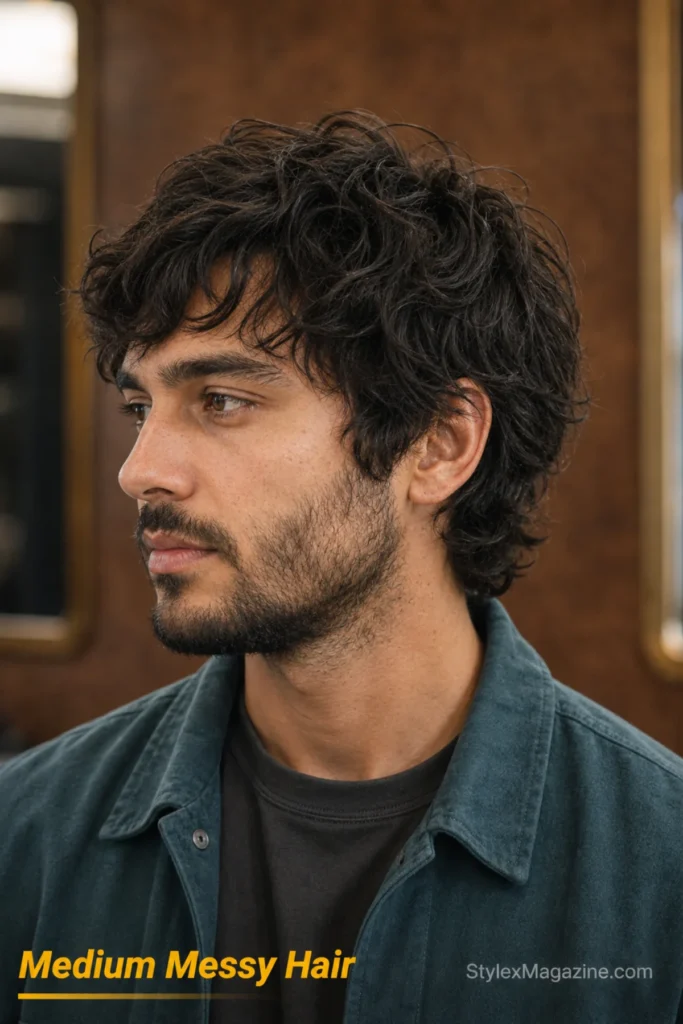
The sweet spot. Length sits around the ears and collar with layered, roughed-up texture throughout. Enough hair for visible movement without long-hair upkeep. The most-requested messy length across age groups. Air dry most of the way, rake styling cream through with fingers to set the shape.
10. Long Messy Hair
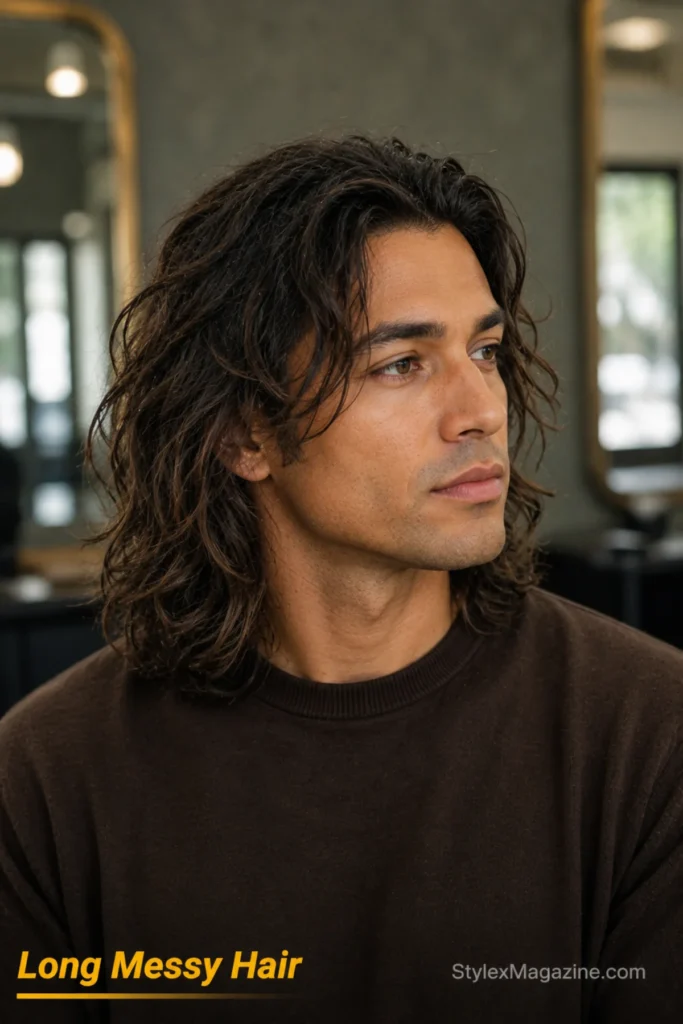
Shoulder-length with layered waves and a natural, relaxed fall. Needs density and regular conditioning to avoid looking stringy. Fine hair struggles past the collar at this length. Oval and square faces carry the weight well. Leave-in conditioner through mid-lengths and ends, air dry, run fingers through once.
11. Messy Fade
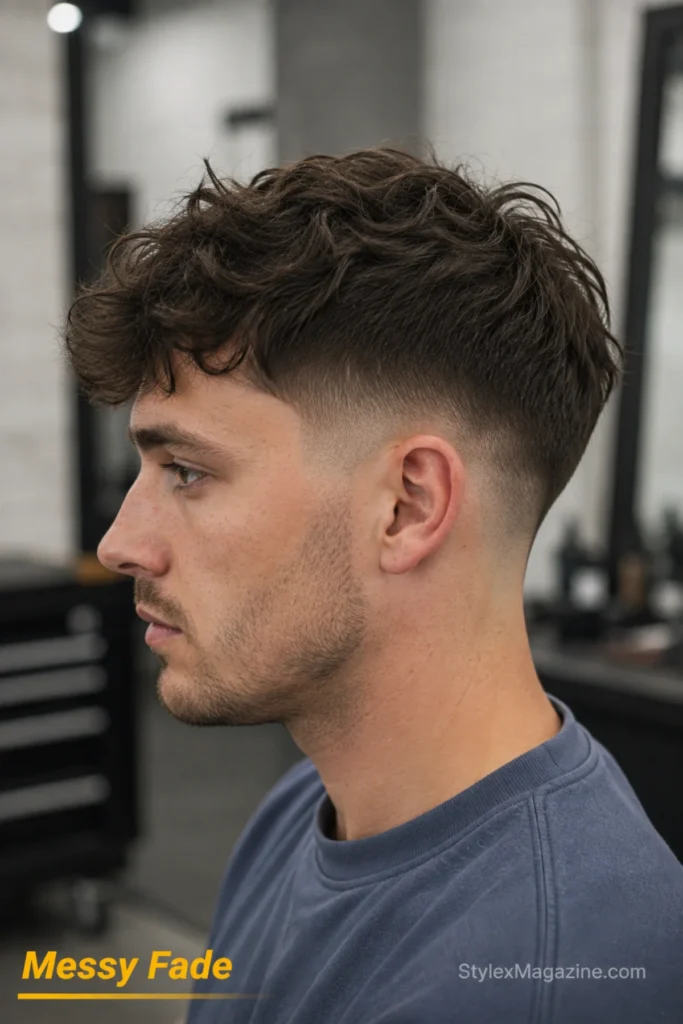
Short faded sides with a longer, loosely layered top. The fade provides sharp contrast that makes the messy texture on top look deliberate rather than neglected. Round and oval faces. Sea salt spray on top for lift and grip, the faded sides handle the clean frame on their own.
12. Messy Undercut
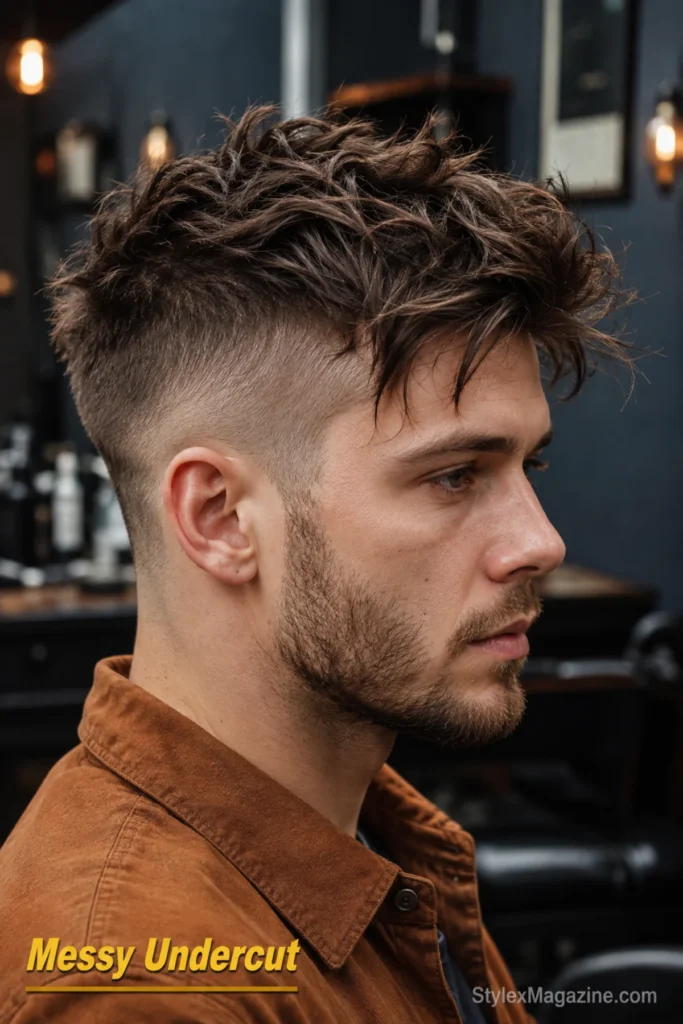
Buzzed sides with a full, textured top styled loosely upward or to one side. Bold contrast. The top needs enough volume to justify the short sides, otherwise the two halves look disconnected. Diamond, oval, and square faces. Dry on low heat while lifting the top with your hands, matte paste through the layers.
13. Messy Brush Up
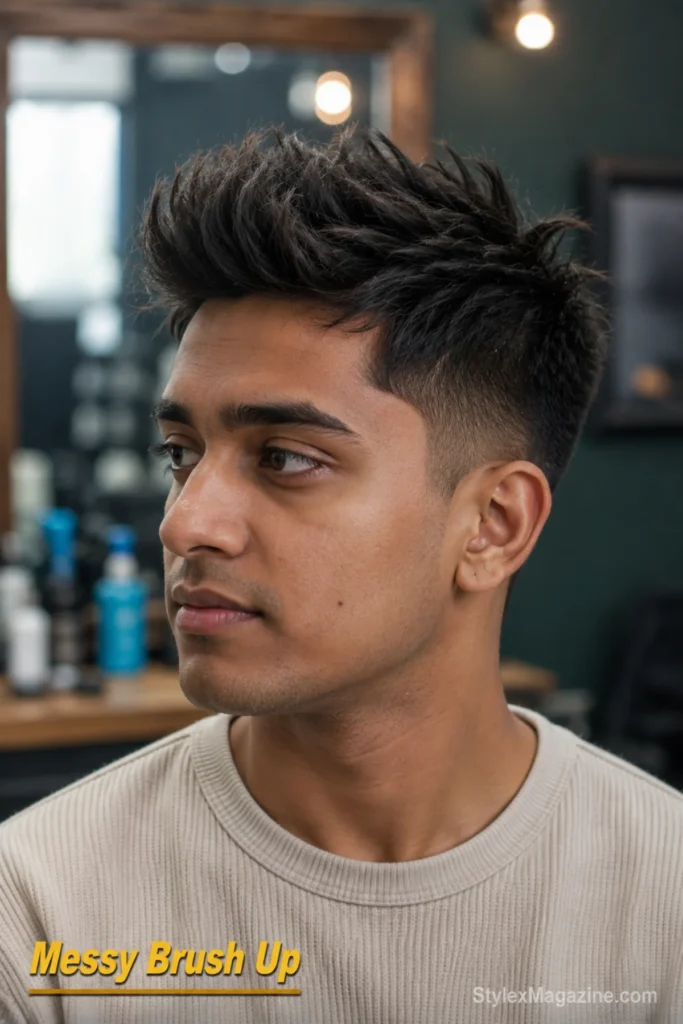
Short sides, top pushed upward into a soft, ruffled peak. Less rigid than a standard brush up. Thick, coarse hair that naturally resists lying flat is ideal for this because the resistance becomes the texture. Round faces benefit from the height. Blow-dry upward, texture powder for grip without weight.
14. Messy Side Part
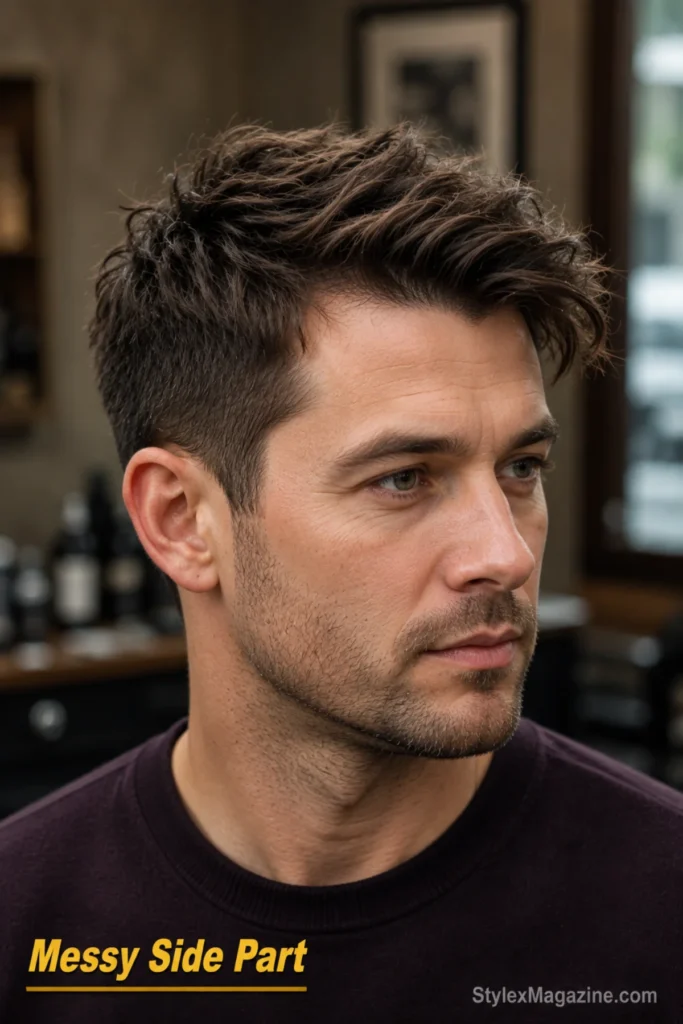
Longer top swept to one side with a relaxed, undone finish. Sides tapered for contrast. The professional messy cut that works in meetings and on weekends without adjustment. Oval, square, and heart faces. Dry while loosely directing the hair to one side, flexible-hold paste to maintain the sweep without locking it rigid.
15. Messy Slick Back
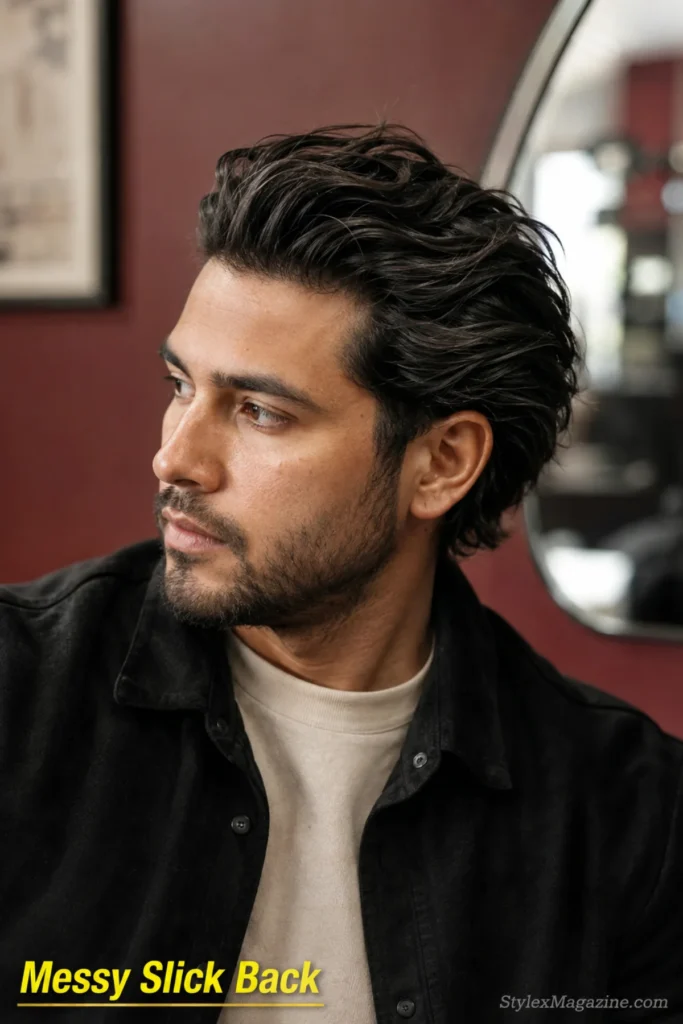
Hair blown backward with fingers instead of a comb. Not sealed flat like a traditional slick back. Crown volume stays intact and the front lifts slightly off the forehead. Oval and oblong faces. Small amount of cream on damp hair, blow-dry backward using only your hands.
16. Messy Curly Hair
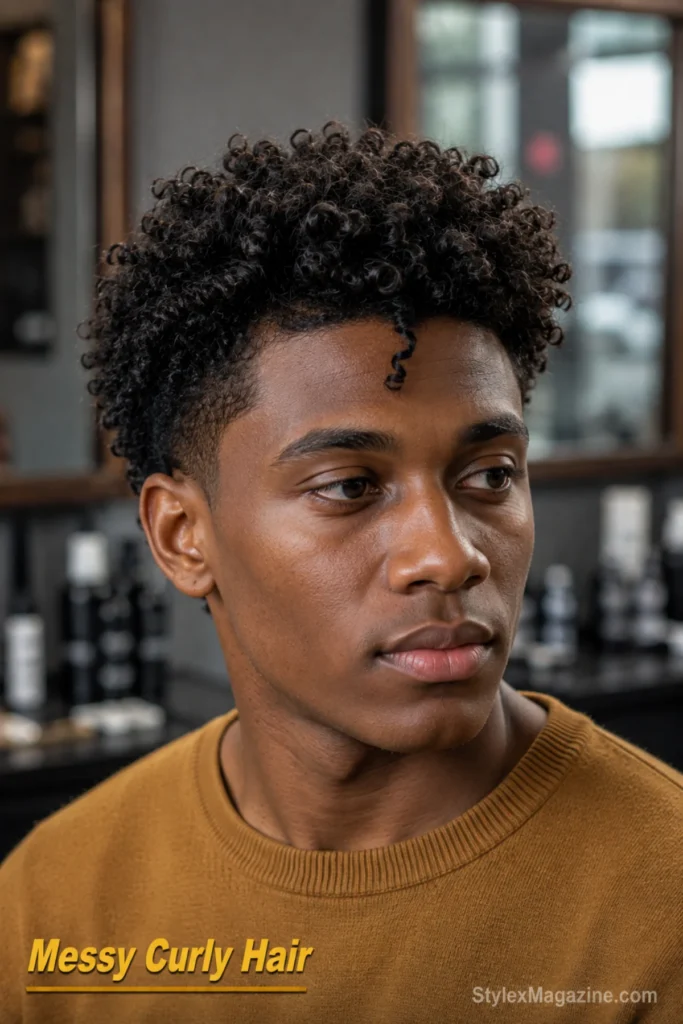
Natural curls left medium-length with soft layering to add shape without killing the bounce. The curls handle most of the visual work, so product stays minimal. Curly hairstyles pair well with the messy approach because the natural texture already creates the separation. Square and heart faces. Curl cream on damp hair, diffuse or air dry.
17. Messy Wavy Hair
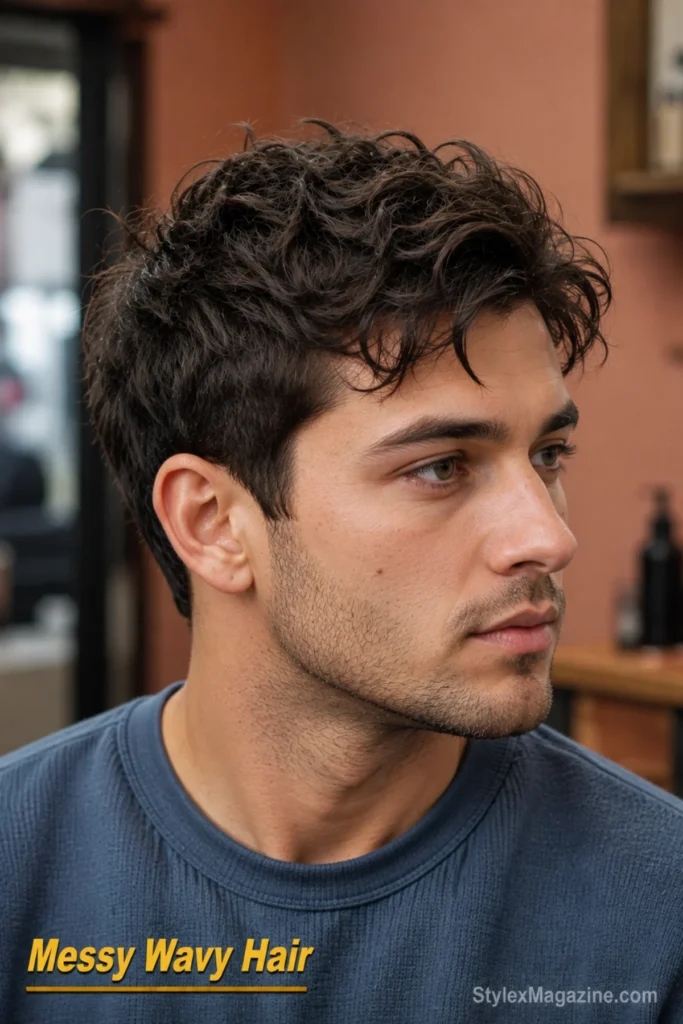
Natural waves enhanced with layering for a beachy, relaxed finish. Wavy hair is the easiest texture for messy styles because the bends create separation without effort. Oval and heart faces. Sea salt spray scrunched into damp hair, air dry untouched. No blow-dryer needed.
18. Messy Straight Hair
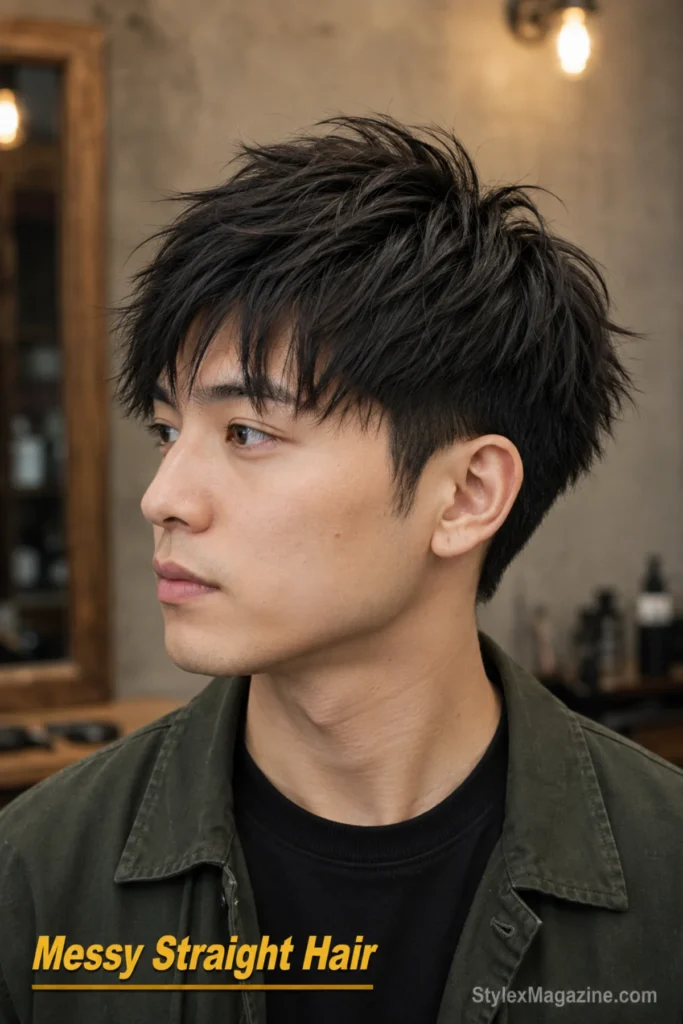
Straight hair with point-cut layers and deliberate disorder created entirely by the barber’s technique. Without layers and texture work, straight messy hair just falls flat and looks uncombed. Blow-dry flipping sections in different directions to build the disorder, then lock it with matte clay. Works across face shapes.
19. Messy Mullet
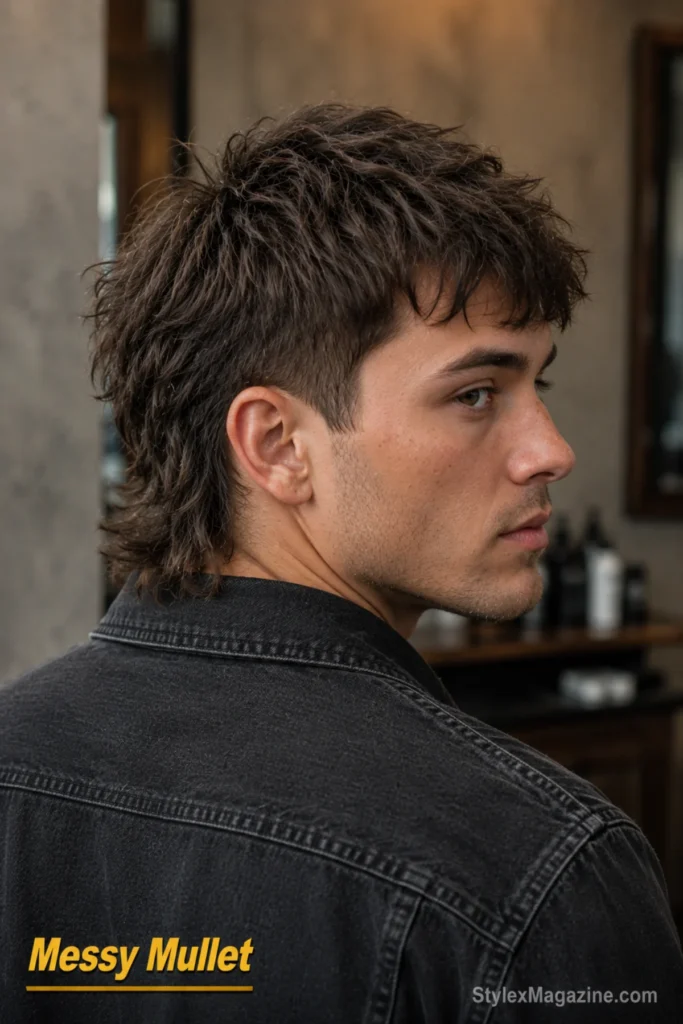
Shorter textured top and sides with a longer, loosely flowing back. Choppy layers throughout soften the traditional mullet’s hard front-to-back contrast. Strong pick for boys and younger men who want retro edge. Oval and square faces. Sea salt spray through the back for natural wave, matte clay on top for definition.
20. Messy Man Bun
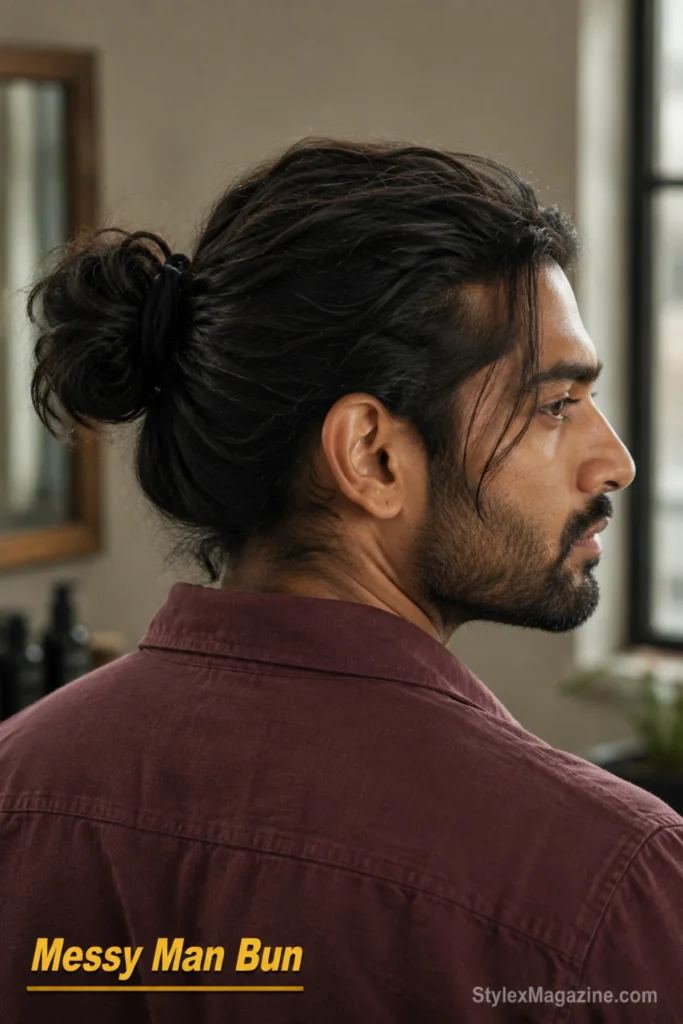
Long hair gathered loosely at the back or crown with strands falling free at the front and sides. The deliberate imperfection is the style. Oval and oblong faces suit the pulled-back shape. A few drops of smoothing oil before tying to calm frizz. Use a soft fabric tie instead of tight elastic bands that crease and snap the hair.
21. Messy Spiky Hair
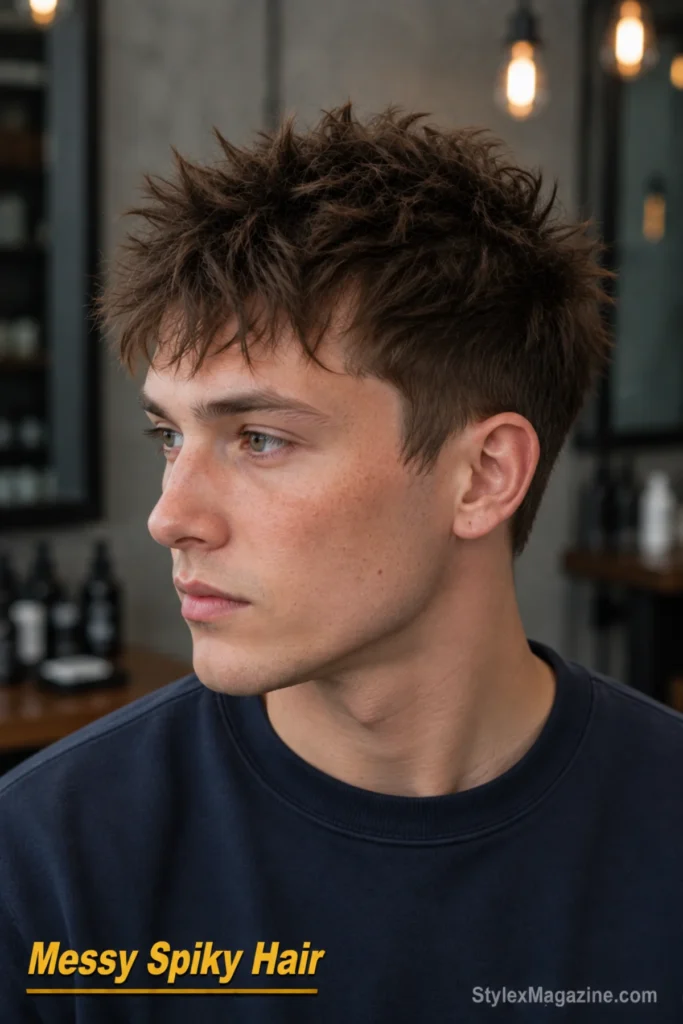
Short uneven layers styled upward in random directions for an edgy, angular finish. Matte finish only. Shiny spikes look dated. Thick, straight hair holds this shape because the strands have enough strength to stay lifted. Round and oval faces. Clay warmed between palms, pinched through the ends piece by piece.
22. Messy Comb Over
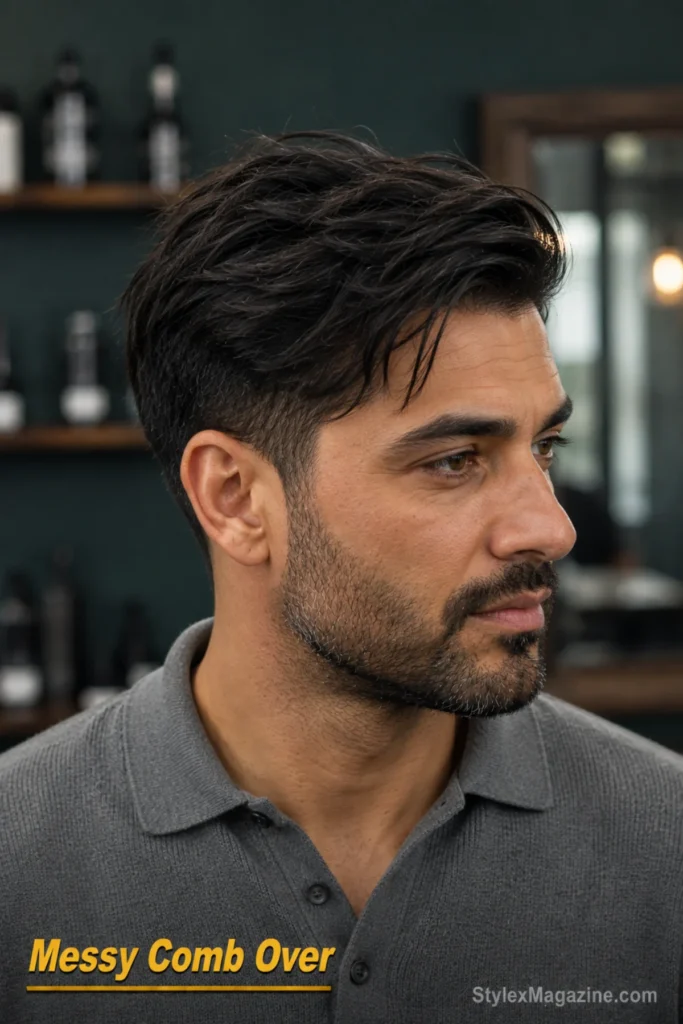
Longer top brushed loosely to one side with a relaxed, undone finish instead of a hard part and pomade seal. The casual version of a structured classic. Oval, square, and heart faces. Dry loosely toward one side with your fingers, flexible-hold paste to keep the sweep soft.
23. Messy Pompadour
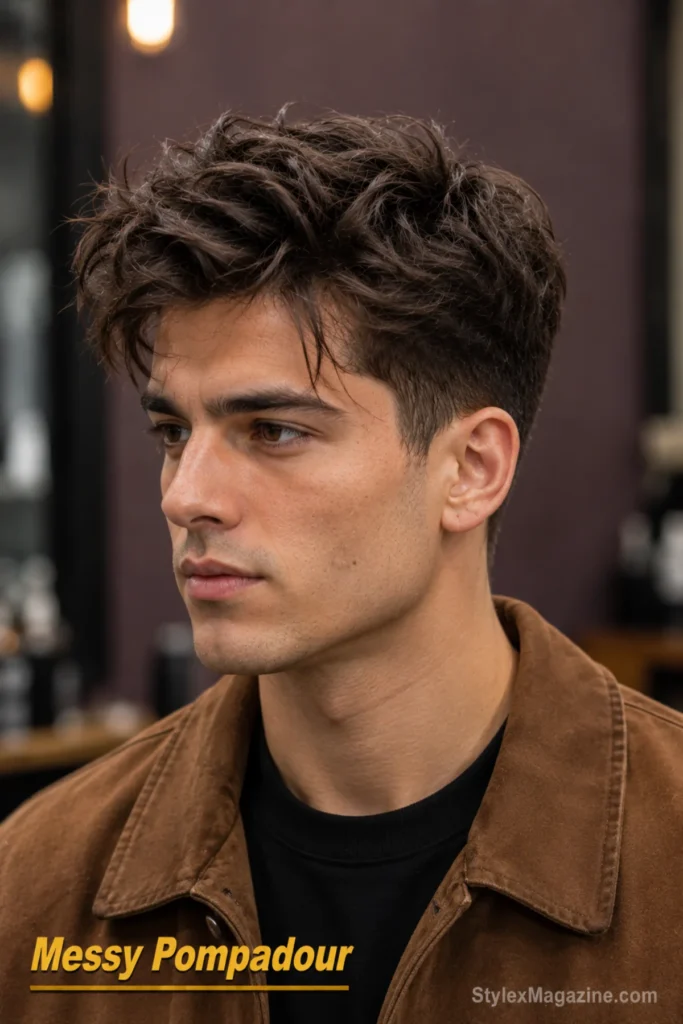
Height and volume at the front with undone movement instead of a polished, slicked finish. Needs thick or medium-density hair for lift. Thin hair collapses under the weight of a pomp shape. Round and square faces benefit from the added height. Blow-dry upward, small amount of paste, and stop before it looks too clean.
24. Messy Wolf Cut
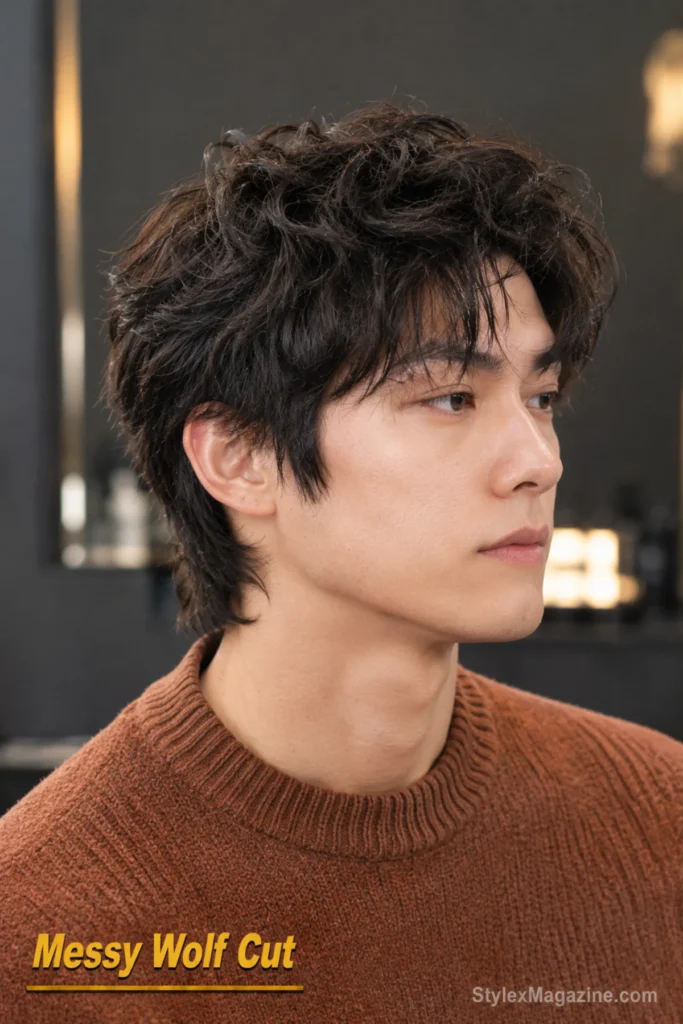
Crown-heavy short layers with a longer, tousled back. Wilder than a messy layered cut, more layered than a messy mullet. Thick and wavy hair carry this shape. Diamond and oval faces. Texture spray, shake into place. For the more structured, layered version, the shag haircut for men guide covers 25 variations with barber tips.
25. Korean Messy Hair
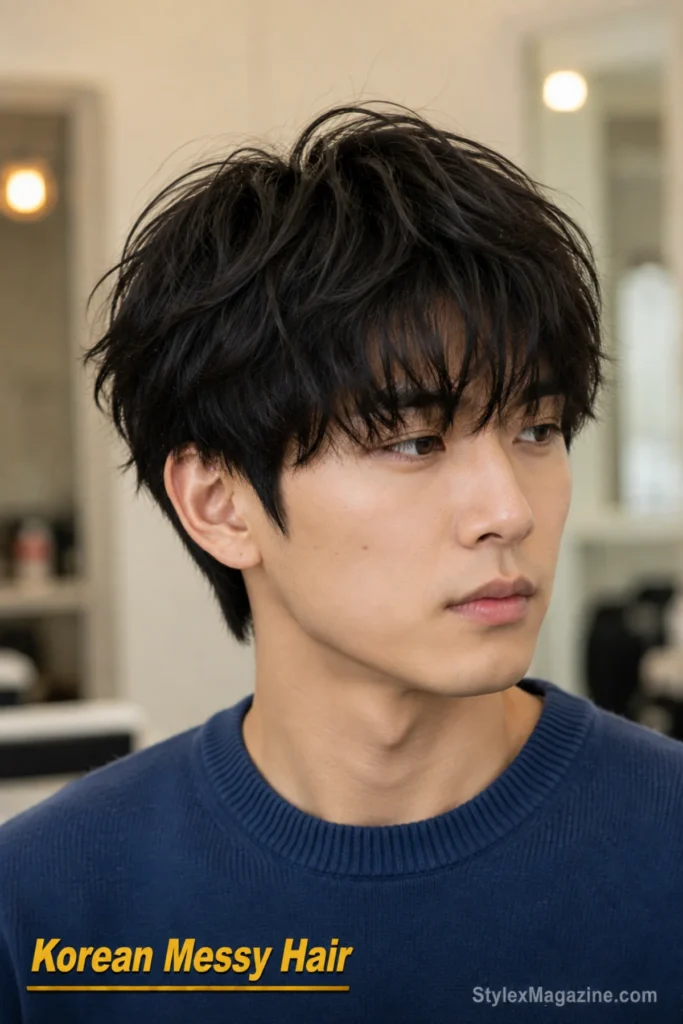
Medium layers with soft, face-framing movement and a full, slightly see-through fringe. Lighter and airier than Western messy styles. Straight, dense hair suits this because the natural weight keeps the shape without heavy product. Oval, heart, and diamond faces. Small amount of styling cream on damp hair, air dry for a natural landing.
Messy vs Textured vs Tousled: What’s the Difference?
All three describe undone hair, but they mean different things when you sit in the barber chair.
| Messy | Textured | Tousled | |
|---|---|---|---|
| What it means | Intentionally disordered, multiple directions | Visible layers and separation cut into the hair itself | Lightly roughed up from a neat starting point |
| How it’s achieved | Finger-styling, scrunch, air dry | Point-cutting, razor work, layering technique | Quick shake or scrunch of an otherwise tidy cut |
| Daily effort | 1-3 minutes | Built into the cut, minimal | Under 1 minute |
| Best product | Matte clay, dry texture spray | Texture powder, sea salt spray | Light cream or nothing |
| Finish | Undone, relaxed | Broken-up, defined pieces | Slightly ruffled, soft |
Messy is the broadest category. A textured cut can be styled messy. A tousled finish is the lightest touch of disorder applied to any cut. Knowing which term to use with your barber narrows the result instantly.
How to Ask Your Barber for Messy Hair
“Messy” means something different to every barber, so name what you actually want before scissors touch hair.
- Name the specific style. “Messy fringe,” “messy taper,” or “messy flow” narrows the target immediately. Just “messy” could produce any of 25 different cuts.
- Bring a front and side photo. Two angles minimum. Choose someone with your hair type so the reference is realistic.
- Describe what stays clean. Neckline, ears, sideburns. “Messy on top, clean around the ears and neckline” gives the barber boundaries that prevent the cut from tipping into sloppy.
- Set the top length. Two inches, four inches, ear-length. Without this anchor, the barber decides for you.
- Ask for point-cutting or razor texture. Blunt-cut layers look like shelves when styled messy. Broken-up ends create the natural, undone finish messy hairstyles depend on.
“I want a messy French crop. Fringe broken up, not blunt. Sides tapered clean around the ears. About three inches on top with point-cut layers so it looks textured, not chunky.”
What Makes Messy Hair Look Intentional?
The line between messy and sloppy comes down to five things the barber and you control together.
- Clean outline. Neckline, sideburns, and the area around the ears stay shaped. The mess lives on top only. Messy outlines look neglected, not styled.
- Matte finish. Shiny product makes messy hair look greasy. Clay, paste, texture powder, and sea salt spray all work. Gel and pomade do not.
- Separation, not clumping. Individual pieces falling in different directions create the messy look. One solid mass of hair pushed sideways is not messy. It is a failed comb over.
- Healthy ends. Dry, split ends turn messy hair from undone to damaged. Conditioning keeps the layered ends soft and prevents frizz from taking over the texture.
- Deliberate volume placement. Height at the crown or front balances the face shape. Flat messy hair just looks uncombed. Even a small amount of root lift changes the entire silhouette.
Common Messy Hair Mistakes
Most messy haircuts fail because of product choice or trim timing, not the cut itself.
- Too much product. Messy hair needs a light touch. Overloading with clay or paste seals the layers together and kills the natural fall. Start with half the amount you think you need.
- Shiny finish. Gel or pomade on messy hair looks wet and greasy, not tousled. Matte products only. If you can see reflection in your hair, you used the wrong product.
- Skipping trims. Messy is a shape, not a stage of hair growth. Skip the barber for three months and the shape dissolves into bulk. I see this weekly. The fix is always the same: a trim restores the layers, and the messy finish comes back immediately.
- Ignoring the sides. A textured, roughed-up top paired with bushy, unshaped sides looks ungroomed. The sides need structure so the top’s disorder looks intentional.
- Over-brushing. Brushing removes the separation messy hair depends on. Finger-style only after the initial blow-dry. The comb stays in the drawer.
How Often Should You Trim Messy Hair?
Short messy cuts need reshaping every 5-6 weeks. Medium every 6-8. Long messy styles can stretch to 10.
| Short Messy | Medium Messy | Long Messy | |
|---|---|---|---|
| Trim cycle | Every 5-6 weeks | Every 6-8 weeks | Every 8-10 weeks |
| Daily effort | 1-2 minutes | 2-4 minutes | 4-6 minutes |
| Key product | Matte clay, texture powder | Sea salt spray, styling cream | Leave-in conditioner, light oil |
Signs it’s time: sides ballooning outward, top losing separation, fringe sitting too heavy over the eyes. If only the crown feels flat, ask for a quick texture refresh at the crown rather than a full reshape.
FAQs About Messy Hairstyles for Men
Can messy hair work for a job interview?
Short messy styles like the messy taper, messy French crop, and messy side part work in professional settings because the tapered sides read as groomed. For formal interviews, push the hair slightly back with a small amount of cream for a cleaner silhouette that you can tousle again after.
Does messy hair look better on day one or day two?
Most messy styles look better on day two. The hair’s natural oils relax the texture, and yesterday’s product settles into a softer hold. Wash two to three times per week. Refresh on non-wash days with a water mist and a light scrunch at the roots.
Can you build messy hair from a buzz cut without an awkward phase?
The earliest messy option from a buzz cut is a short messy crop once you have about two inches on top, roughly two months of growth. Ask your barber to start adding texture at that length rather than waiting for full medium length. Short messy styles like the crew cut crop and French crop are built for this stage.
Does humidity ruin messy hairstyles?
Humidity usually helps messy hair because it adds natural wave and body. Frizz can show up on longer styles, so a lightweight anti-humidity cream through the mid-lengths and ends keeps the shape. Shorter messy cuts handle humidity with no adjustments needed.
Should messy hair have a parting or not?
Both work. No part (fringe, crop, brush up) looks more disordered. A loose side part (messy comb over, messy side part) adds structure that looks professional. A center part with mess (curtains, Korean messy) softens the face. Pick based on face shape and workplace, not a fixed rule.

Other Articles
30 Best Surfer Haircut Styles for Men (2026)
Shaggy Haircuts for Men: 25 Cool Styles, And Barber Tips
[…] for a choppy finish, air dry. The salt creates the gritty separation that defines a crop. See messy hairstyles for men for crop […]
[…] layers, sides at 2 inches scissor-cut, broken fringe rather than blunt. The contrast between the messy hair and a shaped beard is what holds the style together. An unkempt beard under a mod cut looks […]