
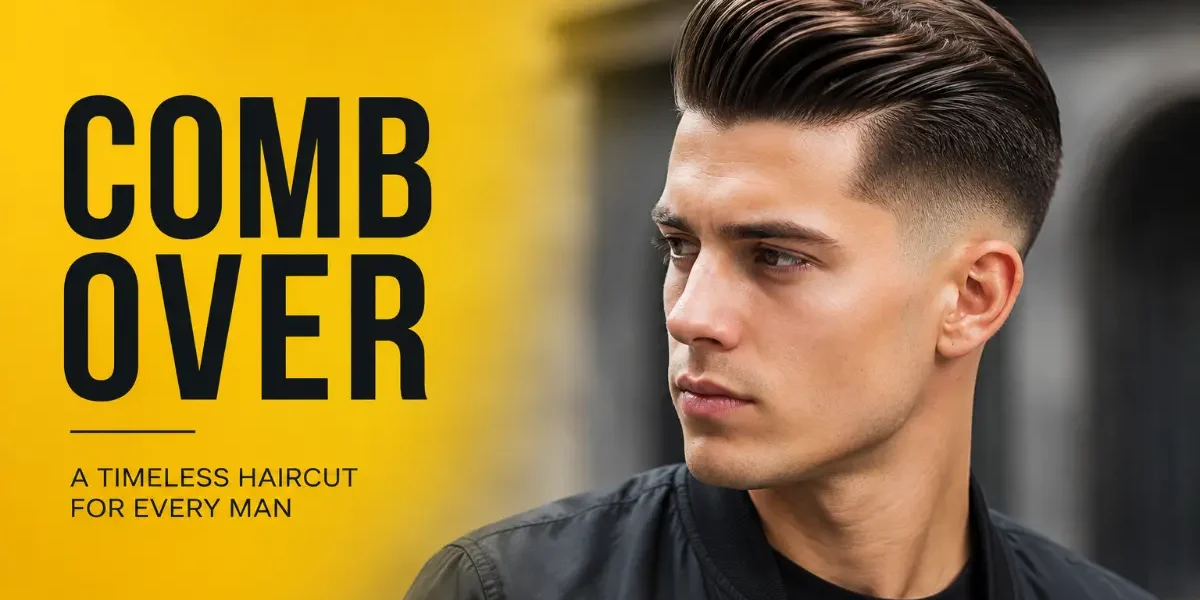

Quick Answer: A comb over haircut parts the hair to one side and combs it laterally across the top of the head. It requires a minimum of 2–3 inches of length on top and works on straight, wavy, and thick hair. Main variations include the classic comb over, comb over fade, textured comb over, and slick comb over.
The comb over became mainstream in the 1940s and 1950s — businessmen and professionals adopted it as the standard sharp look, and it hasn’t left. The modern version is less rigid than its predecessor, pairs with fades and undercuts, and works across far more hair types and face shapes than most men realise.
What Is a Comb Over Haircut?
A comb over haircut is a men’s hairstyle where the hair on top is parted on one side and combed laterally across the head. The sides are kept shorter either tapered, faded, or undercut — while the top stays longer for styling. The combination of shorter sides and longer, directional top is what defines the cut.
The hard part — a razor-shaved line at the parting became a defining detail in 1920s and 1930s barbershop culture, sharpening the side part into something more deliberate. The style spread into mainstream professional culture by the 1940s and 1950s, worn by businessmen, public figures, and military officers as the standard sharp look. The modern revival, which started around 2010–2012, brought it back through barbershop culture with cleaner fade combinations and more textured finishes.
Brad Pitt, Ryan Gosling, and David Beckham have all worn variations of it different executions of the same principle across different hair types and settings.
What Are the Types of Comb Over Haircuts?
Comb over haircuts include 4 main variations classic, fade, textured, and slick each with distinct finishing details and different styling requirements.
Classic Comb Over
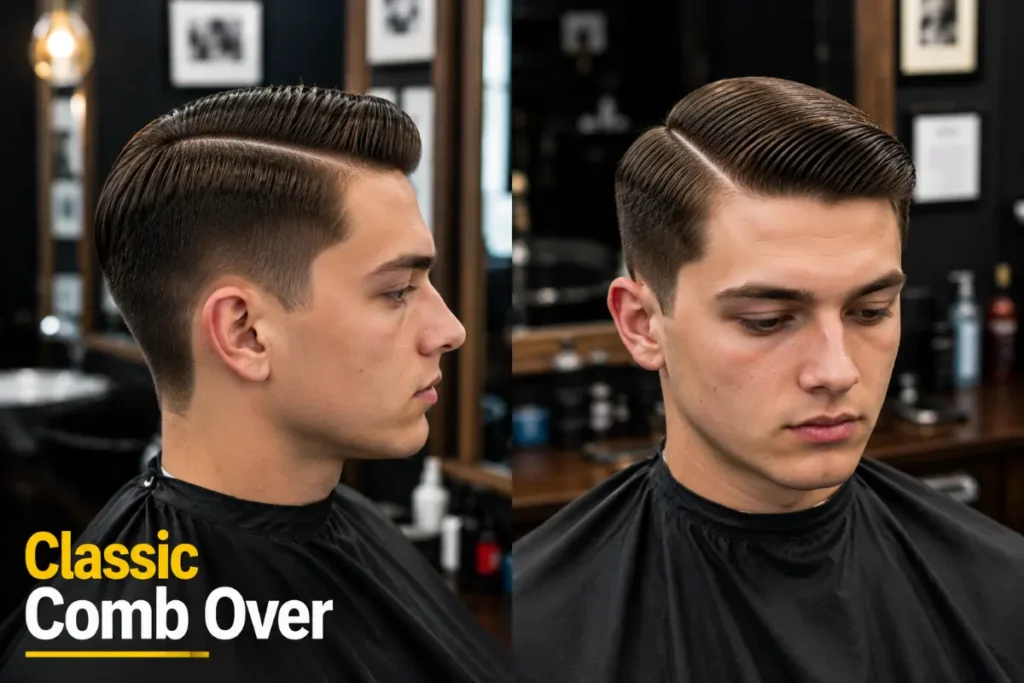
Clean side part, hair combed flat and smooth across the top, tapered or skin-faded sides. The finish is polished pomade or a strong-hold product keeps everything in place. Works best on straight to wavy hair with medium to thick density. The Ivy League haircut is a shorter, tighter version of the same principle.
For every classic comb over style and variation, see the classic comb over haircut guide.
Comb Over Fade
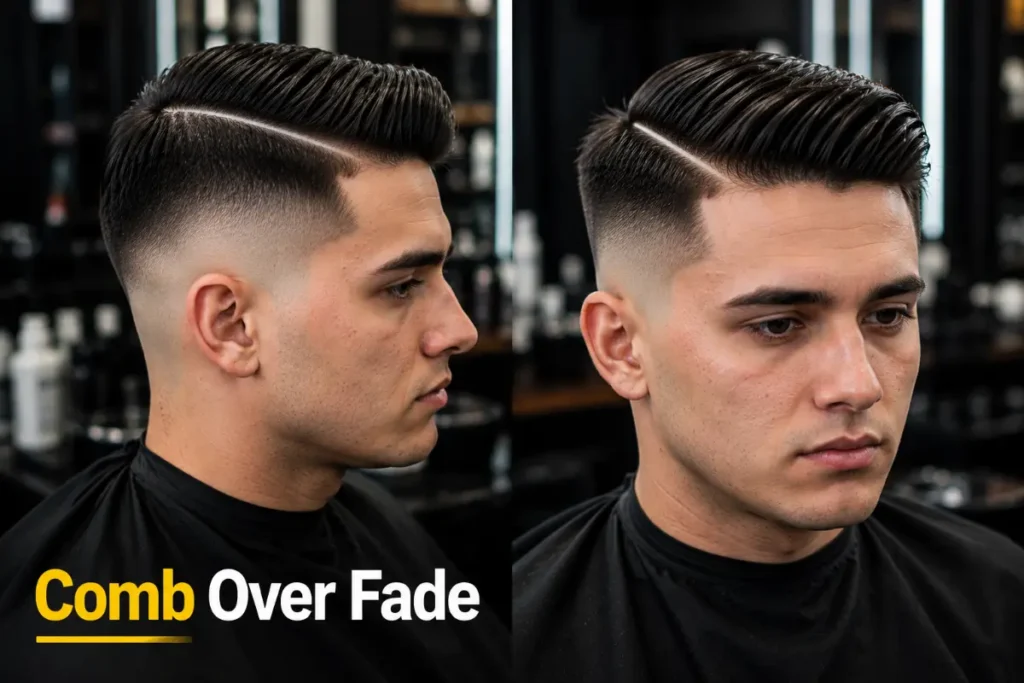
The same lateral comb direction on top, but with faded sides instead of a taper. The fade level low, mid, or high changes the contrast significantly. A low fade comb over is subtle enough for professional settings. A high fade comb over is the bolder, more modern version. The fade is what separates this from the classic and makes it the most requested comb over variation in most barbershops today.
Full breakdown of every fade level and variation in the comb over fade guide.
Textured Comb Over
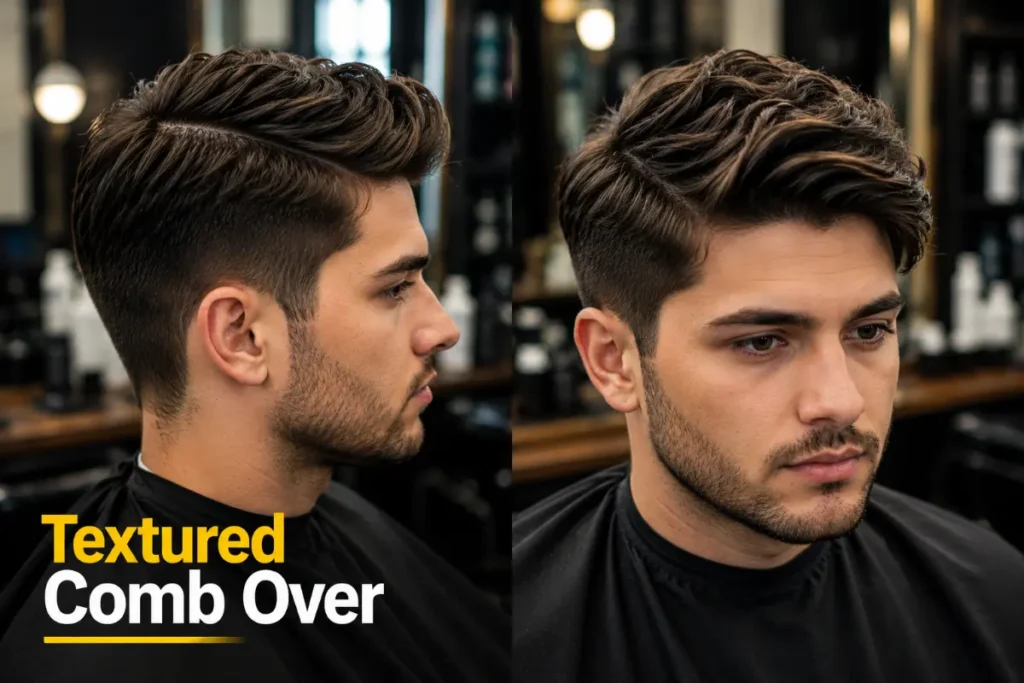
Less structured than the classic the part is softer or natural rather than hard-shaved, and the finish is matte rather than slicked. Works well on wavy and thick hair where a flat, pomaded finish is difficult to maintain through the day. Clay or paste over pomade. More appropriate for casual and creative settings than formal ones.
Slick Comb Over
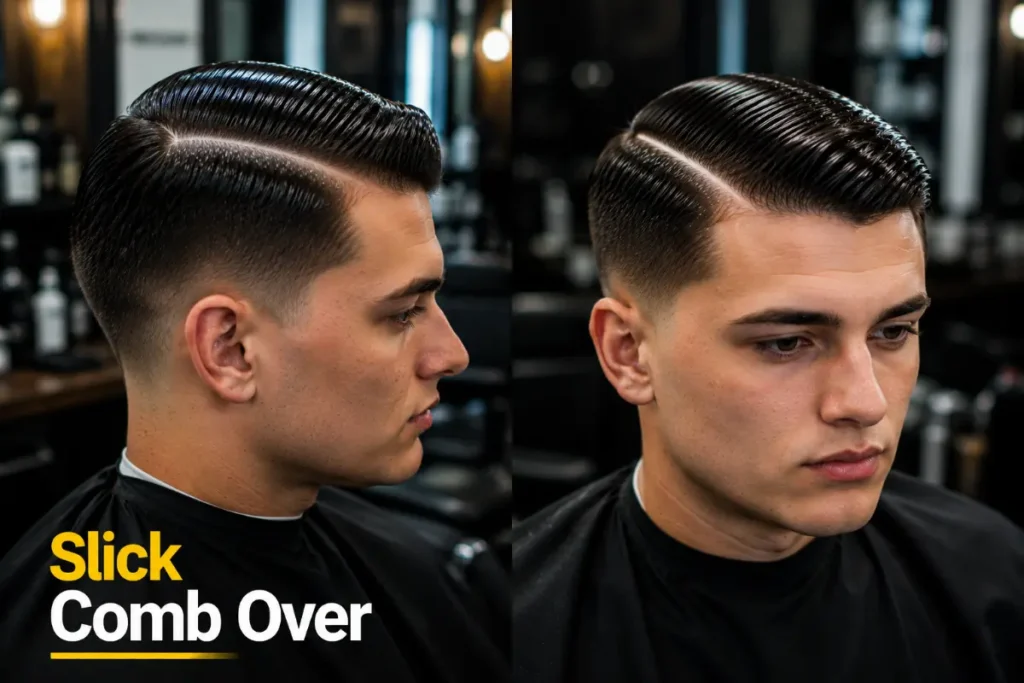
Hair combed completely flat against the scalp with a high-shine pomade no volume, no texture, just a clean swept finish. The most formal version of the comb over. Requires straight to slightly wavy hair and a strong-hold product that keeps the hair flat throughout the day. A hard part shaved in at the parting adds definition to the slick finish.
The slick comb over and the slick back share the same product requirements the difference is direction only. If you already wear a slick back haircut, transitioning to a slick comb over is a matter of changing your comb angle, not your routine — the same slick back styles work equally well swept to the side.
Black Men Comb Over
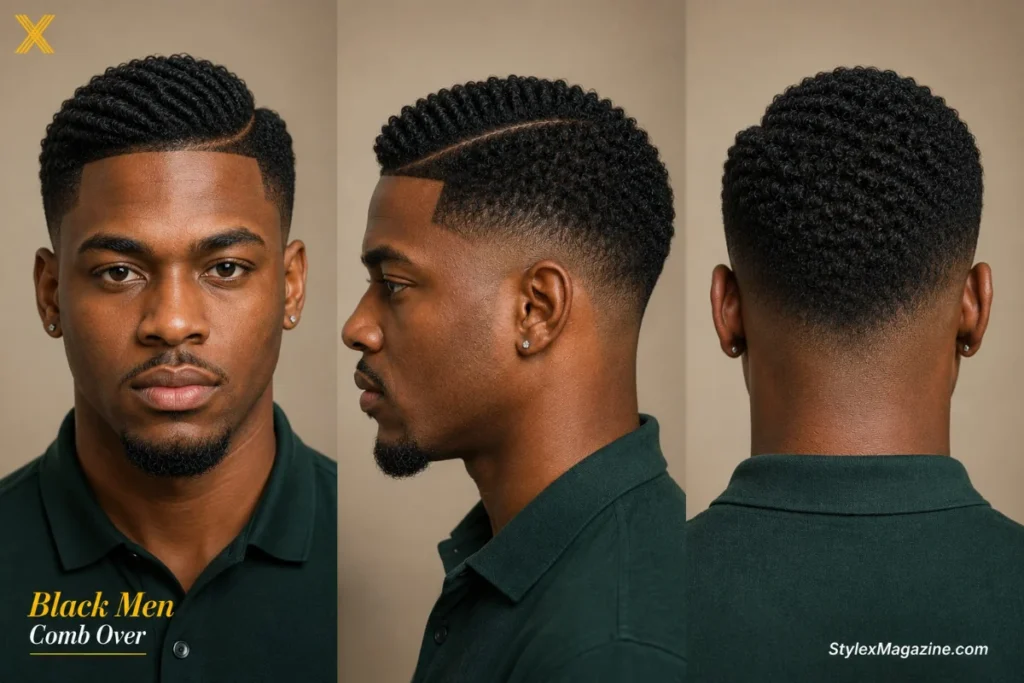
Built for coily and tightly-coiled hair textures — the comb over direction works through scissor-over-comb technique rather than relying on a flat comb alone. Often paired with a faded or tapered side and a geometric design or line-up at the temple for definition.
Best for: Oval and round face shapes.
Tell your barber: “Comb over on top, scissor-over-comb to keep the curl pattern line up at the temples.” Maintenance: Every 2–3 weeks.
Comb Over with Line-Up
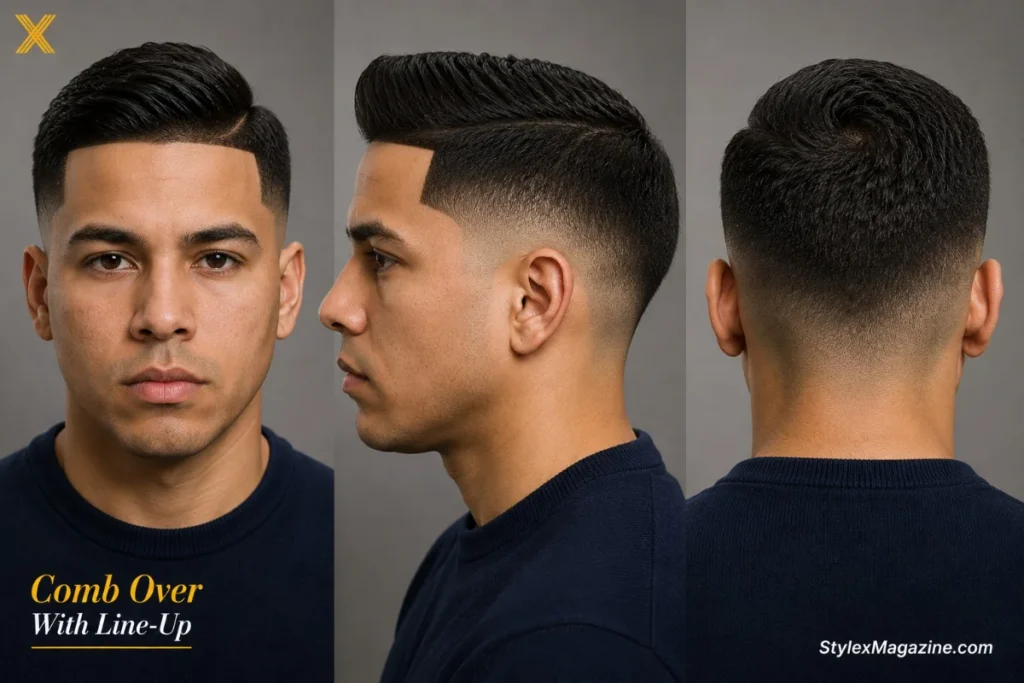
A razor-sharpened edge at the hairline and temples, separate from the comb direction itself. The line-up frames the face and sharpens the front of the cut without changing the top length or comb direction. Works with any of the four foundational variations above.
Best for: All face shapes.
Tell your barber: “Comb over on top — sharp line-up at the front hairline and temples.”
Maintenance: Every 1–2 weeks — line-ups grow out fastest of any detail.
Razored Texture Comb Over
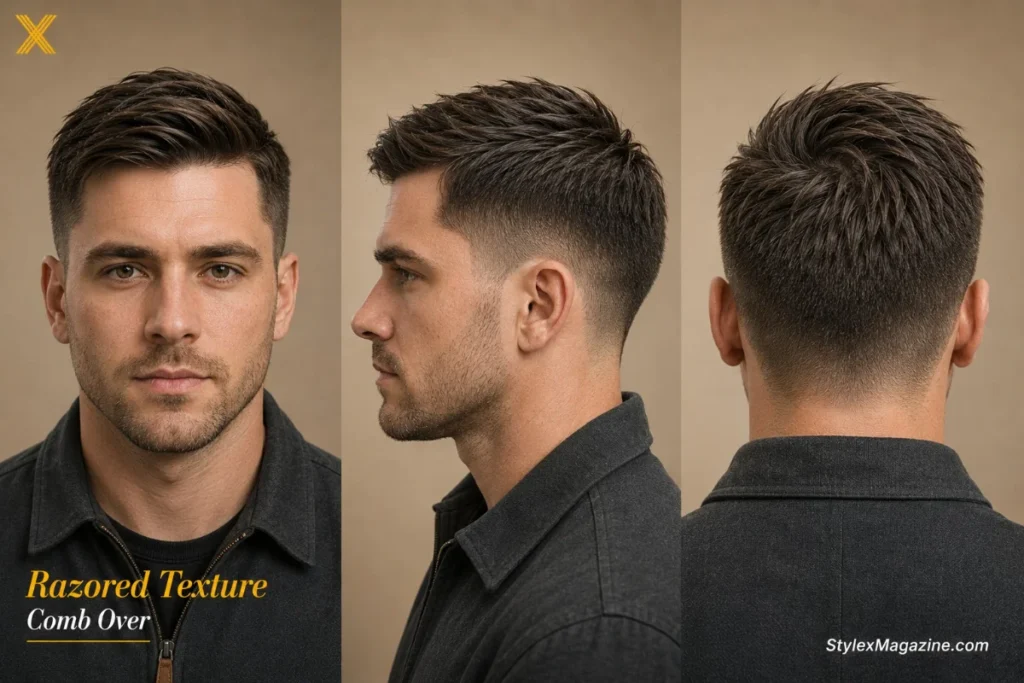
Razor-cut ends rather than scissor-cut the razor removes weight unevenly across the top, creating natural-looking texture and forward movement. Especially effective on thick hair that would otherwise sit heavy in a comb over.
Best for: Square and round face shapes. Thick hair.
Tell your barber: “Comb over on top razor the ends for texture, not a blunt scissor cut.”
Maintenance: Every 3–4 weeks.
Comb Over with Highlights
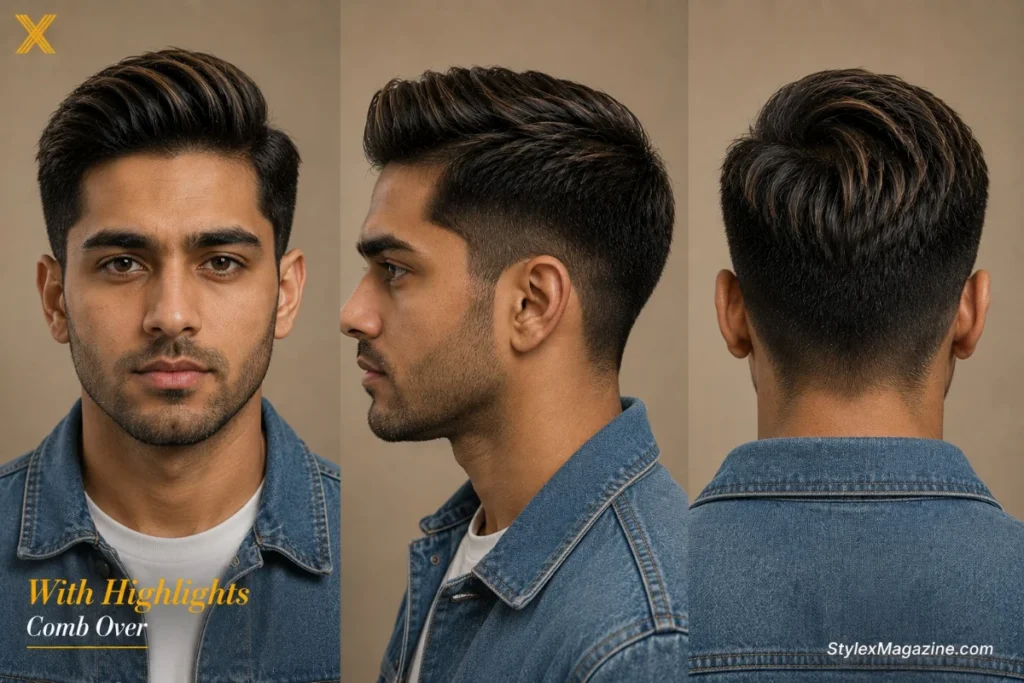
Subtle balayage or foiled highlights through the top section catch the light differently as the hair moves into its combed direction adds dimension without a full color change. Works best on darker base colors where the contrast reads clearly.
Best for: Oval and square face shapes.
Tell your barber: “Comb over on top light foils through the front section only, nothing on the sides.” Maintenance: Color touch-up every 6–8 weeks. Haircut every 3–4 weeks.
Grey Hair Comb Over
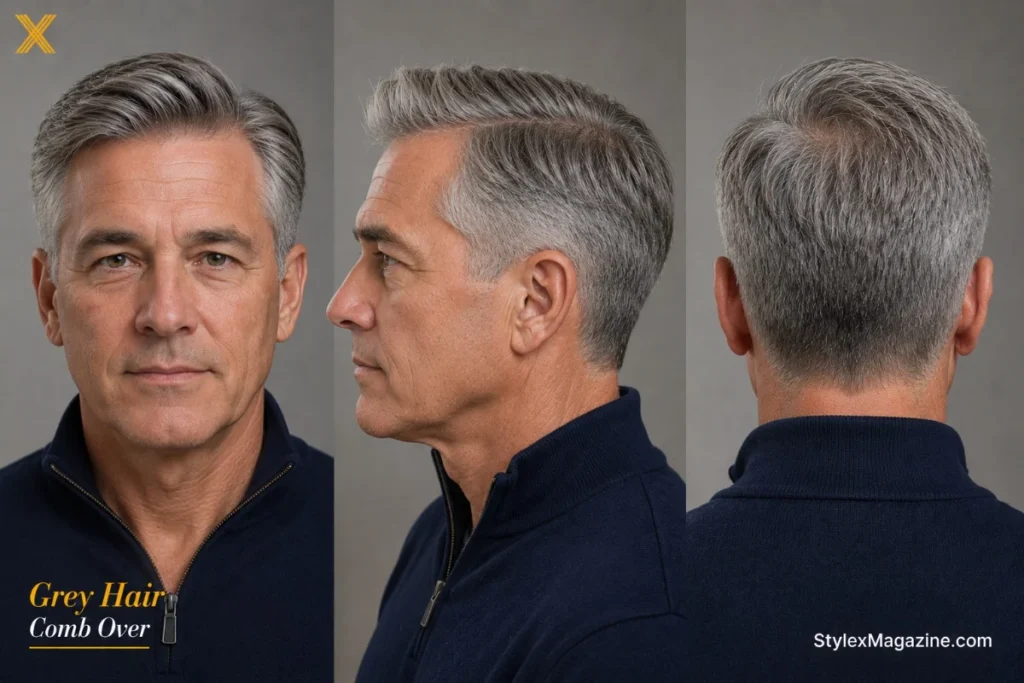
Grey and salt-and-pepper hair holds a comb over particularly well the slightly coarser texture common in greying hair gives the style more structure without extra product. A low taper on the sides keeps the look proportionate rather than ageing the cut further.
Best for: All face shapes.
Tell your barber: “Classic comb over low taper, natural part. Keep it proportionate, not too sharp.” Maintenance: Every 4 weeks.
Combed Fringe Comb Over
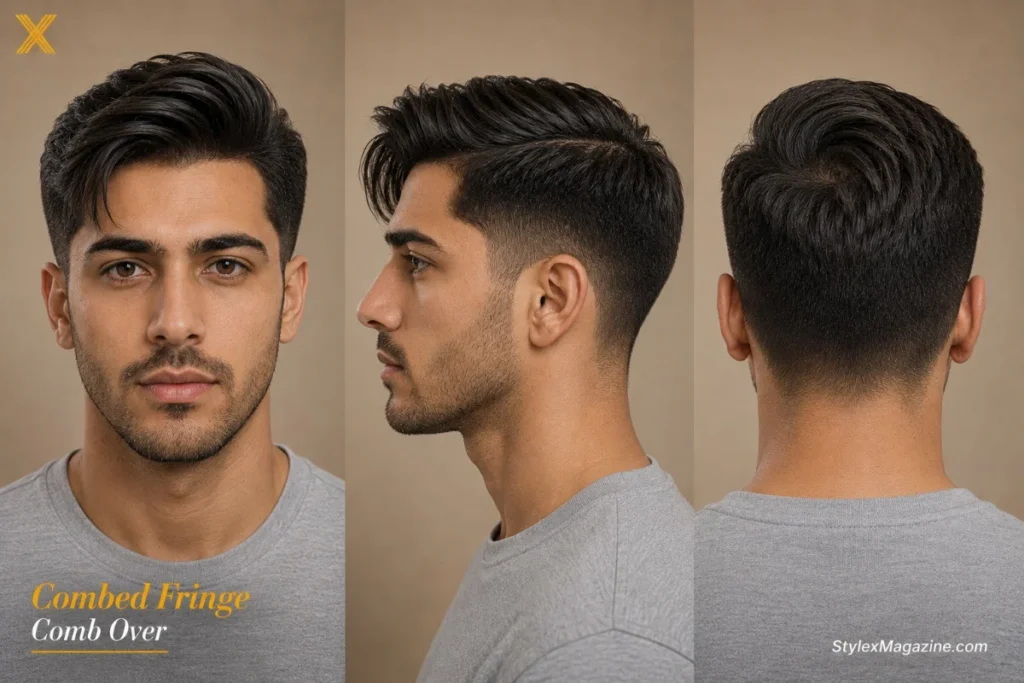
The front section is left slightly longer and flicked or combed to one side as a soft fringe, rather than swept fully back like the classic version. Reads softer and more casual than a standard comb over while keeping the same lateral direction.
Best for: Oval and heart face shapes.
Tell your barber: “Comb over with a longer front section let it flick to the side rather than sweeping it flat.” Maintenance: Every 3 weeks.
Comb Over for Glasses Wearers
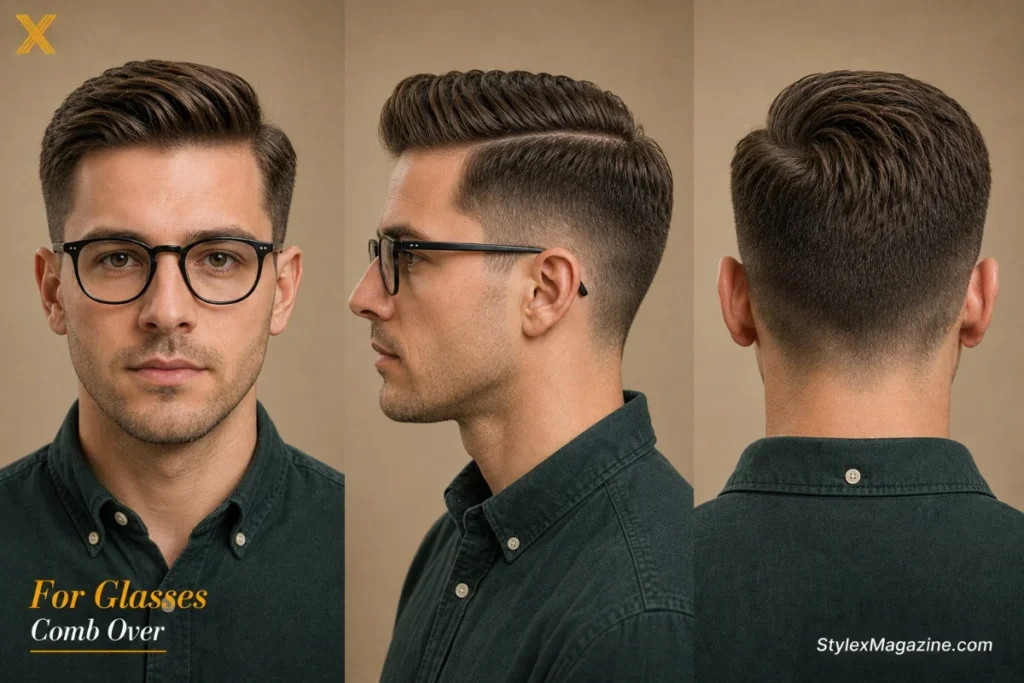
A comb over with moderate volume on top not flat, not overly voluminous balances visually against the frame width of glasses. A side part positioned to align with the frame’s pupil line keeps the face looking proportionate rather than top-heavy or flat.
Best for: Round and square face shapes.
Tell your barber: “Comb over with some volume on top I wear glasses, so don’t go too flat.”
Maintenance: Every 3–4 weeks.
Wet-Look Comb Over
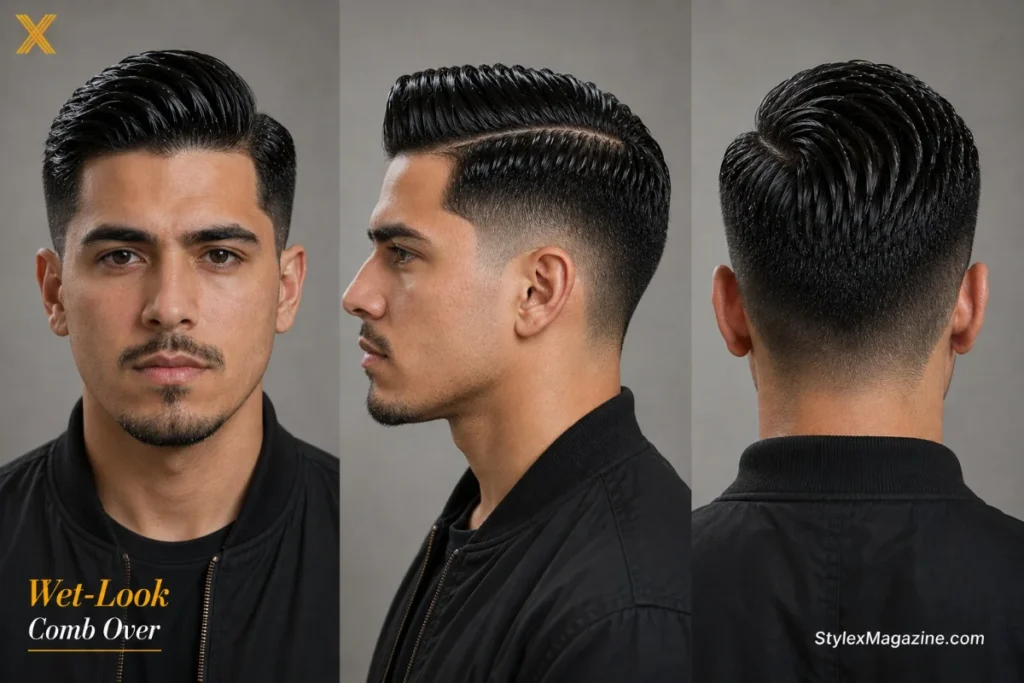
Maximum shine, achieved with a water-based gel rather than pomade the hair looks permanently damp rather than dry-styled. Bolder and glossier than the slick comb over, and the finish reapplies more easily throughout the day if it starts to dry out.
Best for: Oval and rectangular face shapes. Straight hair.
Tell your barber: “Comb over on top I’ll use a wet-look gel, keep the sides clean for that finish.”
Maintenance: Every 3–4 weeks.
Low-Maintenance Comb Over
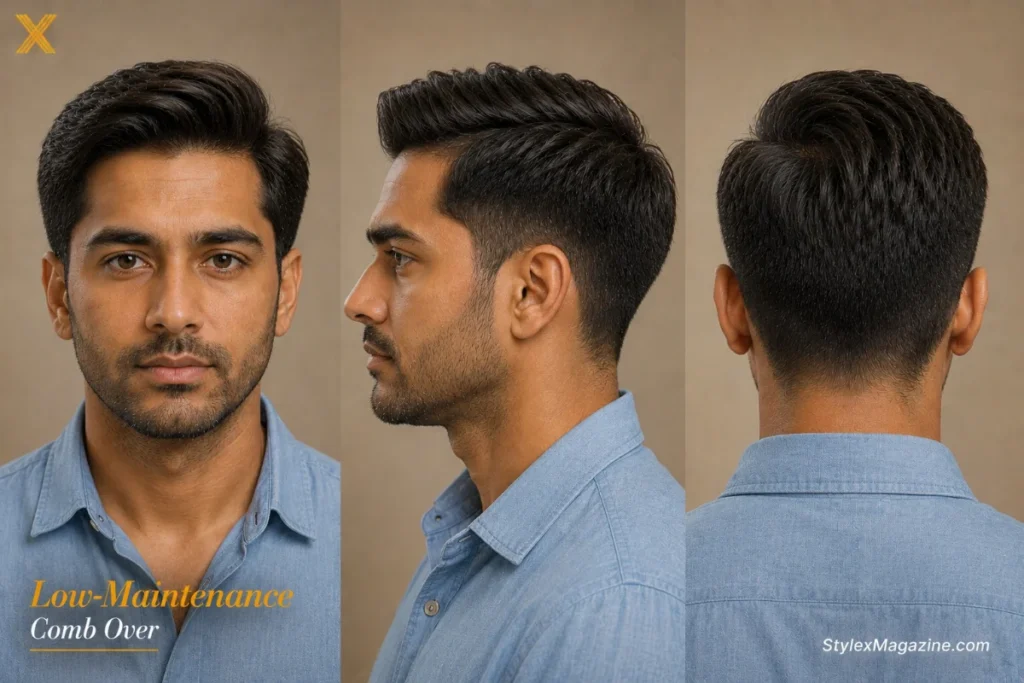
Built to air-dry into shape with little to no daily product a low taper on the sides and a soft natural part that doesn’t require precise styling each morning. Right for men who want the look without a daily routine.
Best for: All face shapes.
Tell your barber: “Comb over that holds its shape air-dried low taper, soft part, nothing that needs daily product.”
Maintenance: Every 4–5 weeks.
Comb Over with Braids
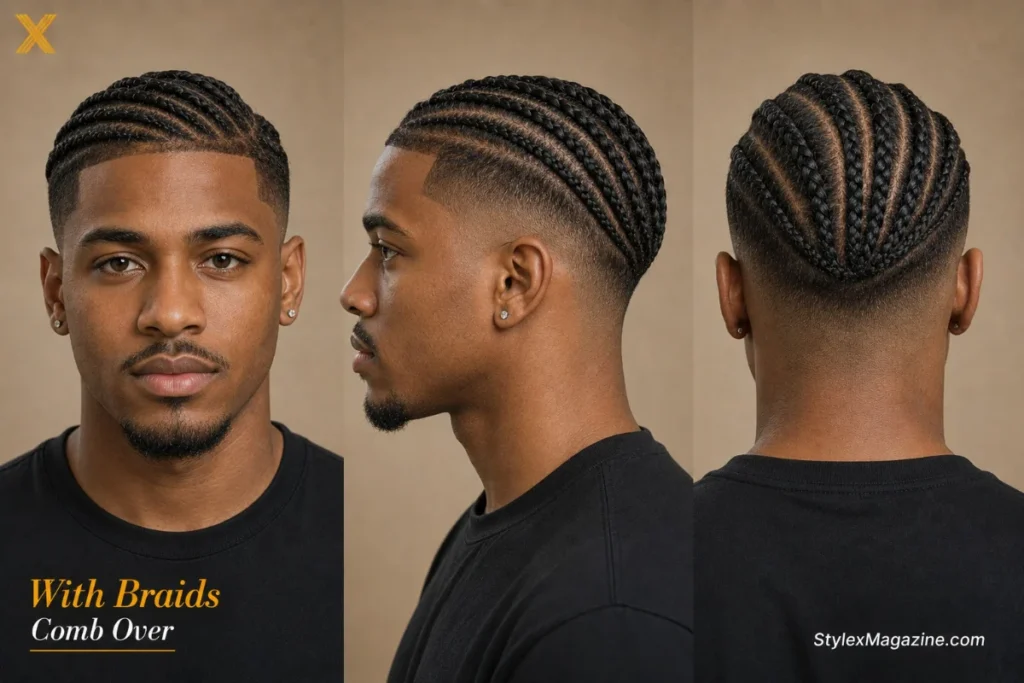
Cornrows or braids replace the combed top section entirely, directed in the same lateral pattern as a traditional comb over. The sides stay faded or tapered to keep the contrast between the textured top and the clean sides.
Best for: Oval and round face shapes.
Tell your barber: “Braids on top following a comb over direction — low or mid fade on the sides.” Maintenance: Braids every 2–3 weeks. Side fade every 2 weeks.
Two-Tone Comb Over
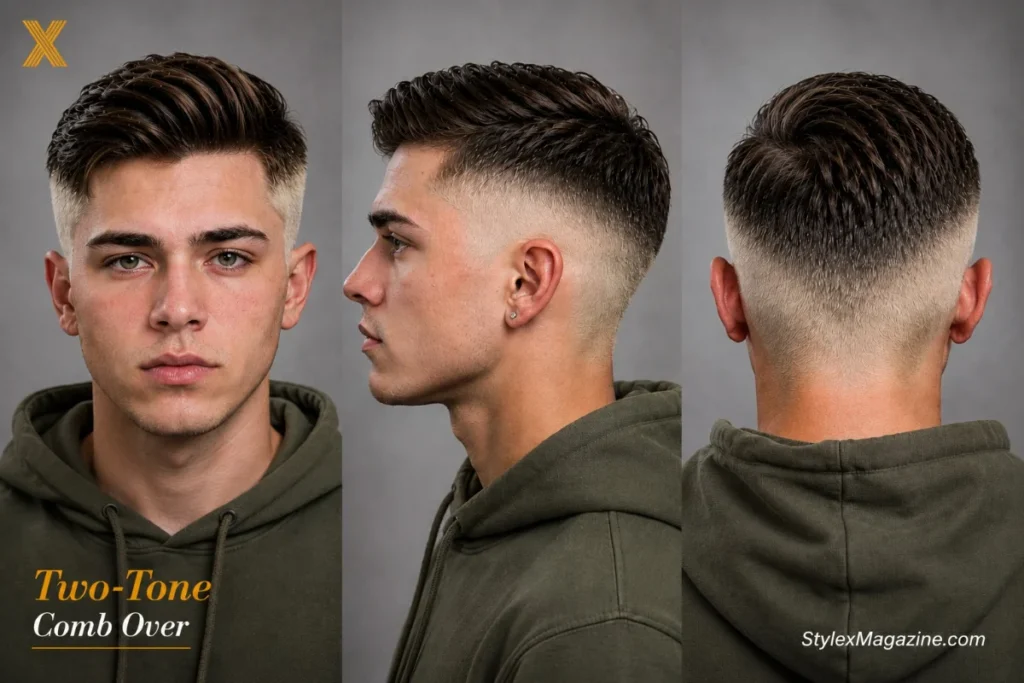
A visible color contrast between the top section and a lightened or bleached side typically combined with a fade so the color change lines up with the haircut’s natural break. Reads bolder and more fashion-forward than a single-color comb over.
Best for: Oval and square face shapes.
Tell your barber: “Comb over fade I want the sides lightened separately from the top color.”
Maintenance: Color every 4–6 weeks. Haircut every 2–3 weeks.
Comb Over Bun
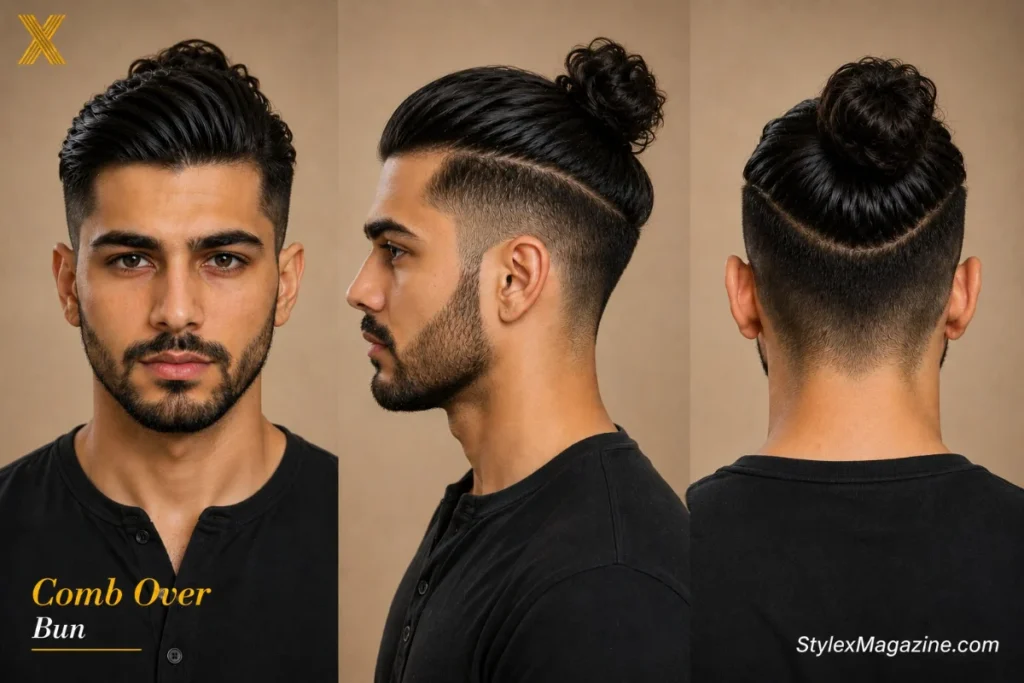
For hair long enough to tie back the top is combed into its lateral direction first, then gathered and secured at the crown rather than left loose. Sides are usually faded or undercut for contrast against the tied length.
Best for: Oval and oblong face shapes. 6+ inches on top.
Tell your barber: “Comb over direction on top, long enough to tie back undercut sides.”
Maintenance: Every 4–6 weeks for the sides. Top grows out, no cutting needed.
Football-Inspired Comb Over
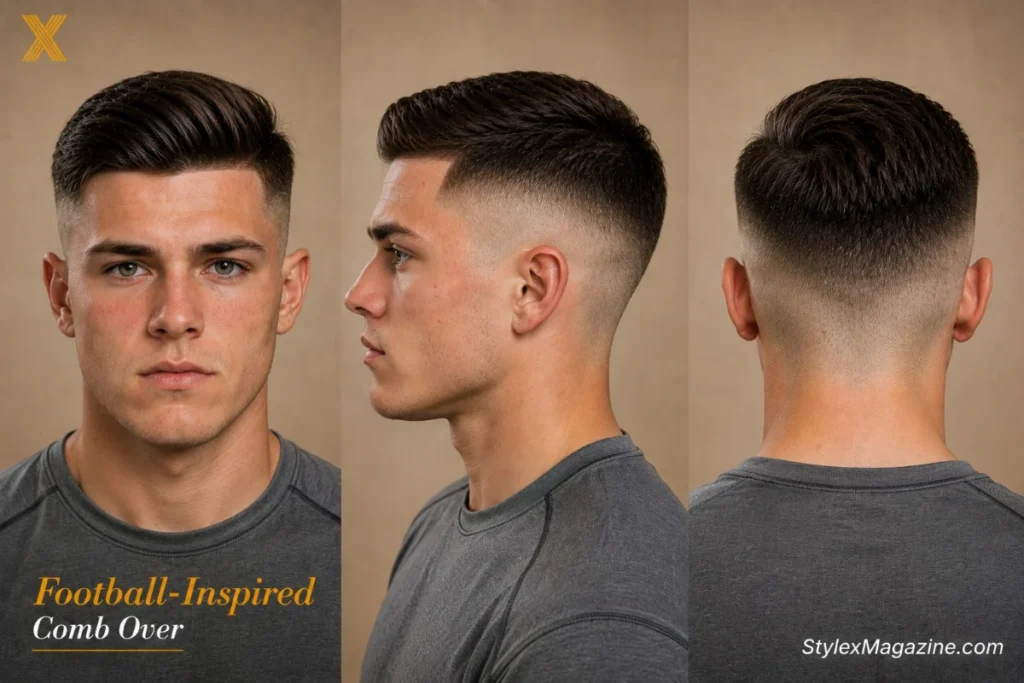
A high or mid fade comb over with a sharp line-up the look favoured on the pitch and in post-match interviews. Bold contrast, short maintenance cycle, built to look sharp under pressure and after a wash.
Best for: Round and square face shapes.
Tell your barber: “Comb over on top — high fade, sharp line-up, keep it tight on the sides.”
Maintenance: Every 1–2 weeks.
Ginger / Red Hair Comb Over
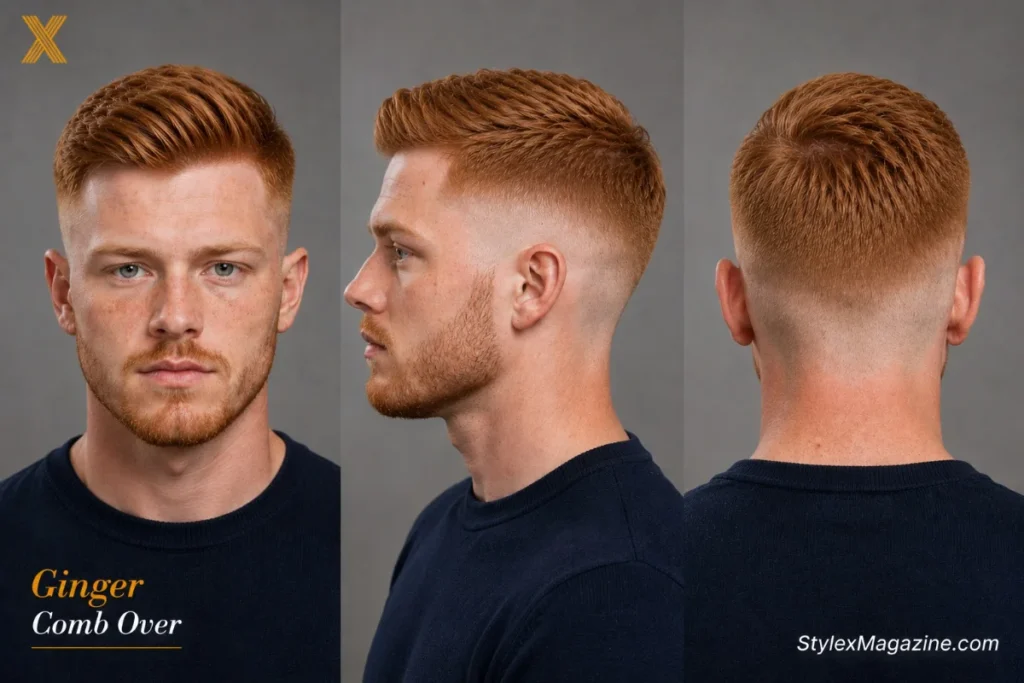
Red and ginger tones show more visible contrast between the comb over top and faded sides than darker hair colors the fade line reads more clearly against lighter or warmer tones. A textured finish suits the natural texture often paired with red hair better than a flat slick.
Best for: Oval and round face shapes.
Tell your barber: “Textured comb over my hair’s lighter, so keep the fade clean since it’ll show more contrast.”
Maintenance: Every 3 weeks.
Blonde Comb Over
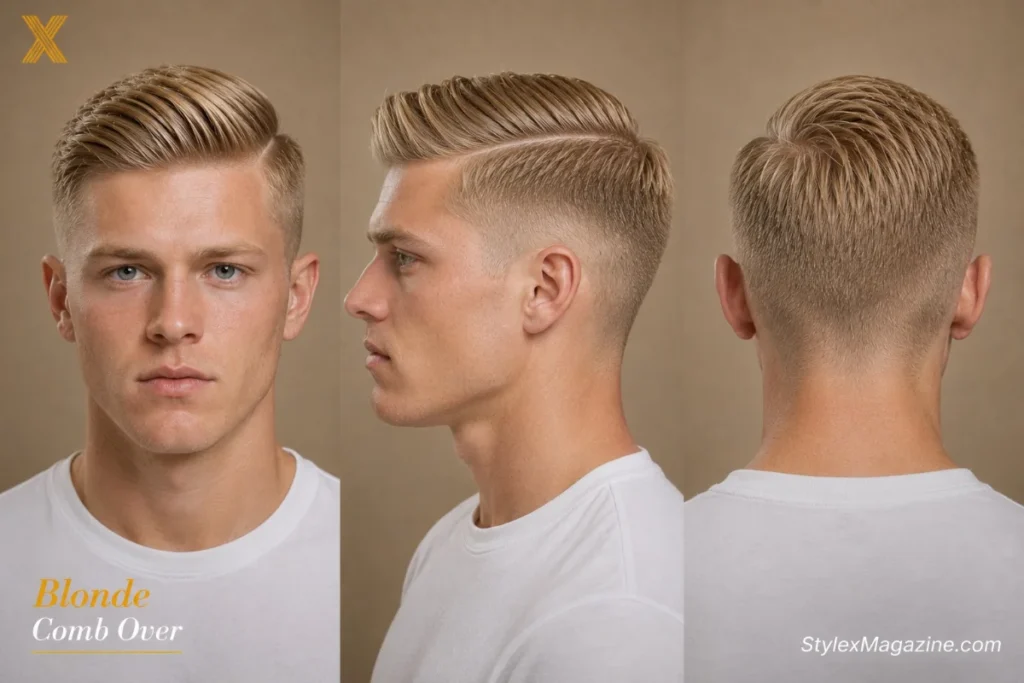
Light hair makes the part line and comb direction more visible than on darker hair precision in the parting matters more here. Works particularly well with a hard part, since the razor line shows clearly against blonde tones.
Best for: Oval and square face shapes.
Tell your barber: “Comb over with a hard part my hair’s light, so the part line needs to be precise.” Maintenance: Every 3 weeks.
Comb Over for Weddings & Formal Events
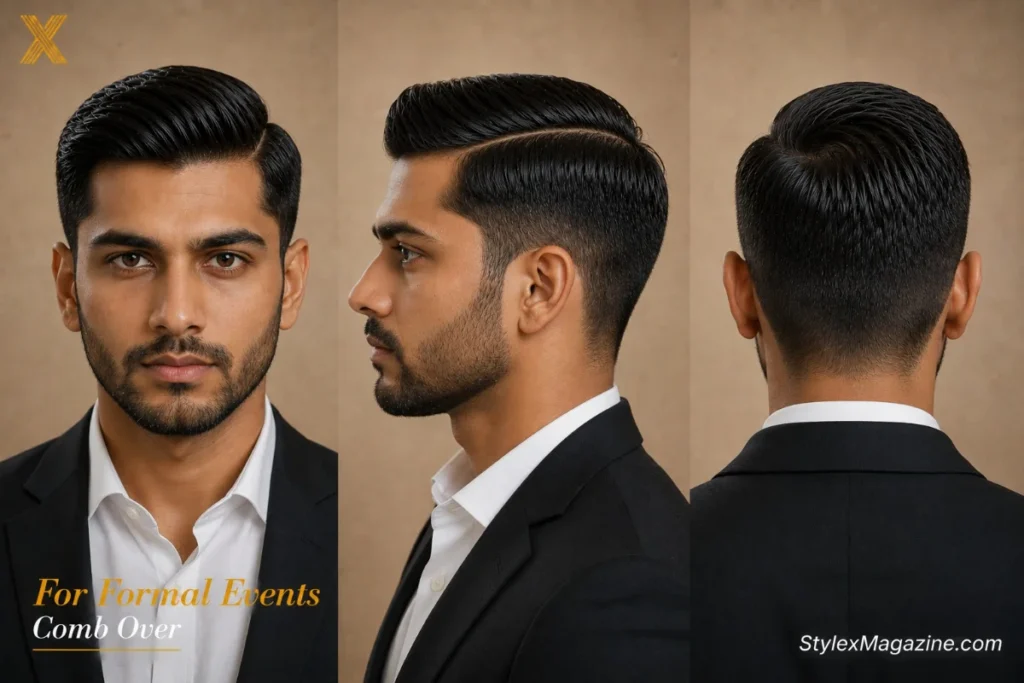
A slicked or classic comb over with a hard part, styled with a stronger hold than usual to last through a full day of photos. Trimmed a few days before the event rather than the same day fresh-cut hair holds product less predictably.
Best for: All face shapes.
Tell your barber: “Classic comb over, hard part, strong hold — book it 3 to 4 days before the event, not the same day.”
Maintenance: One-time styling for the event regular maintenance schedule otherwise.
What Is the Difference Between a Comb Over and a Side Part?
A comb over and a side part describe the same principle — hair parted and combed to one side — but differ in finish and structure.
A side part typically refers to the tighter, more formal version: flat hair, strong hold, clean edges. A comb over is the broader term — it covers everything from the slick formal finish to the loose textured modern version. Most barbers use the terms interchangeably. A side part is one specific execution of the comb over principle — not a separate cut.
When you sit in the chair, specifying the finish slick, textured, or natural — tells the barber more than the label does.
What Is the Difference Between a Comb Over and a Slick Back?
A comb over directs hair laterally from a side part toward the opposite side. A slick back directs hair straight back from the forehead with no side part.
| Comb Over | Slick Back | |
|---|---|---|
| Direction | Lateral — side to side | Backward — front to back |
| Part | Yes — side or hard part | No part |
| Best for | Straight, wavy, thick | Straight, wavy |
| Products | Pomade, wax, paste, clay | Gel, pomade |
| Maintenance | Every 3–4 weeks | Every 3–4 weeks |
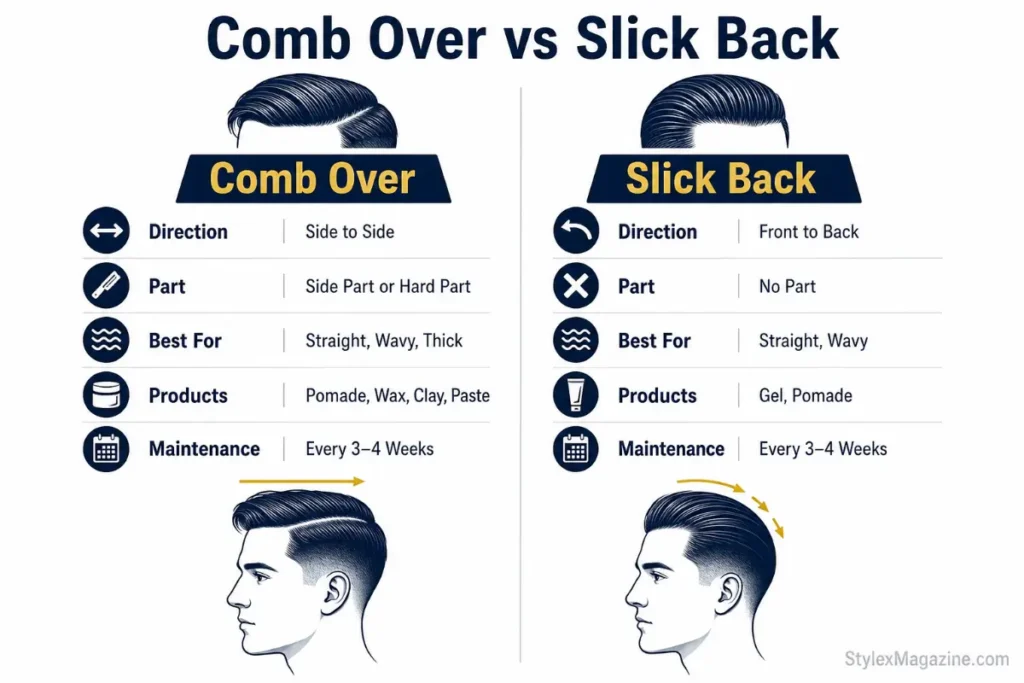
Full slick back breakdown technique, products, and variations — in the slick back hairstyles guide.
Who Should Get a Comb Over Haircut?
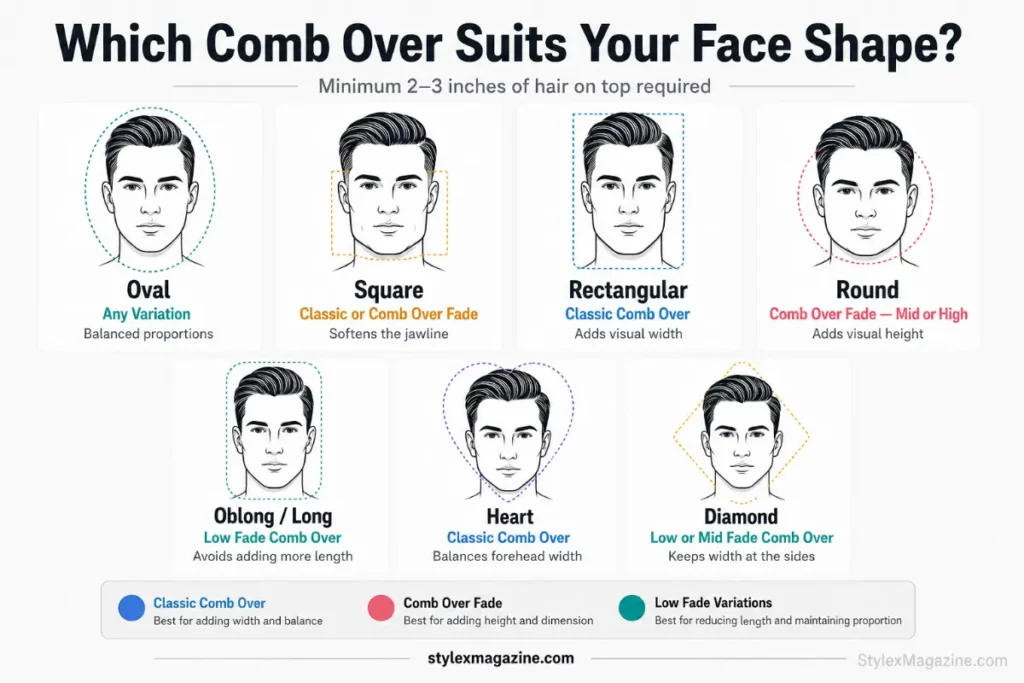
A comb over suits men with straight or wavy hair and oval, square, or rectangular face shapes. Minimum hair length required on top: 2–3 inches.
By Face Shape
By Hair Type
| Hair Type | Best Variation | Key Note |
|---|---|---|
| Straight | Any | Sharpest lines, cleanest finish |
| Wavy | Textured or modern | Natural wave adds volume without effort |
| Thick | Comb over fade | Fade removes bulk on sides |
| Fine / Thin | Classic taper only | Fade at mid or high height exposes scalp |
| Curly | Textured version only | Hair direction fights the comb — keep it loose |
| Thinning / Receding | Classic low taper | Tight taper keeps proportions without exposing the hairline |
| With beard | Any — mid fade comb over most common | Beard adds jaw structure that complements the side-swept top |
Comb over for older men: The classic comb over with a low taper is the strongest option for mature men. Avoid high fades they draw attention to thinning areas rather than framing around them. A natural part rather than a hard-shaved part also reads more proportionate as the hairline changes.
Comb over for balding men: A low taper comb over on thinning hair keeps the sides looking full. Keep the top long enough to comb across not so long it emphasises the thinning. High fade combinations are not recommended on thinning hair.
What Products Does a Comb Over Need?
A comb over requires a medium-hold product — pomade, clay, wax, or paste — applied to damp hair before combing.
- Pomade: High shine, strong hold. Best for the classic slicked finish. Works on straight hair.
- Clay: Matte finish, medium to strong hold. Best for the textured or modern comb over. Adds volume without shine.
- Paste: Light hold, natural finish. Best for a loose, relaxed comb over on wavy or thick hair.
- Wax: Chunky texture, medium hold. Works on short comb overs where definition matters more than volume.
Apply to damp hair — not dry. Start with a small amount, work through from back to front, then comb into the side part direction. Blow drying with a round brush before product gives more volume and holds the direction better on fine hair.
For a detailed breakdown of which products work best for a slick comb over or wet-look finish, see our guide to the best hair gel for slick back hair.
How Often Should You Get a Comb Over?
A comb over with a classic taper lasts 3–4 weeks. A comb over fade lasts 2–3 weeks depending on fade height.
| Variation | Frequency |
|---|---|
| Classic comb over — low taper | Every 3–4 weeks |
| Classic comb over — skin fade | Every 2–3 weeks |
| Comb over fade — low | Every 3 weeks |
| Comb over fade — mid | Every 2–3 weeks |
| Comb over fade — high | Every 2 weeks |
| Hard part (any variation) | Every 2 weeks — hard part grows out first |
| Comb over undercut | Every 3 weeks |
The hard part grows out faster than the fade itself if you’re wearing a hard part, that’s what determines your maintenance schedule.
FAQ
What is a comb over haircut called?
A comb over Also referred to as a side part, side sweep, or — in the tighter pomaded version — a slick side part. All describe the same principle: hair parted and combed laterally to one side.
Is a comb over outdated?
No. The comb over is one of the most consistently requested cuts in barbershops in 2026. The modern version — textured finish, fade or undercut on the sides — is current. The version that looks dated is the flat, heavily-pomaded style on thinning hair used to cover baldness.
Can a comb over work on thin hair?
Yes — with a low taper, not a fade. A fade at mid or high height on thin hair exposes the scalp on the sides. A low taper keeps the sides looking full and the cut looking intentional.
How long does hair need to be for a comb over?
Minimum 2 inches on top. 3–4 inches gives more styling flexibility and holds the comb direction better throughout the day.
What is a hard part comb over?
A hard part comb over has a razor-shaved line at the parting instead of a natural part. The shaved line adds definition and keeps the part consistent between washes. It needs barber maintenance every 2 weeks.

Other Articles
Taper Fade vs Skin Fade: What’s The Difference?

No Comment! Be the first one.