
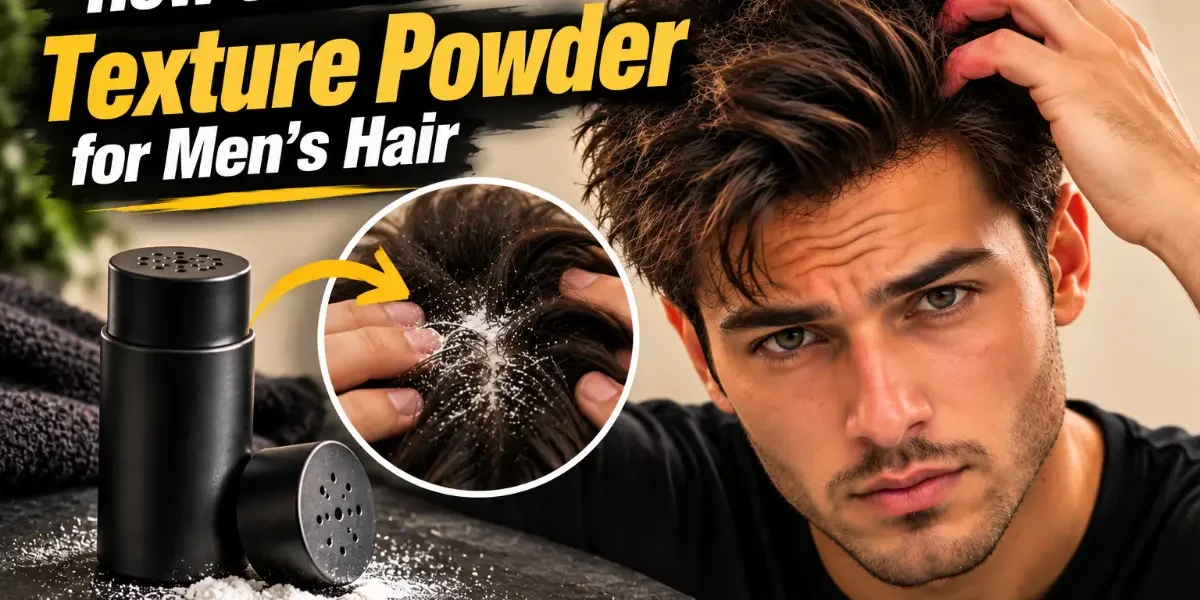

QUICK ANSWER: Apply texture powder to completely dry, cooled hair, never damp. Shake a pea-sized amount into your fingertips, press it into your roots with a circular massage, then flip your head forward for ten seconds to build lift. Style with your fingers once, then leave it. Reapply only at the crown if lift collapses by afternoon.
What Texture Powder Does, and Why It Works?
Texture powder, also called hair styling powder or volumizing powder, is built around one active ingredient: silica silylate. It’s an ultra-fine powder that wedges between hair strands, coating each one with microscopic grip particles that force them apart rather than letting them sit flat against each other.
That separation is the mechanism. It’s not coating your hair in product, and it’s not adding weight. It’s creating friction where there wasn’t any.
The secondary effect matters too. Hair that falls flat by midday isn’t weak hair, it’s hair being pulled down by scalp sebum accumulating at the roots as the day goes on. Silica silylate absorbs that oil, which resets the lift without requiring a re-wash or a re-style.
What you get at the end: matte finish, root volume, strand separation, and hold that doesn’t set hard. No grease. No crunch. Hair that moves when you touch it and goes back to where it was.
Pomade and clay work on a different principle, they coat strands to sculpt or smooth them. Texture powder does the opposite: it separates them. That’s why you can’t replicate this effect with a small amount of matte clay at the roots. Different mechanism entirely.
How to Apply Texture Powder? Step by Step
- Step 1 Blow-dry with direction before you apply anything.
Texture powder sets lift, but it doesn’t create direction. If your hair has no shape before the powder goes in, powder won’t give it one. Blow-dry with a round brush or your fingers in the direction you want it to sit, sweep the front hairline back or to one side, build height at the crown. Let it cool completely. Hot strands can’t hold the powder’s grip.
- Step 2 Tap a small amount into your fingertips — not onto your hair.
One tap of the bottle. A pea-sized amount on your fingertips is the right starting dose. If you shake it directly onto your head, it concentrates where your part is, leaves a dusty white line, and leaves the roots underneath barely touched. Keep control from the start.
- Step 3 Press into the roots at the crown and front hairline.
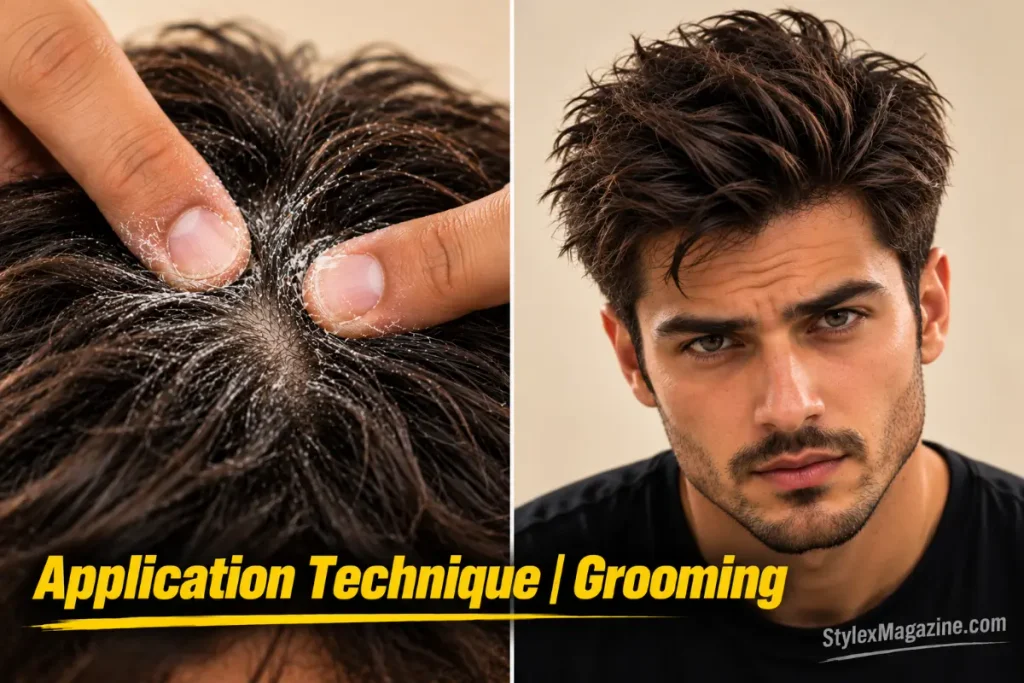
Don’t drag your fingers across the surface. Press fingertips flat to the scalp and move in tight circles — you’re working the powder between the base of the hair shaft and the scalp, not coating the outside of strands. Surface application is what causes the chalky, dusty look.
- Step 4 Flip your head forward and massage for ten seconds.
Invert completely. Gravity pulls your hair away from the scalp and lets the powder reach the root base more evenly. Keep massaging. Flip back up slowly and your hair should fall with noticeably more body than before you started.
- Step 5 Shape once with your fingers, then stop.
Run your fingers through to set the direction. Use a wide-tooth comb if you want cleaner definition at the front. After that, leave it. Every time you handle your hair you transfer scalp oil from your fingers and break down the powder’s friction grip. Style once, walk away.
StyleX Tip: If volume collapses two hours in, don’t re-apply all over. Press two fingertips to the crown only and massage for five seconds. The existing powder reactivates — you don’t need more product.
How to Use It on Different Hair Types?
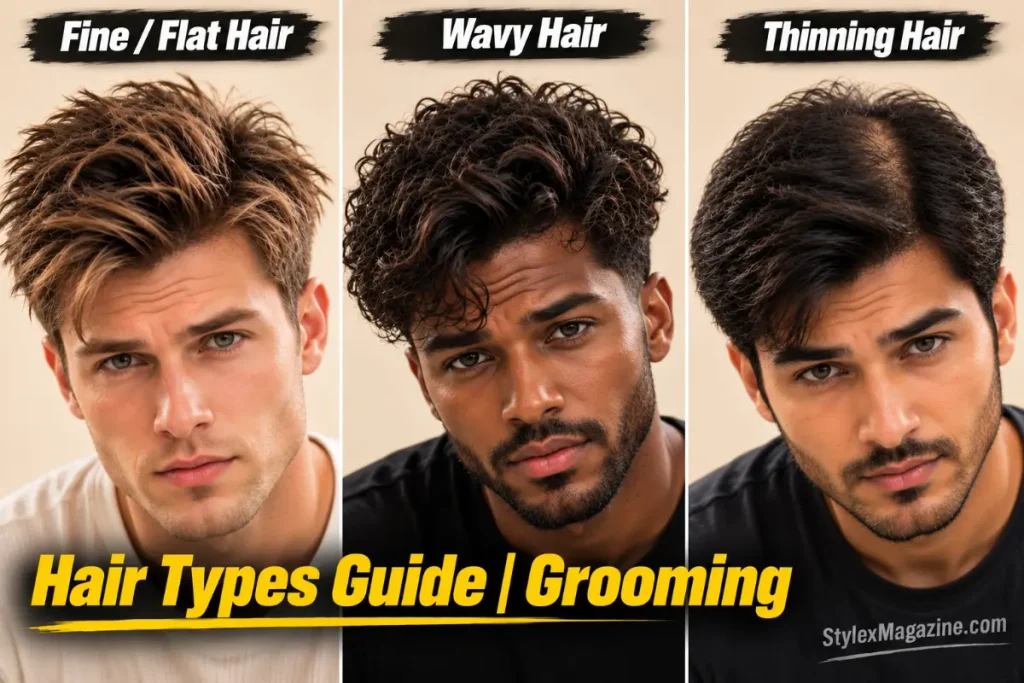
No competitor covers this with enough precision. Here’s the technique variation that matters by hair type:
| Hair Type | Where to Apply | Technique | What to Expect |
| Fine / flat | Roots at crown and front hairline | Circular press + head flip | High lift — the hair type powder was built for |
| Straight / thick | Roots first, light rake through mid-lengths | Rake outward, not downward | Better separation and reduced surface bulk |
| Wavy | Roots only | Fingertip press — no scrunching | Root lift without disrupting wave pattern |
| Thinning | Crown and parting line only | Gentle press — no hard massage | Appearance of fullness; evens out with less pressure |
| Curly | Roots only, half normal amount | Light press and lift — never rake | Minor root volume without frizzing the curl |
When to skip it: Coarse, dense hair with natural body doesn’t gain much from texture powder. It already has the volume and separation. Clay or a matte pomade gives this hair type more return on the same effort.
Three Mistakes That Kill the Effect
- Mistake 1 Shaking it directly onto your hair from above.
This concentrates the powder at the part line, gives you a dusty deposit you can see, and leaves the roots underneath barely touched. Fingertips first — then roots. Always.
- Mistake 2 Applying to warm hair straight from the dryer.
The cuticle is still open from the heat and the powder absorbs unevenly. Your hair also hasn’t set into the shape you blew it into yet. Give it sixty full seconds after the dryer goes off before you touch any product.
- Mistake 3 Deciding it isn’t working after five seconds.
The powder doesn’t activate on contact — it activates through the massage and through the natural heat and movement of styling. Apply, massage firmly for fifteen seconds, flip forward, flip back. Then judge. Deciding it isn’t working at the moment the powder lands on your fingertip is what leads to using three times too much — which leads to stiff, chalky hair that most men then blame on the product.
How to Stack It with Other Products?
Texture powder alone handles fine, flat, or short hair well. When you need more structure, medium-length hair, stronger hold, or a more defined finish, it works better as part of a two-step routine.
| Combination | Order | What It Delivers |
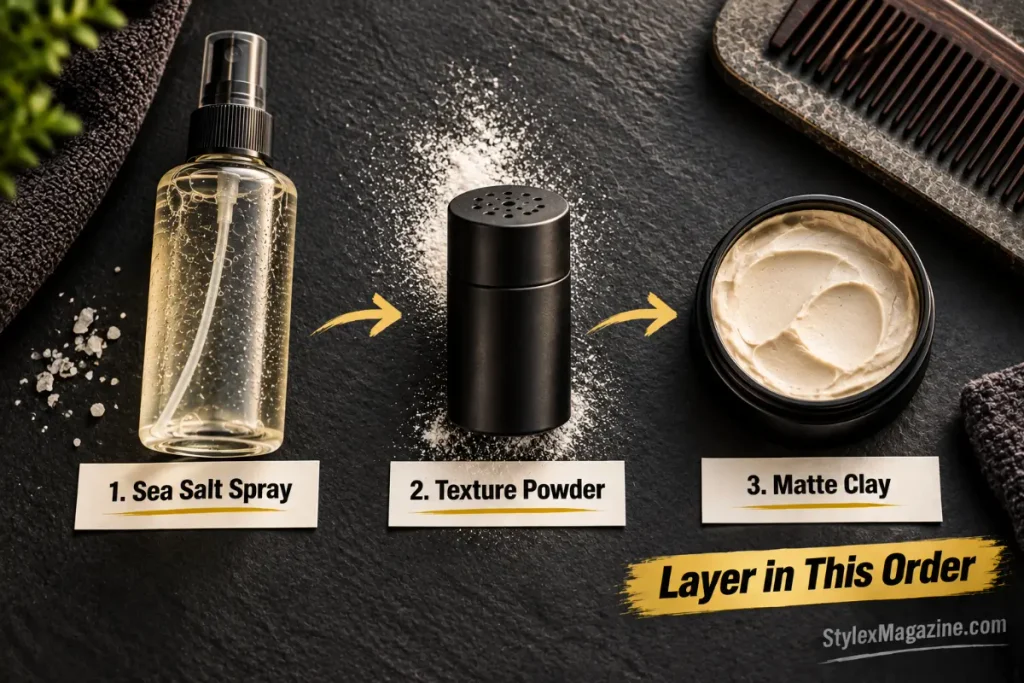
| Sea salt spray → texture powder | Salt spray on damp hair, blow-dry fully, then powder at dry roots | Beach-style separation through lengths + root volume. Spray handles texture; powder handles lift. |
| Texture powder → matte clay | Powder at roots on dry hair first, then thumbnail-sized clay through top section | Lifted base + structured hold on top. Best for crops, quiffs, and textured fringes. |
| Texture powder → light pomade | Powder at roots, pomade pressed between palms and worked through mid-lengths only | Matte volume underneath + subtle low-shine finish on top. Suits side-part styles. |
One rule across all combinations: powder goes on dry hair, last. Any cream, spray, or liquid product goes on first, on damp hair, then dry completely, then add powder. Reversing the order cuts the hold of both products.
If you already use sea salt spray as your regular pre-styler, it pairs better with texture powder than most products do. Salt spray builds grip through the lengths; powder lifts from the root. They target different parts of the hair shaft and compound each other’s effect rather than competing.
Texture Powder vs Dry Shampoo — Are They the Same?
No, and using one when you need the other is a reliable way to be disappointed by both.
Dry shampoo targets oil at the scalp. Its job is to absorb grease so your hair looks less greasy between washes. Volume is a side effect of oil absorption, not the design goal. It has no hold agent. The lift it creates disappears the moment you touch your hair.
Texture powder targets lift and grip. It absorbs some oil too, but silica silylate is specifically selected for creating friction between strands and holding them apart — that hold lasts through the day.
If you spray dry shampoo expecting the lift that texture powder provides, it won’t deliver. If you use texture powder as a substitute for washing your hair, you’ll get root buildup faster than dry shampoo would cause it.
They solve different problems. The overlap is surface-level.
Scalp Care and Wash Routine
This is where most guides stop short, and it’s exactly why texture powder “stops working” for a lot of men after a few weeks of daily use.
Silica silylate is a fine, oil-absorbing particle. Used daily without thorough washing, it builds up at the root base alongside the sebum it’s absorbed. After five to seven days, the roots feel coated rather than lifted — the powder has nowhere to grip because the base layer has become a residue of old product and oil.
The routine that prevents this:
• Wash every one to two days with a regular shampoo — texture powder doesn’t need a rest day but your scalp does.
• Run a clarifying shampoo through your roots once a week if you use powder four or more times a week. Clarifying removes the silica buildup that regular shampoo sometimes misses.
• Don’t condition at the scalp. Conditioner applied to roots adds slip — which works against powder’s friction grip the following morning. Mid-lengths and ends only.
Men who say texture powder worked for two weeks then lost its effect haven’t found a bad product. They’ve let buildup take over. A single clarifying wash resets it within one use.
FAQs
Can texture powder be used right after a haircut?
Yes. A fresh cut is when texture powder performs best. Clean, product-free strands with no existing buildup at the roots absorb powder faster and hold lift longer than hair that’s been styled for two or three days in a row.
Does texture powder work in humidity?
It holds reasonably well in moderate humidity. In high humidity — a rainy day, a hot kitchen — it breaks down faster than clay or pomade, because water vapour partially reactivates the sebum the powder absorbed. A light pass of hairspray over the finished style before you leave extends the hold significantly in these conditions.
Can texture powder replace pomade?
No — they’re not substitutes. Texture powder lifts and separates from the root, delivers matte finish, and has medium hold. Pomade sculpts and smooths from mid-length to tip, delivers shine or low-shine finish, and generally holds stronger. For short crops and textured styles that need lift without weight, powder often removes the need for pomade entirely. For side parts and slick styles, pomade is the right tool and powder adds nothing useful.
Will texture powder show up white on dark hair?
Only if you over-apply or leave it sitting on the surface. A correctly sized amount — one tap, pressed into the roots and massaged in — blends invisibly on dark hair. The issue is surface application, not the product itself. If you can see it, you applied too much or didn’t work it into the base.
Can you use texture powder the same morning you wash your hair?
Yes — and that’s the best time to use it. Freshly washed, product-free roots absorb texture powder the cleanest and hold the lift the longest. The days immediately after washing outperform days two and three in terms of both lift height and hold duration.

Other Articles

Matte vs Shine Hair: How to Choose the Right Hair Finish?
How to Use Hair Wax? The 30-Second Styling Window Most Men Miss

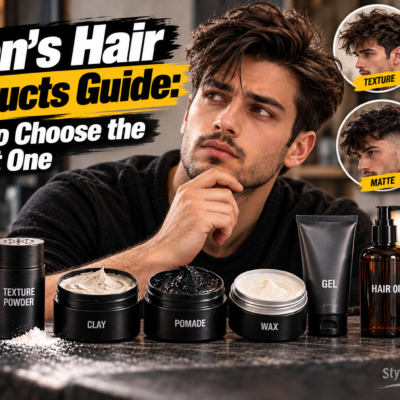


[…] Texture powder adds friction and volume at the root with no weight at all, so it is the one product fine hair can use freely. Full method in how to use texture powder. […]
[…] more sebum than the product can absorb. Switch to a clay with higher kaolin content, or apply texture powder at the roots at hour four. It reactivates the matte effect without […]