
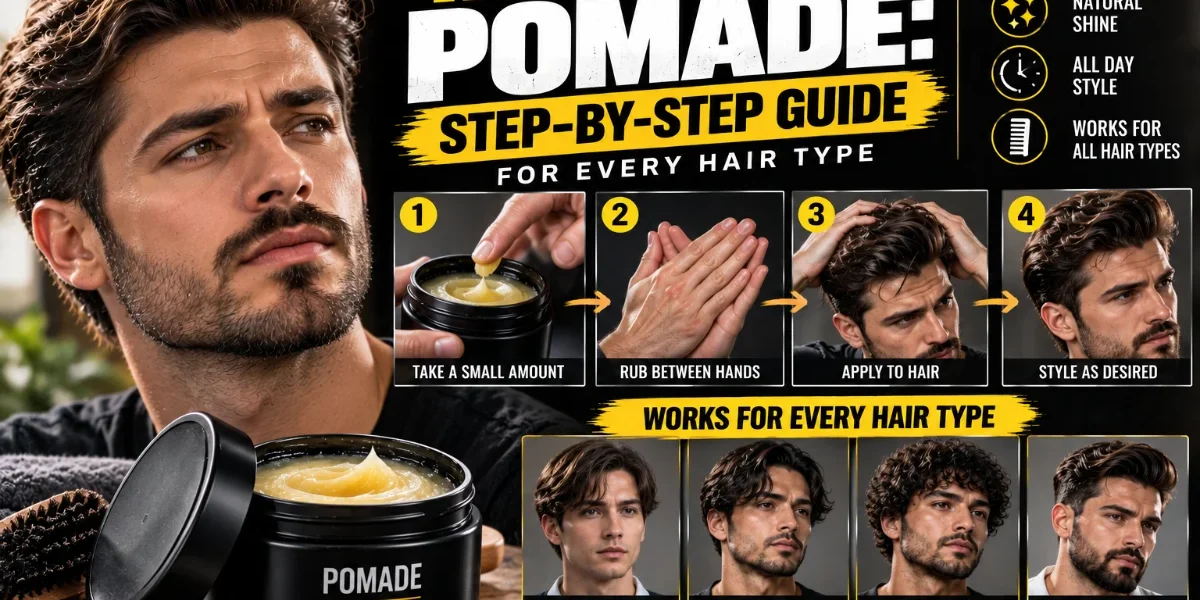

Quick Answer: Scoop a pea-to-dime-sized amount. Warm it between your palms for 10-15 seconds until translucent. Apply from the back of your head forward, working from roots to ends. Style with a comb for a polished finish or fingers for texture. Water-based pomade washes out easily and suits beginners. Oil-based gives stronger hold and classic shine.
Nine out of ten men who sit in my chair with pomade complaints are using the right product the wrong way. Too much product, applied cold, slapped onto dry hair from front to back. The pomade itself is fine. The technique is what separates a style that holds all day from one that falls flat by noon.
Pomade is the single most flexible styling product a man can own. It handles everything from a polished slick back to a textured crop to a structured comb over. But each of those needs a slightly different amount, a different application surface (damp or dry), and a different finishing tool (comb or fingers). This page covers all of it.
What Type of Pomade Do You Need?
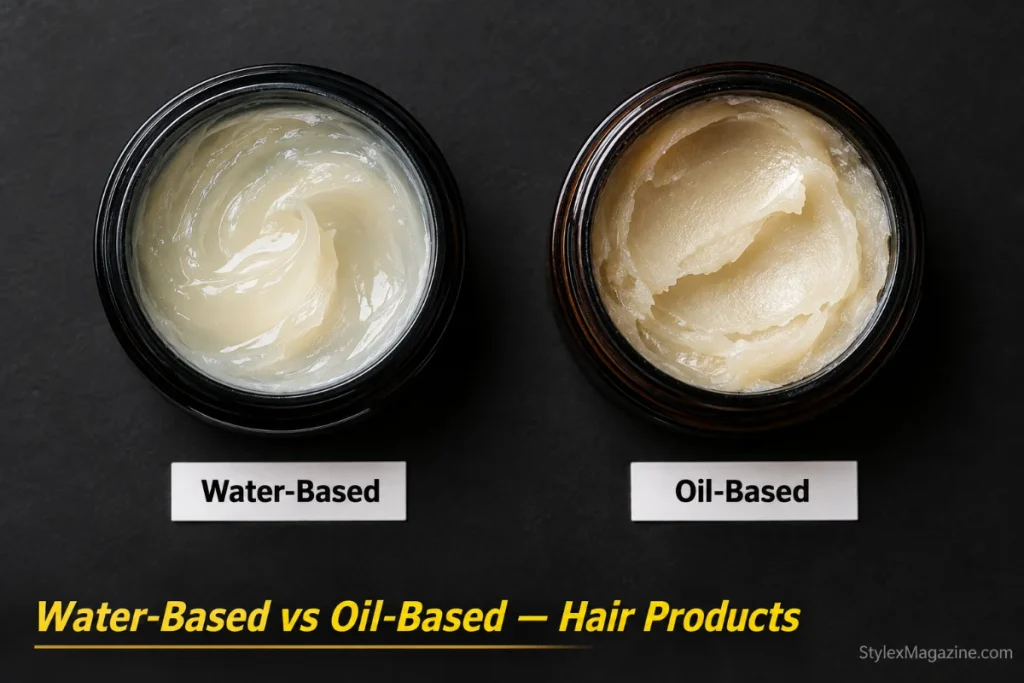
Two types. The difference is what they wash out with.
Water-based pomade: Washes out with regular shampoo and water. Medium hold. Easier to restyle mid-day by dampening your hands and running them through your hair. No heavy buildup. Beginners should start here.
Oil-based pomade: Requires a degreasing shampoo or dish soap to remove. Stronger hold. Classic high shine. Stays in your hair across multiple days, which some men prefer because it builds up and actually styles easier on day two. Heavier feel.
Hold strength matters as much as base type:
| Hold Level | Best For | Hair Types |
|---|---|---|
| Light hold | Natural, relaxed styles. Tousled texture. | Fine and thin hair |
| Medium hold | Side parts, casual slick backs, quiffs. Everyday use. | All hair types |
| Strong hold | Pompadours, high-volume styles, thick unruly hair. | Thick and coarse hair |
Finish: Pomades range from high shine (wet look) to matte (natural look). High shine suits slick backs and formal styles. Matte suits textured, casual styles. Pick the finish based on the look you want, not the hold level.
How Do You Apply Pomade Step by Step?
Step 1: Start with clean, towel-dried hair. Wash your hair and towel dry until it is roughly 80% dry, damp but not dripping. Slightly damp hair helps pomade spread evenly and provides a smoother finish. Completely dry hair gives more hold but makes the product harder to distribute. For a polished, slick style, work with damp hair. For textured, matte styles, work with dry hair.
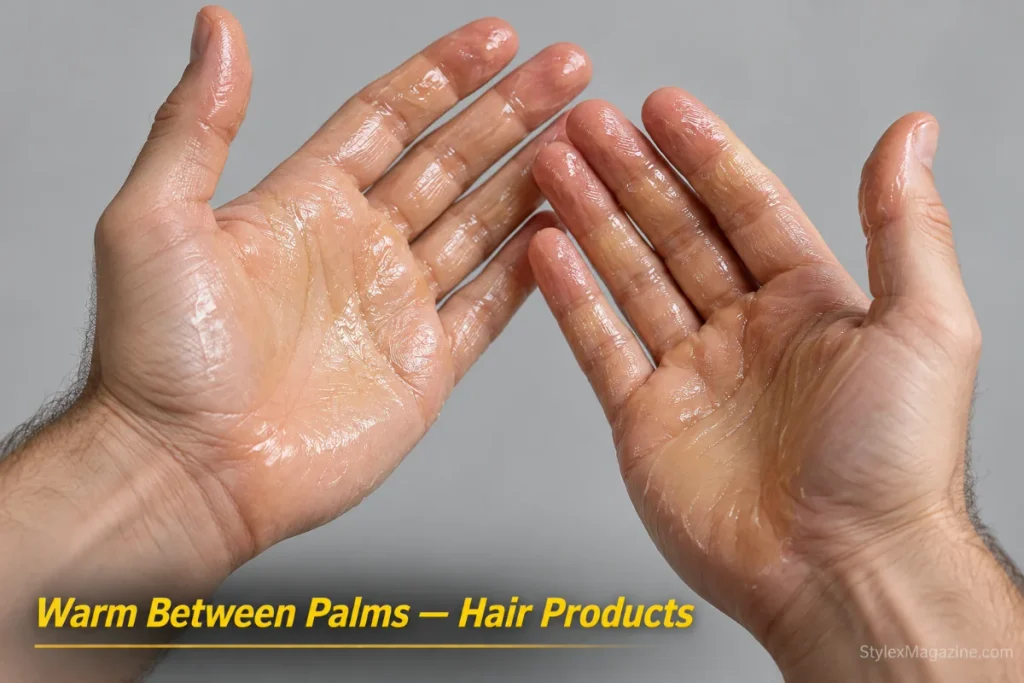
Step 2: Scoop and warm. Scoop a small amount (see the next section for exact amounts by hair length). Rub it between your palms for 10-15 seconds until it becomes translucent and warm. Cold pomade clumps. Warm pomade spreads. This step is not optional.
Step 3: Apply from back to front. Start at the crown and work forward toward the hairline. Use your fingertips to work the pomade through from roots to ends. Starting at the back prevents visible buildup at the hairline where people actually look at you.
Step 4: Get the sides and underneath. Run your fingers through the sides and the hair behind your ears. Most men forget these areas, and unstyled sides ruin an otherwise clean look by midday.
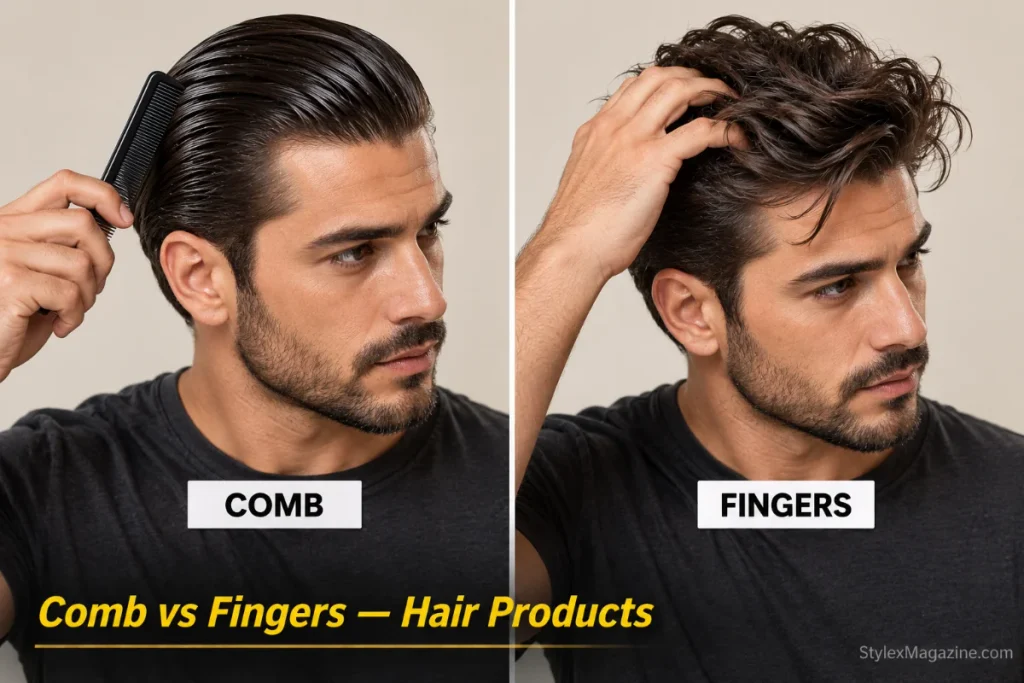
Step 5: Style and shape. Comb for a polished finish (slick back, side part, pompadour). Fingers for a textured, natural finish (quiff, messy crop, tousled look). Use your palms to smooth and compress the final shape. The warmth from your hands helps the pomade set.
Step 6: Let it rest. Do not touch it for 2-3 minutes after shaping. The pomade needs time to set. Every adjustment after this point weakens the hold.
How Much Pomade Should You Use?
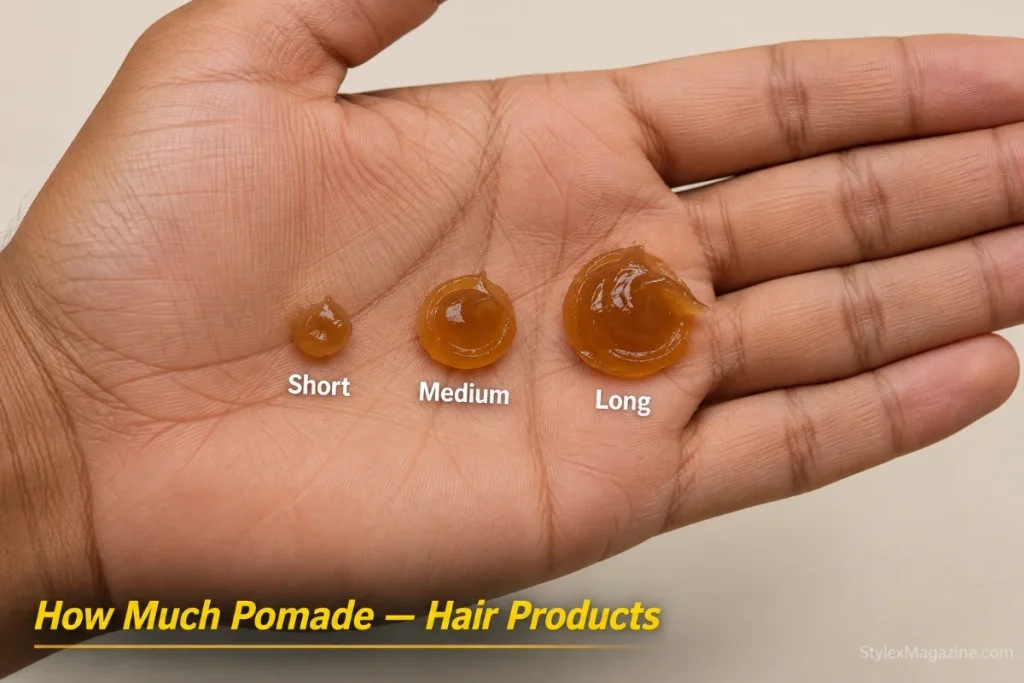
Less than you think. Always.
| Hair Length | Starting Amount | Add More If |
|---|---|---|
| Short (under 2 inches) | Pea-sized | Never for most styles |
| Medium (2-4 inches) | Dime-sized | Hair is thick or coarse |
| Long (4+ inches) | Nickel-sized | Ends are uncontrolled |
You can add more pomade. You cannot remove excess without washing and starting over. Build in thin layers: a light base layer first, style roughly into place, then a second thin layer only where you need extra control. This layering technique gives maximum hold with minimum product.
How Do You Use Pomade on Different Hair Types?
The steps above stay the same. The adjustments below make them work for your specific hair.
Thick hair: Start with a dime-to-nickel amount even for medium length. Use a strong-hold pomade (oil-based or high-hold water-based). Work it through in sections rather than all at once, because thick hair resists distribution. Blow-dry first for the best results on structured styles like pompadours.
Thin or fine hair: Use less product than any other type. A pea-sized amount of lightweight water-based pomade. Heavy or oil-based formulas weigh fine hair down and make it look thinner than it is. Apply only to damp hair. Dry application on fine hair creates visible product lines and clumping.
Curly or wavy hair: Water-based pomade on damp hair defines curls without the crunch gel creates. Work it through with your fingers only. A comb stretches curls out and creates frizz. Scrunch upward while applying to encourage the curl pattern. Start with less product than you would on straight hair because curls hold shape naturally.
Straight hair: The most predictable type to style with pomade. Both water-based and oil-based work well depending on the shine you want. Straight hair shows product buildup faster, so use just enough and avoid layering product on consecutive days without washing first.
What Styles Can You Create with Pomade?
Pomade is pliable and reworkable, so it handles more hairstyles than gel, wax, or clay alone. Here are the five most requested in the shop, each with the pomade type and application technique that works best.
Slick Back: Apply water-based pomade to damp hair, comb straight back from the hairline. Medium to strong hold. High-shine finish. The full technique and 25 variations are in the slick back hairstyles guide.
Side Part: Create a defined part with a fine-tooth comb, smooth each half into place. Medium hold. Add extra product to the shorter side for control. The comb over guide covers side part variations in detail.
Pompadour: Blow-dry hair upward first for volume, then apply strong-hold pomade from roots. Comb up and slightly back at the front. Oil-based gives the classic rockabilly shine.
Textured Crop: Apply a small amount of matte pomade to dry hair. Use fingers to scrunch and separate for a natural, broken texture. No comb. For piece separation that locks in place and holds all day without rechecking, hair wax gives a firmer, more permanent hold on short hair. For more grit and zero shine, clay outperforms matte pomade here, see how to use hair clay.
Quiff: Apply to towel-dried hair, push forward and up at the front, use fingers (not a comb) to break up the texture for a modern, lived-in finish. Medium hold.
How Do You Maintain a Pomade Style Throughout the Day?
Water-based pomade: Dampen your hands slightly and run them through your hair to reactivate the hold. Recomb or reshape with fingers. This takes 30 seconds and works 2-3 times before you need fresh product.
Oil-based pomade: A light recomb in the morning is usually all you need. Oil-based does not wash out with water, so the hold carries across multiple days. Some men wash only 2-3 times per week and find the buildup actually makes styling easier on day two and three.
Removing buildup: Water-based rinses out with regular shampoo. Oil-based needs a degreasing shampoo or a double wash with conditioner first (to break down the oil) followed by shampoo. Use a clarifying shampoo once a week regardless of pomade type to prevent long-term scalp buildup.
What Are the Most Common Pomade Mistakes?

1. Using too much product. The result is flat, greasy hair that attracts dust and lint by afternoon. The fix is not adding more product to compensate. The fix is washing and starting over. There is no way to remove excess pomade without water.
2. Matching the wrong pomade type to your hair. Oil-based on fine hair creates a wet, flat look that no amount of restyling corrects. Water-based on very thick, coarse hair in humid weather loses hold within two hours. Match the weight of the product to the weight of your hair.
3. Layering fresh pomade over yesterday’s product without washing first. Water-based builds up into white flakes. Oil-based becomes a waxy coating that suffocates the scalp. If you are a daily styler, wash every other day at minimum. Oil-based users who skip washes should limit that to two consecutive days.
4. Using a fine-tooth comb on curly or wavy hair after applying. The comb stretches the curl pattern, creates frizz, and distributes the product unevenly across the straightened strands. Curly and wavy hair should only be styled with fingers after pomade application.
5. Blow-drying after pomade application instead of before. Heat after application melts the hold and redistributes the product away from where you placed it. Blow-dry first to create volume and shape, then apply pomade to the dry or nearly dry hair to lock that shape in place.
FAQs
Can I use pomade every day?
Water-based, yes. It washes out cleanly, so daily use causes no buildup issues as long as you shampoo regularly. Oil-based pomade is different: daily application without washing between uses stacks layers of product, which can clog pores and weigh hair down by day three or four. If you use oil-based daily, wash with a degreasing shampoo every second day.
How do I choose between pomade and clay?
Pomade gives shine and stays pliable throughout the day, meaning you can recomb and rework the style. Clay gives a matte, dry finish with a firmer hold that sets and stays. If you want a polished, shiny look (slick back, side part), pomade. If you want a textured, natural-looking finish with no shine (textured crop, messy fringe), clay. Clay also adds grit and volume that pomade cannot match, making it better for fine hair that needs body.
Is pomade bad for your hair?
Pomade itself is not harmful when used in the right amount and removed regularly. Water-based formulas are gentler on the scalp. Oil-based can clog pores if left in too long without washing. The biggest risk is over-application, which weighs hair down and attracts dirt. Use the right amount for your hair length and wash on schedule.
What is the difference between pomade and gel?
Pomade stays flexible after setting. You can recomb and restyle throughout the day without adding more product. Gel hardens and creates a stiff, crunchy hold that cannot be reshaped once dry. Pomade offers shine without the cast. For the full gel breakdown, see the best hair gel for slick back guide.
Can pomade cause hair loss?
Pomade does not cause hair loss. Hair loss is driven by genetics and DHT sensitivity, not styling products. However, pomade left in the hair too long can cause scalp irritation and clogged follicles, which may weaken existing hair over time. Wash on schedule and you have no risk.
How do I fix greasy-looking pomade hair?
You used too much. If you can rework it, run a dry towel through your hair to absorb excess oil, then recomb. If it is beyond saving, wash your hair and start over with a smaller amount. For oil-based pomade, apply dry shampoo or texture powder at the roots to absorb the shine.

Other Articles
How to Use Hair Clay? Step-by-Step Guide for Every Hair Type
25+ Beard Styles for Men: Find Your Best Look (2026)


[…] other product in your kit gives you time. Pomade stays pliable for hours. Clay firms up gradually over five minutes. Sea salt spray needs to air dry […]
[…] Pomade splits into two families that share a name and almost nothing else. Water-based rinses out in the shower and holds a sharper shape; oil-based keeps hair pliable for days and needs a degreaser to shift. The practical differences sit in water-based vs oil-based pomade, and the application method is covered in how to use pomade. […]