
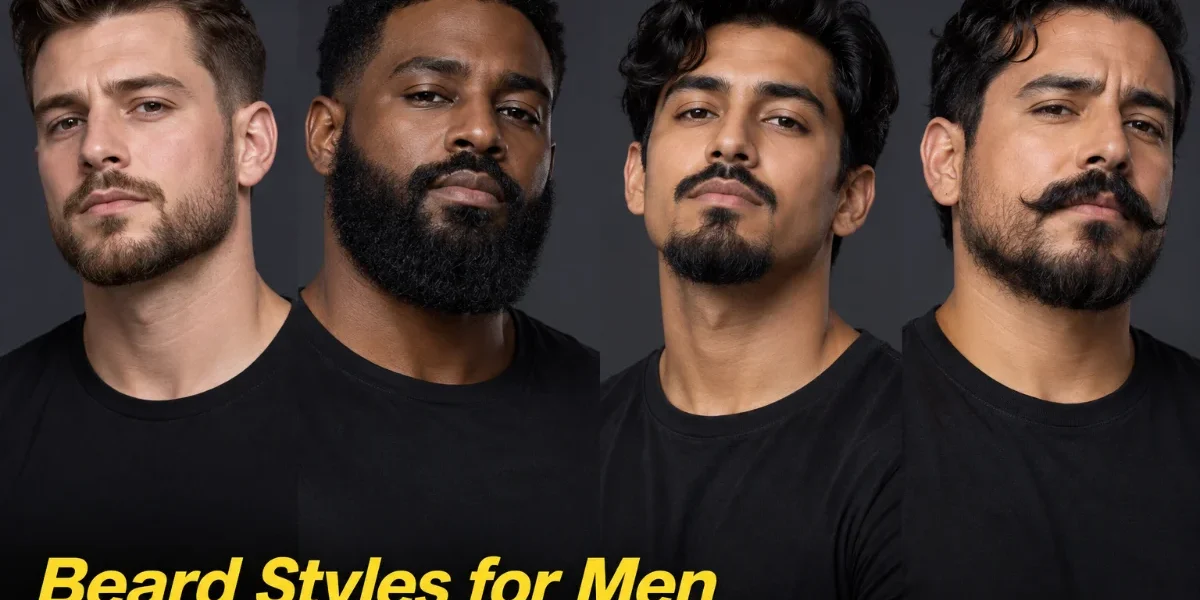

Quick Answer: Beard styles fall into five categories: full beards, short beards, goatee and chin-focused styles, partial and jawline styles, and mustache-forward styles. The right one depends on three factors: your natural growth pattern, your face shape, and how much time you will spend maintaining it. Start with what grows in well, not what looks good on someone else.
What Are the Main Types of Beard Styles?
Every beard style falls into one of five categories, and knowing which category fits your growth pattern narrows the field immediately. There are roughly 30 to 50 named facial hair styles, but they all trace back to these five groups.
Full beards cover the cheeks, jaw, and chin with even, connected hair. They need dense, consistent growth across the entire face. If your cheeks grow in patchy, a full beard will highlight that rather than hide it.
Short beards sit between stubble and full coverage, typically 3 to 20mm. They include the short boxed beard, corporate beard, heavy stubble, and designer stubble. These are the most forgiving styles for uneven growth because shorter hair minimizes the visual gap between thick and thin areas. More on each in our short beard styles guide.
Goatee and chin-focused styles concentrate hair on the chin and mustache while keeping the cheeks clean. Goatees, Van Dykes, anchor beards, circle beards, Balbos, and soul patches all belong here. They sidestep patchy cheeks entirely by focusing on the areas where most men grow hair well.
Partial and jawline styles frame specific parts of the face. Chin straps trace the jawline ear to ear. Mutton chops cover the sideburns and cheeks but leave the chin bare. These are deliberate, high-contrast styles that demand clean lines.
Mustache-forward styles make the mustache the dominant feature, with anything from stubble to a short beard playing a supporting role. The beardstache (a full mustache paired with light stubble) is the most common version right now.
Which Beard Styles Work for Full Beards?
Full beards require dense, even growth across the cheeks, jaw, and chin. If your hair connects from sideburn to chin without visible gaps, you have the coverage for this category.
Full Beard (Classic)
The standard full beard covers the entire lower face with even length and a defined neckline. The 2026 version is more shaped than the grow-it-and-forget-it look from a decade ago: a defined cheek line, a clean neckline sitting just above the Adam’s apple, and consistent length maintained with a trimmer. For everything from low to heavy full beards, see our full beard styles guide.
Ducktail Beard
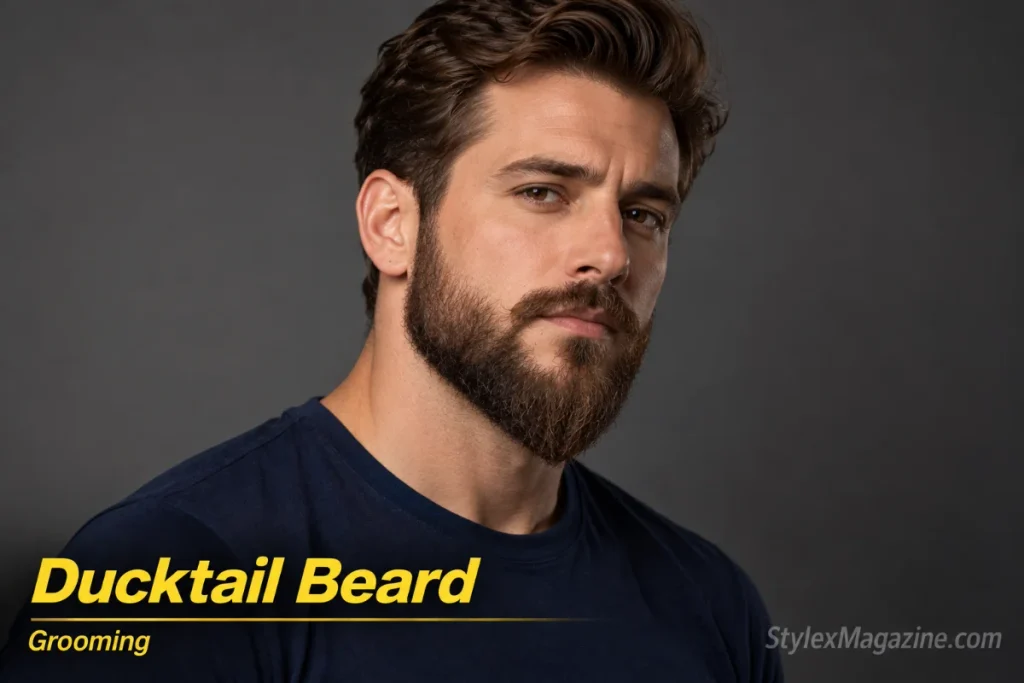
A full beard that tapers to a point at the chin, creating a tapered, V-shaped silhouette. The ducktail adds length and angularity without the width of a Garibaldi, making it a strong option for round faces. It requires more shaping than a natural full beard because the taper must stay symmetrical. The longer the chin section grows, the more pronounced the ducktail shape becomes.
Garibaldi
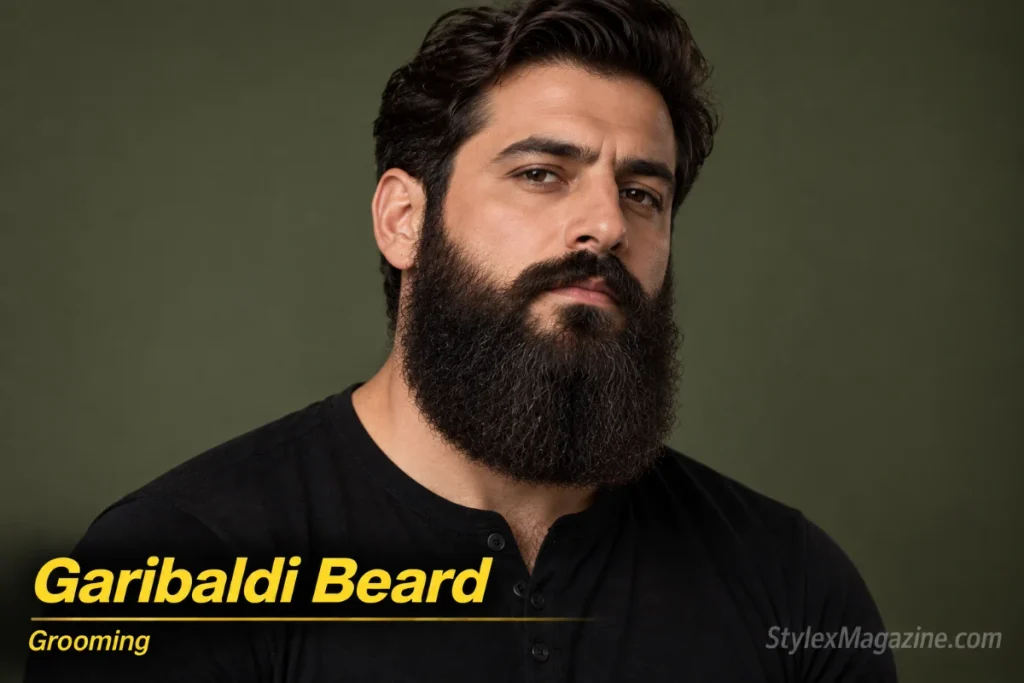
A wide, rounded full beard grown to 15 to 20cm with a natural bottom edge. Named after Italian general Giuseppe Garibaldi. The rounded shape distinguishes it from boxed or squared beards. It requires the density to fill out without looking sparse at the edges, and regular combing to train the rounded silhouette.
Bandholz (Yeard)
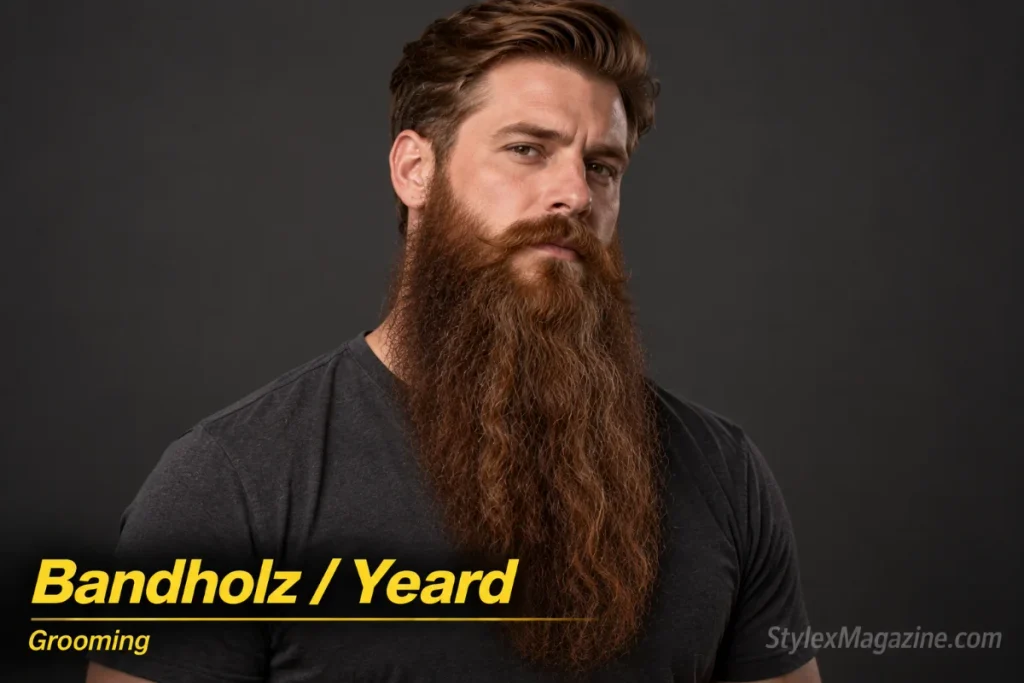
A beard grown for a full year or more without shaping. The Bandholz demands patience through the awkward mid-length stages (weeks 4 through 12 are the worst) and daily conditioning to prevent brittleness. Low trimming maintenance, high conditioning maintenance.
Verdi
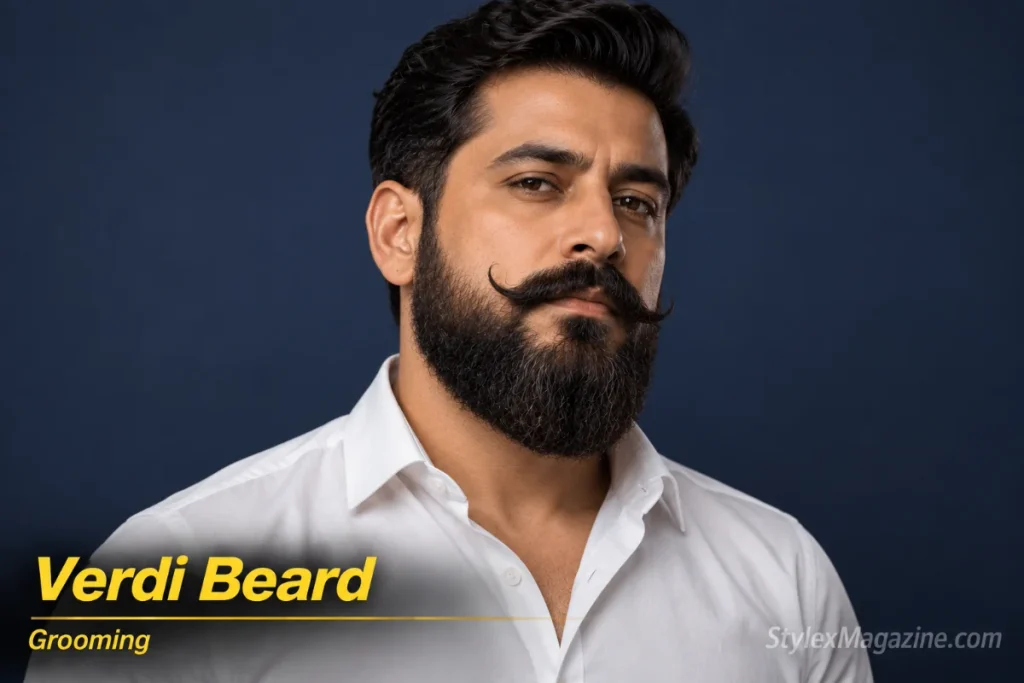
A full, rounded beard paired with a shaped, slightly upturned mustache. The mustache is the defining feature here, styled with wax to hold its shape independently from the beard. Without mustache styling, a Verdi looks like an ordinary full beard.
Viking
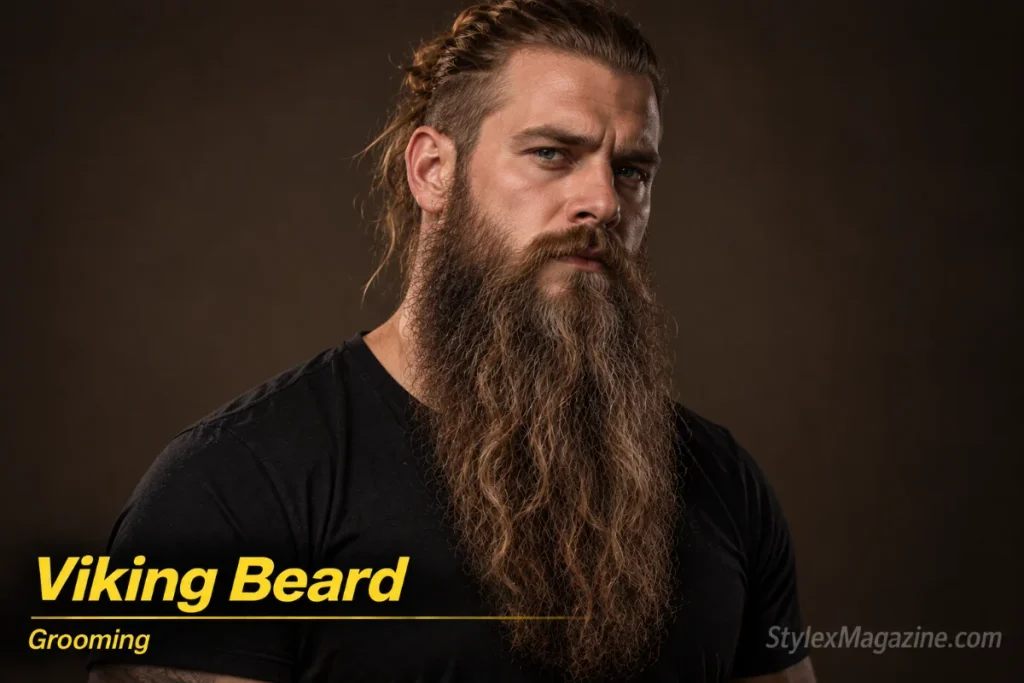
A long, rugged beard worn with minimal shaping. Popularized by television and film rather than historical accuracy, but the style itself works for men with extremely dense, fast-growing facial hair who want presence over precision.
Which Beard Styles Work for Shorter Beards?
Short beards sit between 3 and 20mm and are the most practical starting point for most men. They minimize the contrast between patchy and full areas, grow out cleanly, and require less daily maintenance than longer styles.
Short Boxed Beard
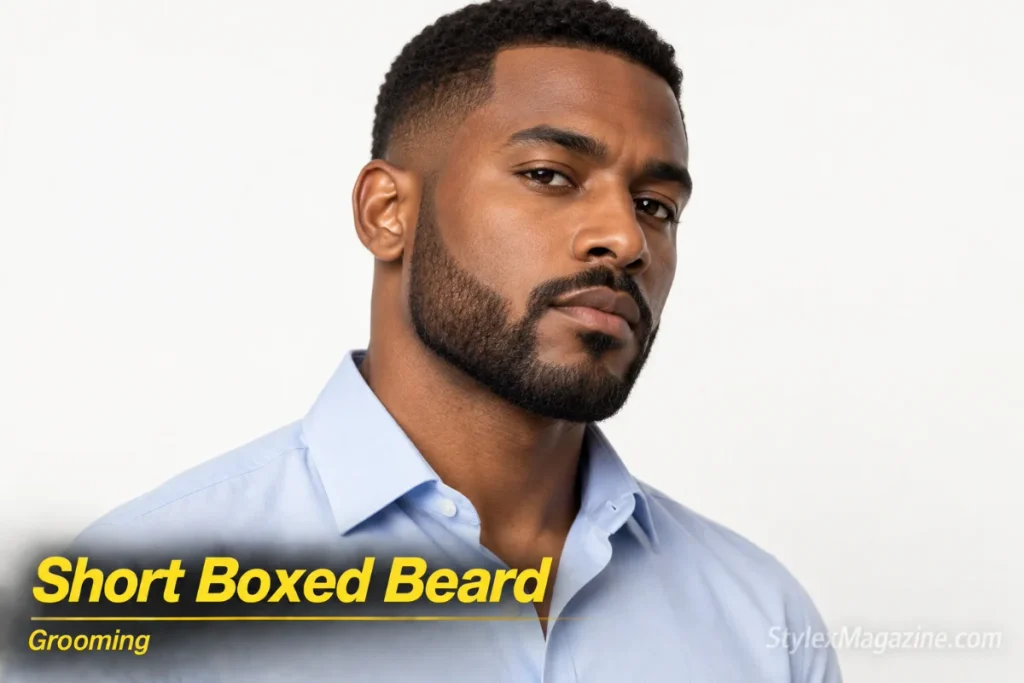
The most requested short beard in the chair right now. Even length across the jaw and chin, clean cheek line, defined neckline. Typically guard 4 to 6 on a clipper (12 to 18mm). Works on almost every face shape because the clean lines create structure without adding bulk.
Corporate Beard
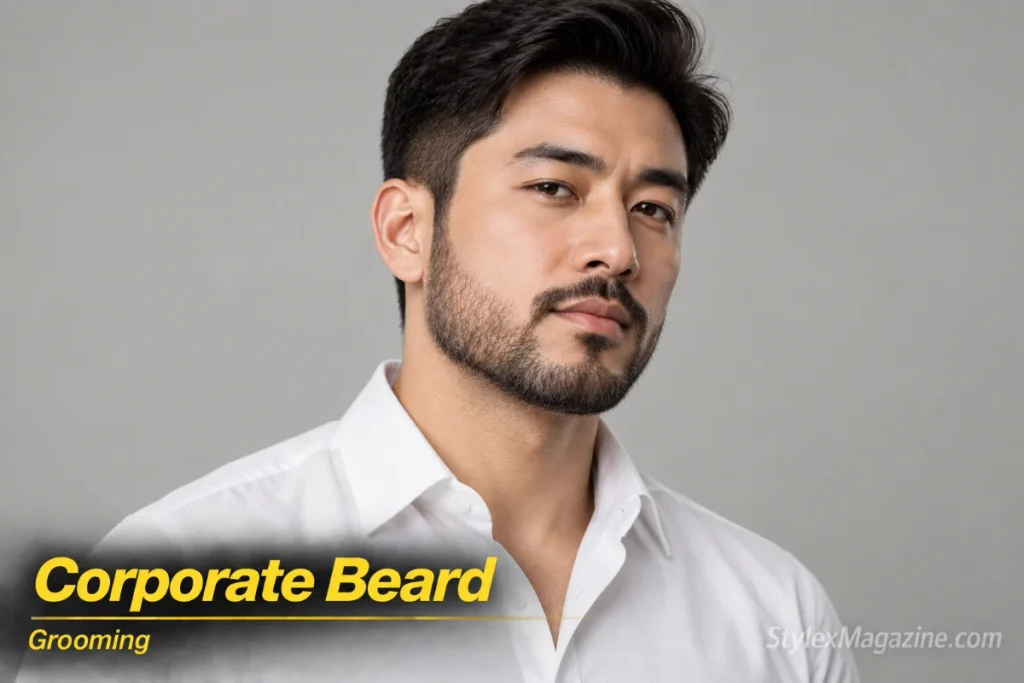
Close-cropped, usually 10 to 15mm, with a natural cheek line and a crisp neckline. The safest office-appropriate option. It is forgiving of most face shapes but demands the most consistent upkeep of any short style because straggler hairs are immediately visible at this length.
Stubble (Light, Medium, Heavy)
Stubble covers everything from a 5 o’clock shadow (1 day of growth) to heavy designer stubble (5 to 10 days). I recommend stubble as a starting point for anyone unsure of their growth pattern, because two weeks of growth reveals exactly where your hair comes in thick, thin, or not at all. See all 30 variations in our short beard styles guide.
Shadow Beard
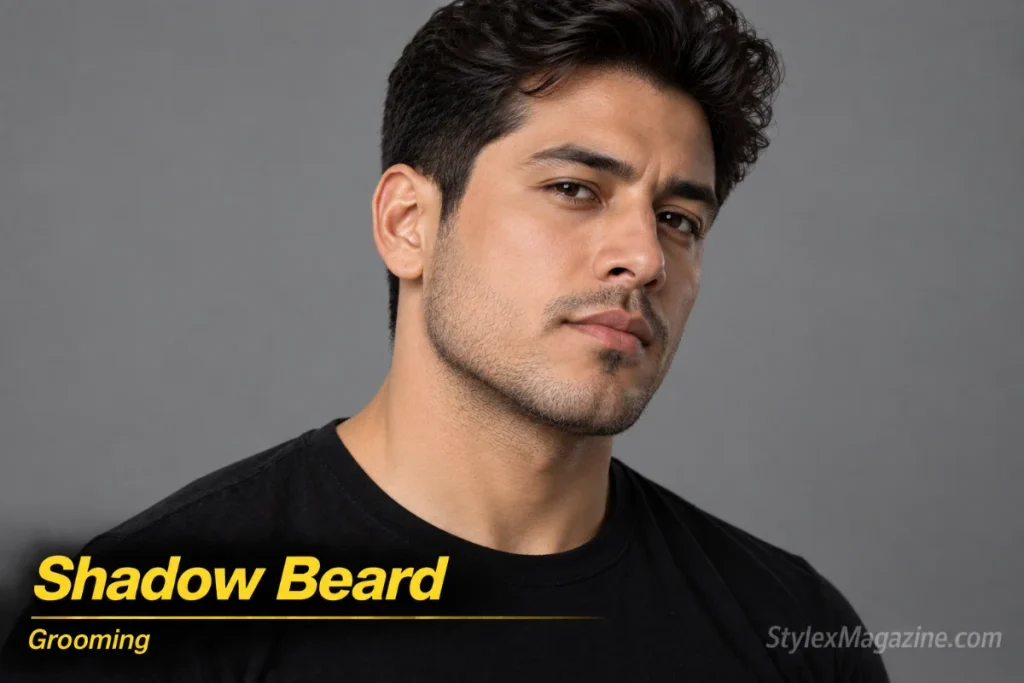
Somewhere between clean-shaven and stubble, typically under 1mm. It creates a subtle darkening along the jaw without visible individual hairs. Low commitment, easy to maintain with a trimmer on the shortest guard setting, and it adds definition to the jawline without requiring any shaping decisions.
Beardstache
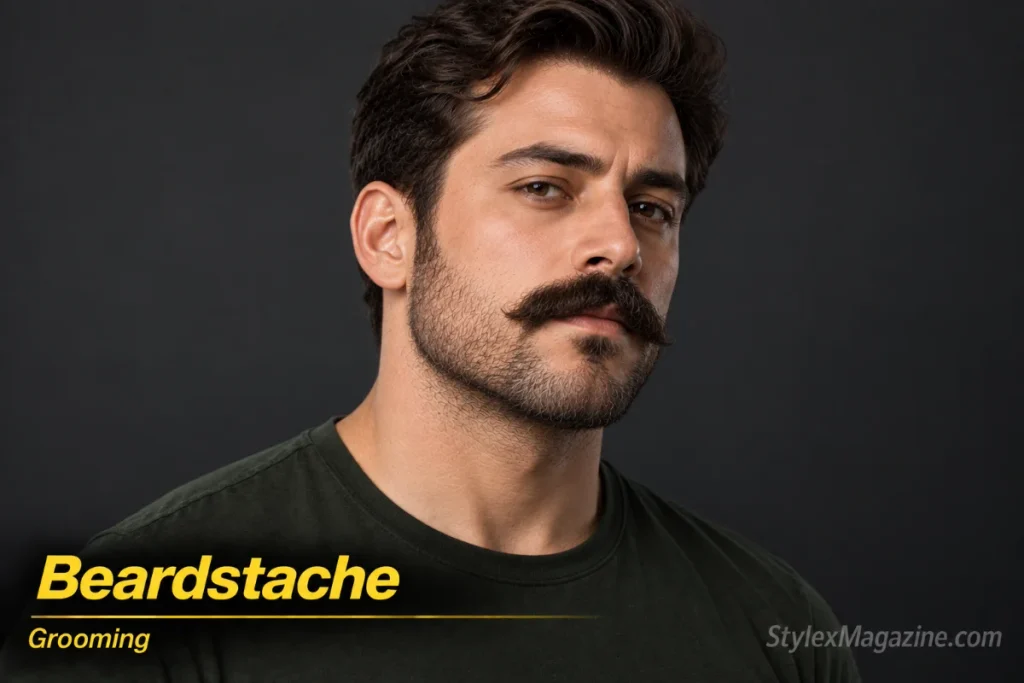
A full, shaped mustache paired with short stubble across the cheeks and jaw. The mustache carries the style, the stubble adds jawline texture without competing. High-contrast and currently trending. Works well for men with strong mustache growth but patchy cheeks.
Which Beard Styles Focus on the Chin and Mustache?
Chin-focused styles keep the cheeks shaved clean and concentrate hair around the mouth, chin, or both. They are the strongest options for patchy beard growth because they work with what grows in naturally rather than trying to cover what does not.
Classic Goatee
Hair on the chin only, no mustache, cheeks shaved clean. The simplest chin-focused style and among the easiest to maintain. I see men with full growth choosing goatees purely for the low maintenance, but their real strength is for men whose cheek growth is uneven. Full guide: goatee styles for men.
Van Dyke
A pointed chin beard with a disconnected mustache. Named after the 17th-century Flemish painter Anthony van Dyck. The separation between beard and mustache creates a sharper, more deliberate look than a connected goatee, but it requires precise trimming to stay balanced. Full guide: Van Dyke beard styles.
Anchor Beard
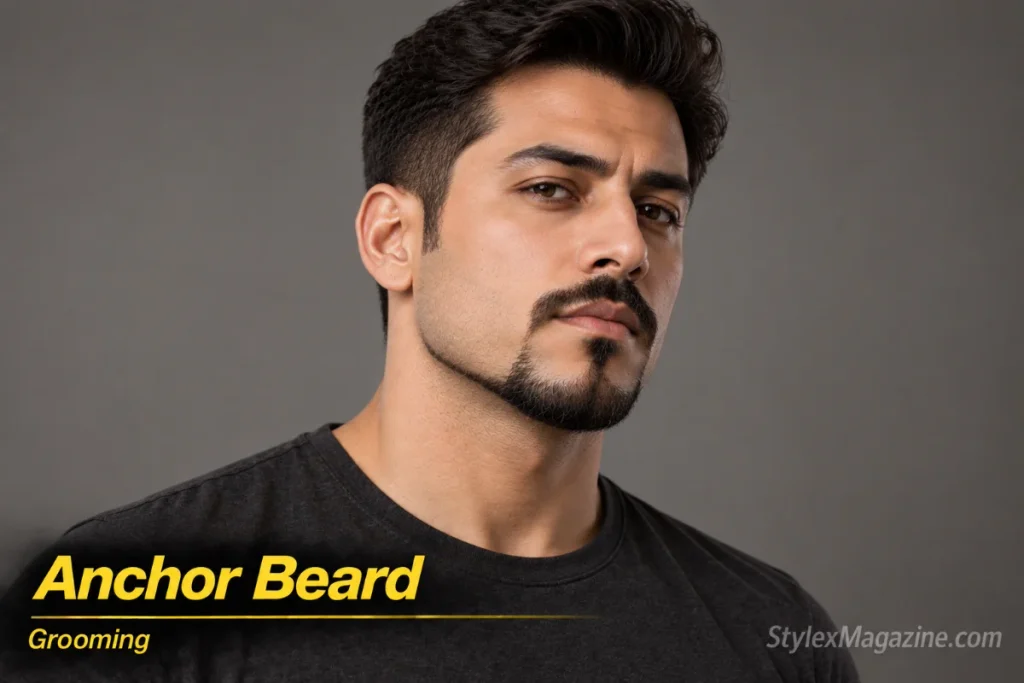
Shaped like a ship’s anchor: a pointed chin beard traces the jawline and connects to a mustache, with the cheeks shaved clean. More angular than a goatee, more structured than a Van Dyke. It adds strong definition along the jaw without requiring full cheek coverage.
Circle Beard
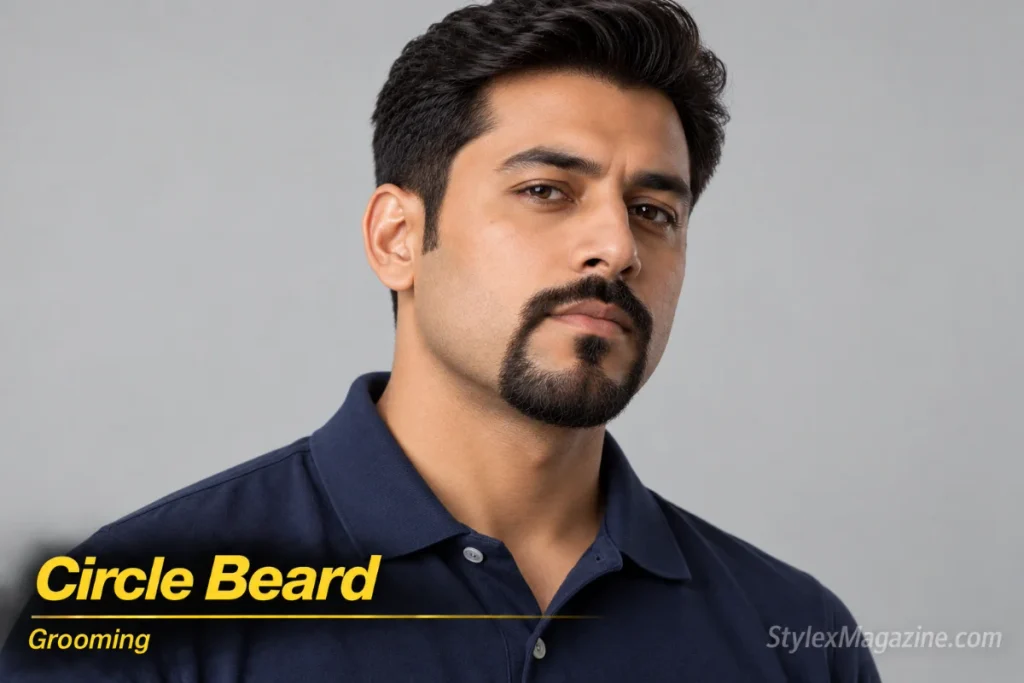
The mustache connects to the chin beard in a continuous circular shape around the mouth. Neat, symmetrical, and low-commitment. It suits square and rectangular faces well because the rounded shape softens angular features.
Balbo
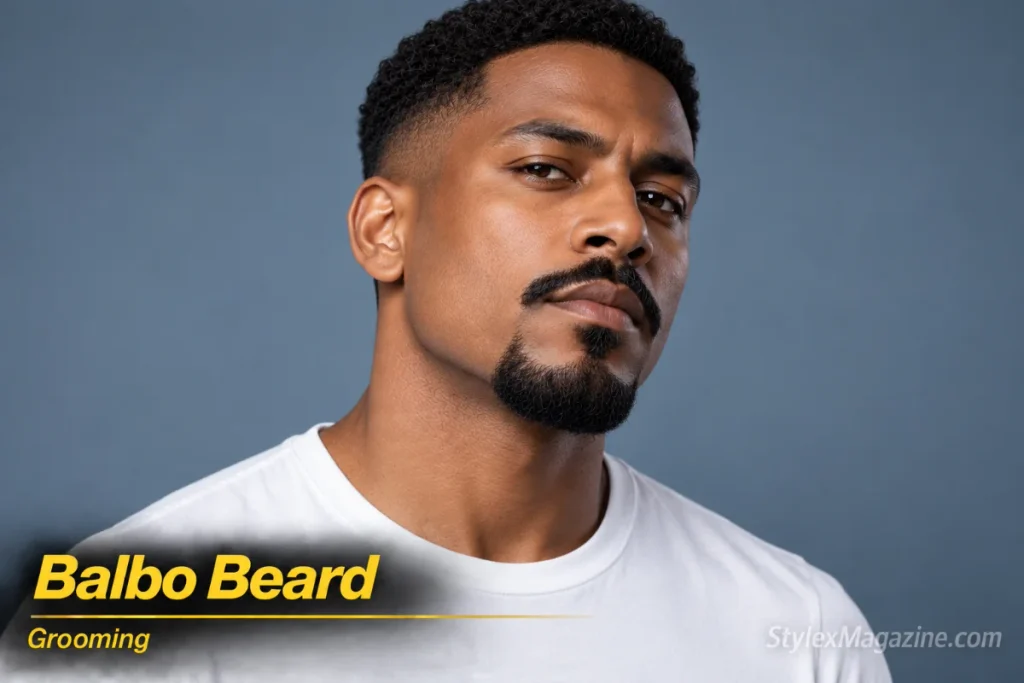
A floating mustache paired with a separate chin beard, cheeks shaved clean. The disconnect between mustache and chin hair is deliberate, not a growth limitation. The Balbo works for men who can grow dense chin hair but prefer a clean, structured look without full coverage.
Soul Patch
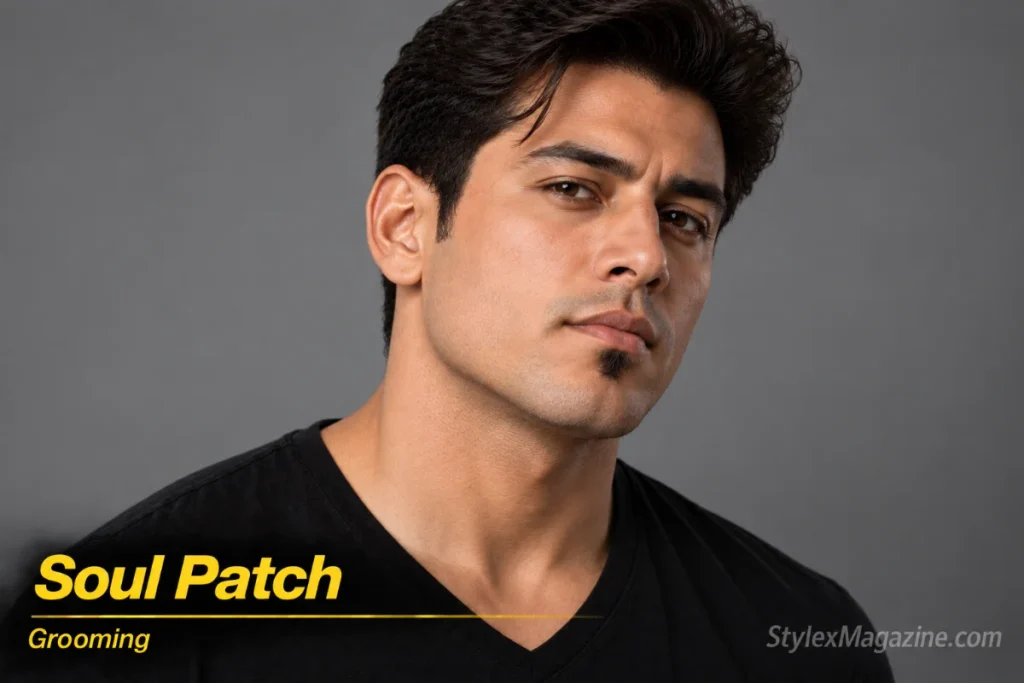
A small tuft of hair directly below the lower lip, everything else shaved clean. Minimal commitment, no shaping required. It works as a standalone accent or paired with a disconnected mustache. The soul patch adds a focal point without requiring any real beard growth elsewhere on the face.
Which Beard Styles Frame the Jawline?
Partial styles use facial hair to highlight or reshape specific parts of the face. They require precise line work and regular maintenance because the entire style depends on clean, deliberate edges.
Chin Strap
A thin strip of facial hair running along the jawline from ear to ear, with the cheeks and neck shaved clean. The chin strap defines the jaw sharply without adding any bulk. It requires clean edges (touchup every 3 to 4 days) to avoid looking unkempt. Full guide: chin strap beard styles.
Mutton Chops
Thick sideburns extending down the cheeks to the jawline, with the chin shaved clean. A bold, high-contrast look that adds width to the face. Best for men with narrow or oblong faces who want to add visual width at the jaw level. Full guide: mutton chops beard styles.
Chin Curtain (Lincoln Beard)
Hair follows the jawline from ear to ear without a mustache. The chin is covered, the cheeks are mostly clear. It creates a frame around the lower face. Historically associated with Abraham Lincoln and Amish grooming traditions. See more no-mustache variations in our beard without mustache guide.
Hollywoodian
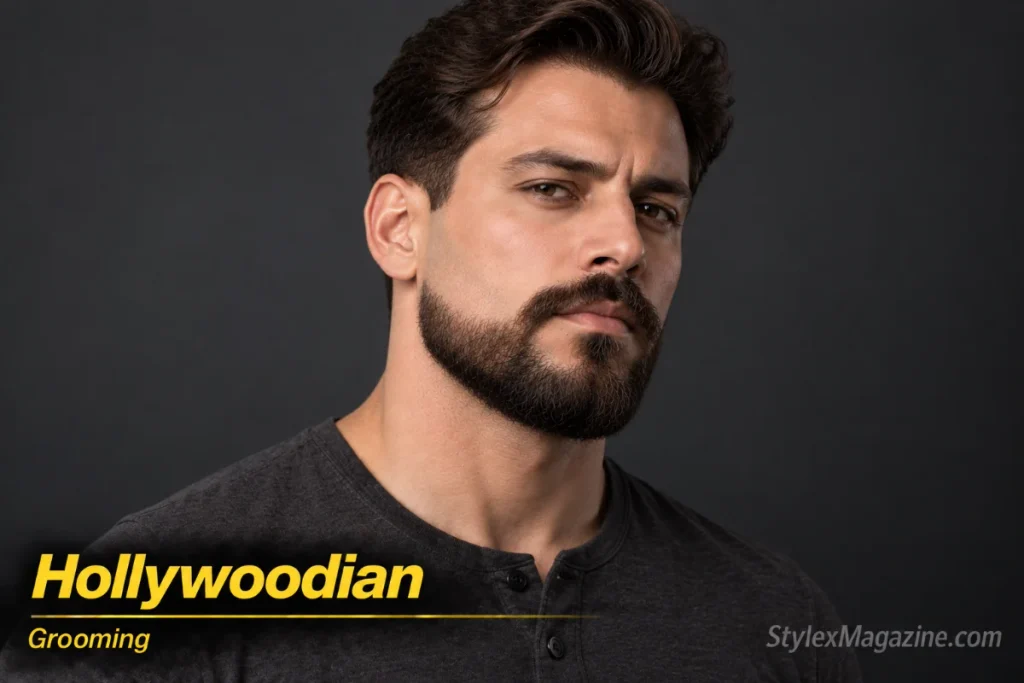
A beard that removes the sideburns entirely and focuses growth along the jaw and chin. The transition from bare cheeks to beard can look unnatural if the edges are not clean, so precision matters more here than with most styles. It draws attention directly to the jawline and is a strong option for round faces.
Which Beard Styles Lead With the Mustache?
Mustache-forward styles make the mustache the focal point, with surrounding facial hair playing a supporting role or absent entirely.
Chevron Mustache
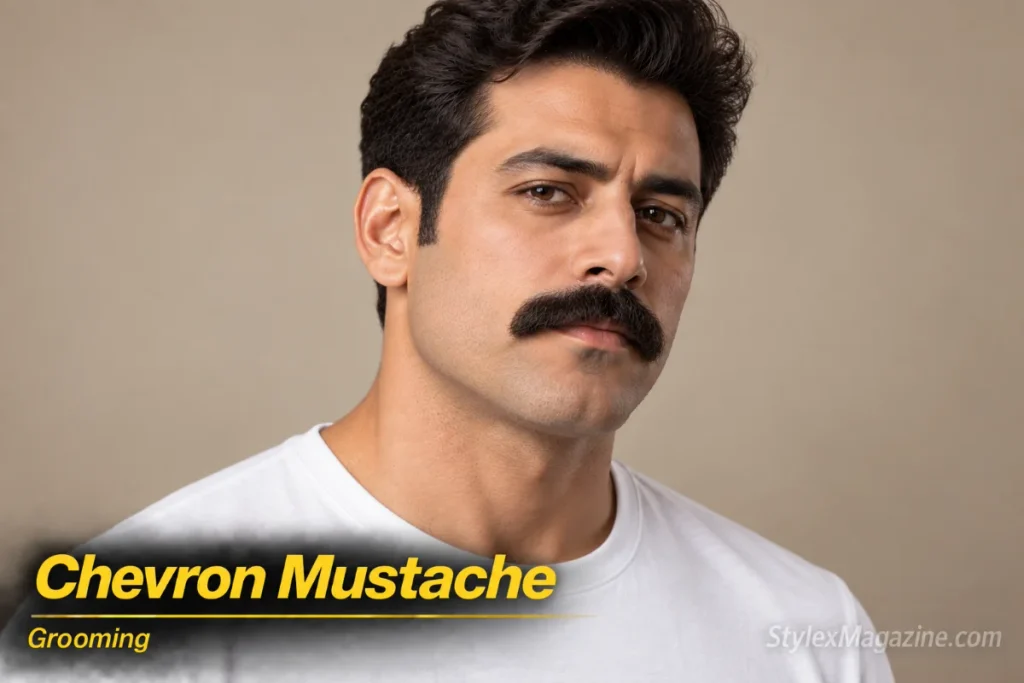
Full, thick, following the natural curve of the upper lip. No beard required. Low maintenance, high impact. Works with almost any face shape and can pair with a beard of any length without losing its identity.
Handlebar Mustache
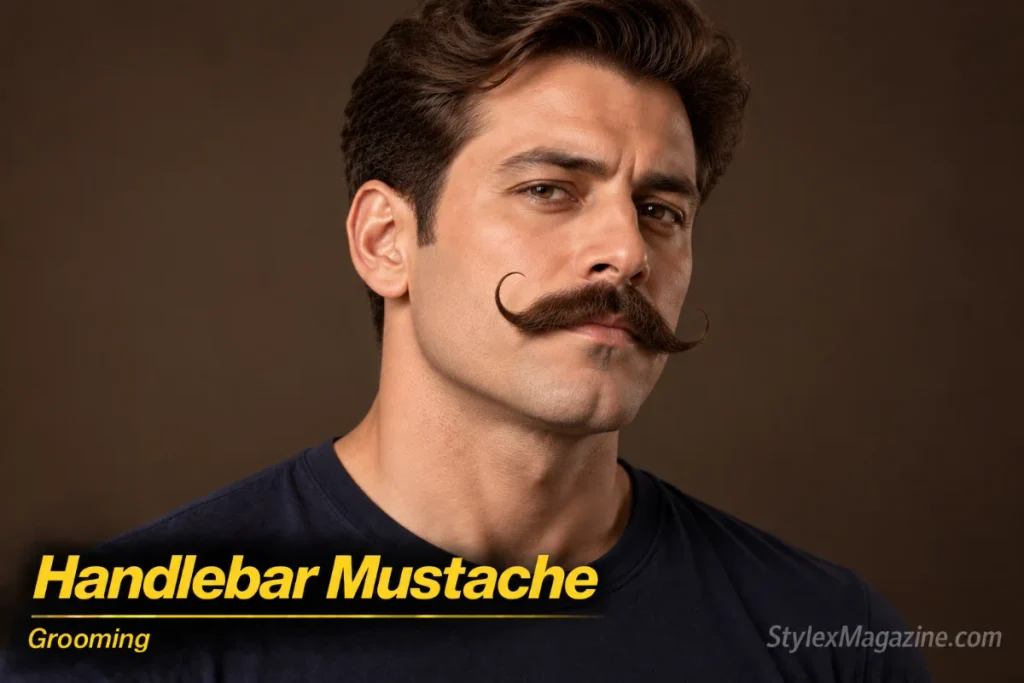
Long enough to curl at the tips, styled with wax. High-commitment: daily wax application and combing to hold shape. The handlebar is a statement, and it needs to look intentional. A half-formed handlebar looks like a mustache that needs trimming, not a deliberate style choice.
Horseshoe Mustache
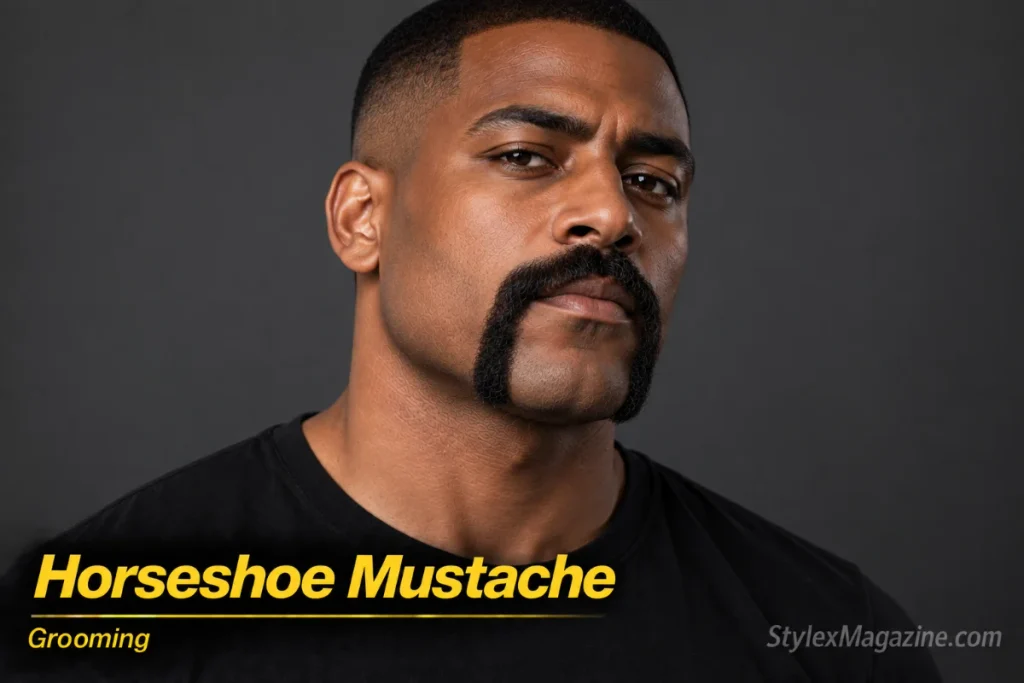
Extends straight down from the corners of the mouth toward the jawline, forming a horseshoe shape. A bold style that demands darker or coarser hair to hold its visual weight. Without sufficient density, the vertical extensions look thin and incomplete.
How Do You Pick the Right Beard Style?
Three factors matter more than personal preference: your growth pattern, your face shape, and how much maintenance you will actually commit to. Hair texture and age also play a role, but growth pattern is where the decision starts.
Growth Pattern (Start Here)
Your growth pattern is non-negotiable. No grooming routine, supplement, or oil changes where your hair grows in.
Patchy cheeks, strong chin: Chin-focused styles: goatee, Van Dyke, Balbo, anchor beard. These concentrate hair where it already grows well.
Even but thin coverage: Short styles: stubble, corporate beard, short boxed beard. Shorter length minimizes the visible contrast between thick and thin areas.
Dense, full coverage everywhere: Full beard, ducktail, Garibaldi, Bandholz, or any style listed above. Dense growth gives you the widest range of options.
Strong mustache, weak everything else: Beardstache, chevron, or handlebar. Let the mustache lead instead of fighting weak beard growth.
Hair Texture
Beard hair texture affects which styles hold their shape and how often you need to groom.
Straight beard hair holds clean lines and sharp edges well. Short boxed beards, corporate beards, and chin straps look their sharpest on straight hair because the edges stay defined between trims.
Wavy or curly beard hair adds natural volume and texture, which benefits fuller styles (Garibaldi, Bandholz, ducktail). Curly beards appear thicker at shorter lengths, which is an advantage for men whose growth is moderate rather than dense. They need more conditioning than straight hair to avoid dryness and frizz.
Coily or tightly curled beard hair creates dense, textured growth that pairs well with beard fades and tapered styles. Coily hair is prone to ingrown hairs, so sharp razored edges need more care. A boar bristle brush and regular conditioning are non-optional at any length. Detailed fade+beard combinations: fade haircut with beard.
Face Shape
Face shape determines which styles add balance and which add bulk in the wrong places. Rather than repeating face-by-face recommendations here, we cover every face shape with specific beard recommendations in our dedicated guide: best beard style for your face shape.
Age
There are no hard rules tying beard style to age, but two practical patterns worth knowing:
Younger men (under 25) with thinner, developing growth tend to get better results from chin-focused styles (goatee, Balbo, Van Dyke) and stubble rather than forcing a full beard that has not filled in yet. If your beard has not connected by your late 20s, it likely will not, and working with the pattern you have produces a better result than waiting.
Greying beards often look sharper in shorter, more structured styles (corporate beard, short boxed beard). Grey hair is coarser and tends to grow outward rather than lying flat, so longer grey beards can look wiry without daily conditioning. The structure of a shorter style controls that natural coarseness.
Maintenance Commitment
Be honest about what you will actually do, not what you intend to do.
| Maintenance Level | Time Per Week | Styles That Fit |
|---|---|---|
| Minimal (under 5 min) | Quick trim every few days | Stubble, shadow beard, soul patch |
| Low (5 to 15 min) | Weekly trim, daily oil | Corporate beard, short boxed, goatee |
| Medium (15 to 30 min) | Weekly trim + line work, daily oil/balm | Full beard, ducktail, Balbo, beardstache |
| High (30+ min) | Regular barber visits + daily styling | Beard fade, handlebar, Bandholz |
How Should Your Beard Match Your Haircut?
A beard and haircut should work as a single shape, not two separate decisions. The transition from hair to beard through the sideburns is where the look comes together or falls apart.
Fade haircuts blend naturally into shorter beard styles, creating a clean gradient from hairline to jawline. If you wear a fade, a beard fade or a short boxed beard with tapered sideburns keeps the lines continuous. More on this pairing: fade haircut with beard.
Buzz cuts create a high-contrast frame when paired with a fuller beard, because the short head and longer jaw hair shift visual weight downward. This pairing works well for receding hairlines.
Bald heads pair well with medium to full beards. The beard becomes the primary feature on the face, adding structure and proportion that a bare head alone does not provide.
Longer hairstyles generally pair better with fuller beards. A long top with a stubble beard can look unbalanced because the volume is concentrated entirely above the ears.
What Are the Most Common Beard Problems?
Most beard issues come down to skin, not hair. Address the cause, and the beard follows.
Beard dandruff (flaking under the beard): Usually caused by dry skin or Malassezia yeast overgrowth. A three-step routine (exfoliate, wash, oil) resolves most cases within two weeks. Full guide: beard dandruff: causes and treatment.
Patchiness: Not fixable with oils or supplements. Work with your growth pattern by choosing styles that concentrate hair where it grows well. Chin-focused styles (goatee, Van Dyke) are designed for this.
Itching during early growth: Usually peaks around weeks 1 to 3. The hair curls back and scratches the skin as it grows through. A lightweight beard oil applied daily and a boar bristle brush to train the hair direction resolve this for most men. Pushing through the itch phase is part of growing any beard longer than stubble.
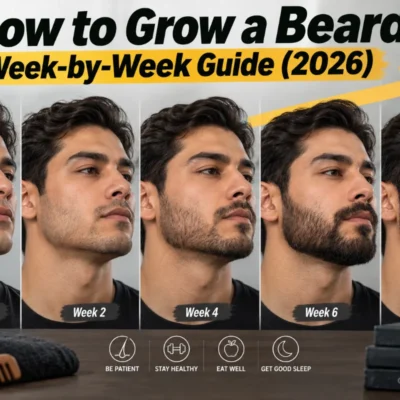
The awkward growth phase (weeks 3 to 8): Every full beard goes through it. Resist the urge to trim during this period. The uneven look resolves once the hair reaches enough length to lay flat. More on growing through the awkward phase: how to grow a beard.
Neckline and cheek line mistakes: These two lines define your beard. The neckline should sit just above the Adam’s apple, not at the jawbone (which creates a double-chin effect). The cheek line should follow your natural growth rather than a carved geometric shape. Full guide: how to trim and maintain a beard at home.
Ingrown hairs: Most common with coily or tightly curled beard hair, especially after shaving with a razor. Exfoliating before shaving and using a single-blade razor reduces the risk. If ingrown hairs are frequent, consider trimming with a guard rather than shaving to the skin.
FAQ
How many types of beards are there?
Between named styles, regional variations, and hybrid combinations, there are roughly 30 to 50 distinct beard styles. They all fall into five categories: full beards, short beards, chin-focused styles, jawline/partial styles, and mustache-forward styles.
What beard style do women find most attractive?
Surveys consistently rank heavy stubble (the 5 to 10 day growth range) as the most positively received facial hair length. That said, grooming matters more than the specific style. A well-maintained full beard outperforms a neglected stubble every time.
Can I switch beard styles without shaving everything off?
Yes. Going from a full beard to a goatee or Van Dyke means shaving the cheeks but keeping the chin and mustache intact. Going from long to short just needs a trimmer. The only transitions that require a full reset are growing from clean-shaven to a new style, or switching between styles that need different growth lengths.
How long should I wait before deciding a beard style is not working?
Give any new style at least 3 to 4 weeks before judging. Beards look their worst during weeks 2 through 4 when the growth is uneven and the shape has not settled. If it still looks wrong after a full month of consistent growth, the issue is likely growth pattern rather than patience.
Should my beard always match my haircut?
Not necessarily match, but complement. A high-contrast combination (buzz cut with a full beard) works just as well as a blended combination (fade with a tapered beard), as long as both look intentional. What does not work is an accidental-looking mismatch, like a polished hairstyle paired with an untrimmed, shapeless beard.

Other Articles
20 Best Full Beard Styles for Men (2026)
No Comment! Be the first one.