
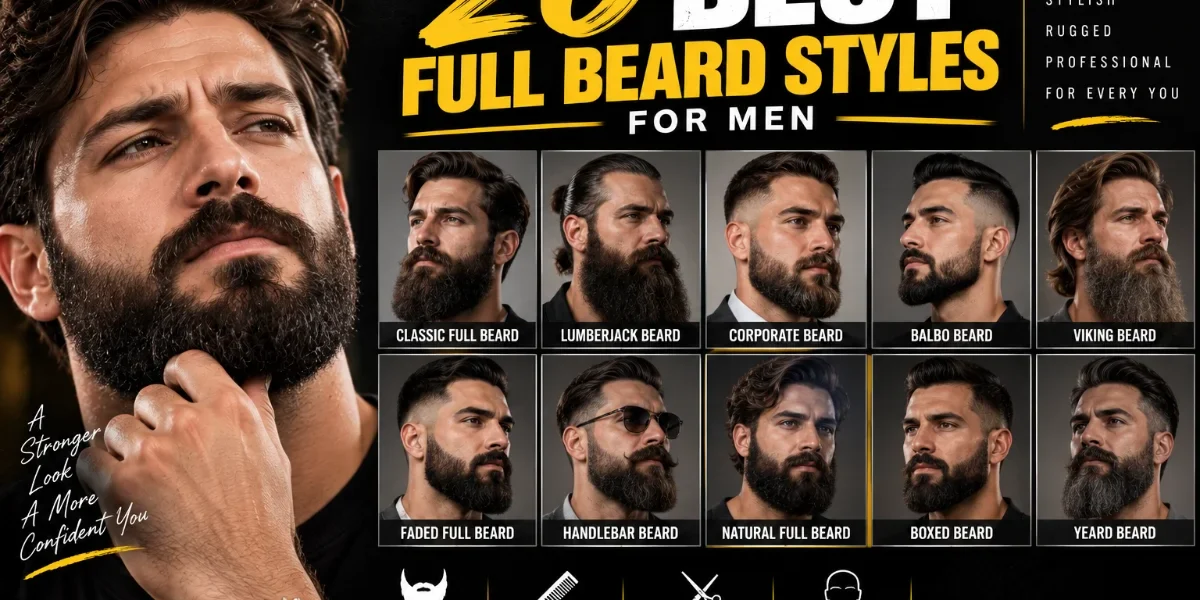

Quick Answer: A full beard covers the cheeks, jawline, chin, and mustache in connected growth, starting at around 20mm and ranging up to 6+ inches. The 20 styles below break full beards into specific variations by shape, length, and finish, each with guard numbers, face shape guidance, and the exact phrase to tell your barber.
A full beard is not one style. It is a category with at least 20 distinct variations, and which one suits you depends on your face shape, your density, and how much shaping you want to commit to. The man growing a corporate full beard at 25mm and the man growing a Garibaldi at 4 inches are living in different grooming realities, and the advice for each is different.
What separates a full beard from a short beard is coverage and length. Below 20mm, you are in short beard territory. Above it, the shape of your beard matters more than the length alone. Every style below assumes full cheek, jaw, chin, and mustache coverage. If your cheeks grow thin, skip to Style #20.
What Are the Best Full Beard Styles for Men?
The best full beard style is the one that matches your face shape and your actual density, not the photo you saved. A Bandholz on a round face adds width. A corporate full beard on an oblong face adds balance. The 20 styles below are grouped by shape and finish, not ranked. Work through the face shape table after the gallery to narrow your options.
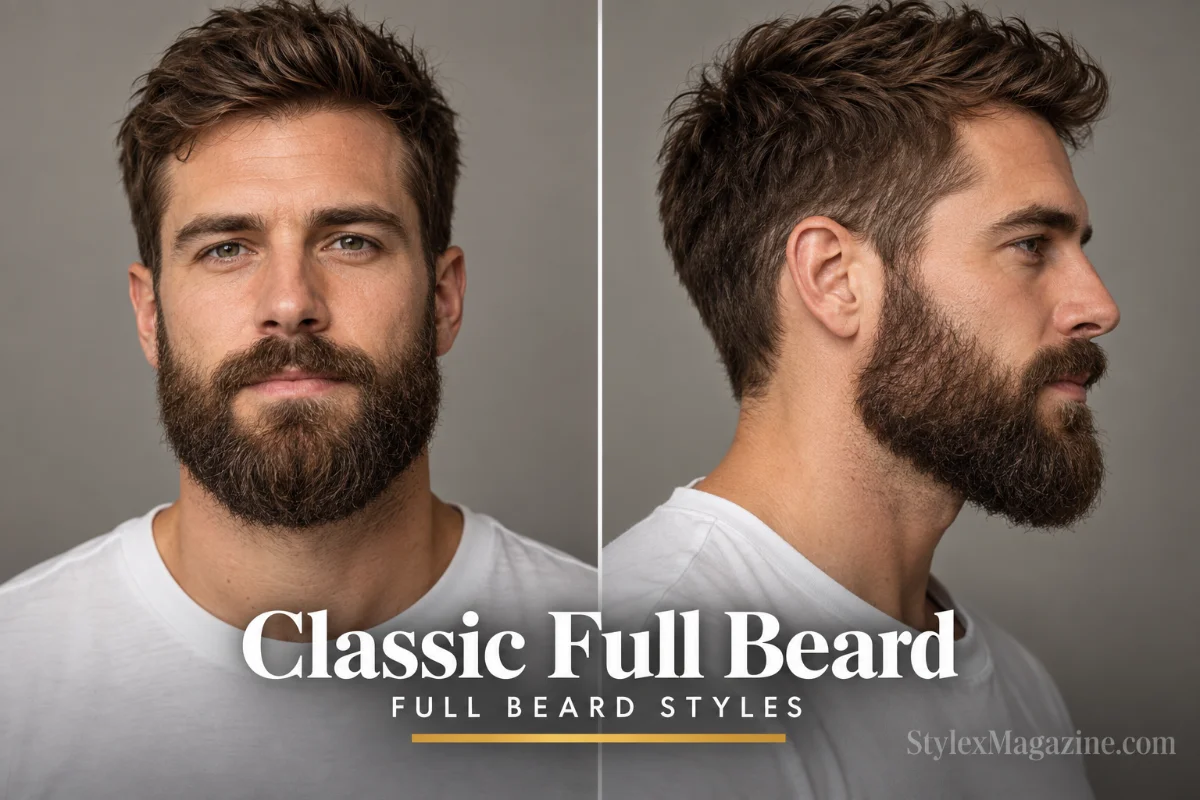
1. Classic Full Beard
Celebrity: Jason Momoa | Hair type: Straight to wavy, thick
Full, even growth across the cheeks, jaw, and chin with a connected mustache. Neckline defined one to two finger widths above the Adam’s apple. Cheek line follows your natural growth or sits slightly refined. No aggressive shaping.
Straight hair falls flat and shows line definition clearly. Wavy hair adds natural volume that fills the silhouette without product. Curly or coily textures produce a denser, rounder beard at the same length, so ask your barber to check proportions from the front before cutting.
Best for: Oval and square faces. Medium to thick density.
Length: 25-50mm (1-2 inches)
Tell your barber: “Full beard, keep it even all the way around. Clean the neckline two fingers above the Adam’s apple, leave the cheek line natural. No tapering.”
Trim frequency: Every 3-4 weeks.
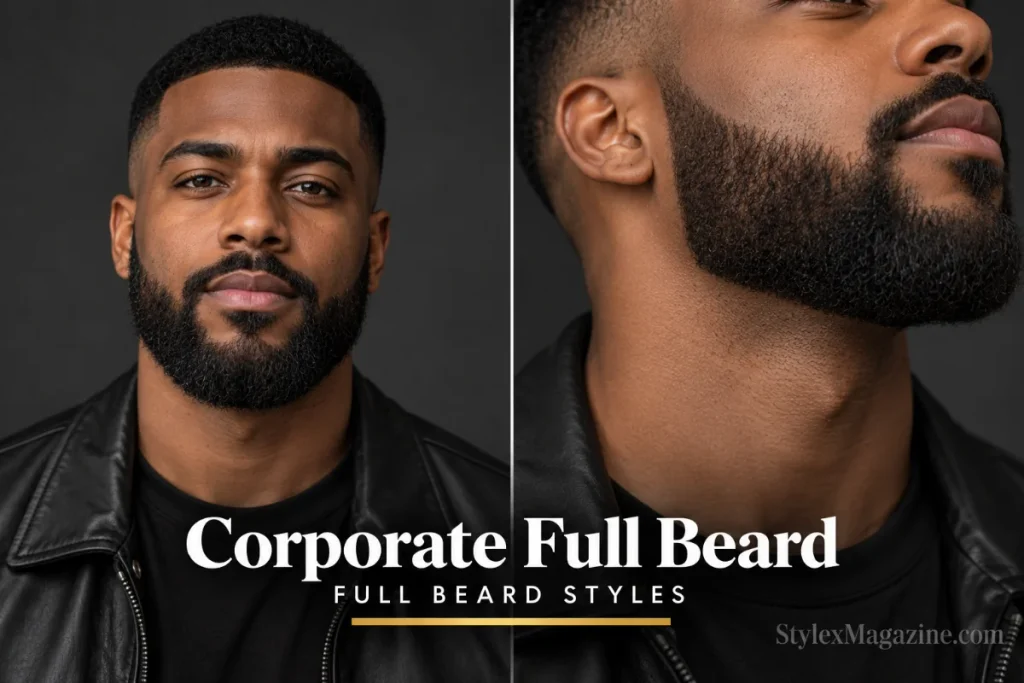
2. Corporate Full Beard
Celebrity: George Clooney | Hair type: Straight, medium density
Shorter than a classic full beard, usually between 20-30mm, with a crisp neckline and slightly refined cheek lines. Every straggler is visible at this length, and that makes it the most demanding full beard variation to maintain. The upside: at 20-25mm, even thinner growth looks reasonably full because the short length compresses the gaps.
Best for: All face shapes. Works with thin to thick density.
Length: 20-30mm (guard 5-7)
Tell your barber: “Corporate length full beard, tight and clean. Sharp neckline, soft cheek line. I want to keep it at about 25mm.”
Trim frequency: Every 2 weeks.
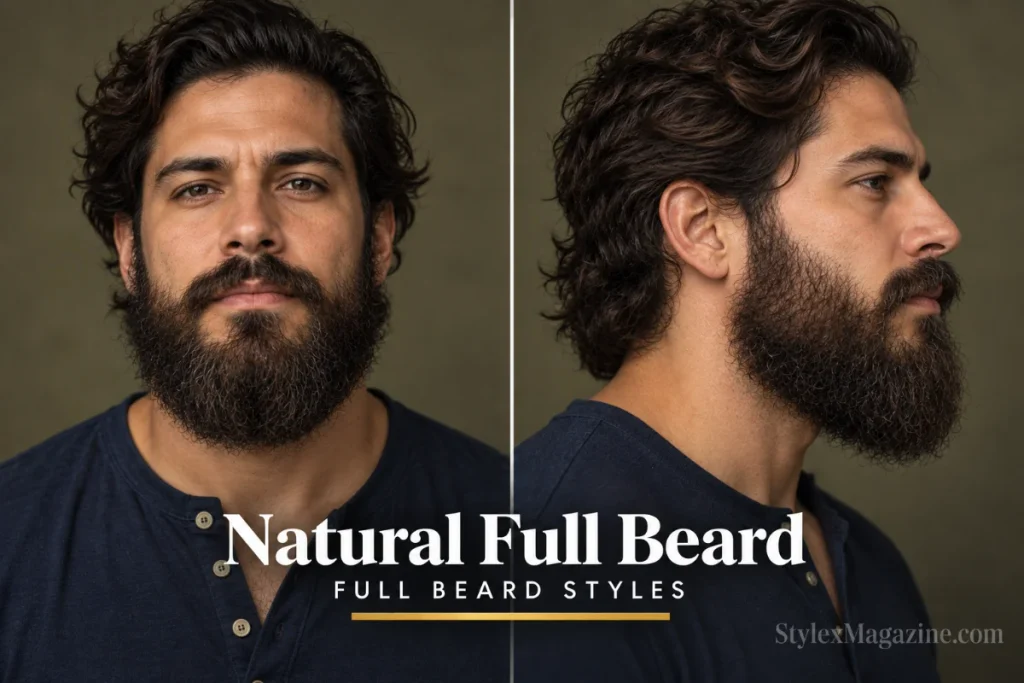
3. Natural Full Beard
Celebrity: Chris Hemsworth (Thor: Ragnarok era) | Hair type: Wavy, thick
Follows your growth pattern rather than fighting it. Minimal shaping: a clean neckline and occasional stray removal, nothing else. The cheek line sits wherever your hair decides to grow. I see this requested by men who want a full beard without looking like they spend time on it. Without some shaping, the natural beard suits dense, even growers best. Patchy cheeks show more at this length when nothing is trimmed to compensate.
Wavy and curly textures fill the natural beard’s silhouette faster than straight hair. Straight beards at this length can look flat on the sides without a blow-dry or balm for volume.
Best for: Oval and oblong faces. Thick, even density.
Length: 30-75mm (1.5-3 inches)
Tell your barber: “Keep it natural. Clean the neckline, take off any strays, but do not shape the cheeks or chin. I want it looking like mine, not somebody else’s.”
Trim frequency: Every 4-5 weeks (neckline cleanup only).
4. Short Full Beard
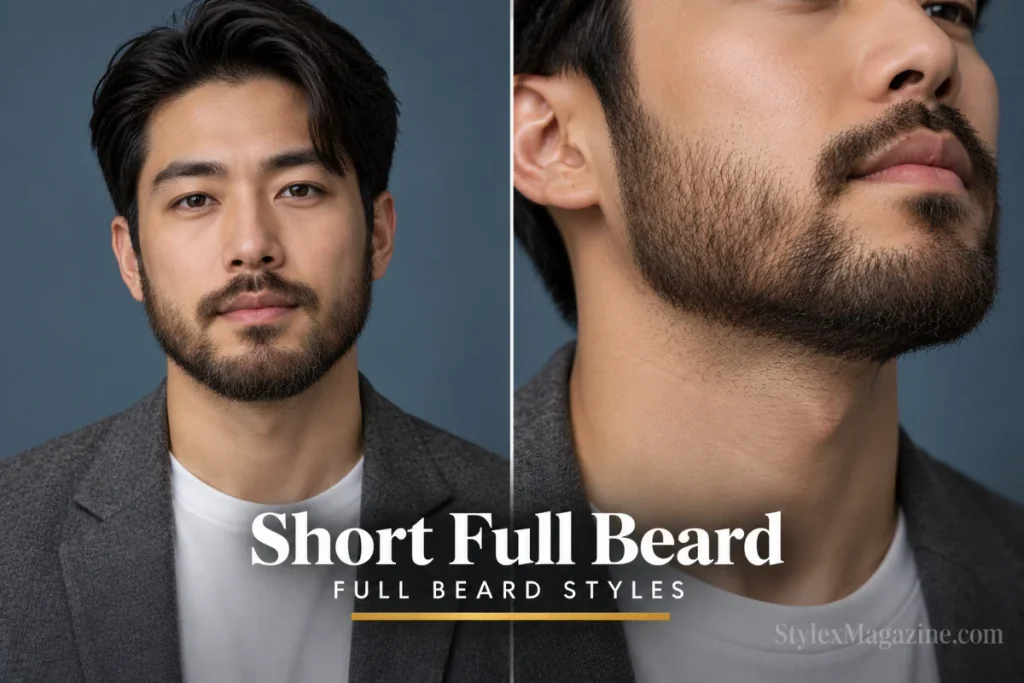
Celebrity: Ryan Reynolds | Hair type: Straight to wavy, medium density
Sits right at the boundary between a short beard and a full beard. 20-25mm, full coverage, just enough volume to register as “bearded” rather than “hasn’t shaved.” Works well for men testing full beard territory before committing to length.
All textures work here. Straight hair holds the clean line. Wavy and curly textures add slight volume that makes the beard appear fuller at the same guard setting.
Best for: All face shapes, especially men with medium density who look uneven at longer lengths.
Length: 20-25mm (guard 5-6)
Tell your barber: “Full beard at 20mm, even all around. Clean neckline, natural cheek line. Nothing fancy.” Trim frequency: Every 2 weeks.
5. Rounded Full Beard
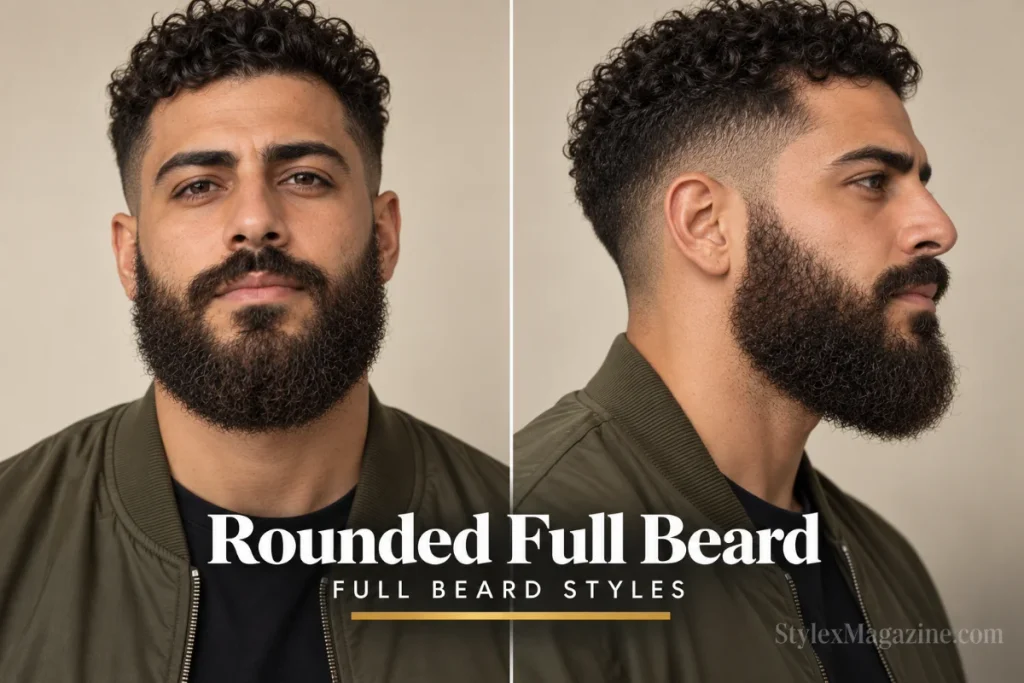
Celebrity: Idris Elba | Hair type: Coily to curly, thick
Bottom of the beard follows a soft curve rather than a square or pointed finish. Works well on men with angular features because it softens sharp jawlines and square chins without losing coverage. Coily and curly beard textures hold a rounded shape naturally because the hair grows outward before dropping down. Straight hair needs more barber work to maintain the curve.
Best for: Square and diamond faces. Curly, coily, or thick density.
Length: 30-50mm (1-2 inches)
Tell your barber: “Full beard, round the bottom off. No point, no square finish. Soft curve from jaw to chin on both sides.”
Trim frequency: Every 3 weeks.
6. Squared Full Beard
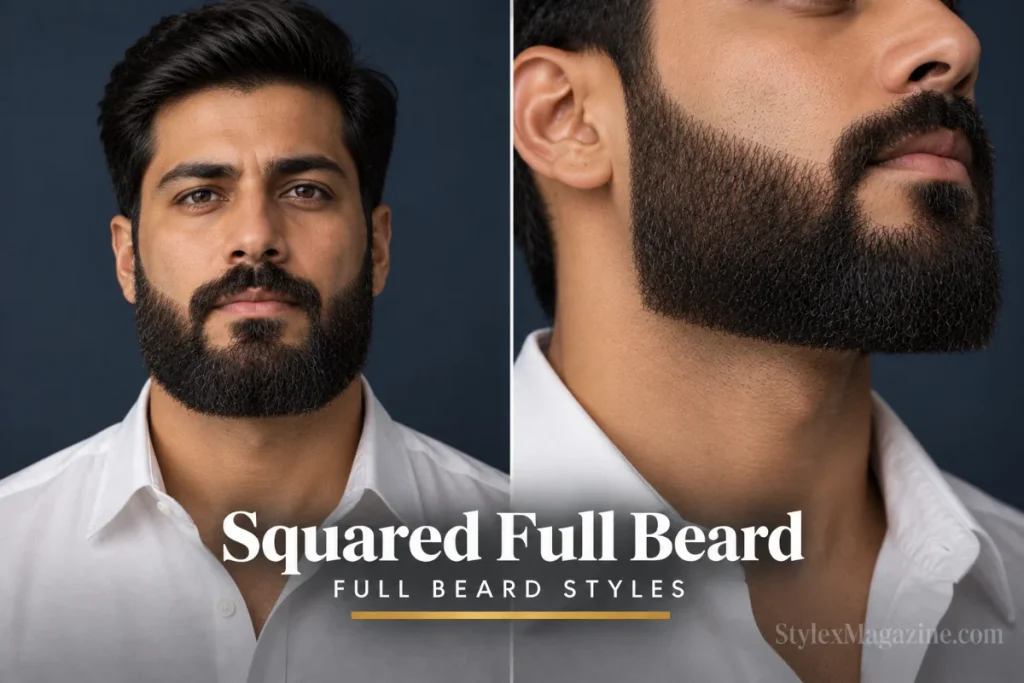
Celebrity: Ben Affleck | Hair type: Straight, medium to thick
Shaped into a flat bottom line and squared-off sides, creating a blocky, structured silhouette. This adds jaw definition on round and oval faces but can make a square face look heavy if worn too thick on the sides. In my experience, the squared finish demands more barber visits because the flat bottom line shows uneven growth within a week.
Straight hair holds squared edges cleanly. Wavy and curly textures soften the lines between trims, so expect more frequent touch-ups.
Best for: Round and oval faces. Straight to wavy, medium to thick density.
Length: 30-50mm (1-2 inches)
Tell your barber: “Squared-off full beard. Flat bottom, straight cheek lines. Keep the sides tight and the chin broad.”
Trim frequency: Every 2-3 weeks.
7. Tapered Full Beard
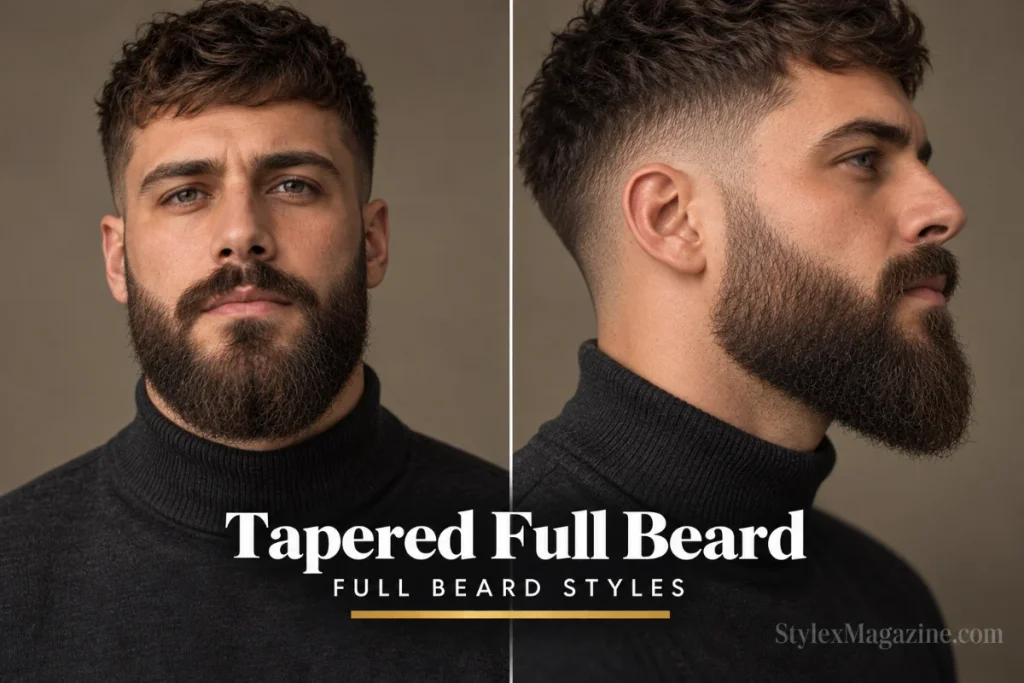
Celebrity: David Beckham (mid-2010s) | Hair type: Straight, medium density
Shorter near the sideburns, gradually getting longer toward the chin. The taper creates a natural graduation that ties the beard into any haircut without a hard transition. If your barber blends your sideburns into the beard rather than leaving a sharp line, you already have a version of this.
All textures benefit from tapering. Coily hair shows the gradient clearly. Straight hair needs a skilled barber to keep the blend looking seamless rather than stepped.
Best for: Heart and triangle faces. Works across all densities.
Length: 15mm at sideburns, 40-50mm at chin
Tell your barber: “Taper the full beard from the sideburns into the chin, shorter at the top, longer at the bottom. Blend the sideburn into my haircut.”
Trim frequency: Every 2-3 weeks.
8. Ducktail Beard
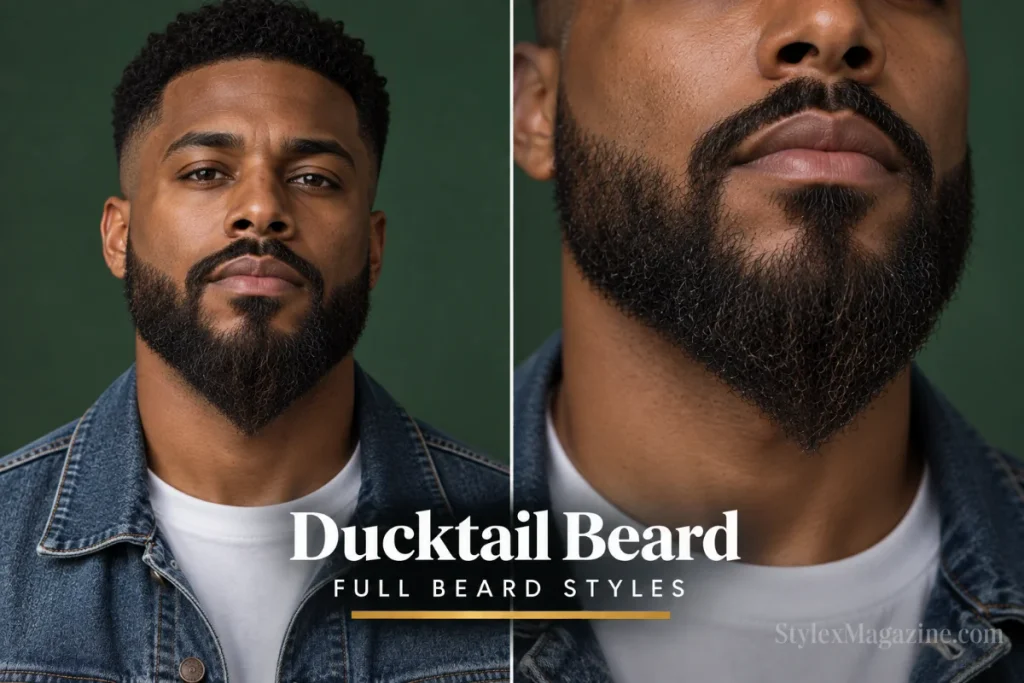
Celebrity: Leonardo DiCaprio | Hair type: Straight to wavy, medium to thick
Tapers to a point at the chin while the sides stay shorter, creating a V-shape. The pointed finish elongates round and wide faces. Straight and wavy hair holds the point. Curly hair tends to round off at the chin unless the barber scissors a deliberate point each visit.
Best for: Round and square faces. Straight to wavy, medium to thick density.
Length: 30mm on sides, 50-75mm at chin point
Tell your barber: “Ducktail shape. Shorter on the sides, bring the chin to a point. I want the V-shape visible from the front.”
Trim frequency: Every 2-3 weeks.
9. Garibaldi Beard
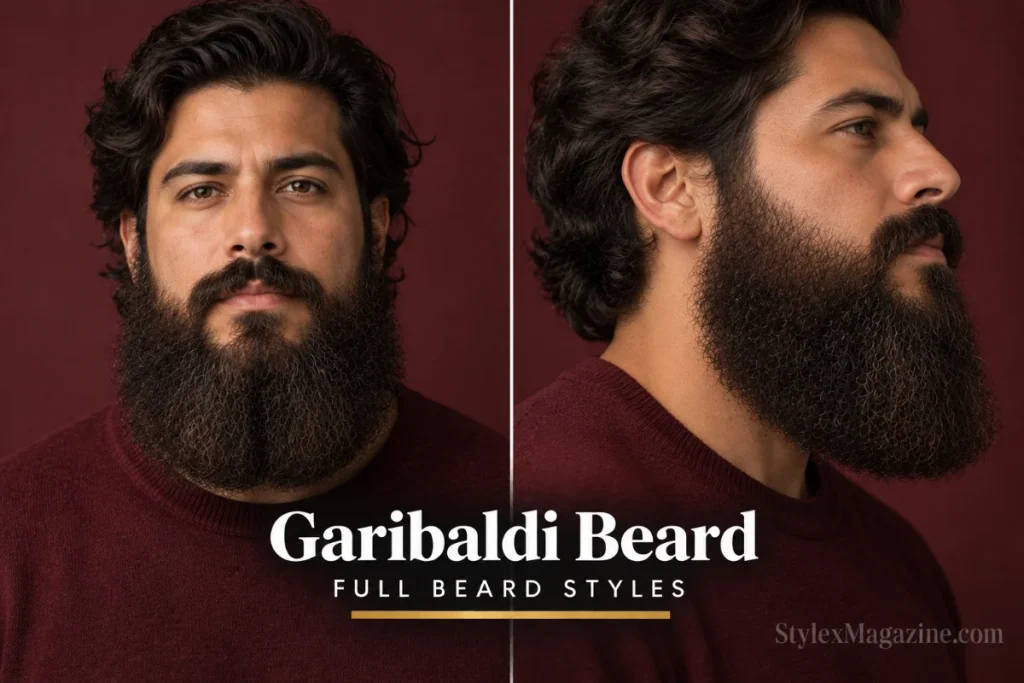
Celebrity: Tom Hardy | Hair type: Wavy to curly, thick
Wide, rounded at the bottom, and fuller than a boxed beard. Sits between a neat full beard and a wild yeard. Named after Italian general Giuseppe Garibaldi. The distinction from a classic full beard is width: the Garibaldi is deliberately wider, especially at the bottom, and the shape is rounder.
Curly and coily textures fill the Garibaldi’s wide shape faster than straight hair, which tends to hang downward rather than outward. Straight-haired men often need 4-5 months of growth to get the same width a curly beard achieves in 3.
Best for: Oval and oblong faces. Thick density required. Thin beards cannot fill the width.
Length: 75-100mm (3-4 inches)
Tell your barber: “Garibaldi shape. Wide, rounded bottom, keep the volume on the sides. Do not thin it out. Clean neckline only.”
Trim frequency: Every 3-4 weeks.
10. Bandholz Beard
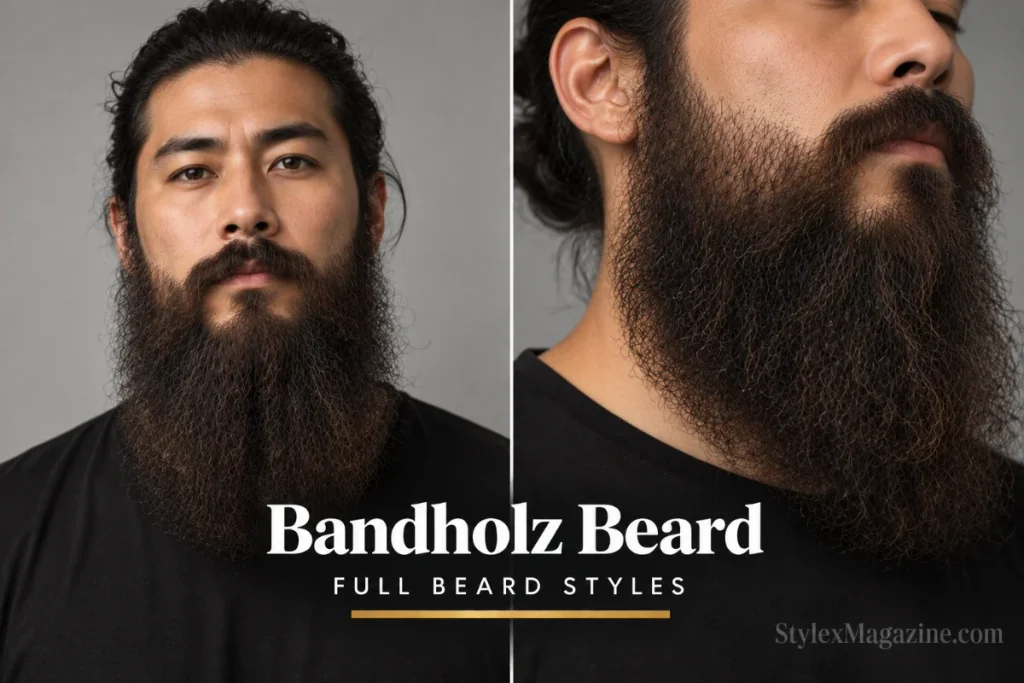
Celebrity: Eric Bandholz (Beardbrand founder) | Hair type: Wavy, thick
Named after the man who founded Beardbrand, the Bandholz grows for 6+ months without shaping. The natural growth pattern dictates the shape. The mustache blends into the beard. No defined lines. The only maintenance is neckline cleanup, conditioning, and end trimming.
All textures produce different Bandholz shapes. Straight hair falls long and narrow. Wavy hair fans outward. Coily hair grows dense and round. Each is valid. The Bandholz is defined by no shaping, not by one particular silhouette.
Best for: Oval and diamond faces. Thick, dense growth required.
Length: 100mm+ (4+ inches)
Tell your barber: “Bandholz. Do not shape it. Just clean the neckline, trim any damaged ends, and leave everything else alone.”
Trim frequency: Every 5-6 weeks (maintenance only).
11. Viking Beard
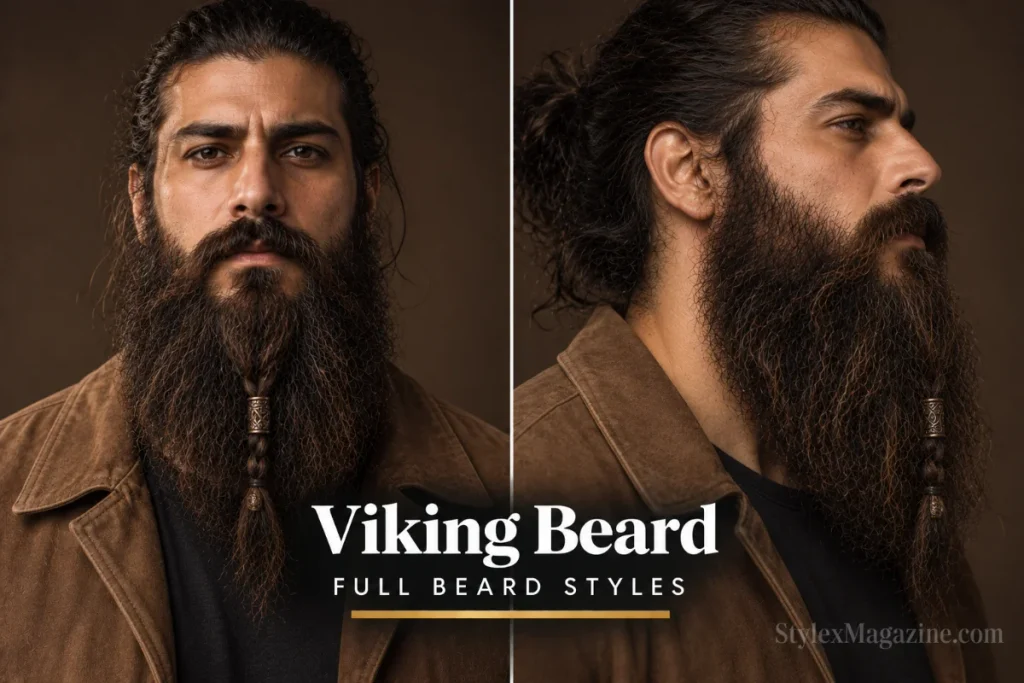
Celebrity: Travis Fimmel (Vikings) | Hair type: Any texture, thick density
Long, rugged, and deliberately less refined than the Bandholz. Often includes braids, beads, or a more textured finish. Pop culture drives this style more than barbershop tradition. The practical difference from a Bandholz: Viking beards are styled with texture and movement, while the Bandholz sits naturally.
Best for: Oval, square, and oblong faces. Thick density. Thin beards look wispy at this length.
Length: 100-150mm+ (4-6+ inches)
Tell your barber: “Keep the length. Clean the neckline, trim the damaged ends, remove stragglers. Do not shape it. I want it looking rugged.”
Trim frequency: Every 4-6 weeks.
12. Verdi Beard
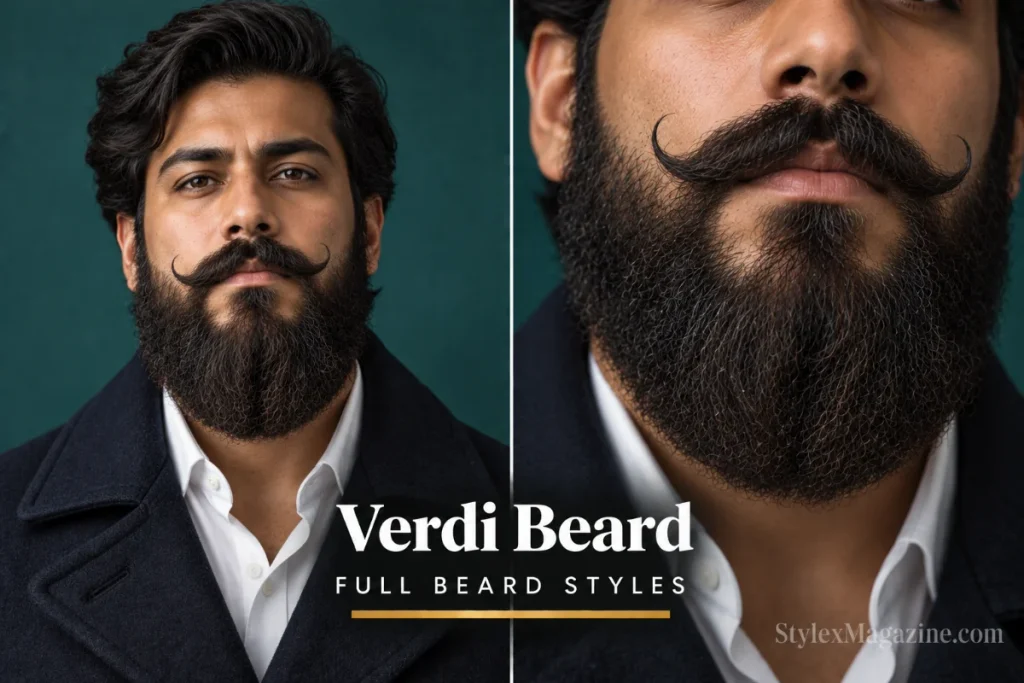
Celebrity: Named after composer Giuseppe Verdi | Hair type: Straight to wavy, medium to thick
A rounded, full beard at medium length paired with a styled, prominent mustache that curls slightly upward at the ends. The mustache is the focal point. The distinction from a Garibaldi: Garibaldi lets the mustache blend into the beard naturally, while the Verdi treats the mustache as a separate, styled element.
Best for: Oval and rectangular faces. Requires thick mustache growth specifically.
Length: 50-100mm (2-4 inches) on the beard, mustache grown long and waxed
Tell your barber: “Verdi beard. Round the beard, keep medium length. But leave the mustache long so I can style it with wax.”
Trim frequency: Every 3-4 weeks (beard). Daily mustache waxing.
13. Yeard (Year Beard)
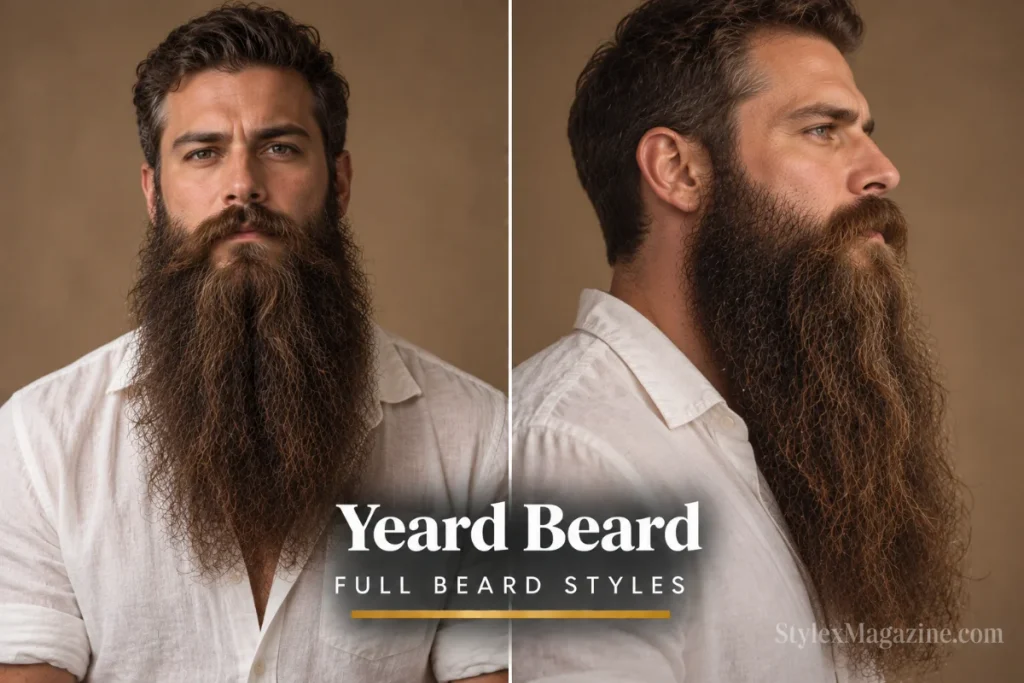
Celebrity: N/A (competitive beard community style) | Hair type: Any texture, thick density
A full beard grown for 12 months without trimming. No shaping, no length reduction. The only intervention is neckline cleanup and conditioning. The yeard is more of a growth challenge than a style: you commit to one year and see what your genetics produce. I’ve had clients attempt this and most tap out around month 5 when the awkward mid-length phase hits.
Straight hair produces a long, narrow yeard. Curly and coily textures produce a wide, dense mass that needs daily oil and combing to stay manageable. Plan your conditioning around your texture, not around a generic schedule.
Best for: Men with even, dense growth who want to test their beard’s full potential.
Length: 100-175mm (4-7 inches depending on growth rate) T
ell your barber: “Year beard. Do not cut the length. Neckline cleanup only. Trim any damaged ends and leave everything else.”
Trim frequency: Every 6-8 weeks (ends only).
14. French Fork Beard
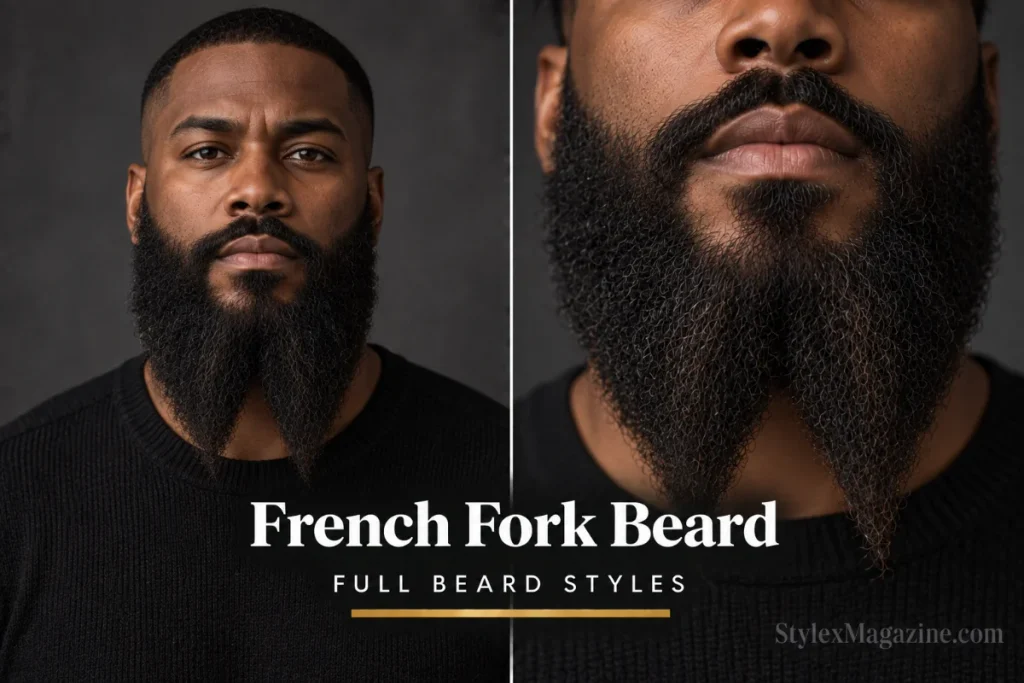
Celebrity: Brad Pitt (various phases) | Hair type: Straight to wavy, medium to thick
A full beard that splits into two distinct points at the chin, creating a forked silhouette. The fork can be natural (some men’s chin hair grows in two directions) or sculpted by a barber. Suits men with strong chin structure because the two points frame the chin rather than covering it.
Best for: Oval and oblong faces. Medium to thick density. Requires chin length of at least 75mm.
Length: 50mm on sides, 75-125mm at chin
Tell your barber: “French fork. Keep the sides shorter, grow the chin out, and split it into two points at the bottom. Shape the fork, do not thin the sides.”
Trim frequency: Every 3-4 weeks.
15. Full Beard with Handlebar Mustache
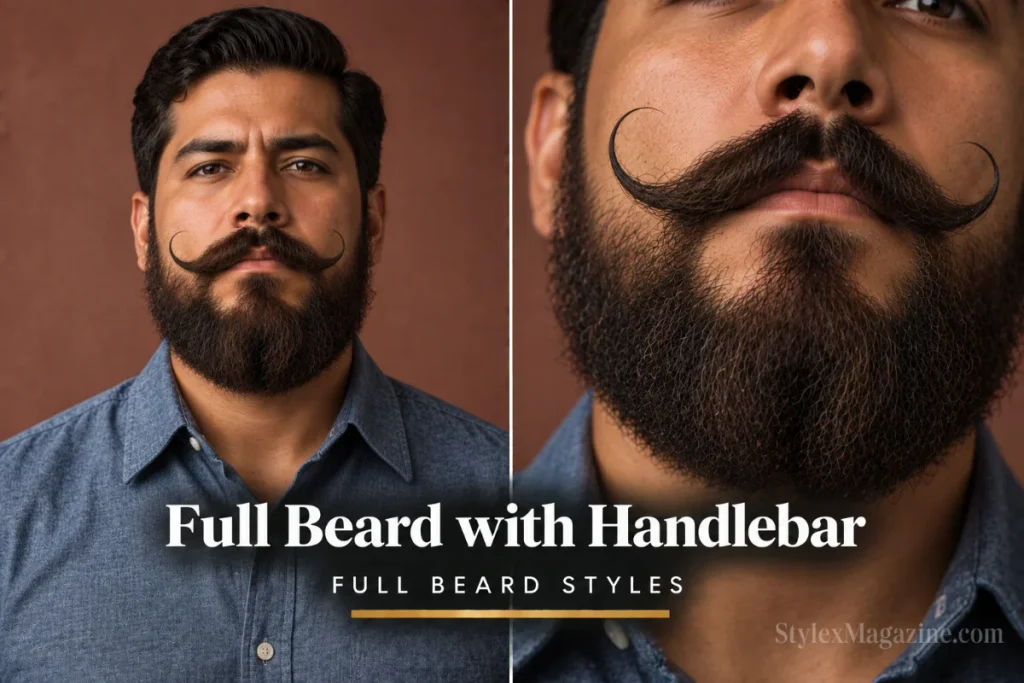
Celebrity: N/A (barbershop culture) | Hair type: Straight to wavy, thick mustache growth required
A full beard paired with a handlebar mustache where the ends curl upward and outward, separate from the beard. The handlebar adds a deliberate, styled element to an otherwise natural full beard. High maintenance: the mustache needs daily waxing to hold shape. Curly mustache hair resists the curl and needs a stronger hold wax or a heated comb to set.
Best for: Oval and square faces. Thick mustache growth specifically.
Length: 40-75mm on beard, mustache grown 50mm+ past lip corners
Tell your barber: “Full beard with a handlebar mustache. Keep the beard medium length, but leave the mustache long on the sides so I can curl it with wax.”
Trim frequency: Every 3-4 weeks (beard). Daily mustache waxing and shaping.
16. Faded Full Beard
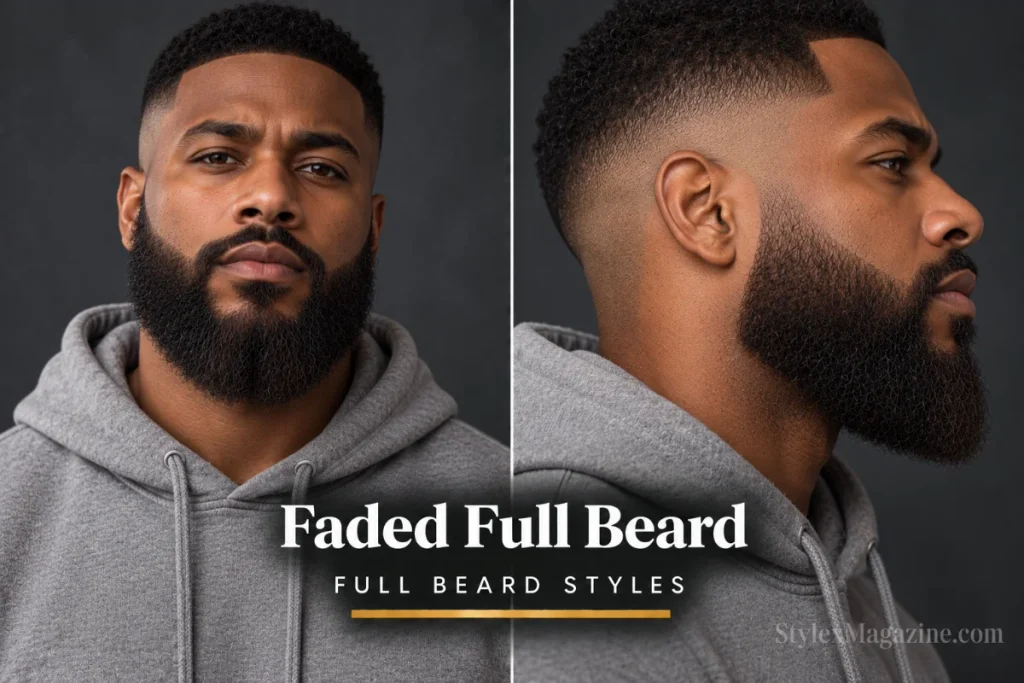
Celebrity: Drake | Hair type: Coily, thick
Sideburns blend from skin or very short stubble into the full beard through a gradient, connecting the beard seamlessly into the haircut. The faded full beard is the most requested modern barbershop variation because it pairs the weight of a full beard with the precision of a fade. For specific fade and beard combinations by fade type, see fade haircut with beard.
Coily and curly textures hold the fade gradient cleanly. Straight hair can blur the transition between sessions, so expect tighter touch-up intervals.
Best for: All face shapes. Works best with coily and curly textures that hold fade lines.
Length: 0mm at sideburn top, 30-50mm at chin
Tell your barber: “Fade the sideburns into the full beard. Skin at the top of the sideburn, blending into the full length by the jawline. No hard line between the fade and the beard.”
Trim frequency: Every 1-2 weeks (the fade grows out fast).
17. Full Beard with Disconnected Mustache
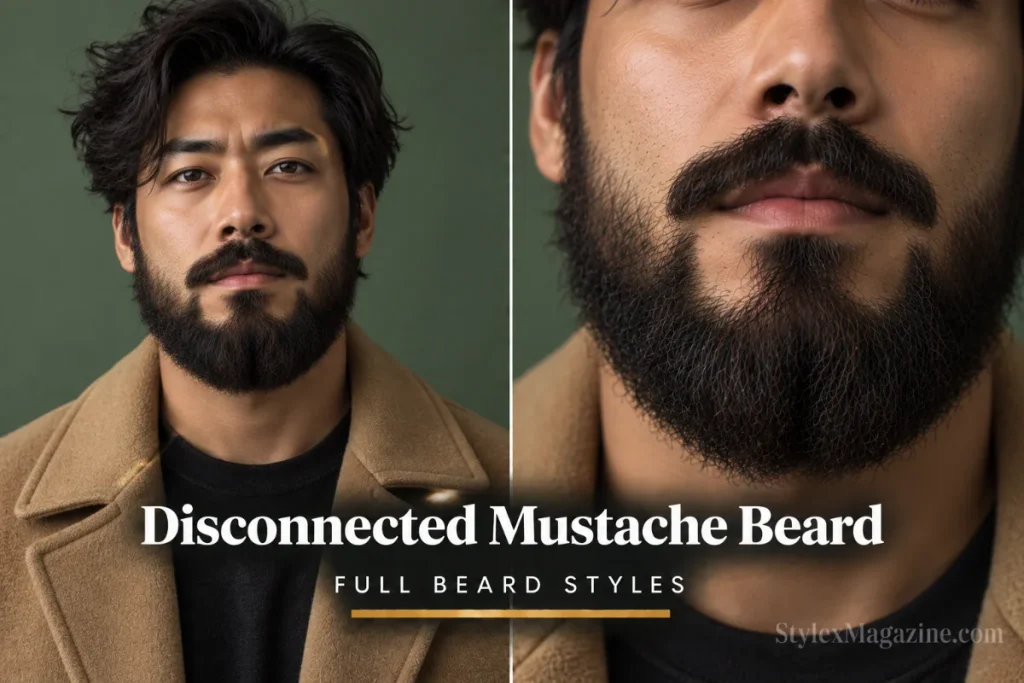
Celebrity: N/A (barbershop variation) | Hair type: Any texture, medium to thick
Mustache grows full but stays separated from the beard by a shaved gap on both sides of the mouth. The disconnect creates a different visual rhythm than a standard connected full beard. Appeals to men who want a Van Dyke-adjacent look with full cheek coverage. For more options without a connected mustache, see beard styles without mustache.
Best for: Oval and square faces. Medium to thick density.
Length: 30-50mm on beard, mustache at any length
Tell your barber: “Full beard with a disconnected mustache. Shave the connection between the mustache and the beard on both sides of the mouth. Keep the cheeks and chin full.”
Trim frequency: Every 2-3 weeks, plus weekly gap cleanup.
18. Grey / Silver Full Beard
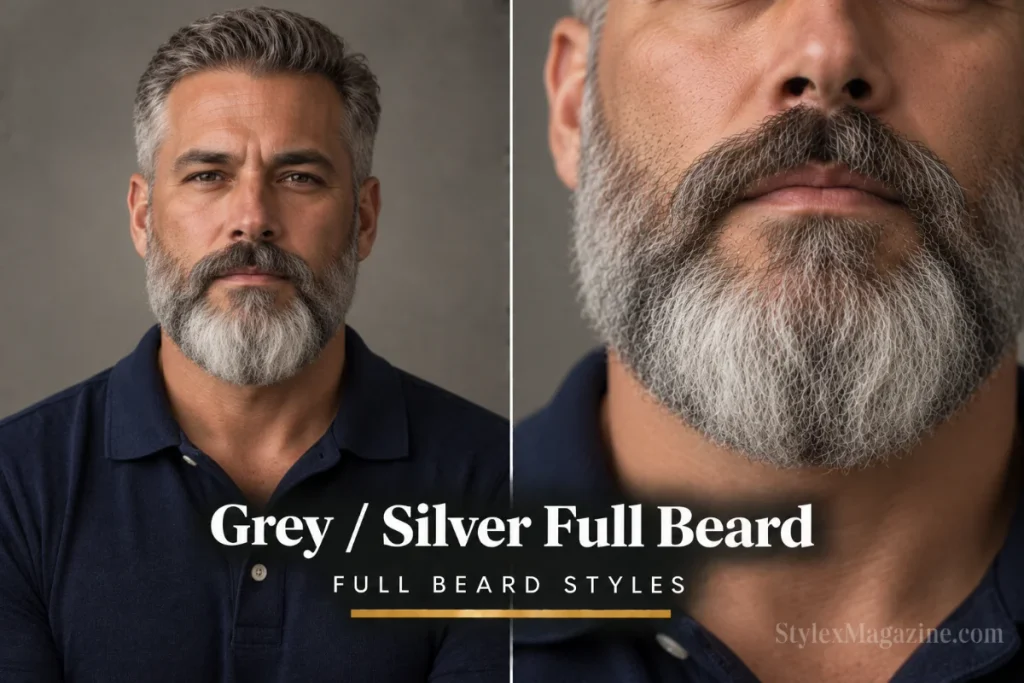
Celebrity: Jeff Bridges | Hair type: Any texture, medium to thick
A full beard where grey or white hair is the dominant color, worn deliberately rather than hidden with dye. Grey beard hair is coarser and reflects light differently, which gives it more visual weight than darker beards at the same length. The practical shift: grey hair dries faster, tangles more, and needs heavier conditioning than pigmented hair. Beard oil alone is not enough at this stage. Use a beard balm or butter for moisture and hold.
Best for: Any face shape. Works at any length.
Length: 25mm+ (any full beard length)
Tell your barber: “Keep the shape clean but leave the grey. Clean neckline, trim any rough ends. Do not thin it. Grey hair already looks thinner than it is.”
Trim frequency: Every 3-4 weeks.
19. Lumberjack Beard
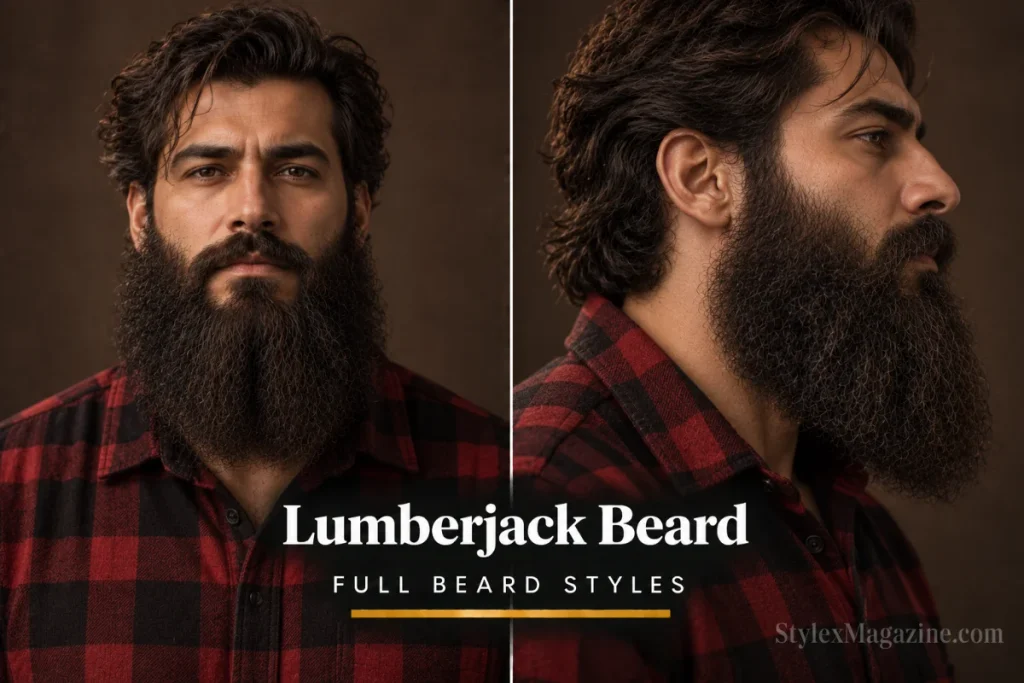
Celebrity: Nick Offerman | Hair type: Any texture, thick and dense
Longer, fuller, with minimal shaping and a deliberately rugged finish. Sits between a natural full beard and a yeard: it has some intentional shape (especially at the neckline), but the sides and chin are left fuller and bushier than a classic full beard. The 2010s beard revival made this style mainstream, but it requires genuine density. Thin growth at this length does not fill in. It gets wispy.
Best for: Oval, square, and oblong faces. Thick, dense growth.
Length: 75-125mm (3-5 inches)
Tell your barber: “Lumberjack. Keep it full and bushy. Clean the neckline, remove strays, trim the rough ends. Do not thin the sides or bring the chin to a point.”
Trim frequency: Every 4-5 weeks.
20. Full Beard for Patchy Growth
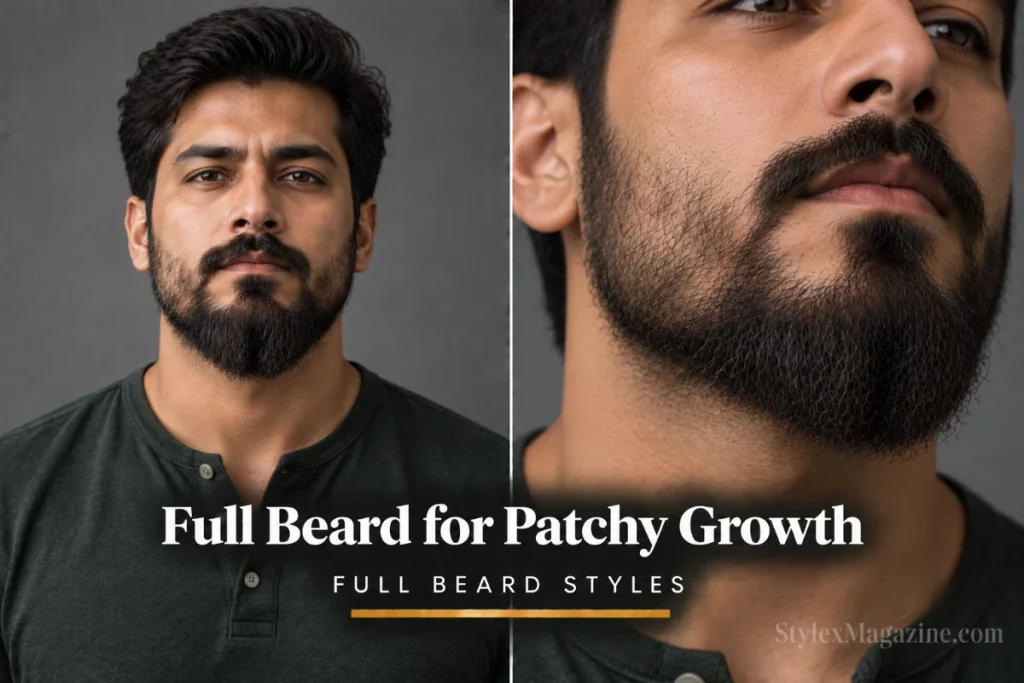
Celebrity: Keanu Reeves | Hair type: Any texture, thin to medium density
Not every man has even cheek coverage, and a full beard is still possible with uneven growth if you manage expectations and pick the right variation. The strategy: keep length shorter (20-30mm) where gaps are less visible, grow the chin and jawline longer to draw the eye down, and skip aggressive cheek line shaping because shaping exposes the gaps rather than hiding them.
I’d recommend the corporate full beard (Style #2) or the tapered full beard (Style #7) for men with uneven cheeks. Both keep the focus on the jaw and chin where growth is usually strongest.
Best for: Round and oval faces. Thin to medium density with uneven cheeks.
Length: 20-30mm overall, up to 40mm on chin
Tell your barber: “Keep it at 20-25mm. Do not shape the cheek line aggressively. Let the natural growth sit. Longer on the chin if density allows.”
Trim frequency: Every 2-3 weeks.
Full Beard Comparison Table
| # | Style | Length | Maintenance | Best Face Shapes | Min. Density |
|---|---|---|---|---|---|
| 1 | Classic | 25-50mm | Medium | Oval, square | Medium |
| 2 | Corporate | 20-30mm | High | All | Thin-thick |
| 3 | Natural | 30-75mm | Low | Oval, oblong | Thick |
| 4 | Short Full | 20-25mm | Medium | All | Medium |
| 5 | Rounded | 30-50mm | Medium | Square, diamond | Thick |
| 6 | Squared | 30-50mm | High | Round, oval | Medium |
| 7 | Tapered | 15-50mm | Medium | Heart, triangle | Any |
| 8 | Ducktail | 30-75mm | Medium | Round, square | Medium |
| 9 | Garibaldi | 75-100mm | Medium | Oval, oblong | Thick |
| 10 | Bandholz | 100mm+ | Low | Oval, diamond | Thick |
| 11 | Viking | 100-150mm+ | Low | Oval, square, oblong | Thick |
| 12 | Verdi | 50-100mm | High | Oval, rectangular | Thick |
| 13 | Yeard | 100-175mm | Low | Any (even growth) | Thick |
| 14 | French Fork | 50-125mm | Medium | Oval, oblong | Medium |
| 15 | Handlebar Combo | 40-75mm | High | Oval, square | Thick |
| 16 | Faded | 0-50mm | High | All | Medium |
| 17 | Disconnected Stache | 30-50mm | Medium | Oval, square | Medium |
| 18 | Grey/Silver | 25mm+ | Medium | All | Medium |
| 19 | Lumberjack | 75-125mm | Low | Oval, square, oblong | Thick |
| 20 | Patchy Growth | 20-40mm | Medium | Round, oval | Thin |
What Haircuts Work Best with a Full Beard?
The haircut and the beard should function as one connected shape, not two separate decisions. The sideburn transition is where most combinations fall apart.
| Haircut | Best Full Beard Pairing | Why |
|---|---|---|
| Low fade | Tapered, faded, corporate | The fade connects into the beard through the sideburn. Blended, modern. |
| Mid fade | Classic, rounded, faded | The most balanced pairing. Neither the hair nor the beard dominates. |
| High fade | Faded, ducktail, corporate | High contrast. Works best when the beard has volume below to compensate for the exposed sides. |
| Buzz cut | Classic, rounded, natural | Uniform short hair lets the beard carry the visual weight. See buzz cut with beard for 35 pairings. |
| Shaved / bald head | Bandholz, lumberjack, Garibaldi | A full, voluminous beard balances a bare scalp. See bald head with beard styles for the complete guide. |
| Textured crop | Corporate, tapered, short full | Casual texture on top pairs with a structured beard below. Avoid very long beards with crops. |
| Slick back | Classic, squared, Verdi | Polished hair pairs with a polished beard. The Verdi’s styled mustache completes the combination. |
| Comb over | Classic, corporate, tapered | Side-parted structure on top matches a well-shaped beard below. |
| Long hair | Bandholz, Viking, natural | Length on top and length on the bottom belong together. Shorter beards under long hair look disconnected. |
What Are the Most Common Full Beard Mistakes?
The neckline is where most full beards fail. These six mistakes account for the majority of full beards that look neglected rather than intentional.
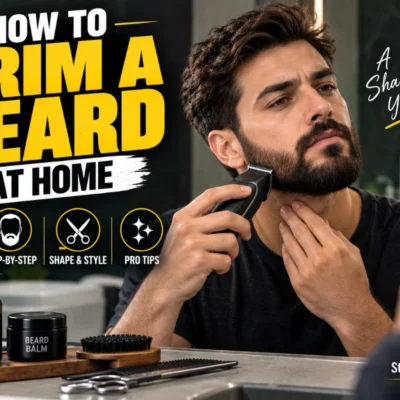
1. Neckline carved too high. Men shave the neckline along the jawline itself, which creates a “floating” beard and a visual double chin. The neckline should sit one to two finger widths above the Adam’s apple. Everything below gets shaved. Everything above grows. For the full neckline and shaping guide, see how to trim and maintain a beard at home.
2. Cheek line cut too aggressively. A natural or slightly refined cheek line almost always looks better than a razor-sharp one. Aggressive cheek lines shrink the beard visually and expose any density issues on the upper cheeks.
3. Ignoring the mustache. The mustache is part of the full beard. Letting it grow over the lip without trimming or shaping makes eating difficult and the beard look unkempt. Trim the lip line or train the mustache to the sides with a small comb.
4. Skipping conditioning on longer beards. Beard hair above 50mm gets dry, coarse, and prone to breakage. Beard oil handles daily moisture. Beard balm or butter adds hold and deeper conditioning. Regular shampoo strips natural oils. Use a beard-specific wash 2-3 times per week.
5. Treating every full beard the same length. A tapered full beard and a Garibaldi need different guard settings, different trimming techniques, and different products. “Full beard, even all around” works for a classic full beard. It destroys a ducktail.
6. Choosing the wrong variation for your density. A Garibaldi needs thick, dense growth. A Bandholz needs even coverage everywhere. If your cheeks are uneven, a corporate or tapered full beard keeps focus on the jaw and chin, where growth is usually strongest.
FAQs
How long does it take to grow a full beard?
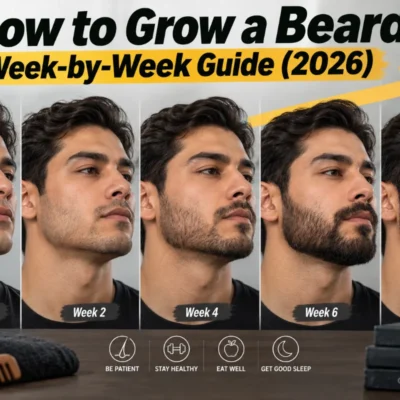
Most men reach minimum full beard coverage (20-25mm) in 6 to 8 weeks. A medium-length full beard (40-50mm) takes 3 to 4 months. Longer styles like the Garibaldi or Bandholz take 6 to 12 months. For the full growth process, see how to grow a beard.
What is the difference between a full beard and a Garibaldi?
A full beard is the category. A Garibaldi is one specific variation: wide, rounded at the bottom, fuller than a classic full beard, typically 3-4 inches long. Every Garibaldi is a full beard. Not every full beard is a Garibaldi.
Can you grow a full beard with uneven cheeks?
Yes. Keep to 20-30mm overall length and grow the chin longer to shift attention downward. The corporate (Style #2) and tapered (Style #7) variations work best because they do not rely on even cheek density.
How often should you trim a full beard?
Corporate and faded styles: every 1-2 weeks. Classic, rounded, and squared: every 2-3 weeks. Garibaldi, natural, and lumberjack: every 3-5 weeks. Bandholz and yeard: every 5-8 weeks (neckline and ends only). See the comparison table above for all 20.
What products do you actually need for a full beard?
Beard oil daily for moisture. Beard balm or butter for medium to long beards that need hold. A beard wash (not regular shampoo) 2-3 times per week. A boar bristle brush or wide-tooth comb. A trimmer with adjustable guards. Anything beyond these five is optional.
Does a full beard work in professional settings?
A well-maintained corporate full beard (Style #2) or short full beard (Style #4) is accepted in most professional environments in 2026. The neckline and cheek lines must be clean. Strays must be trimmed. Shorter full beards signal intentional grooming. Longer, unshaped beards signal the opposite.

Other Articles
25+ Beard Styles for Men: Find Your Best Look (2026)
Beard Dandruff: Causes, Treatment & How to Stop It for Good

[…] your barber: “Induction cut, no guard, full beard, clean neckline two fingers above Adam’s apple.” Skip this if your beard growth is thin […]
[…] chin still bare. Both keep the chin shaved. That clean chin is what separates mutton chops from a full beard or a chin […]
[…] to the beard. A heavy mustache with a short beard looks disconnected. A thin mustache with a full beard gets lost. Keep both elements within one guard size of each other unless you are growing a […]
[…] even growth across the full face: Full beard, short boxed beard, […]
[…] of beard length, but how you execute each one changes depending on whether you have stubble or a full beard (see the beard length section […]
[…] The standard full beard covers the entire lower face with even length and a defined neckline. The 2026 version is more shaped than the grow-it-and-forget-it look from a decade ago: a defined cheek line, a clean neckline sitting just above the Adam’s apple, and consistent length maintained with a trimmer. For everything from low to heavy full beards, see our full beard styles guide. […]