
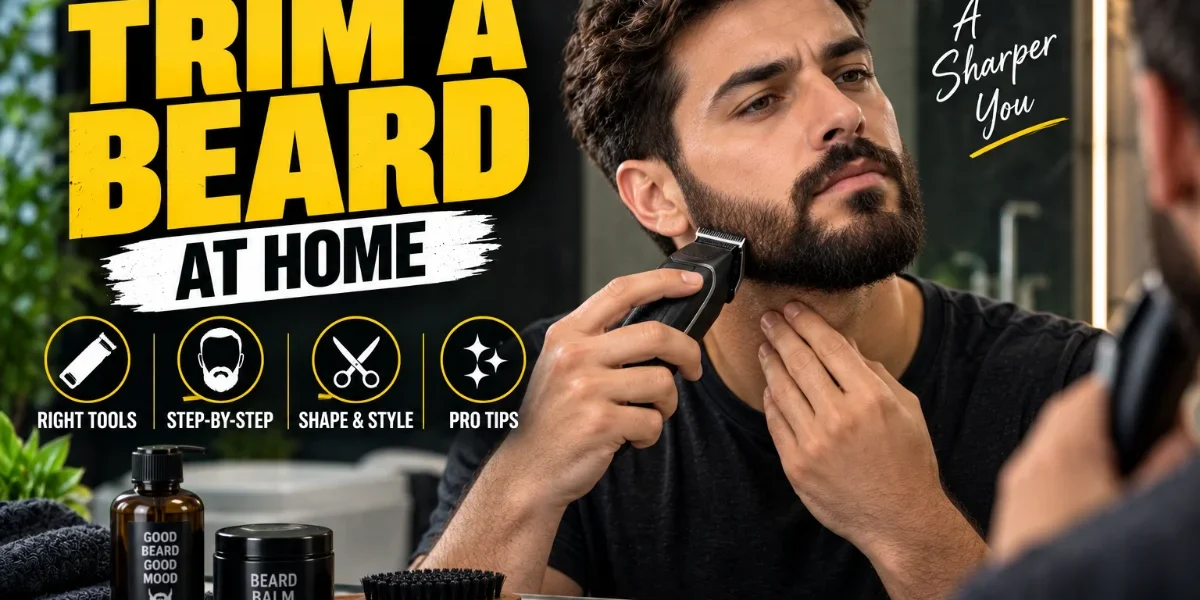

Quick Answer: Wash and fully dry your beard first. Start with a longer guard than you think you need and work down. Trim the sides before the chin. Set the neckline two finger-widths above the Adam’s apple. Define the cheek line along your natural growth. Trim the mustache at the lip line with scissors. Finish with beard oil on the skin underneath.
The difference between a beard that looks maintained and one that looks neglected is a fifteen-minute trim every one to two weeks. That is all. Most men either never trim and let things go wild, or trim too aggressively and lose weeks of growth in a single session. Both problems come from not having a process.
This is the process. It covers every beard length from stubble to full, and it works whether you are doing this for the first time or cleaning up between barber visits.
What Tools Do You Need?
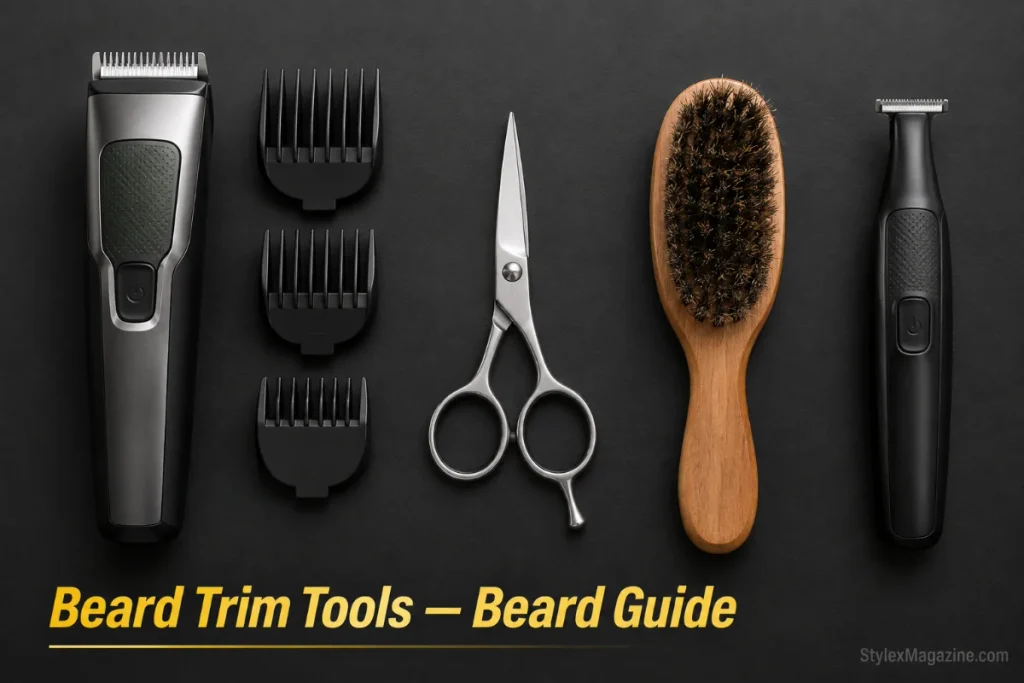
Four things. That is the full list.
Beard trimmer with adjustable guards. The guards control length. A set that runs from guard 1 (3mm) to guard 8 (25mm) covers every style. Cordless trimmers give you more control. Make sure the guards lock rather than slide, because sliding guards can shift mid-pass and take a strip shorter than intended.
Scissors. Small, sharp beard scissors or grooming shears for the mustache, stray hairs, and detail work that the trimmer cannot reach cleanly.
Comb or boar bristle brush. A comb detangles and lifts the hair so the trimmer cuts evenly. A brush distributes oil and trains growth direction after trimming.
Razor or detail trimmer (no guard). For the neckline and cheek line. A razor gives the cleanest edge. A detail trimmer with no guard is the next best option.
Skip the products until after the trim. Oil and balm go on at the end, not the start.
How Do You Prepare Your Beard for Trimming?
Wash. Dry completely. Comb it out.
Wash your beard with a beard wash or gentle face wash. Towel dry, then let it air dry fully. Wet hair hangs roughly 15-20% longer than dry hair. If you trim it wet, you will cut shorter than you intended and realize the mistake only once it dries.
Once dry, comb or brush the entire beard downward in the direction of growth. This pulls every hair to its natural resting position and exposes the strays that are outpacing the rest. Those strays are what you are about to trim.
How Do You Trim a Short Beard?
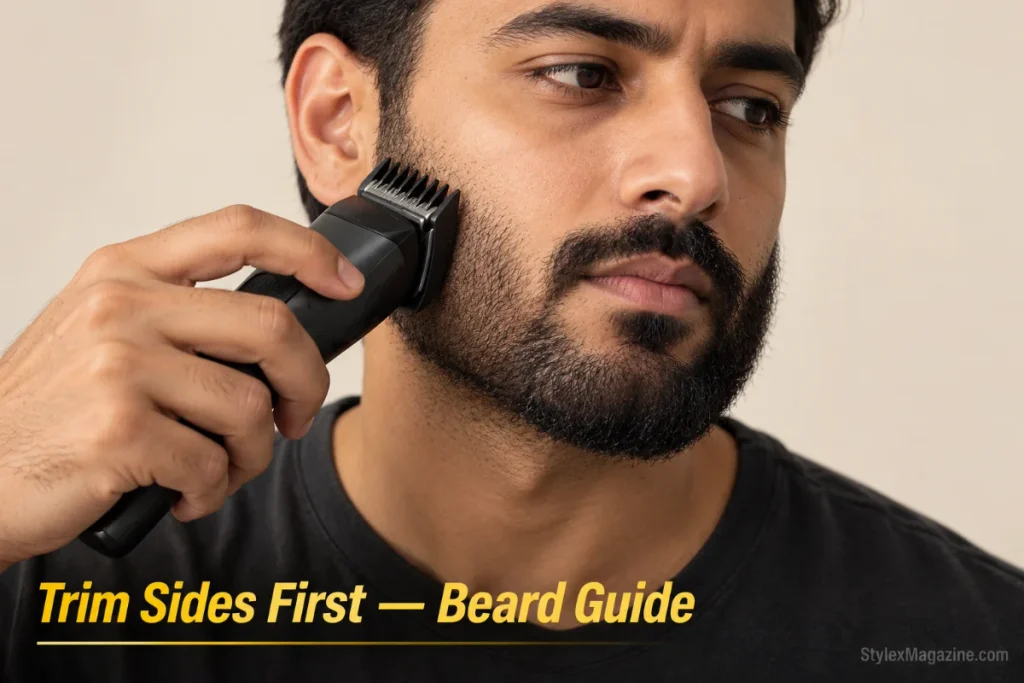
Stubble to 15mm. Guard 1 through guard 5.
Step 1: Pick your guard. Start two guard sizes longer than your target. If you want a guard 3 finish, start at guard 5. You can always go shorter. You cannot go back.
Step 2: Trim the sides first. Work from the sideburn down toward the jaw in smooth downward strokes, moving with the grain. I trim more short beards in the chair than any other length, and the single biggest improvement most men can make is keeping the sides a half-guard shorter than the front. It creates a cleaner profile without looking obviously different.
Step 3: Trim the front and chin. Switch to your target guard length. Trim downward from the chin to the neckline. Let the chin stay slightly longer than the sides for natural shape.
Step 4: Define lines. Neckline and cheek lines (covered in the next section). These lines are what separate a trimmed beard from a shaped one.
Step 5: Detail. Scissors for any stray hairs and flyaways the trimmer missed. Check both sides from multiple angles. The sides should taper naturally into the chin, not end in a hard shelf.
Step 6: Wash, oil, brush. Rinse your face to clear loose clippings (they cause itching if left on the skin). Then work three to four drops of beard oil into the skin underneath while still damp. For medium to long beards, follow with a small amount of beard balm for hold and flyaway control. Brush downward to set the shape.
How Do You Trim a Medium to Long Beard?
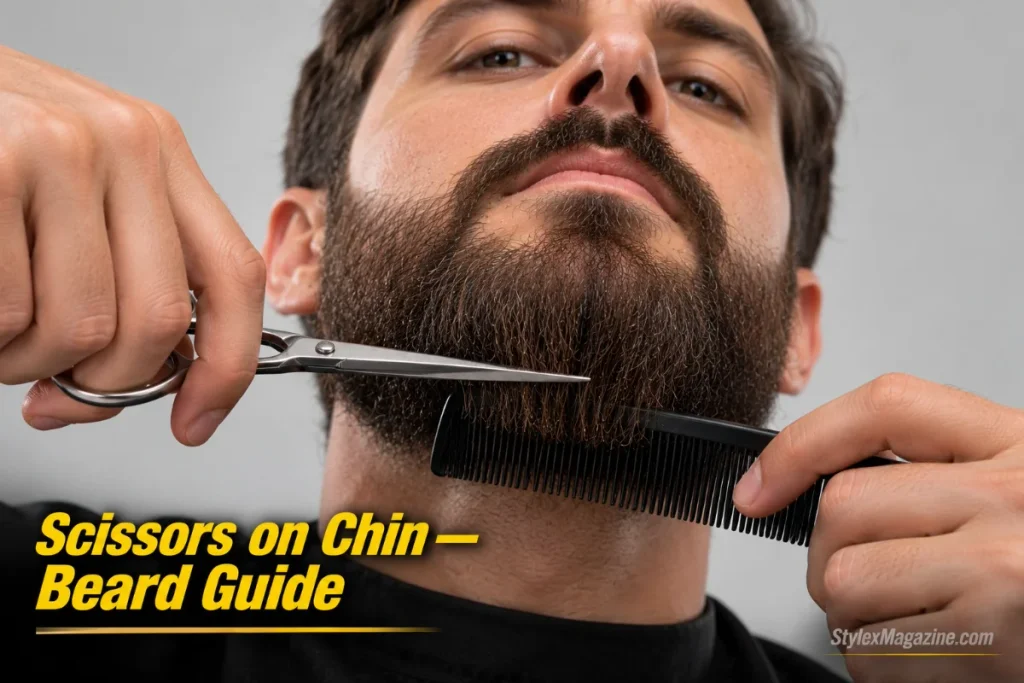
15mm and above. Guard 5+ or scissors.
The approach changes once length is involved. Scissors replace the trimmer for overall shaping, and the goal shifts from cutting to length toward removing bulk and maintaining silhouette.
Step 1: Comb everything out. Comb the sides outward so you can see which hairs extend beyond the body of the beard. Comb the chin and front straight down.
Step 2: Remove bulk from the sides. Use a guard two sizes shorter than your beard’s length to trim the sides. Work in smooth ear-to-jaw strokes. The sides of a medium or long beard carry the most bulk and can make the face look wider than it is. Keep the sides tighter than the chin for a natural taper.
Step 3: Shape the front with scissors. Comb the chin hair straight down. Hold the scissors horizontally and snip only the hairs extending below your target length. Small cuts. Check after every two or three snips. Scissors give more control than a trimmer at this length, because you can see exactly what you are cutting.
Step 4: Clean the outline. Neckline, cheek lines, and the back line behind the sideburn (the straight line from the back of the sideburn down to the bottom of the beard). The back line is the hardest to see. Use a handheld mirror or your phone’s front camera to check it.
Step 5: Stray hairs. Comb the entire beard downward one more time. Anything sticking out gets snipped.
Step 6: Wash, oil, brush. Rinse loose clippings off your face and neck. Oil on the skin underneath while damp, then brush downward to distribute and set the final shape. Add beard balm at the ends if the beard needs hold.
How Do You Set Your Neckline and Cheek Lines?
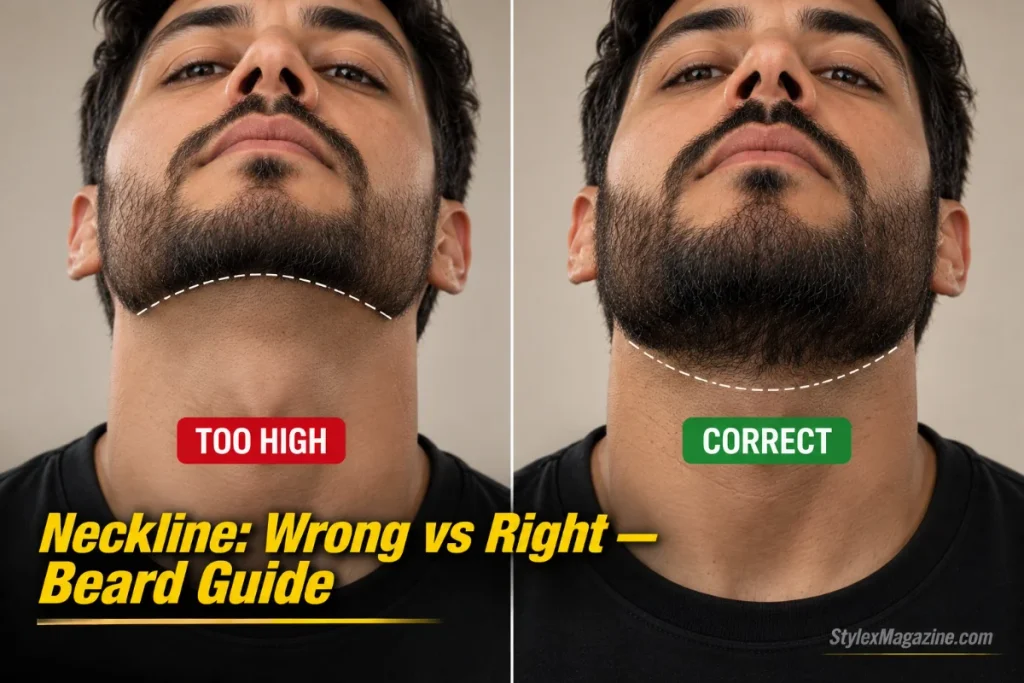
Neckline: two finger-widths above the Adam’s apple. Place your index and middle finger horizontally above your Adam’s apple. Where the top finger sits is your neckline. From that center point, follow the natural crease under your jaw, curving up gently toward the back of each ear. Shave everything below that line clean.
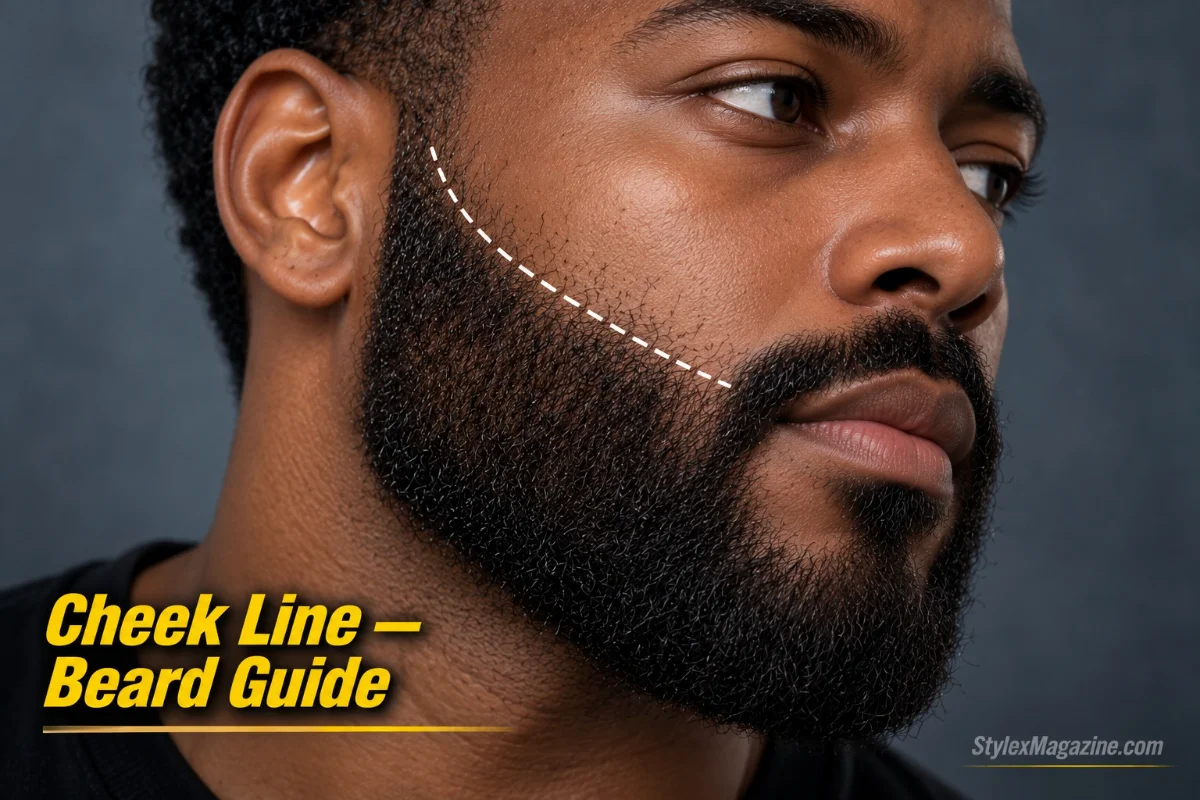
Cheek line: follow your natural growth. Trace the highest point of your natural beard growth from the sideburn toward the corner of your mouth. Clean up only the stray hairs above that line. Carving the cheek line too low removes fullness. Too high looks unnatural.
The smile test: Smile wide in the mirror. If your beard pulls above the jawline when you smile, the neckline is set too high. Let the lower hairs grow out before re-setting.
For curly and coily beards: Coily hair contracts after cutting, so the neckline appears to jump higher after trimming than where you set it. Cut slightly lower than the two-finger point to account for shrinkage. For the full guide on coily textures, see fade haircuts for Black men.
How Do You Trim Your Mustache?
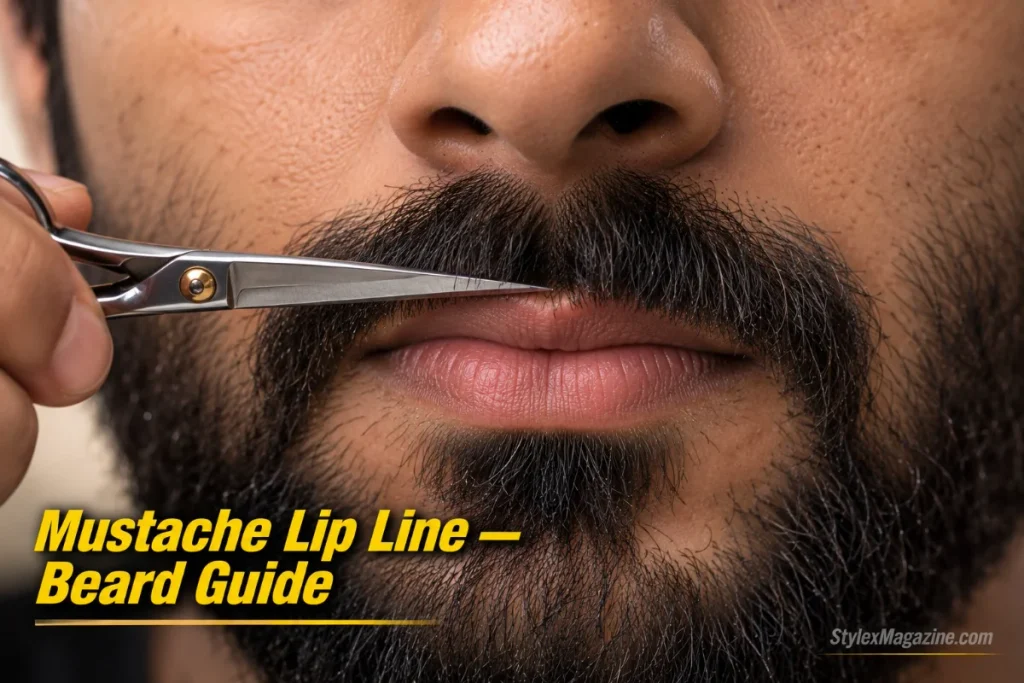
Comb down. Trim at the lip line. Work from center outward.
Comb all the mustache hairs straight down over the upper lip. Trim anything that falls below the lip line using scissors, cutting from the center of the lip toward each corner. Small snips, not long cuts.
The mustache should stay proportional to the beard. A heavy mustache with a short beard looks disconnected. A thin mustache with a full beard gets lost. Keep both elements within one guard size of each other unless you are growing a deliberate beardstache variation.
How Do You Maintain a Beard Between Trims?
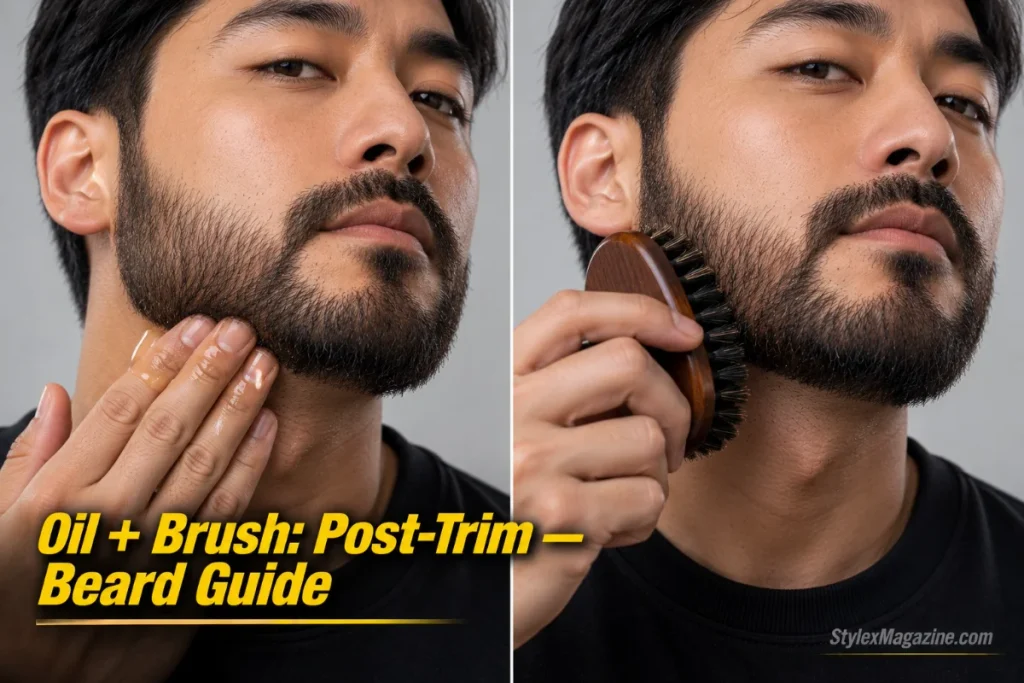
Daily (2 minutes): Three to four drops of beard oil worked into the skin underneath while damp from the shower. Ten strokes with a boar bristle brush to distribute oil and train direction.
Every 2-3 days: Shave or trim the neckline and cheek line to keep the borders clean. These lines grow out faster than the beard itself.
Weekly: Wash the beard two to three times per week with a beard wash (not head shampoo, not body wash). Comb through and check for stray hairs growing faster than the rest. Snip those with scissors.
Every 1-2 weeks (stubble and short beards): Full trim with a guard trimmer. Short beards grow out of shape faster.
Every 2-4 weeks (medium to long beards): Full shape-up with scissors and trimmer. Medium and long beards hold their shape longer but need bulk control on the sides.
| Beard Length | Full Trim Frequency | Lines Cleanup | Oil |
|---|---|---|---|
| Stubble (1-5mm) | Weekly | Every 3-4 days | Daily |
| Short (5-15mm) | Every 1-2 weeks | Every 2-3 days | Daily |
| Medium (15-25mm) | Every 2-3 weeks | Every 2-3 days | Daily |
| Long (25mm+) | Every 3-4 weeks | Every 2-3 days | Daily |
What Are the Most Common Beard Trimming Mistakes?
1. Trimming while wet. Wet hair hangs 15-20% longer than dry. Trim it wet and it will look shorter than planned once it dries.
2. Starting with the target guard instead of longer. One wrong pass at the wrong length takes weeks to grow back. Start two guards higher than your goal and step down.
3. Setting the neckline at the jawline. A neckline carved at the jaw makes the beard look thin and strangles the face. Two finger-widths above the Adam’s apple. Not at the jaw.
4. Carving the cheek line too low. Drops the beard’s visual volume. Follow your natural growth line, do not invent a lower one.
5. Evening out both sides by chasing one into the other. You trim the left slightly short, so you trim the right to match, then the left looks long again. I see this spiral in the chair weekly. Stop. Put the trimmer down. Small asymmetries are invisible to everyone except you in the mirror at close range.
6. Skipping oil and moisturizer after trimming. Trimming exposes skin that was covered. That skin is dry. Moisturize immediately or it will itch and flake within 24 hours.
7. Trimming against the grain. Running the trimmer upward against the growth direction causes skin irritation, razor bumps, and ingrown hairs. Trim downward, with the grain, on every pass. The only exception is a very light upward pass on the neck to check for missed strays after the main trim is done.
What If You Mess Up?
You took off too much length. No fix except time. Facial hair grows roughly half an inch per month. Budget two to four weeks per centimeter of recovery. In the meantime, trim the rest of the beard shorter to match the mistake, or embrace a shorter style temporarily.
You cut the neckline too high. Stop shaving that zone. Let the neckline hair grow back for 7-10 days. It will look scruffy for a week. Then re-set the line at the correct position (two finger-widths above Adam’s apple).
One side is shorter than the other. Do not trim the longer side to match. Live with the slight asymmetry for a few days while the short side catches up. At beard length, most growth differences of a few millimeters are invisible to anyone who is not holding a ruler to your face.
You created a bald patch. If the trimmer slipped and took a strip to the skin, let the surrounding hair grow over it. Comb the beard in the direction that covers the patch. At short lengths, the patch fills within a week. At medium lengths, the surrounding hair hides it within days.
You butchered the cheek line. Leave it. Do not try to fix a bad cheek line by carving lower, because that only removes more volume. Let the stray hairs grow back for a week, then re-approach the line from scratch.
FAQs
Should I trim my beard wet or dry?
Dry. Wet hair stretches and hangs longer than its true resting length, so a wet trim always ends up shorter than planned. If you already trimmed wet and it came out too short, the recovery is the same as any over-trim: let it grow back and resist the urge to even things out further. Budget about two weeks per guard size of lost length.
What guard size should a beginner start with?
Start with the longest guard you own and work down in single steps. For most men, guard 4 or 5 (12-15mm) is a safe starting point that maintains length while cleaning up the shape. Never start at your target length on the first pass.
How often should I trim my beard?
Stubble and short beards need a full trim every one to two weeks. Medium beards hold shape for two to three weeks. Long beards need a full shape-up every three to four weeks. Lines (neckline and cheek line) need cleanup every two to three days regardless of length.
Does trimming make a beard grow thicker?
No. Trimming cuts the visible hair shaft. It cannot affect the follicle underneath, so it changes neither the thickness nor the growth rate of the hair. A freshly trimmed beard appears fuller because all the hairs sit at a uniform length, removing the tapered tips that make untrimmed hair look thinner.
Can I trim my beard with scissors only?
For medium and long beards, scissors are actually the better primary tool. They give more control than a guard trimmer because you can see exactly what you are cutting. For short beards and stubble, a guard trimmer is faster and more consistent. Most men use both: trimmer for bulk and length, scissors for detail and stray hairs.
What do I ask my barber when getting a beard trim?
Three things: what beard style suits your face shape, where your neckline should sit, and how often to come back based on your growth speed. A reference photo removes most miscommunication. For specific face shape and style recommendations, see best beard for your face.

Other Articles
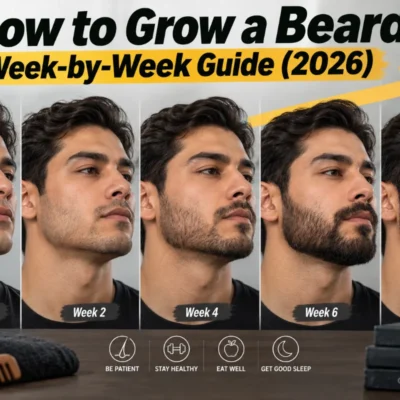
How to Grow a Beard? Week-by-Week Guide (2026)
Best Beard Style for Your Face Shape: The Complete Guide




[…] For the full trim and shaping guide, see How to Trim and Maintain a Beard at Home. […]
[…] 1. Neckline carved too high. Men shave the neckline along the jawline itself, which creates a “floating” beard and a visual double chin. The neckline should sit one to two finger widths above the Adam’s apple. Everything below gets shaved. Everything above grows. For the full neckline and shaping guide, see how to trim and maintain a beard at home. […]