
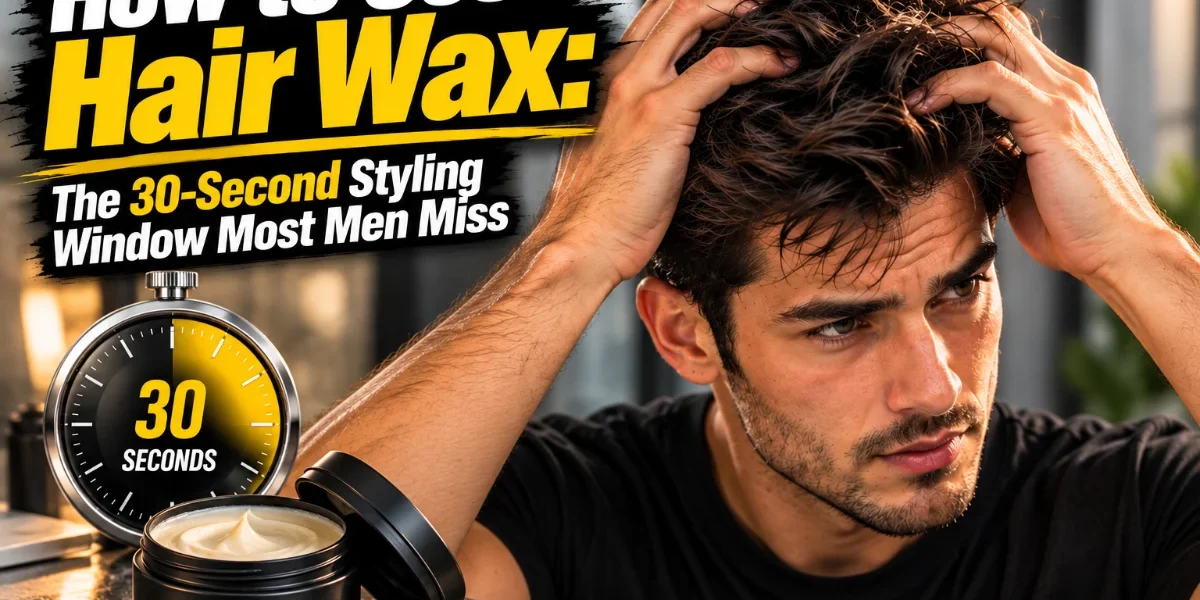

Quick Answer: Hair wax sets the moment it hits your hair. You have roughly 30 seconds to distribute and shape before the hold locks. Warm a pea-sized amount between your palms until invisible, apply fast from back to front on dry hair, and shape immediately. Once set, stop touching it. Wax gives the strongest defined hold of any styling product, but it forgives nothing.
Every other product in your kit gives you time. Pomade stays pliable for hours. Clay firms up gradually over five minutes. Sea salt spray needs to air dry before it activates. Wax does none of that. It grips on contact, firms within seconds, and locks the style you gave it whether you meant that style or not.
That speed is why I keep wax on the station for one specific job: short styles that need sharp piece separation and all-day hold without rechecking a mirror. The client who walks in wanting a textured crop that survives a 12-hour shift gets wax. The client who wants something he can recomb at lunch gets pomade. Different tools for different problems.
Why Wax Behaves Differently from Every Other Product?
Wax contains beeswax, carnauba wax, or synthetic polymers that solidify at room temperature. When you warm them between your palms, they liquefy temporarily. The moment that warm film contacts cooler hair, it begins re-solidifying. That transition from liquid to solid is your entire styling window.
Pomade stays wet. Gel hardens but cracks. Clay dries but stays slightly reworkable. Wax locks and holds.
What this means for you: every decision about direction, height, and texture needs to happen in the first 30 seconds after application. Adjusting after that point disrupts the hold structure rather than reshaping it.
| Product | Setting Time | Reworkable? | Hold Strength | Best Length |
|---|---|---|---|---|
| Wax | 30 seconds | No (locked once set) | Strong | Under 4 inches |
| Pomade | Never fully sets | Yes, all day | Medium-strong | Any length |
| Clay | 5 minutes | Slightly, by scrunching | Medium-strong | Any length |
| Sea salt spray | Air dry (10-15 min) | Yes, with water mist | Light-medium | Medium+ |
This table should end the “which product do I need” question. If you want permanence, wax. If you want flexibility, pomade. If you want texture without commitment, clay or salt spray.
The Application: Six Steps in Under a Minute?
Prep: Clean, dry hair. Wax needs a clean surface because leftover oils and old product create a slippery barrier that kills grip. Shampoo, towel dry, and let it finish drying. Fully dry hair gives the strongest hold. If you want a softer finish, leave it at 90% dry.
Scoop: Fingertip scrape from the jar surface. A pea for short hair, a dime for medium. Never more than a dime.
Warm: Rub between your palms for 10 seconds. The product should disappear completely from your hands. If you can still see it, keep rubbing. Visible wax on your palms means visible clumps in your hair.
Distribute: Fingers spread, start at the crown, rake forward to the hairline. Move fast. Both sides, then the top, then the back. The clock is running the moment product touches hair.
Shape: Pinch for pieces, push up for height, press flat for smooth, comb for polish. This is the 30-second window. Commit to a shape and execute it.

Stop: Hands down. Walk away. The hold is setting. Touching it now creates frizz, breaks the structure, and leaves fingermarks in the product film.
Wax by Hair Length: What Works and What Does Not?
Hair length matters more with wax than with any other product. The setting speed and concentrated formula create different results at different lengths.
Under 1 inch (buzz cut range): Half a pea. Fingertip application only. Wax at this length controls flyaways and adds a subtle sheen or matte finish depending on the formula. Apply to the tips, not the scalp.
1-2 inches (textured crop, spikes, crew cut): The sweet spot. Pea-sized amount. Full application technique. Wax performs best here because the short strands are light enough for the product to hold upright and separated. Fiber wax creates the strongest piece separation at this length.
2-4 inches (quiff, fringe, side part): Dime-sized amount. More hair means more resistance, so work faster during distribution. Blow-dry the hair into your rough shape first, then apply wax to lock it. Without pre-shaping, the weight of the hair at this length can fight the hold.
Over 4 inches: Wax becomes a problem. The concentrated formula weighs longer strands down, creates visible product buildup at the mid-lengths, and makes hair look stringy rather than styled. Switch to cream wax (lighter formula) or pomade. According to professional styling guides from Blumaan, “Wax Fiber” products specifically suit medium-length styles when paired with blow-drying and pre-styler foundations, but standard wax alone struggles beyond 4 inches.
Six Styles, Each in 30 Seconds?
Each style below follows the same timing: 30 seconds from first contact to final shape.

Textured Crop (matte wax, dry hair): Rake through from crown forward. Pinch random sections at the front and top. Pull upward. Release. Each pinched section freezes in the twisted position. Ten pinches, ten pieces, done. See messy hairstyles for men for crop variations.
Short Spikes (fiber wax, dry hair): Spread fingers into the hair at the crown. Push straight up. The fiber wax grips individual strands and holds them vertical. Move front to back in one fast pass. Spikes set within seconds. Works on hair under 2 inches only.
Controlled Side Part (shine wax, dry hair): Create the part with a fine-tooth comb. Smooth the shorter side flat with your palm. Smooth the longer side back and across. The wax locks both halves in their combed position. See the comb over guide for side part variations.
Slick Back (shine wax, slightly damp hair): Comb everything straight back from the forehead to the crown. Press your palms flat against the sides. The damp hair gives a smoother, shinier lay. See slick back hairstyles for the full technique.
Pompadour (strong-hold wax, damp hair): Blow-dry the front section upward with a round brush first to build height. Once fully dry, apply wax from roots upward at the front and comb the sides back flat. The wax locks the height in place. Without the blow-dry foundation, the weight collapses the volume within an hour.
Messy Fringe (matte wax, dry hair): Apply only to the front two inches of hair. Push the fringe forward and to one side. Twist two or three sections for deliberate disorder. The wax freezes the arranged chaos so it holds through the day.
Pro tip: For extra hold in wind or humidity, a light mist of hairspray over the finished style seals the wax in place. Hold the can 12 inches away and use one quick pass. Do not saturate.
Heat-activate trick: If the wax feels like it is not gripping hard enough after shaping, hit the styled hair with a blow dryer on medium heat for 5-10 seconds. The heat re-melts the wax film slightly, and it re-sets firmer as it cools. This locks the style harder than air-setting alone.
When Hair Wax Is the Wrong Product?
You need to restyle during the day. Wax locks. It does not flex. If your schedule includes a gym session, a client dinner, and an evening out, you need a product that recomb without washing. That is pomade.
Your hair is longer than 4 inches. The weight of longer hair overcomes the hold, and the concentrated formula makes long strands look coated and heavy. Switch to cream wax (lighter formula), clay, or pomade.
You have fine or thin hair and want volume. Standard wax is too heavy for fine strands. It pulls them flat against the scalp rather than lifting them. Use clay for lift and body on fine hair, or a lightweight cream wax if you must use a wax-family product.
You have curly hair and want natural bounce. Hard-setting wax stiffens curls into frozen clusters. Cream wax or a light pomade preserves the curl’s natural movement while controlling frizz. For curly styling, see curly hairstyles for men.
You want beachy, loose, natural texture. That is sea salt spray territory, not wax. Wax creates defined, structured hold. Sea salt creates undone, organic texture.
Being honest about what a product cannot do saves more bad hair days than any application technique.
Damage Control: Fixing Over-Application, Clumps, and Buildup
You used too much and your hair looks greasy. The only real fix is washing and starting over. Wax does not absorb or evaporate. It sits on the hair surface exactly where you put it. If washing immediately is not possible, dust texture powder or dry shampoo at the roots to absorb visible excess. This is a temporary mask, not a solution.
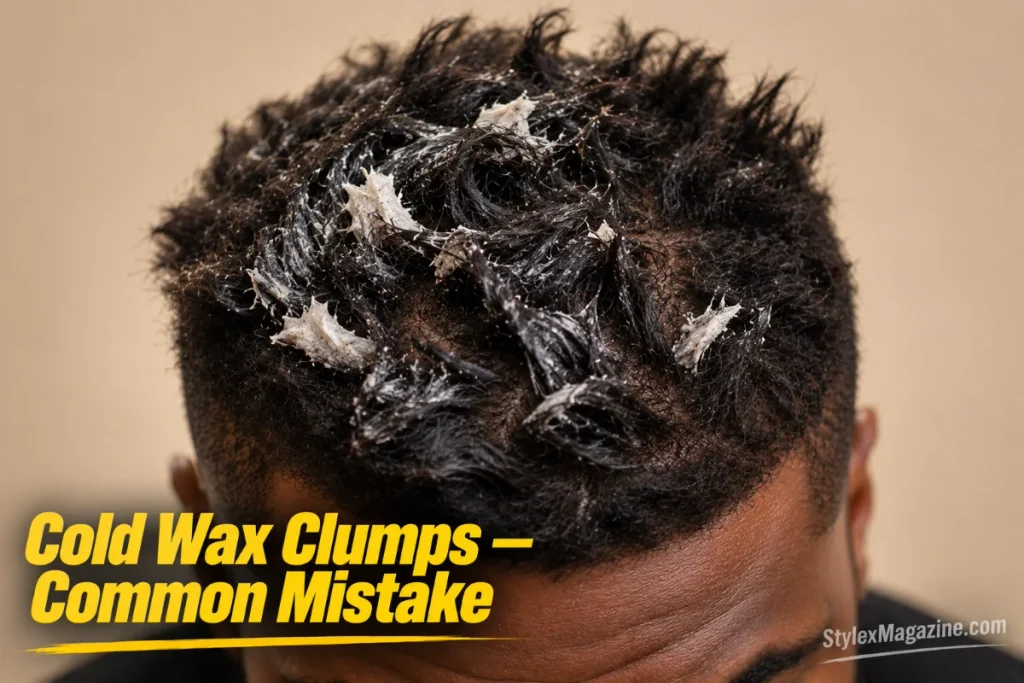
You have visible white clumps. The wax was not warmed enough before application. Those clumps are semi-solid pieces that grabbed the first strands they contacted. Run a fine-tooth comb through to break them apart and redistribute. If the clumps are too set, dampen your hands, work through the affected section, and reshape quickly.
Product buildup after multiple days. According to the American Academy of Dermatology, washing styling products out regularly prevents scalp irritation and pore blockage. For wax specifically, massage shampoo into dry hair before adding water. The shampoo bonds to the wax particles directly. Rinse and repeat if needed. A clarifying shampoo once a week clears stubborn residue that regular shampoo misses.
The style collapsed by noon. Three likely causes: too little product (add a thin second layer only to the areas that fell), hair was too damp when you applied (wax grips dry surfaces harder), or the hair is too long for wax to hold (switch products).
FAQs
Does hair wax expire?
Most wax products last 12-24 months after opening. Wax that has dried out, crumbled, or separated into oil and hard chunks has degraded. Dried-out wax does not emulsify properly and creates chalky, uneven deposits. If the texture in the jar has changed from when you bought it, replace it.
Can hair wax cause acne along the hairline?
Wax applied to hair does not cause acne. Wax that migrates to the forehead and temples can clog pores in those areas, especially if left overnight. If you break out along your hairline, apply wax to the mid-lengths and tips only, keep it away from your forehead skin, and change your pillowcase every 2-3 days.
Can you layer wax with other products?
Mixing a few drops of hair oil into wax before applying softens the hold and adds moisture for thick, dry hair that needs hydration alongside control. Applying sea salt spray first, drying, then waxing on top creates stronger texture on short hair than either product alone. The spray roughens the surface, giving the wax more grip.
Can you sleep with wax in your hair?
You can, but two consecutive nights without washing creates visible buildup. Wax transfers to your pillowcase and compresses the style flat overnight. In the morning, dampen your hands and run them through to loosen the old product, then add a half-pea of fresh wax to reshape. Change the pillowcase if you do this regularly.
What is the difference between matte wax and fiber wax?
Matte wax gives a natural, no-shine finish with medium-to-strong hold. Fiber wax contains stringy, elastic fibers that create extreme piece separation and the strongest hold of any wax type. Matte suits textured crops and casual styles. Fiber suits spikes, defined pieces, and very short hair that needs to stay upright against gravity.
How often should you wash hair wax out?
Every day if you apply daily. Every other day at most if you skip days. Wax sits on the hair surface and does not absorb or break down naturally. Each unwashed layer adds weight and stiffness. After two days without shampooing, the accumulated film dulls the hair, flattens the style, and can irritate the scalp. Massage shampoo into dry hair before adding water for the cleanest removal.

Other Articles
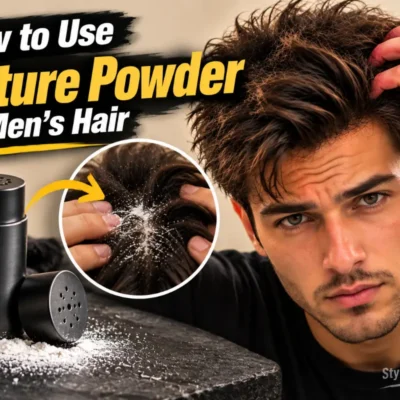
How to Use Texture Powder for Men’s Hair
How to Use Sea Salt Spray: Step-by-Step Guide for Texture and Volume



[…] Wax holds through tack rather than stiffness, so it grips pieces together without setting. Thick, coarse hair takes it better than fine hair. See how to use hair wax. […]