

A short beard sits between 3 and 20mm, longer than stubble, shorter than a full beard. The short boxed beard, heavy stubble, corporate beard, and beardstache are the strongest options right now. Below are 30 styles grouped by type, each with the clipper guard, face shape match, and who should skip it.
A short beard does more for your face than most men expect. The right shape sharpens a soft jawline, hides patchy spots, and adds structure without requiring the commitment or upkeep of a full beard. As someone who has shaped thousands of short beards in the chair, I can tell you: styling a short beard well comes down to knowing your guard number, your face shape, and where to set your neckline.
These 30 short beard styles cover everything from boxed beards to stubble, faded looks to mustache combos, each with specific clipper settings and honest advice on who should and shouldn’t wear them.
Classic and Everyday Short Beards
These are the foundation styles. If you have never worn a short beard before, start here.
1. Short Boxed Beard
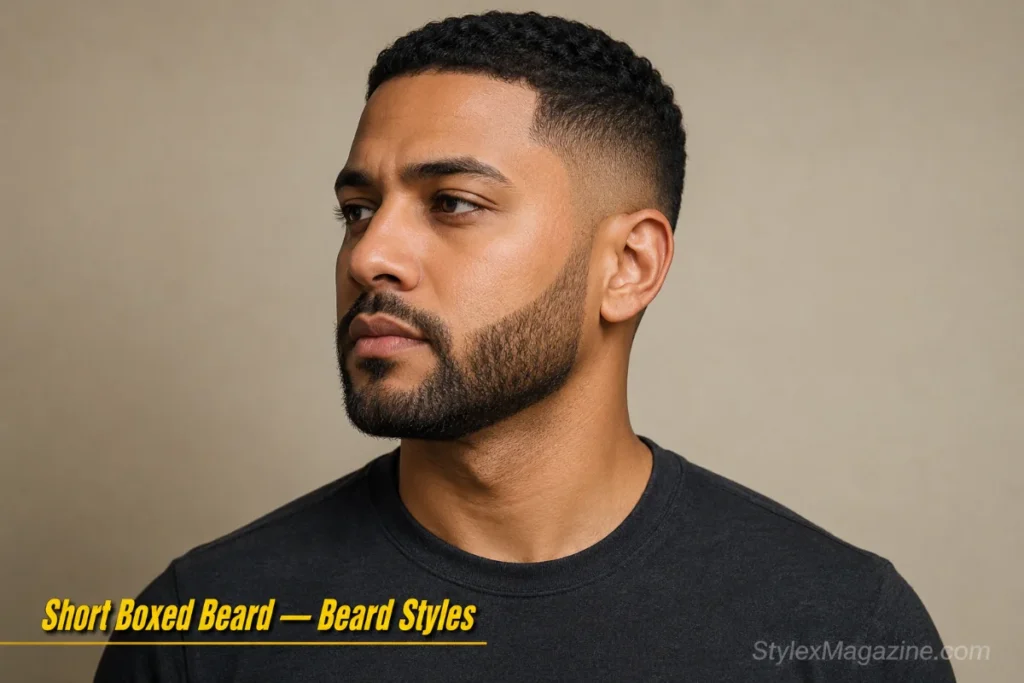
The short boxed beard is the single most requested short beard style I see in the chair, and for good reason. It frames the jaw with clean geometric lines, a straight cheek line, a defined neckline, and consistent density throughout. The “boxed” part comes from that deliberate, squared-off shape that separates it from a beard that simply grew in.
Set your trimmer to guard 4 through 6 (12–20mm). Run it evenly across the full beard area, then switch to no guard for the neckline. Place the neckline about two finger-widths above your Adam’s apple. For the cheek line, follow your natural growth border and clean everything above it with a razor or detail trimmer. The shape should look intentional from every angle.
Oval, square, and rectangular faces carry this style especially well. The strong horizontal lines complement angular features and add definition to softer jaw shapes. Skip this if your cheek growth is patchy or thin, the boxed shape exposes uneven density rather than hiding it. A circle beard or stubble works better in that case.
2. Corporate Beard
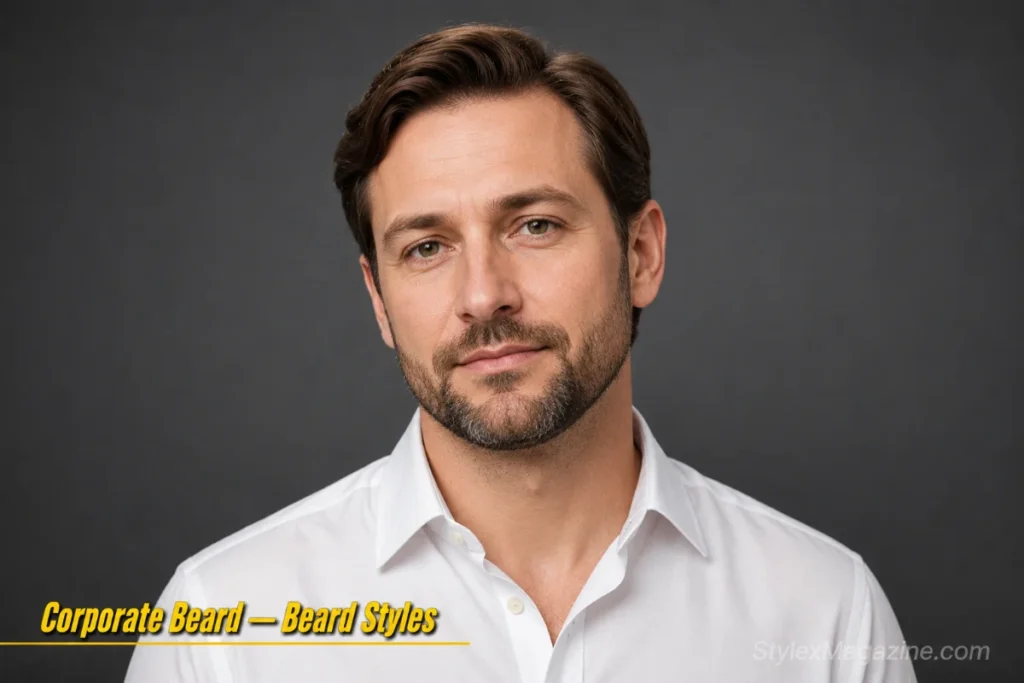
The corporate beard is a close relative of the short boxed beard, but softer. The cheek line follows your natural growth instead of being razor-carved, and the overall shape sits a touch shorter, guard 3 to 4 (8–12mm). Some barbers call this a tight beard because of how closely it hugs the jaw. It signals “I care about grooming” without signaling “I spent 30 minutes on this.”
This works across nearly every professional setting and suits oval and oblong face shapes particularly well. Skip this if you want a strong visual statement, the corporate beard is deliberately understated.
3. Heavy Stubble (5 O’Clock Shadow)
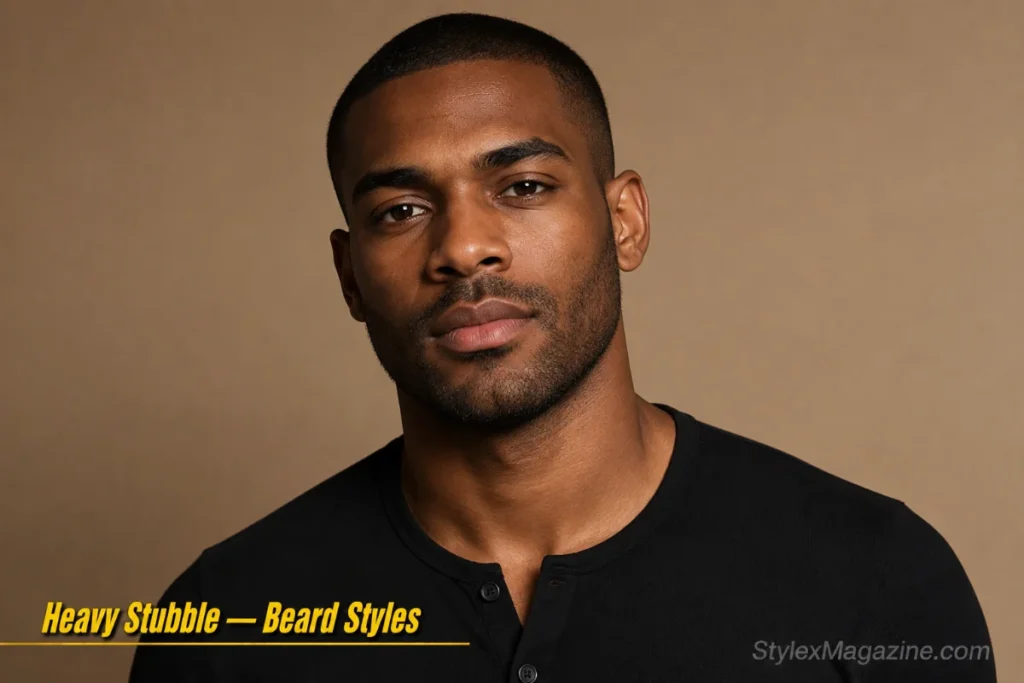
Heavy stubble sits at 4 to 5mm (guard 1 to 2) and hits the intersection of rugged and polished better than any other facial hair length. A 2013 study in Evolution and Human Behavior by Dixson and Brooks found that women rated heavy stubble as the most attractive facial hair length, a finding confirmed again in a 2016 follow-up in the Journal of Evolutionary Biology. In practice, it works on almost every face shape.
The difference between a sharp 5 o’clock shadow and a man who forgot to shave is one thing: the neckline. Clean it with a razor or trimmer without a guard, and suddenly that same stubble looks deliberate. Trim the full face every 2 to 3 days to maintain the length.
Round faces benefit the most, the shadow adds definition along the jaw without adding bulk. Skip this if your growth is extremely light or blonde and barely shows at this length. Go slightly longer (guard 2 to 3) to build visibility.
4. Short Stubble (3-Day Beard)
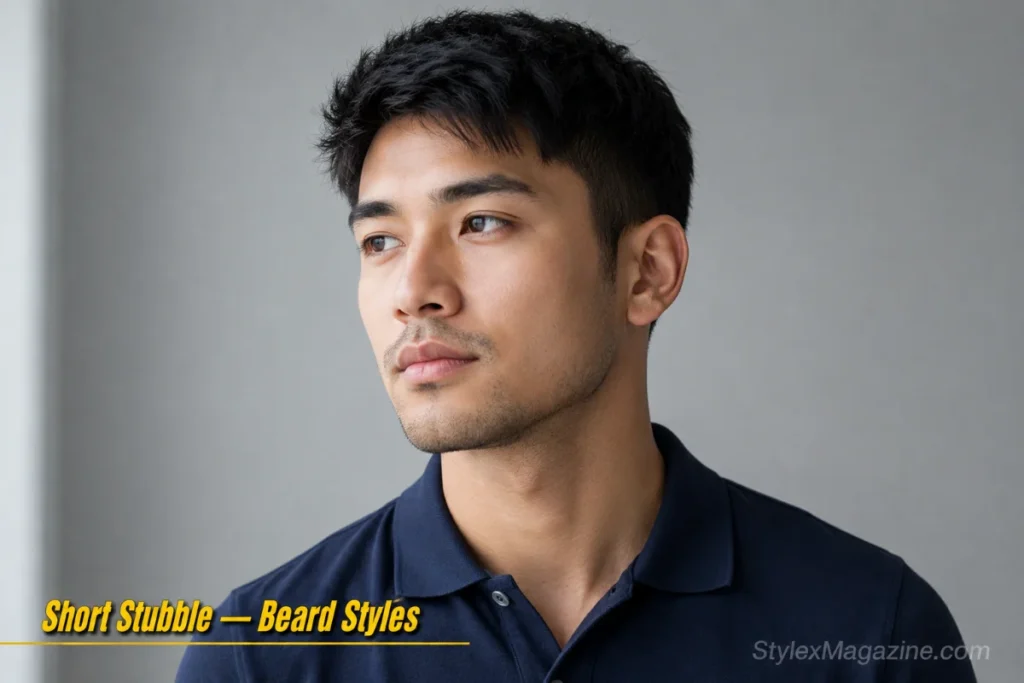
Shorter than heavy stubble, this is 1 to 3mm territory, guard 0.5 to 1. The three-day beard works for men with thinner facial hair because it does not expose patchiness the way a longer beard does. Maintain a clean neckline and this becomes a deliberate mens short beard style rather than laziness.
Best for diamond and heart-shaped faces where you want texture without adding visual weight. Skip this if your growth is dense and dark, it can look like you simply missed a shave.
5. Classic Full Short Beard
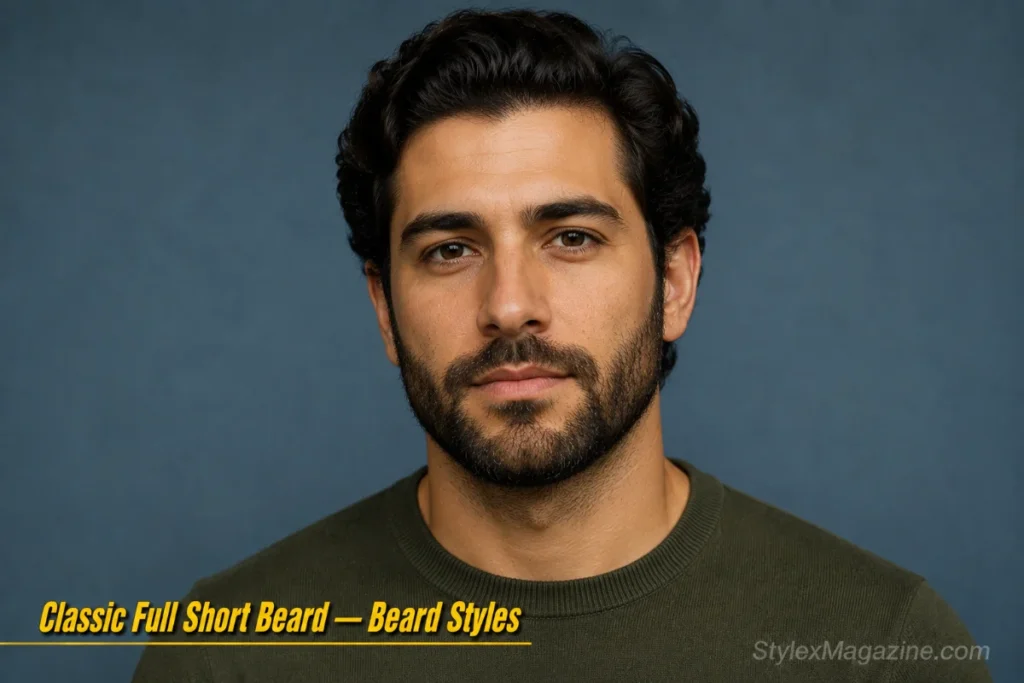
An even length across the jaw, cheeks, and chin, guard 3 to 4 (8–12mm), with natural growth patterns left intact. No hard carving, no sharp angles. The classic short full beard prioritizes a natural, masculine look that sits comfortably between groomed and rugged.
Oval and oblong faces wear this well because the even distribution does not add unwanted width or length. Skip this if you have a very round face, the uniform length can emphasize roundness. A tapered approach (shorter sides, slightly longer chin) works better.
6. Short Rounded Beard
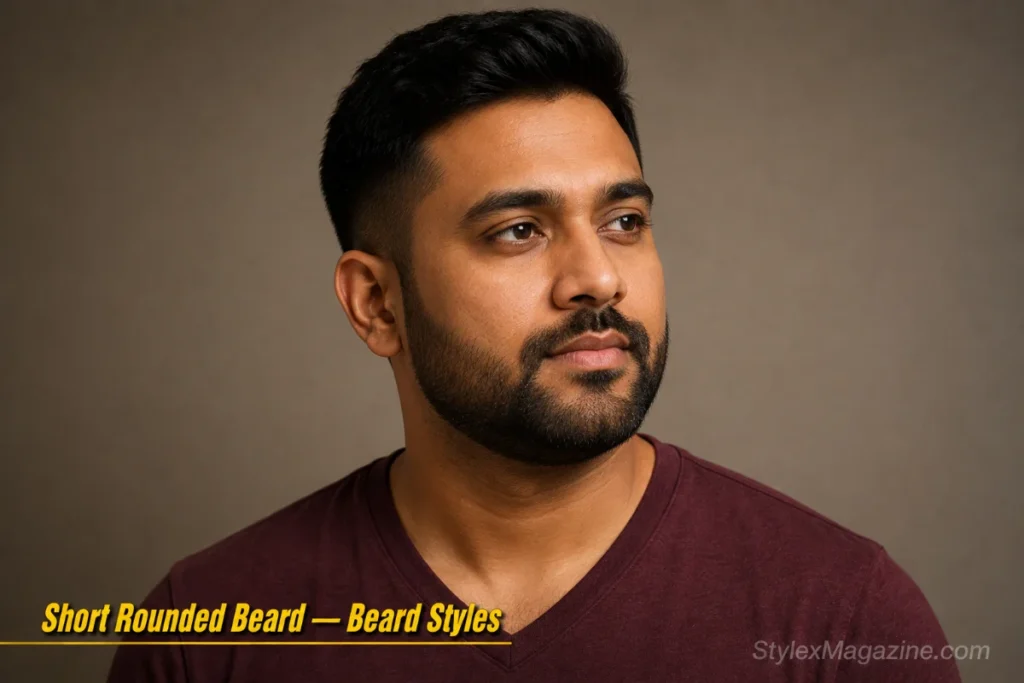
Same length range as the classic full short beard, but shaped with soft, curved edges rather than any straight lines. Use guard 3 to 4 and round the corners at the cheek line and chin rather than squaring them off. The effect is relaxed and natural.
Round and oval faces pair well with this shape because the curves echo the face rather than fighting it. If you want a similar soft shape but with more chin emphasis, a short ducktail, where the chin tapers to a subtle point while the sides stay rounded — creates a stronger jawline effect. Skip the rounded beard if you have a square jaw and want to emphasize it — a boxed beard sharpens angular features better.
7. Short Shaggy Beard
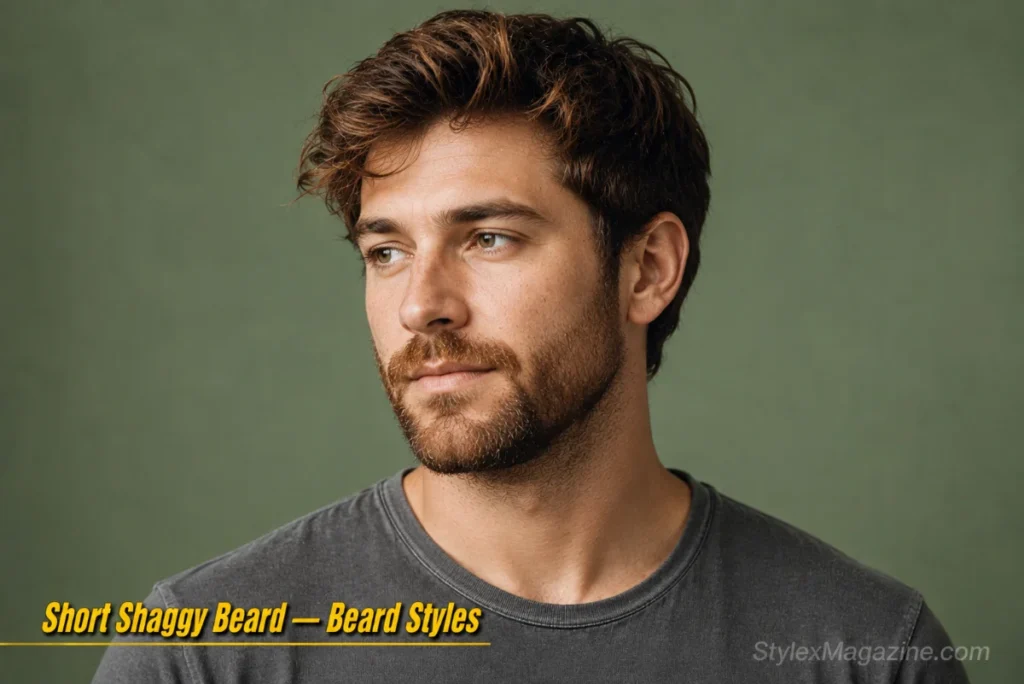
The short shaggy beard works with uneven growth rather than against it. Keep it at finger depth or slightly shorter (guard 3 to 4, but without obsessive edge cleanup). The texture is the point, a slightly wild, lived-in look that comes across as intentional if the neckline stays clean.
Few small beard styles forgive patchy spots on the cheeks the way this one does. The uneven texture disguises thin areas instead of highlighting them. Skip this if you work in a formal corporate environment where precision grooming is expected.
8. Hollywoodian
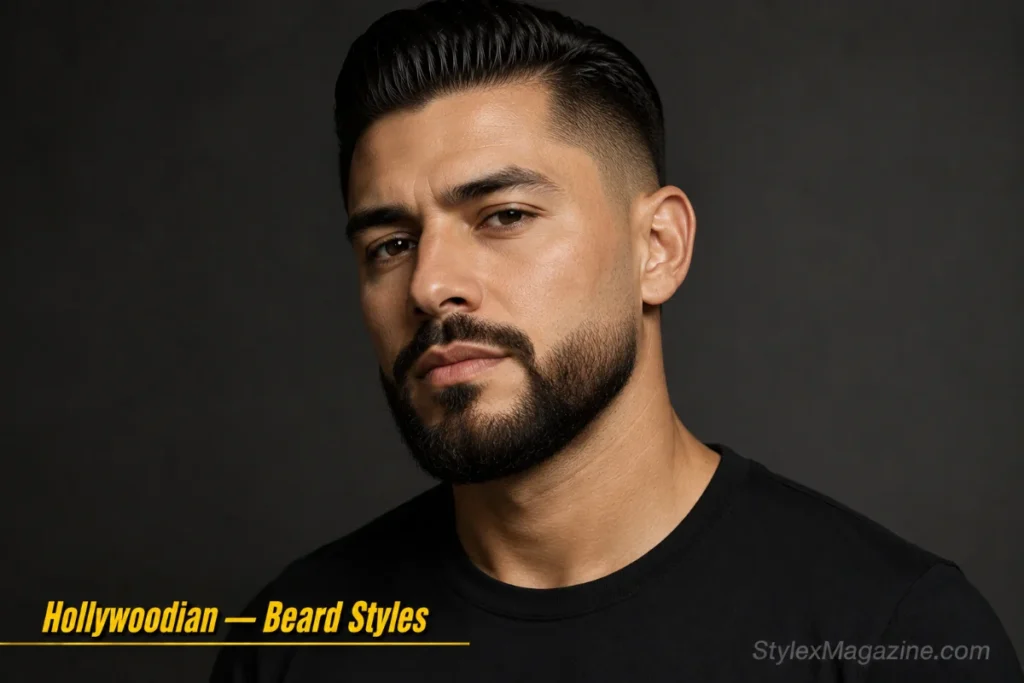
The Hollywoodian covers the chin and jaw with a connected mustache but stops short of the sideburns, keeping the cheeks light or clean-shaven. Guard 3 to 5 (8–15mm) on the chin and jaw, with cheeks trimmed down to stubble or shaved clean.
This style works beautifully for men whose cheek growth comes in lighter than their chin. It turns a limitation into a deliberate design. Oval and heart-shaped faces carry it well. Skip this if you have strong, even cheek growth, you would be shaving off your best feature.
Chin and Partial Short Beards
These styles concentrate the hair on the chin and mouth area, with clean or minimal cheeks. They suit men with patchy cheek growth or those who want a sculpted, defined look.
9. Circle Beard
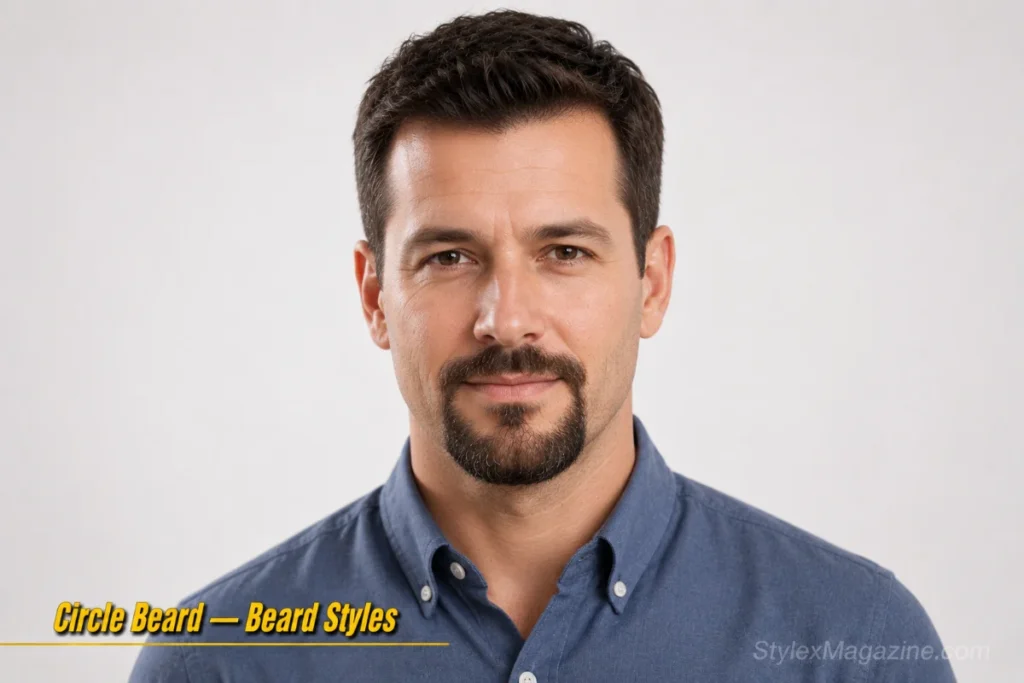
A rounded goatee connected to a mustache, forming a clean circle around the mouth. The proportions matter. too small and it disappears, too wide and it becomes a different style entirely. Guard 2 to 4 on the circle, cheeks clean-shaven.
Oval, square, and angular faces get the best result because the circle softens hard lines. Skip this if you have a very round face, the circular shape can echo the roundness rather than adding contrast.
10. Anchor Beard
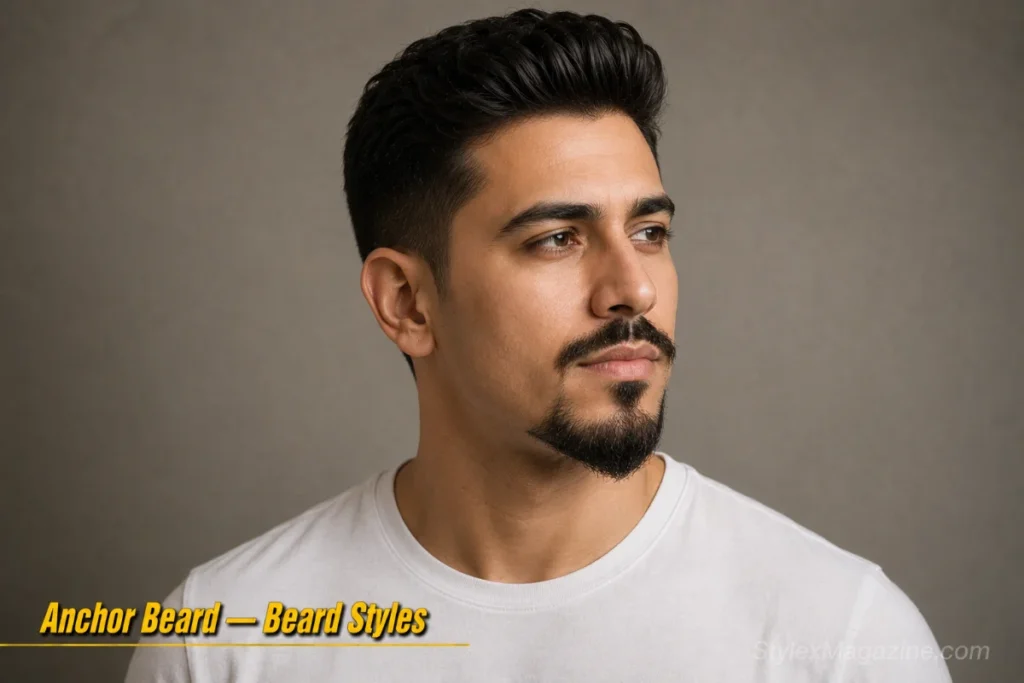
The anchor combines a pointed chin beard running along the jawline with a soul patch and a mustache, the shape resembles a ship’s anchor. Cheeks are clean-shaven. Use a detail trimmer to carve the anchor shape and maintain it every 2 to 3 days.
Round and oval faces benefit from the vertical emphasis the anchor creates. Skip this if your chin growth is sparse, the anchor demands density in the chin area to hold its shape.
11. Balbo
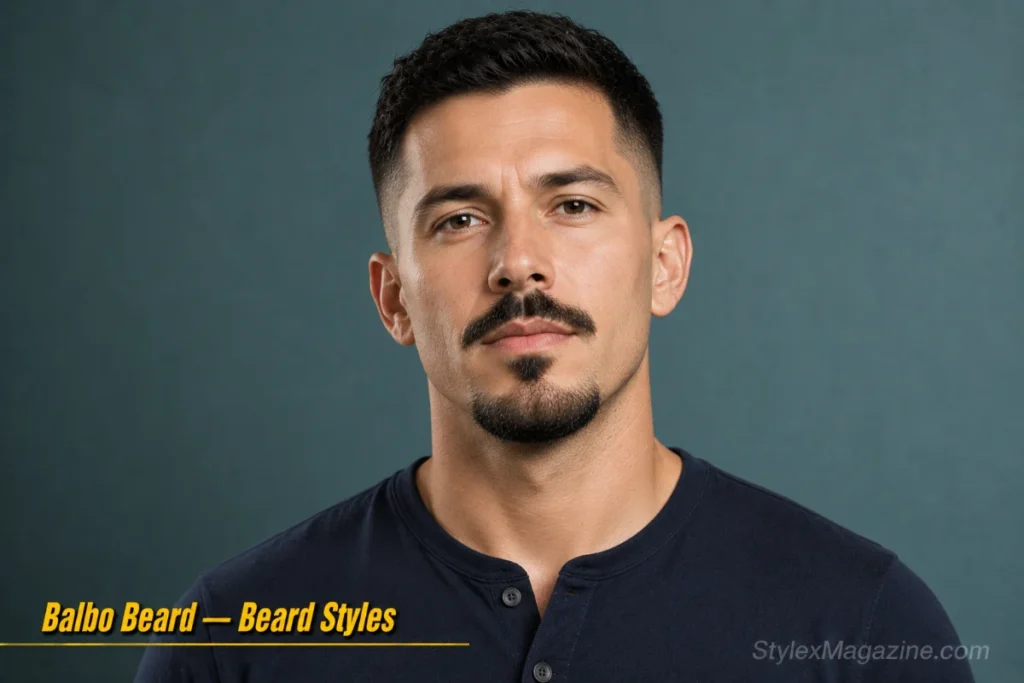
The Balbo features a disconnected floating mustache, a soul patch, and a defined chin beard. No sideburns, no cheek hair. Three distinct sections that each need separate maintenance, this is a high-effort short beard design.
Round faces gain the most because the Balbo adds vertical length without width. Skip this if you are new to facial hair grooming, the three-piece maintenance is harder than it looks, and a wonky Balbo looks worse than no Balbo.
12. Extended Goatee
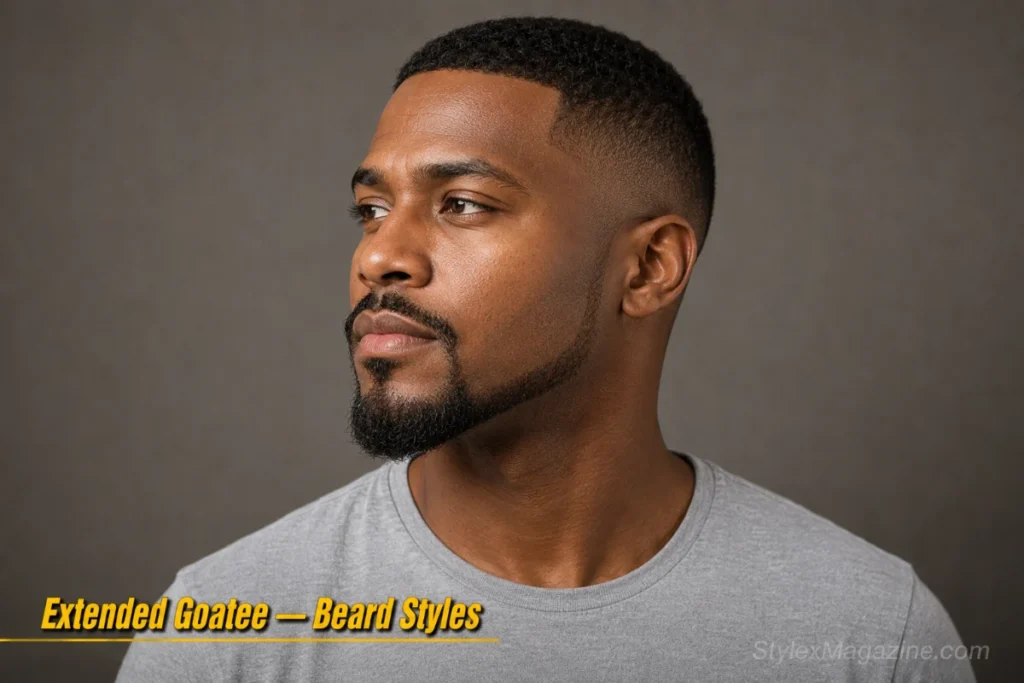
The extended goatee stretches the standard goatee slightly along the jawline without connecting to full sideburns. It sits between a goatee and a Hollywoodian, more coverage than the first, less than the second. Guard 2 to 4 on the goatee area, cheeks clean.
Square and oval faces carry this well. Skip this if your jaw growth is patchy near the ears, the extension will fade out unevenly.
13. Royal Beard
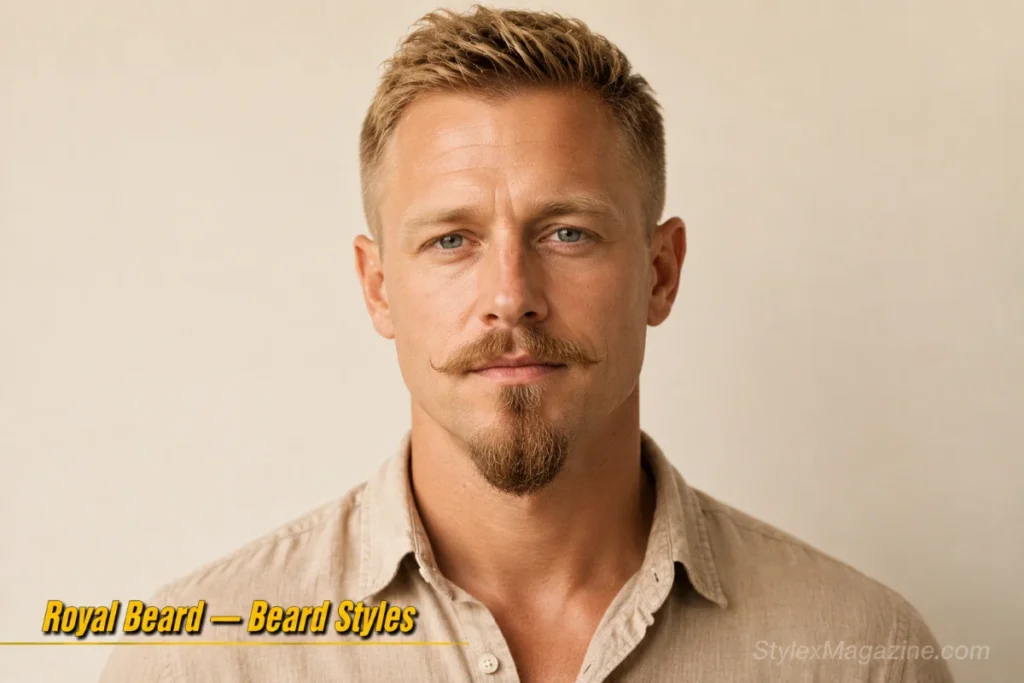
A slightly curved mustache paired with a vertical chin beard forming a T-shape, with the neck and cheeks clean. The vertical emphasis elongates rounder faces and adds a refined, almost regal quality.
Round and oval face shapes benefit most. Skip this if you prefer low-maintenance, the T-shape demands precise trimming to avoid looking lopsided.
14. Soul Patch with Stubble
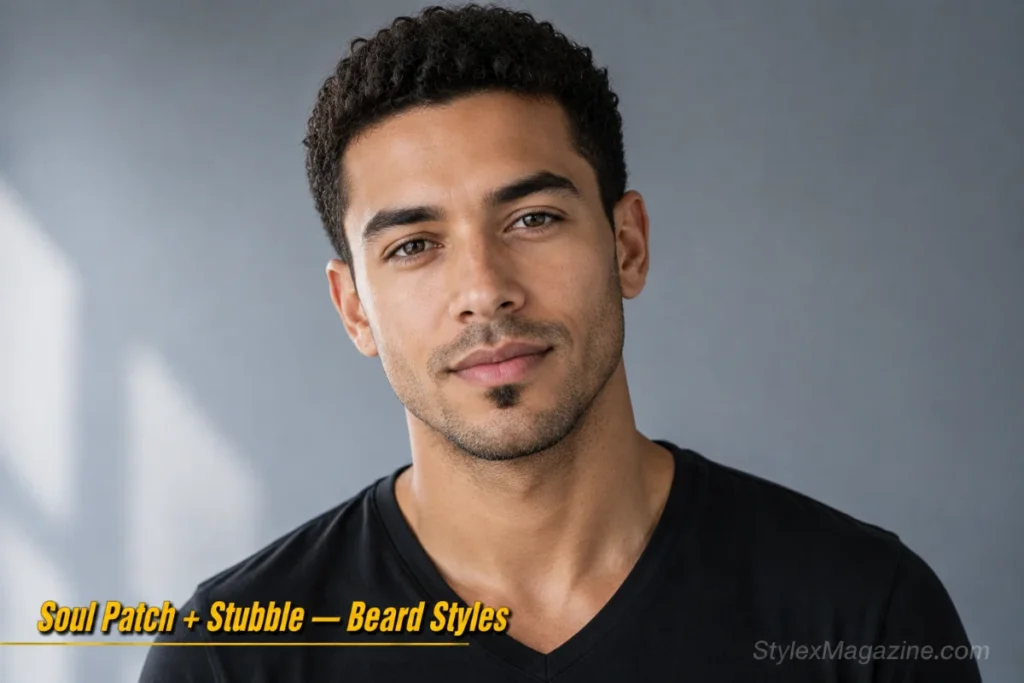
A small patch of hair just below the lower lip paired with light stubble (guard 1) across the rest of the face. The stubble gives the soul patch context, without it, a soul patch alone tends to look unfinished. Together, the combination looks intentional and minimal.
Works on most face shapes because it barely alters the face’s proportions. Skip this if you want your beard to make a strong visual impact, this is the quietest short beard style on the list.
15. Goatee
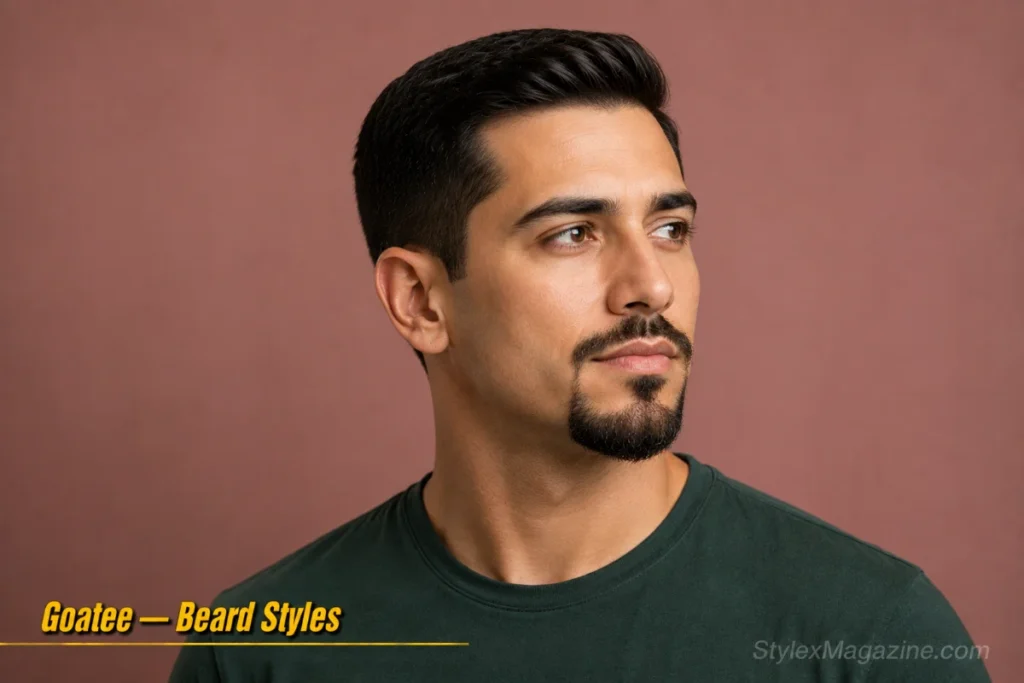
A chin beard with or without a connected mustache, cheeks clean. Probably the most recognized short facial hair style and a strong starting point for men with weaker cheek growth.
16. Van Dyke
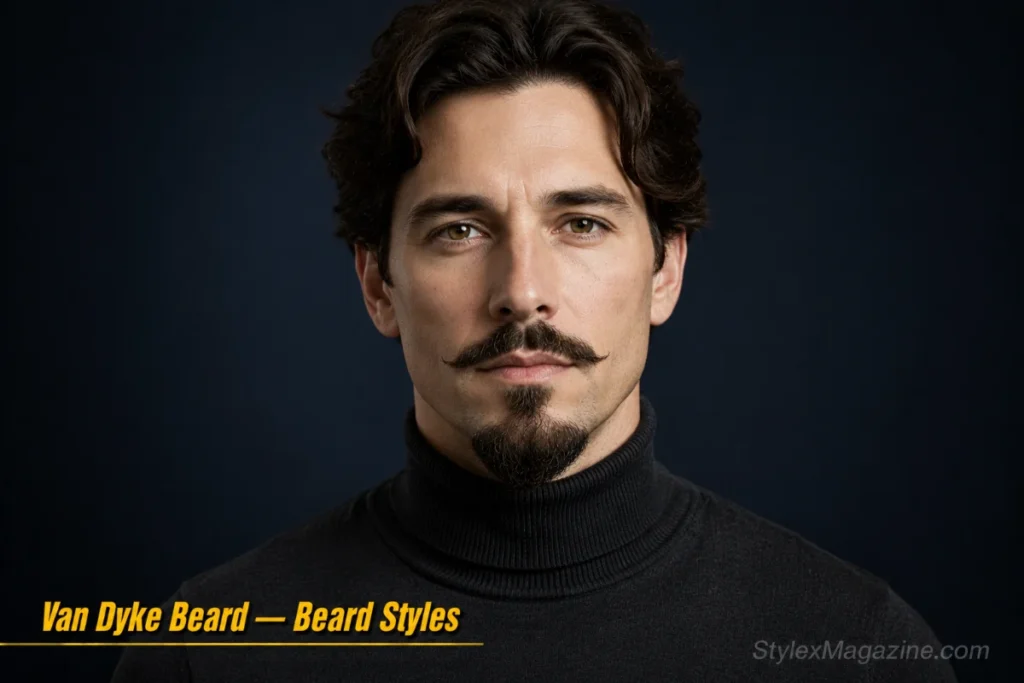
A pointed chin beard paired with a disconnected mustache, sharp, artistic, and bold. Cheeks are clean-shaven.
17. Chin Strap
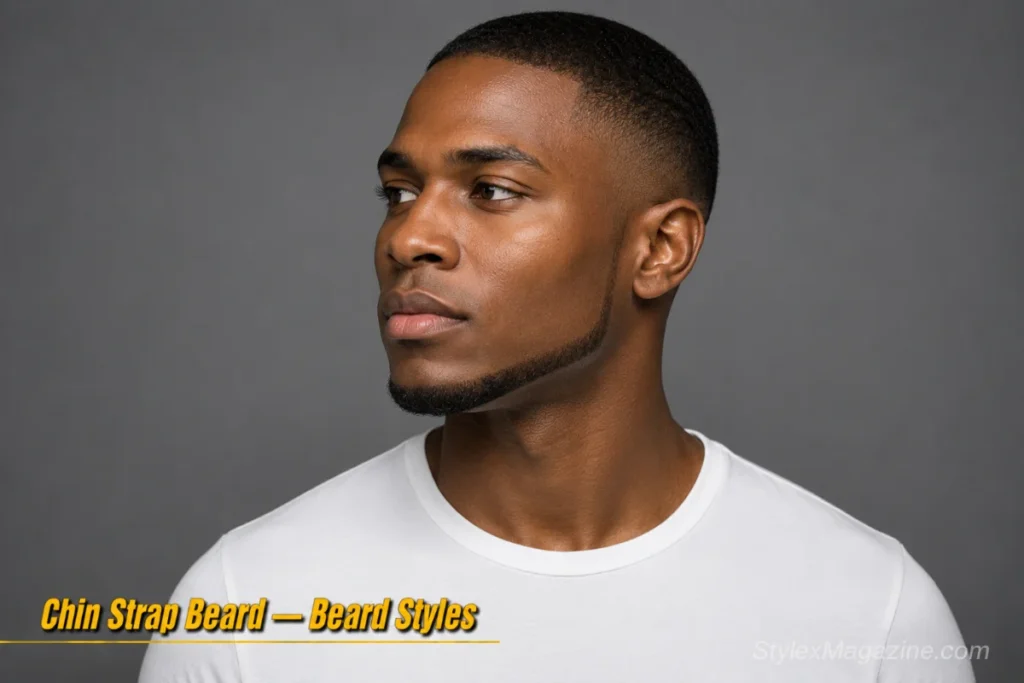
A thin line of hair running along the jawline from ear to ear. The modern version is narrower and better blended than the heavy early-2000s look. For more no-mustache options, see beard styles without mustache.
Short Beard and Mustache Combos
Pairing a short beard with a stronger mustache shifts the focal point to the center of the face. These short beard and mustache styles are trending hardest right now, and each pairs a different mustache shape with a cropped beard for a distinct effect.
18. Beardstache
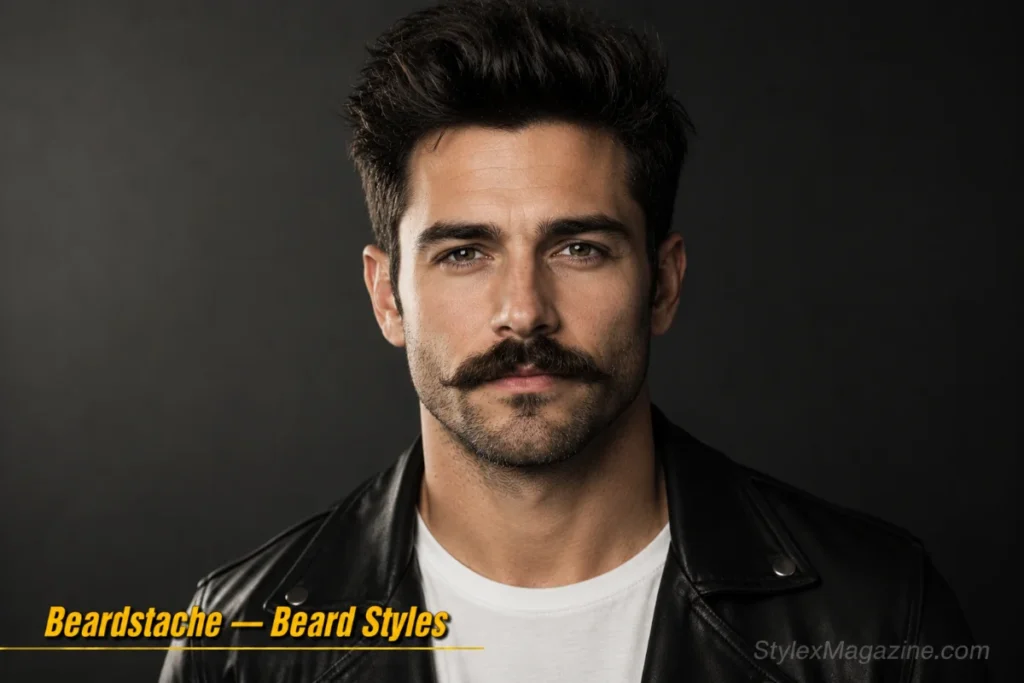
A thick, prominent mustache with short stubble (guard 1 to 2) across the chin and cheeks. The contrast between the full mustache and the light beard below it creates a striking, deliberate look. Grow the mustache out to your desired fullness first, then trim the rest of the face short.
Works on most face shapes because the mustache anchors the look rather than the beard shape. Skip this if your mustache growth is thinner than your beard. the whole point is a heavy mustache dominating lighter stubble.
19. Short Beard with Chevron Mustache
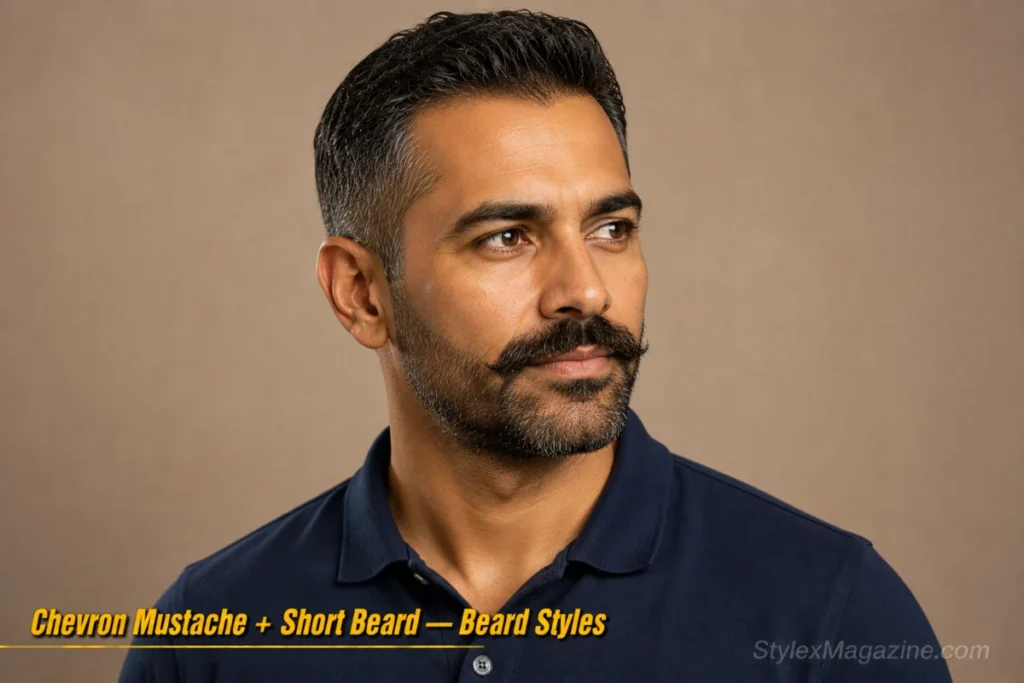
A thick chevron mustache following the upper lip paired with an even short beard at guard 2 to 3. The chevron adds weight to the center of the face without the theatrical commitment of a handlebar. Classic, masculine, easy to maintain.
Square and oval faces pair well with the added horizontal emphasis. Skip this if your mustache grows thin or sparse, a chevron needs density to hold its shape.
20. Short Beard with Handlebar Mustache
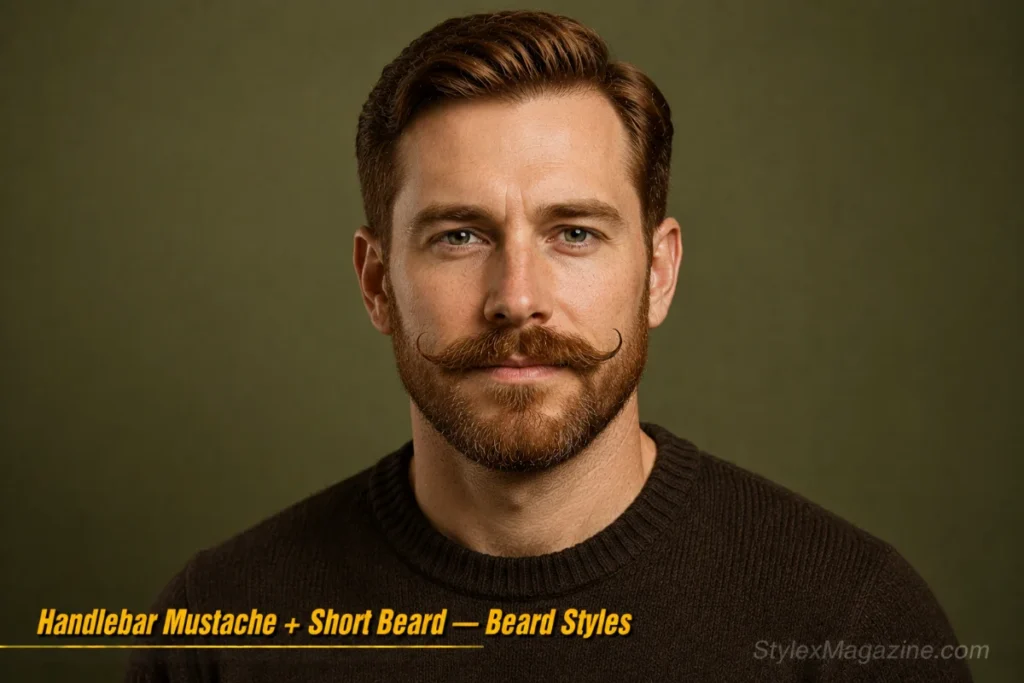
A waxed handlebar with curled ends above a short, clean beard (guard 2 to 3). High effort, high payoff. The handlebar demands daily styling with a firm mustache wax and a steady hand. The short beard below keeps the rest of the face grounded.
Best for men who enjoy grooming as a ritual. Skip this if you are impatient with daily styling, an unwaxed handlebar just looks like an overgrown mustache.
21. Short Beard with Long Mustache
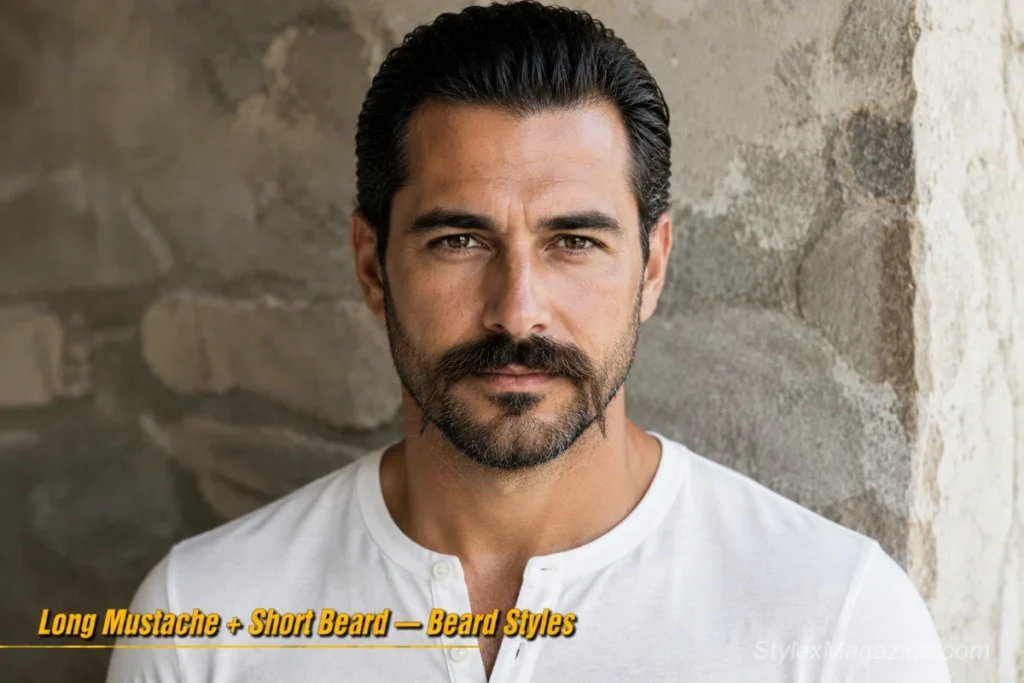
The mustache grows beyond the lip line while the beard stays cropped short. The long mustache becomes the statement piece, vintage-leaning, expressive, and distinctive. Train the ends with a comb and keep the beard at guard 2 to 3.
Works on oval and oblong faces. Skip this if your workplace has a conservative grooming culture, a long mustache signals intentional personal style, which not every environment supports.
Faded and Modern Short Beards
The beard fade is the biggest trend in mens beard styles right now. These styles blend the beard into the sideburns and haircut for a seamless, architectural finish.
22. Short Beard Fade
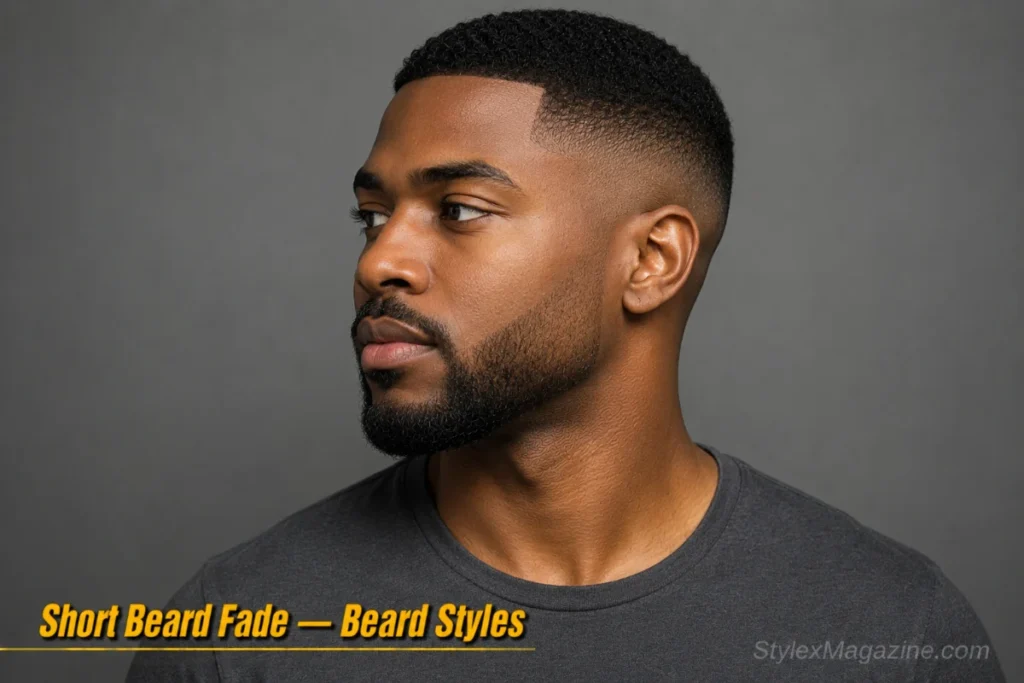
A short beard (guard 3 to 4) that blends into the sideburns with a clean gradient, going from full density at the chin to progressively shorter stubble toward the cheekbones. This is the style that ties a fresh haircut to the beard for a polished, modern result.
Pair it with a low fade haircut or a mid fade haircut for the cleanest transition. The fade haircut with beard guide covers 35 fade and beard combinations grouped by fade type. Works on every face shape. Skip this if you plan to maintain it entirely at home without experience, a clean beard fade depends on a smooth gradient that takes practice to nail.
23. Shadow Fade Beard
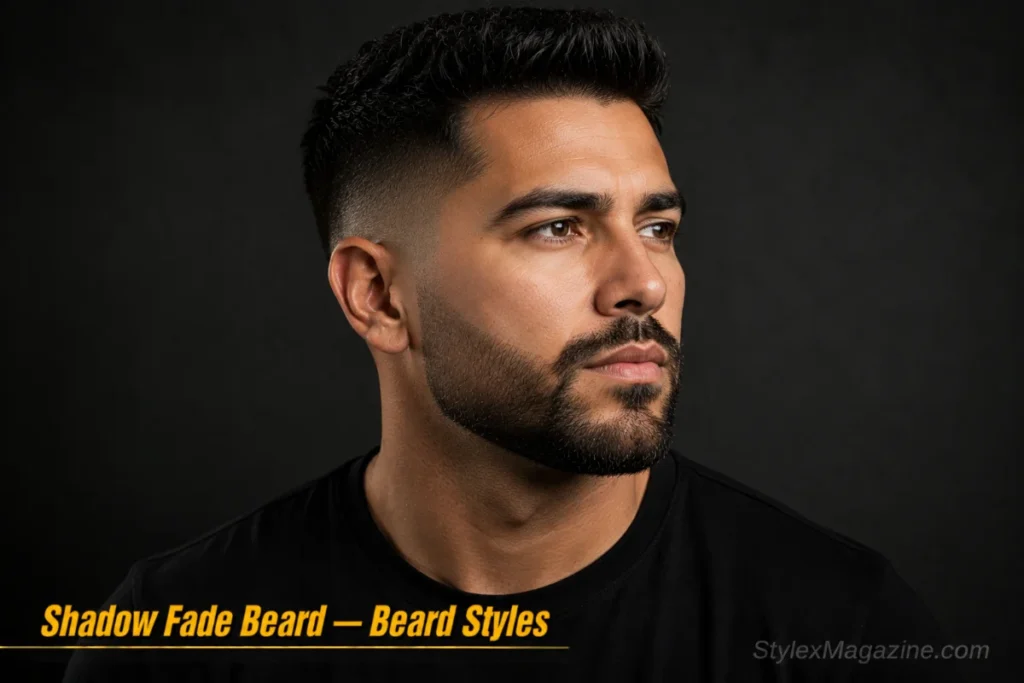
A more dramatic version of the standard beard fade. The gradient runs from dense beard at the chin to near-skin at the upper cheeks, creating visible shadow and depth. The effect is sculpted and architectural.
Best with angular face shapes, the shadow accentuates bone structure. Skip this if your growth is very light, the fade effect needs density contrast to read properly.
24. Taper Fade Short Beard
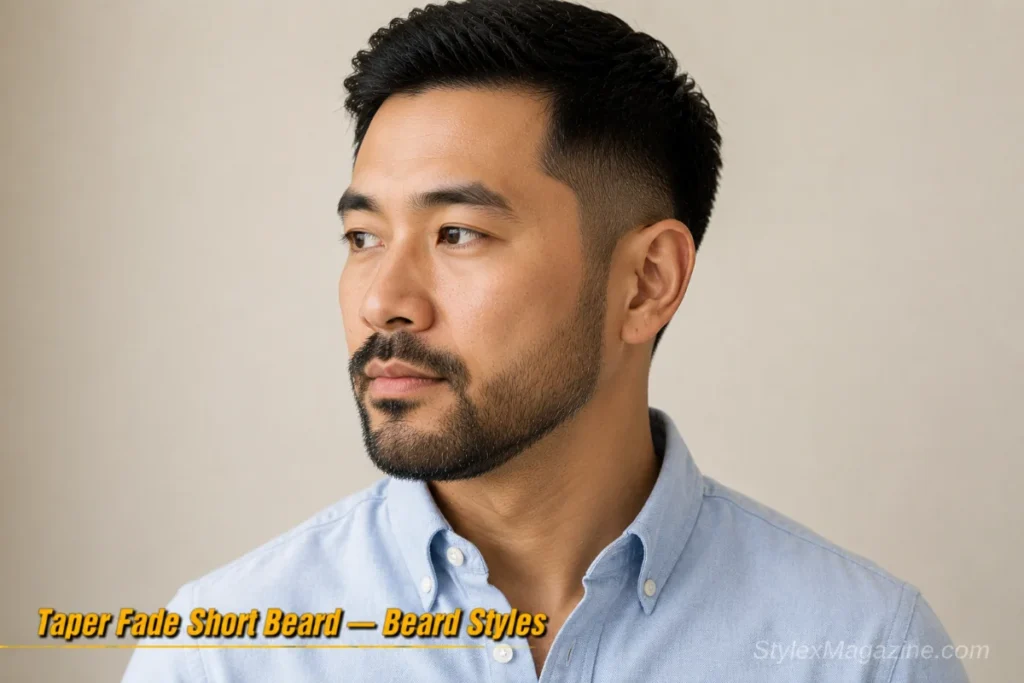
The taper starts higher on the sideburns and shortens gradually toward the chin for a subtle, natural transition. It is a softer version of the beard fade, less dramatic, more wearable day to day. Works well paired with a taper fade vs skin fade haircut approach.
Suits most face shapes and professional settings. Skip this if you want the bold, high-contrast look of a full beard fade, the taper is deliberately subtle.
25. Short Beard with Buzz Cut
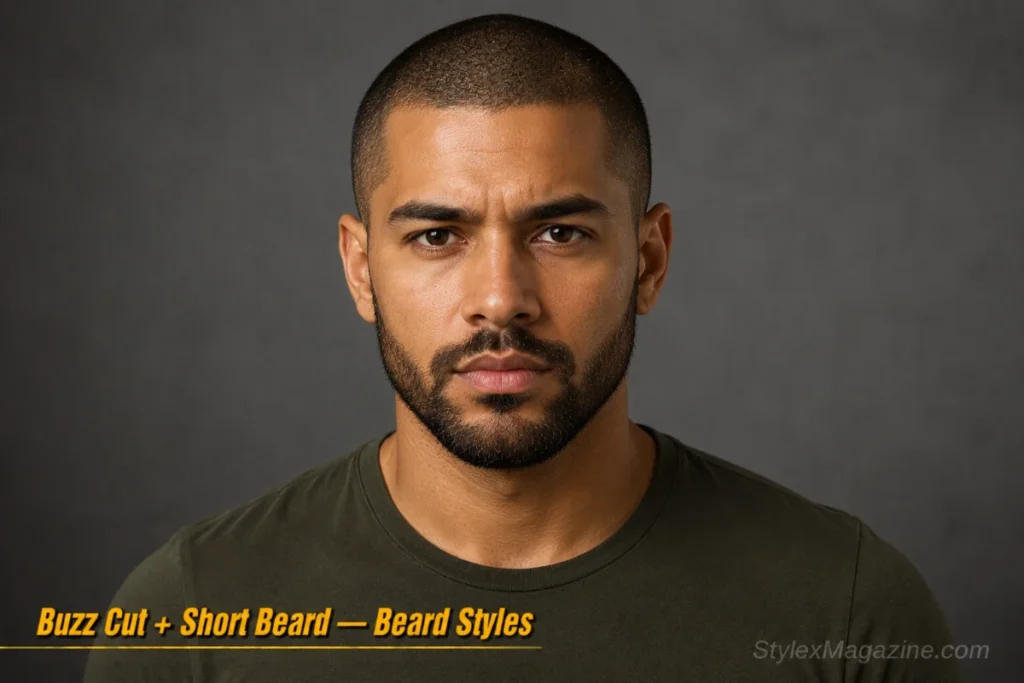
The short beard and buzz cut is the ultimate low-maintenance, high-impact pairing. The buzz keeps the head clean and simple while the short beard (guard 3 to 4) adds all the visual interest. The contrast between a closely-cropped head and a defined beard draws the eye to the jawline.
Works on every face shape, particularly well on men with strong jaw structures. Skip this if you prefer your hairstyle to carry the visual weight, the buzz cut hands that job entirely to the beard.
Short Beards by Hair Type
Hair texture, color, and growth pattern change how a short beard looks and what it needs. These short beard styles for men address specific hair types.
26. Short Beard for Black Men
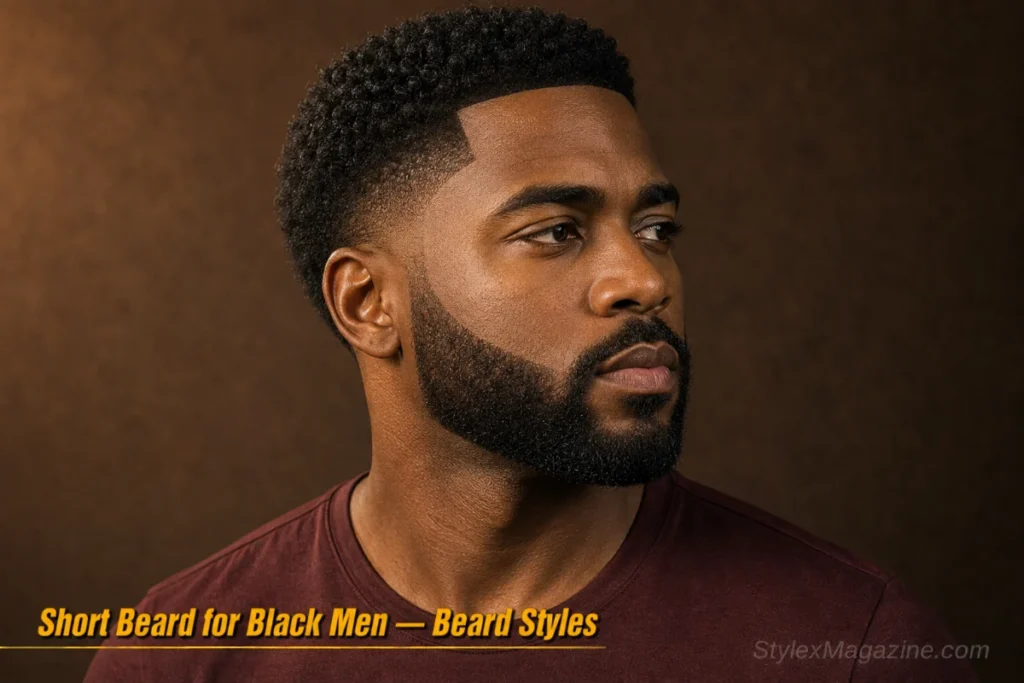
Coarse, coiled facial hair behaves differently at short lengths. What matters most is controlling texture and keeping even, defined lines. Guard 2 to 3 works for most men, with a detail trimmer to carve clean cheek and neck lines. Moisturize daily, coily hair dries out faster at shorter lengths, and dry skin beneath shows more when the beard is short.
Defined edges are everything here. A sharp line-up at the cheeks and neckline transforms the same beard from rough to refined. Skip generic advice about “letting it grow”, coily hair needs shape from the start.
27. Curly Short Beard
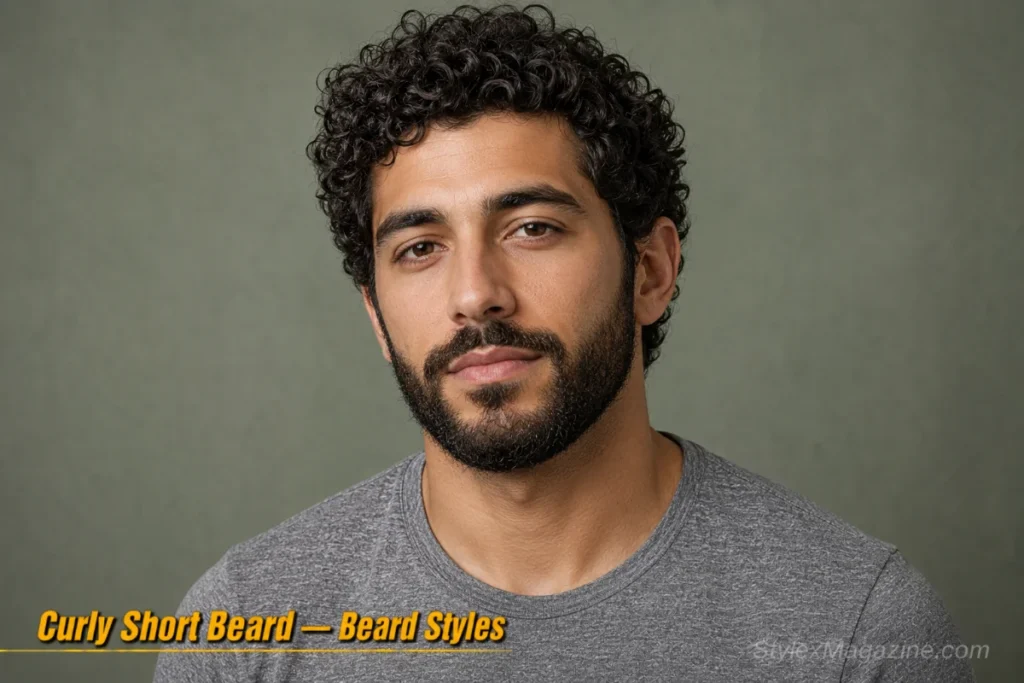
Curly facial hair adds natural fullness even at shorter lengths, which is an advantage, your beard looks thicker than it is. Keep the length controlled (guard 3 to 4) and the edges clean. Trim the outline every 3 to 4 days because curly hair loses its shape faster than straight.
Works on most face shapes. Skip the temptation to straighten it, a short curly beard with clean lines has more character than a flat, straightened version.
28. Patchy Short Beard
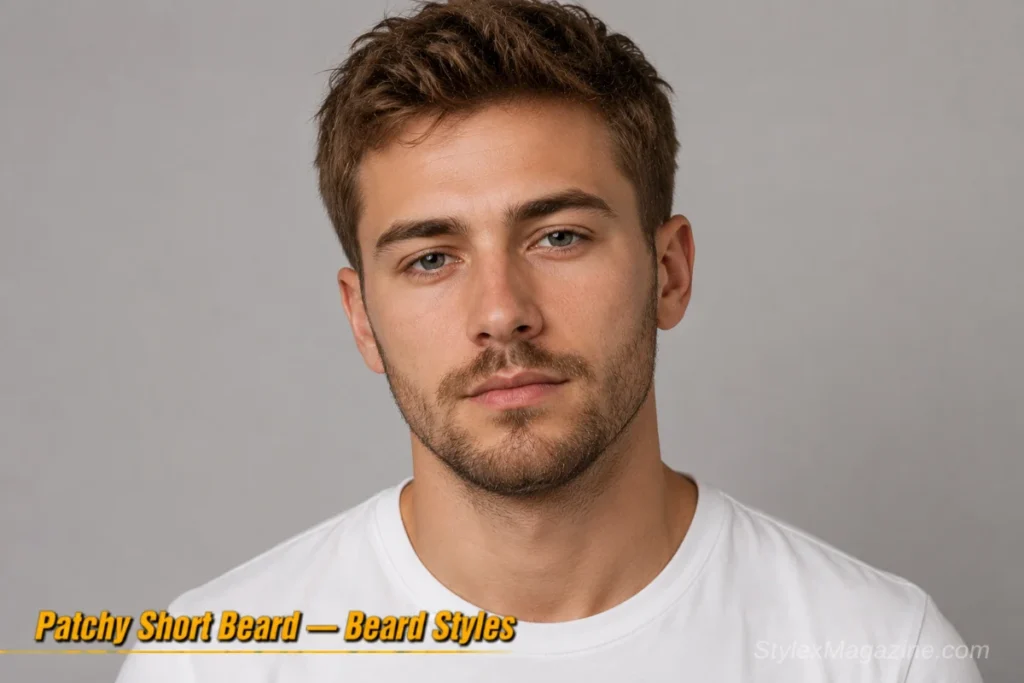
Short lengths are the single best strategy for patchy growth. At guard 1 to 2, uneven coverage looks like deliberate texture rather than failed growth. Focus the shape on the chin and mustache area where most men have the densest hair, and keep the patchier cheeks at stubble length.
Chin-focused styles like the circle beard, anchor, and goatee work best if patches are concentrated on the cheeks. Skip longer lengths that expose the gaps, the shorter you go, the less visible patchiness becomes.
29. Salt and Pepper Short Beard
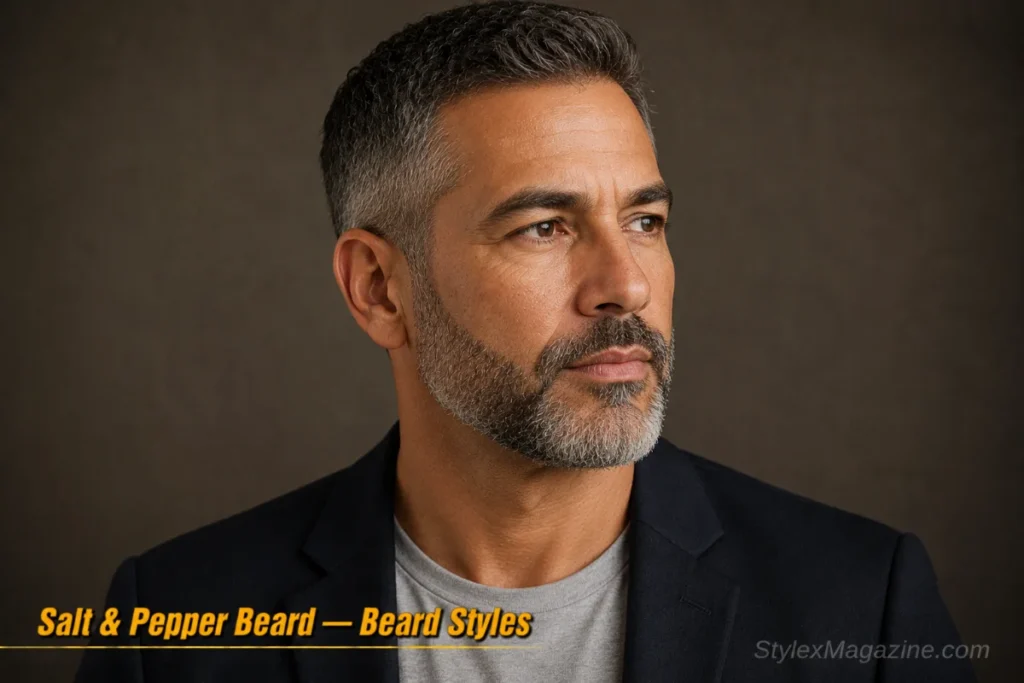
The mix of dark and grey adds instant character and visual density to a short beard. The contrast between tones makes the beard appear fuller than a single-color beard at the same length. Keep the edges sharp, a salt and pepper beard with crisp lines looks distinguished, while the same beard with fuzzy edges just looks tired.
This is also the strongest short beard style for older men. A tight, well-maintained salt and pepper beard at guard 3 to 4 signals experience and confidence without looking aged. Skip this if you are tempted to dye it uniform, the two-tone mix is the whole point. A natural salt and pepper short beard looks better than a flat dye job at close range.
30. Short Viking Beard
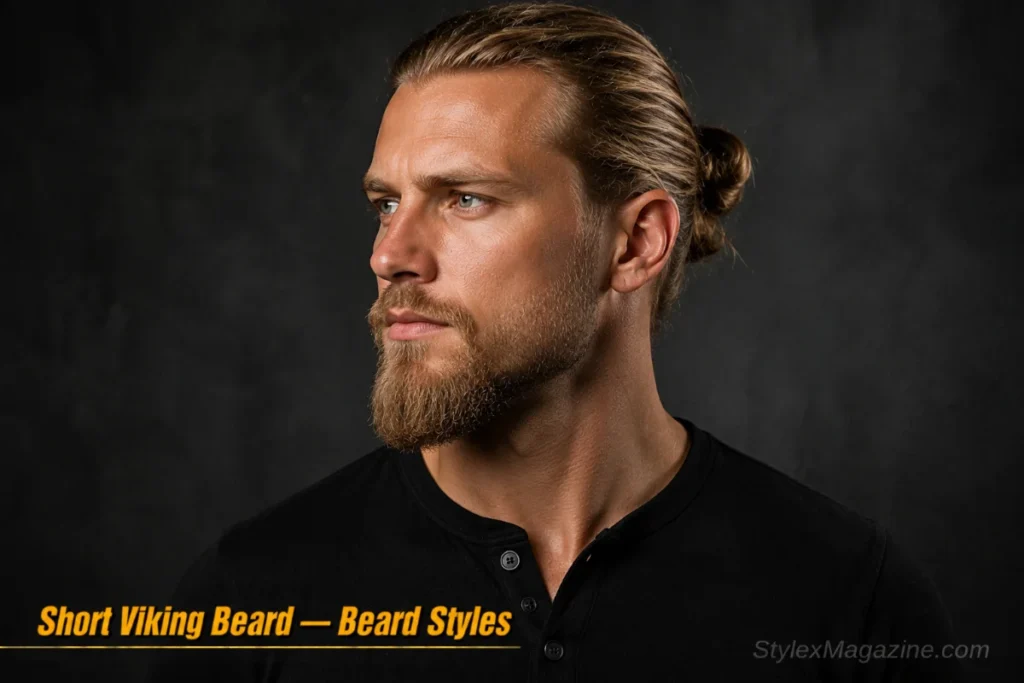
A short Viking beard keeps the cheeks trimmed shorter (guard 2) and lets the chin grow slightly longer (guard 4 to 5), creating a strong horizontal jawline with a rugged edge. Clean lines at the neck and cheeks keep it from looking unkempt.
Best for round and oval faces, the longer chin adds vertical length. Skip this if your chin growth is slower than your cheeks, the Viking shape depends on the chin carrying the most visual weight.
Short Beard Lengths: Guard and mm Chart
| Style | Length | Guard | Best For |
|---|---|---|---|
| Short stubble | 1–3mm | 0.5–1 | Thin beards, low effort, most face shapes |
| Heavy stubble | 4–5mm | 1–2 | Rugged/polished balance, round faces |
| Very short beard | 5–8mm | 2–3 | Clean professional look, daily wear |
| Short beard | 8–12mm | 3–4 | Balanced definition, even coverage |
| Short boxed beard | 12–20mm | 4–6 | Fuller look with sharp, geometric lines |
How to Pair a Short Beard with a Haircut?
Short hair with beard combinations work best when both elements share the same level of grooming intention. The wrong pairing makes them compete instead of complementing each other.
| Haircut | Best Short Beard Pairing | Why It Works |
|---|---|---|
| Low fade | Short boxed beard, heavy stubble | The fade blends into the beard for a seamless line |
| Mid fade | Beard fade, corporate beard | The mid-level transition balances both elements |
| High fade | Shadow fade beard, stubble | The high contrast matches the dramatic fade |
| Buzz cut | Heavy stubble, short boxed beard | The simple head shifts all visual interest to the jaw |
| Textured crop | Short shaggy beard, stubble | Texture on top matches texture on the chin |
| Slick back | Corporate beard, short boxed beard | Clean, polished hair pairs with a clean, polished beard |
For specific haircut guides, see fade haircuts for men, low fade haircut, mid fade haircut, and burst fade haircut.
Short Beard vs Stubble vs Full Beard
Not sure a short beard is the right call? Here is how it stacks up.
| Stubble | Short Beard | Full Beard | |
|---|---|---|---|
| Length | 0.5–5mm | 5–20mm | 20mm+ |
| Maintenance | Every 2–3 days | Every 3–5 days | Daily attention |
| Growth time | A few days | 2–4 weeks | Several months |
| Look | Rugged, casual | Sharp, balanced | Bold, statement |
| Office-friendly | Yes | Yes | Depends on workplace |
How to Maintain a Short Beard?
A short beard exposes more skin than a longer one, so skin care matters as much as beard care. A consistent grooming routine takes 5 minutes a day and makes the difference between a sharp short beard and one that looks abandoned.
Apply beard oil daily, at short lengths, it reaches the skin directly, preventing the itch and flaking that drive most men to shave it off. If your beard sits above 8mm, follow the oil with a small amount of beard balm for light hold and shape control throughout the day.
Wash with a gentle beard wash 3 to 4 times per week (regular shampoo strips the natural oils your skin needs). Touch up the cheek line and neckline every 3 to 4 days to keep the shape crisp, a dull outline turns any short beard into a neglected one.
Brush or comb daily after applying oil. A beard comb detangles, distributes oil evenly, and trains the hair to lie in the right direction. At shorter lengths, a boar bristle brush works better than a comb because it reaches the skin and stimulates blood flow beneath the hair. This is the simplest low maintenance habit that makes a noticeable difference in how a short beard looks by the end of the day.
FAQs
How long does it take to grow a short beard?
Most men reach a shapeable short beard in 2 to 4 weeks. Stubble needs only 5 to 7 days. Beard hair grows roughly half an inch per month, so patience through the patchy early stage is the main requirement.
Can you style a short beard without going to a barber?
Yes. A quality adjustable trimmer with guard attachments handles 90% of short beard maintenance at home. Set your guard to the desired mm length, run it evenly across the beard, then remove the guard to clean the neckline two finger-widths above the Adam’s apple. The only part worth a barber visit is the initial shaping of a boxed beard or beard fade — once the lines are set, you can maintain them yourself with a detail trimmer every 3 to 4 days.
Do short beards work in professional settings?
The corporate beard and short boxed beard are office-standard across most industries. Clean lines and a defined neckline are what make them professional — not the length itself.
How often should you trim a short beard?
Every 3 to 5 days for the overall length, and every 2 to 3 days for the neckline and cheek line edges. Stubble needs more frequent trimming (every 2 to 3 days) because even 1mm of extra growth changes the entire look. A boxed beard at 12–20mm is more forgiving and can go 4 to 5 days between trims without losing its shape.
Is heavy stubble the same as a short beard?
It sits at the border. At 4 to 5mm, heavy stubble is the very shortest end of a short beard. Below 3mm, it falls into stubble territory. The distinction is mainly about neckline grooming — heavy stubble with a clean neckline looks like a short beard, without one it looks like a missed shave.

Other Articles
20 Best Beard Styles Without Mustache (2026)
30 Best High and Tight Haircuts For Men (2026)
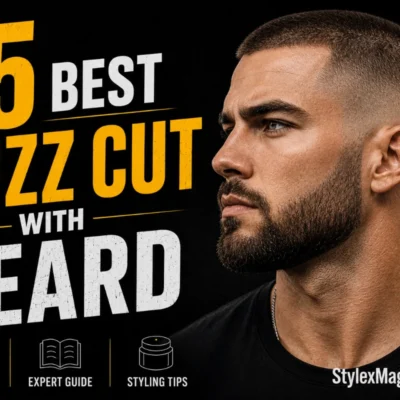
[…] needs styling product. For a deeper look at short beard variations and guard-length breakdowns, the short beard styles guide covers them in full […]