
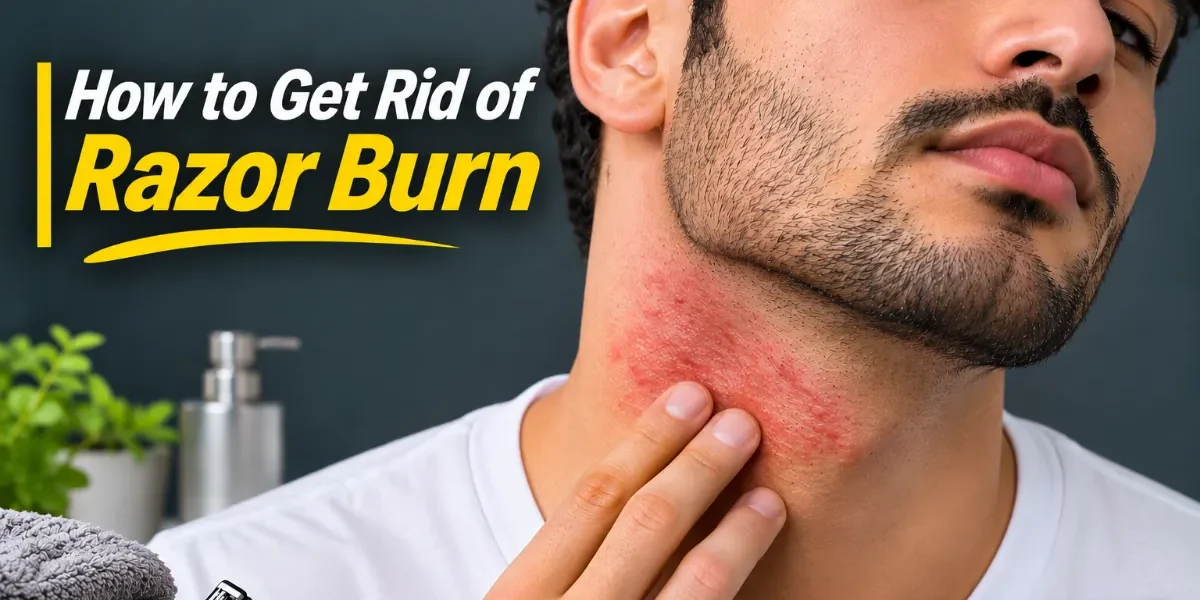

Quick answer: To calm razor burn fast, stop shaving the area, rinse with cool water, and apply a cool compress followed by aloe vera or a fragrance-free, alcohol-free moisturiser. A thin layer of 1% hydrocortisone cream brings down the worst of the redness and itch. Most razor burn settles within a few hours to a few days — the real fix is changing how you shave so it stops returning.
That red, stinging rash after a shave is razor burn, and almost every man has met it on the neck or jaw at some point. The good news: it is irritation, not an infection, and it calms quickly with the right care. The better news: once you know what causes it, it is one of the easiest shaving problems to prevent. Below is how to soothe it now, how long it lasts, and the routine that keeps it from coming back — part of the wider men’s shaving guide.
Razor Burn or Razor Bumps?
A quick check first, because the fix is different for each.
| Razor burn | Razor bumps | |
| When | Right after you shave | Days later, as hair regrows |
| Looks like | Red, blotchy rash; stinging, itch | Raised, pimple-like bumps |
| Cause | Surface irritation from the blade | Hairs curling back into the skin |
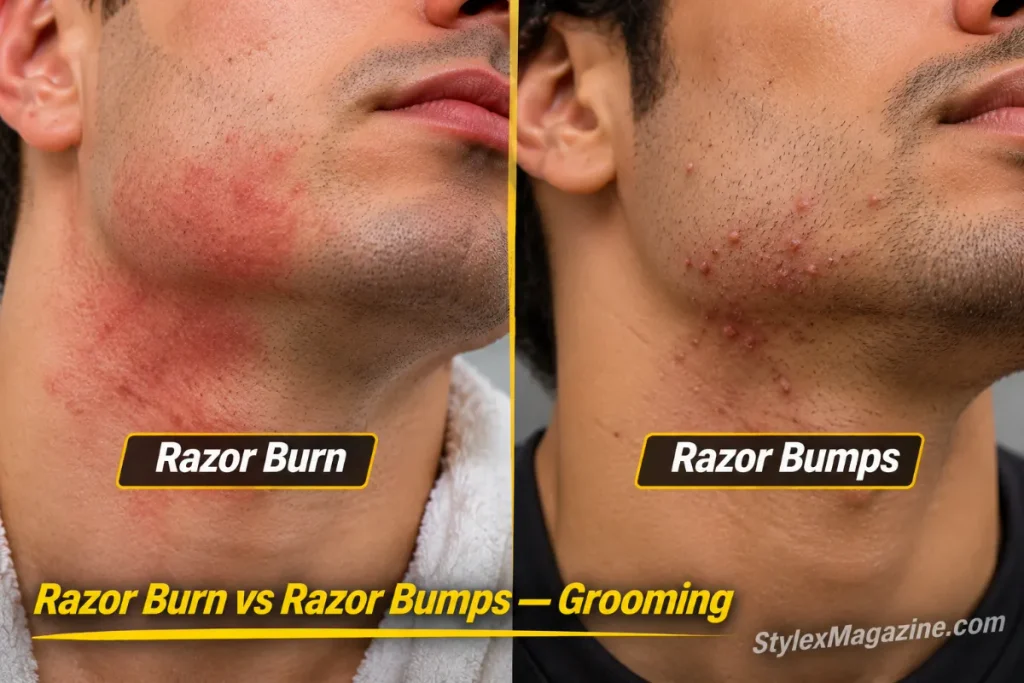
Razor burn is the red, blotchy rash you feel within minutes of shaving — burning, stinging, itching, and sometimes small red bumps and tenderness. This page fixes that. If instead you get pimple-like bumps appearing a few days later along the neck or jaw, those are ingrown hairs, a different problem with a different fix — see how to get rid of razor bumps.
What Causes Razor Burn?
Razor burn is friction plus a stripped skin barrier. The usual culprits:
- A dull or dirty blade that drags and tears the hair instead of slicing it cleanly.
- Shaving dry or with thin, foamy lather that gives the blade no cushion.
- Pressing too hard instead of letting the blade glide.
- Shaving against the grain or passing over the same patch again and again.
- Shaving too often, leaving the skin no time to recover.
- Dry or sensitive skin, which irritates more easily to begin with.
How to Get Rid of Razor Burn Fast?
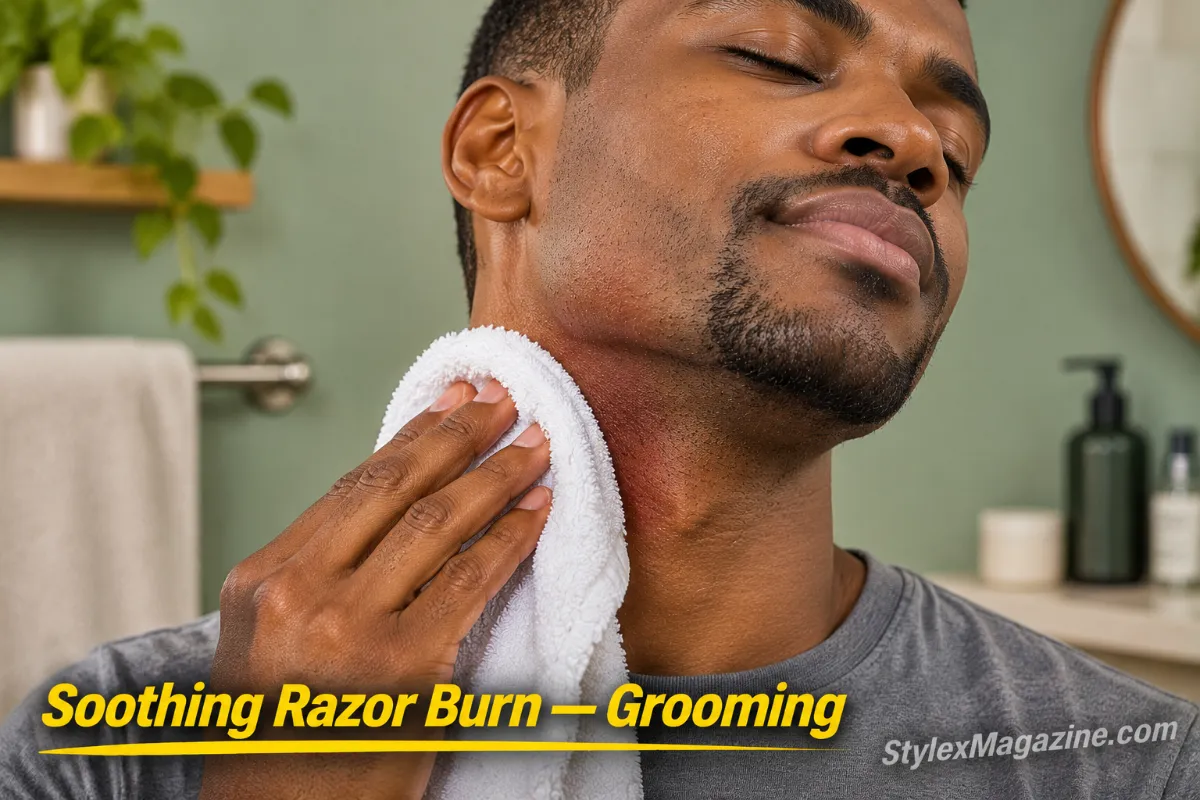
You cannot heal skin in minutes, but you can take the heat out of it quickly and let it recover in a day or two.
- Stop shaving the area. Shaving over razor burn restarts the damage. Give it a few days.
- Cool it down. Rinse with cool water and hold a cool, damp washcloth to the skin for a few minutes to settle the sting.
- Apply aloe vera. A thin layer soothes and cools. It will not cure the burn, but it eases the discomfort while the skin heals.
- Moisturise gently. Use a fragrance-free, alcohol-free lotion or balm; ingredients like shea butter or coconut oil lock in moisture. An alcohol-free balm from the best aftershave for men does the same job.
- Calm redness and itch. A thin layer of 1% hydrocortisone cream once or twice a day brings down inflammation — use it only for a few days.
- Soak a wider patch. A colloidal oatmeal bath relieves irritation over a larger area.
What to skip. Cleveland Clinic dermatology advises against apple cider vinegar and witch hazel — both sting already-raw skin, and warns off anything with fragrance or alcohol. Do not exfoliate, scrub, or pick at the area while it is inflamed. Source: Cleveland Clinic
How Long Does Razor Burn Last?
Mild razor burn can fade within a couple of hours. A worse case usually clears within a few days once you stop shaving and keep the skin cool and moisturised. If it has not improved after about a week, or it is getting worse rather than better, treat that as a sign to see a doctor rather than wait it out. If you have an event coming up, shave at least a couple of hours ahead so any redness has time to settle.
How to Prevent Razor Burn?
Prevention is where razor burn is actually beaten. Change the routine, not just the aftershave.
Prep the skin. Shave after a warm shower, or hold a warm, damp towel to your face first, to soften the hair. Exfoliate gently a couple of times a week to clear dead skin from the blade’s path.
Lather properly. Never shave dry. A cushioning cream lets the blade glide instead of scrape, the best shaving creams range from fragrance-free formulas for reactive skin to richer lathers for coarse beards.
Use a sharp, clean blade. A dull blade is the single biggest cause of irritation. Replace a cartridge every five to seven shaves, rinse it every stroke, and store it dry. If your skin reacts easily, a single-blade razor cuts less aggressively than a multi-blade cartridge, and the best safety razor comes down to how mild you need it.
Shave with the grain. Map the direction your hair grows, it changes across the face and neck — and shave along it. The American Academy of Dermatology recommends shaving in the direction of hair growth to limit irritation. Use short, light strokes, let the razor’s weight do the work, and go over each area once rather than three times. Source: American Academy of Dermatology
Finish cool. Rinse with cold water, pat dry, and apply an alcohol-free balm. Don’t shave every single day if your skin reacts.
Razor Burn on the Neck
The neck is where razor burn hits hardest, because the skin is thin and the hair grows in several directions at once. A single straight pass that works on your cheek can run against the grain on your neck without you noticing.
- Map the neck separately. Rub the skin dry with your fingers in a few spots, the rough direction is against the grain. Necks often grow sideways or upward.
- Shave along the grain only here, even if it means a slightly less close finish. An against-the-grain neck pass is the most common cause of burn and bumps.
- Go light and slow, re-lather before any second pass, and avoid a tight collar straight after shaving. If your neck flares no matter what, an electric shaver is gentler, see the best electric razor for men.
When to See a Doctor
Most razor burn clears with home care. Book a doctor if the irritation lasts more than a week or two despite changing how you shave, if the area becomes painful, swollen, or pus-filled (a sign of infection), or if it keeps returning no matter what you try. Severe or spreading redness is worth getting looked at rather than shaving through.
FAQ
How do you get rid of razor burn overnight?
You usually can’t fully, but you can calm it a lot by tonight: stop shaving, cool the skin, apply aloe or a fragrance-free moisturiser, and dab on 1% hydrocortisone. Sleep on clean, soft bedding and it will look far better by morning.
Can you shave over razor burn?
No. Shaving irritated skin restarts the damage and can turn razor burn into infected bumps. Wait until the redness and tenderness are gone.
Why do I get razor burn on my neck every time?
The neck is the hardest place to shave — hair grows in several directions and the skin is thin. Map the grain, shave along it with light pressure, use a sharp blade, and never go against the grain there.
Does razor burn leave scars?
Razor burn itself usually fades without a trace. It is razor bumps — ingrown hairs — that can scar or leave dark marks, so if those keep appearing it is worth treating them directly rather than shaving through.
Can an electric razor help prevent razor burn?
Often, yes. A foil or rotary electric shaver does not cut as close as a blade, so it is gentler on skin that reacts, and many men with recurring irritation switch to one for the neck. It trades a little closeness for far less burn.


Best Safety Razors for Men: 7 Picks for Every Skin
Best Shaving Creams for Men





[…] against-grain pass both help. When bumps do flare up, clearing them is its own process, and how to get rid of razor burn walks through what calms the skin and stops the next […]
[…] It can, especially with a close manual shave against the grain. Shaving with the grain, exfoliating the scalp, and not pressing too hard all reduce the risk. If bumps persist, see how to get rid of razor burn. […]
[…] cream and a slower pass help, so see our picks for the best shaving creams, and if bumps persist, how to get rid of razor burn. Source: American Academy of […]