
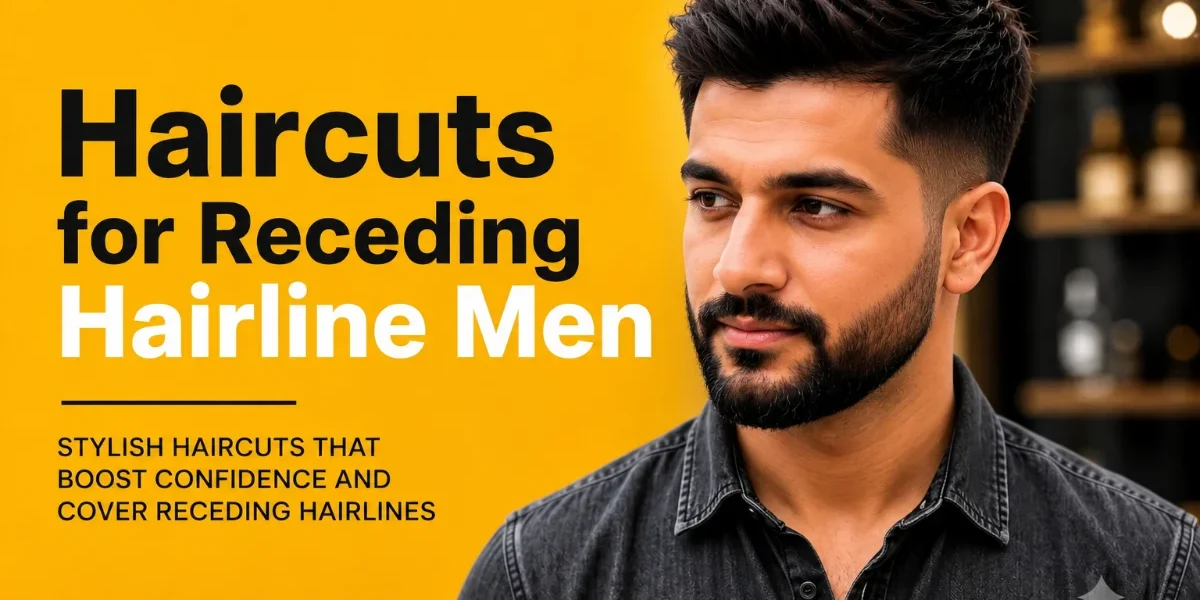

Quick Answer: The best haircuts for a receding hairline are the textured crop, buzz cut, crew cut, Caesar cut, and low fade. Shorter, textured, forward-styled cuts outperform longer styles because they minimise the visible difference between thinning temples and denser areas. The right choice depends on how far your hairline has moved and your face shape.
Every haircut for a receding hairline does one of three things. It goes shorter to close the gap between thick and thin areas. It covers the transition zone with a forward fringe. Or it builds volume and structure to move the focal point away from the temples. That principle separates the cuts that work from the ones that make recession worse.
This guide covers hairline recession at the temples: the M-shape that forms when the corners pull back, the widow’s peak that deepens over time, the creeping edges that shift your face shape. If the issue is density loss spreading across the scalp rather than hairline movement, that falls under haircuts for thinning hair. If the crown is going bare or the loss has advanced past the front, start with haircuts for balding men.
A receding hairline moves backward at the temples, forming that M-shape and it is distinct from a mature hairline. A mature hairline settles roughly 1 to 1.5 cm above its teenage position and stops. Recession keeps going. The temples deepen over months or years, the widow’s peak sharpens, and the corners widen. The American Academy of Dermatology estimates roughly 40 per cent of men show visible recession by age 35, driven primarily by DHT dihydrotestosterone which miniaturises hair follicles at the temples and crown.
One distinction that matters more than most barbers explain: a widow’s peak is genetic. Recession is progressive. You can have both. A natural widow’s peak works with textured volume styles quiffs, pompadours, anything that lets the V-shape frame the forehead. A widow’s peak deepened by recession needs forward-styled cuts that soften the V rather than expose it. Knowing which situation you are in changes which cuts from this list will serve you.
What Are the 20 Best Haircuts for a Receding Hairline?
These are grouped by what they do whether you want short and clean, textured coverage, volume, structure, a specific fade, or something longer. Each group targets a different mindset, and each cut earns its spot by doing something the others in the group do not.
Best Short Haircuts for a Receding Hairline
Short cuts close the gap between thick and thin areas almost entirely. They do not ask your hair to do anything it cannot deliver, and they work at every stage of recession.
1. Buzz Cut For Receding Hairline
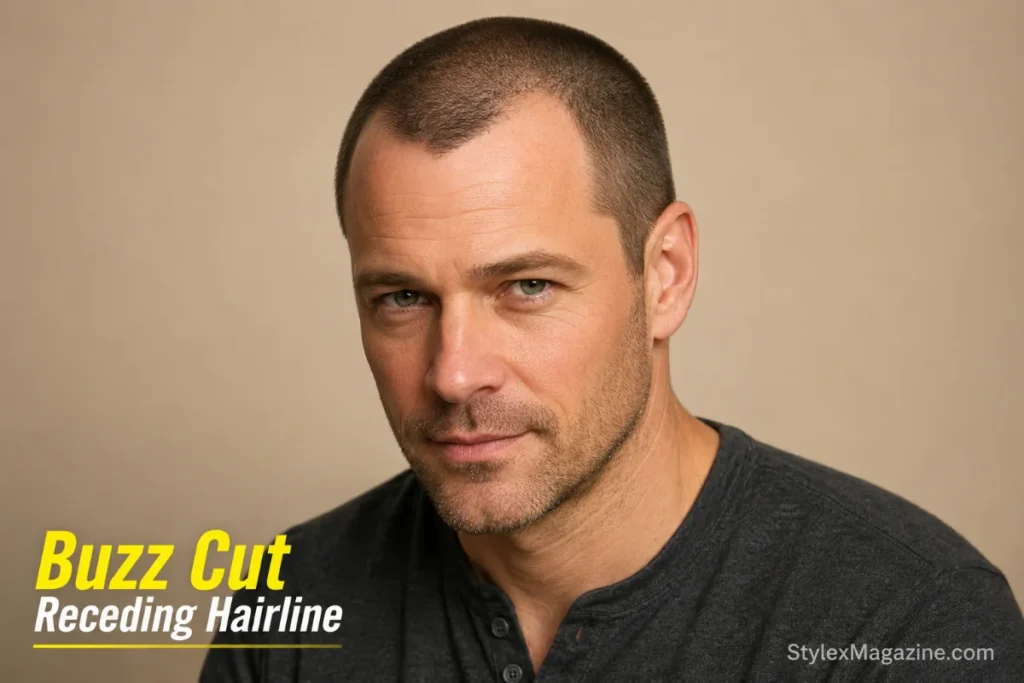
Even length all over, typically a #2 or #3 clipper guard. Thick and thin areas look the same because there is no length difference to expose the gap. The simplest, most reliable option at any stage of recession. Jason Statham turned the buzz cut into a signature proof that owning the hairline carries more weight than fighting it. David Beckham cycles back to a buzz between longer phases and it never looks like a concession.
Styling tip: No product needed. A beard or heavy stubble adds structure to the lower face and completes the look. Maintain every one to two weeks at home or in the chair.
2. Crew Cut
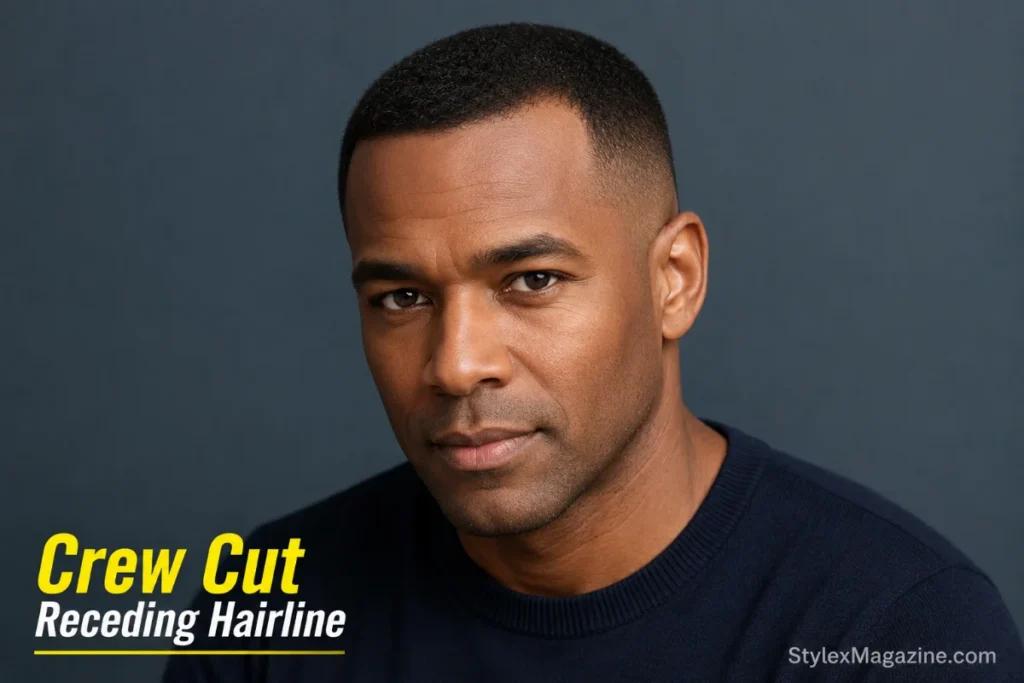
Gradually shorter from the front to the crown, tight on the sides. The crew cut keeps the longest hair at the front where recession shows most, giving you just enough length to create the impression of density without depending on it. George Clooney has worn versions of the crew cut for decades always clean, always age-appropriate, never trying too hard.
Styling tip: A small amount of matte paste worked through the front adds texture without shine. Works across all face shapes. Every three to four weeks.
3. Ivy League For Receding Hairline
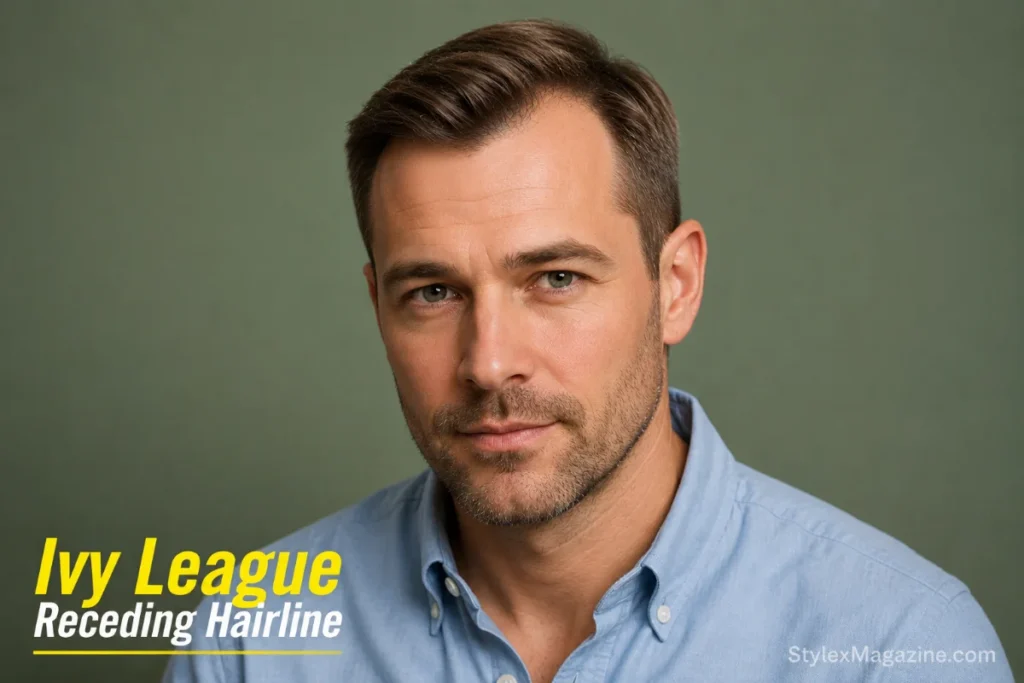
A slightly longer crew cut with enough length on top to part or sweep to one side. Gives you styling flexibility forward, side-swept, or textured — without relying on density you may not have. Chris Evans keeps this structure through most of his press runs, adjusting length seasonally while the fundamental shape stays the same.
Styling tip: Light pomade, natural part no blow-drying required. Grows out gracefully. Best on oval and square faces. Every three to four weeks.
4. High and Tight
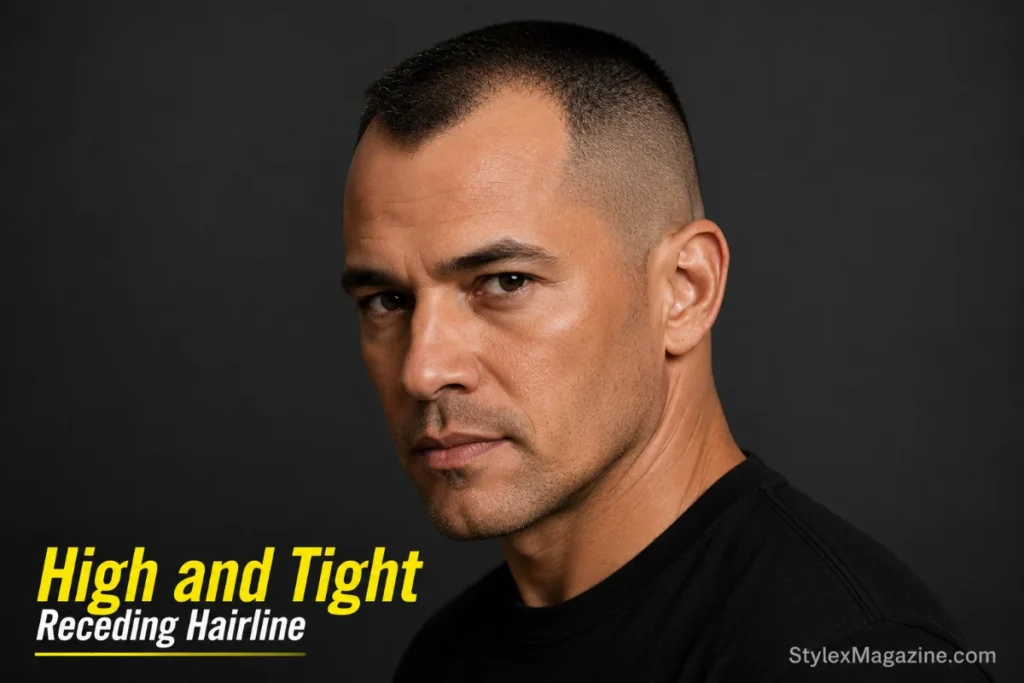
Clipped tight on the sides and back, short on top. The near-shaved perimeter makes the short top look intentional the eye sees a sharp military shape, not thinning. Jake Gyllenhaal wore this for Jarhead and kept returning to variations of it for years after.
Styling tip: No product the cut does the work. Keep the neckline clean between visits. One of the most effective short hairstyles for men with a receding hairline who want something clean without going full buzz. Every two to three weeks.
Textured Cuts That Cover a Receding Hairline
Forward-styled texture covers the hairline transition zone without looking like a combover. These cuts work because choppy layers create the illusion of density exactly where recession shows at the temples and the front.
5. Textured Crop
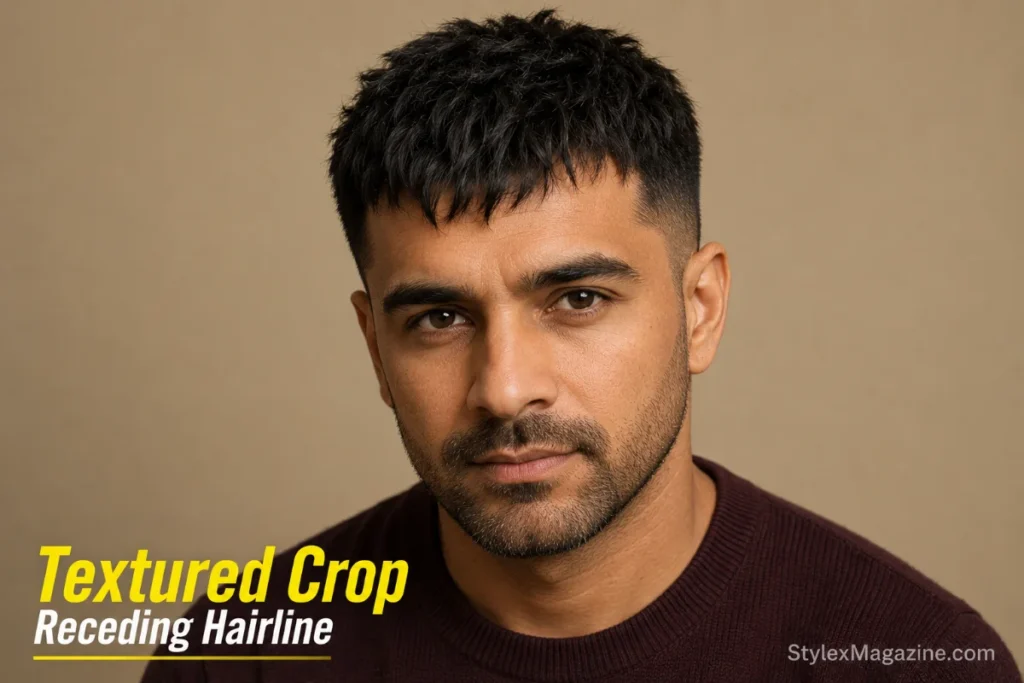
Short choppy layers on top, fade or taper on the sides. The forward fringe softens the hairline and rough texture fills in thinning areas visually. Tom Holland wore a textured crop through 2022 that showed how much depth short layers add without needing length. The most recommended men’s hairstyle to hide a receding hairline and the one barbers suggest first when a client sits down with temple recession.
Styling tip: Matte clay on towel-dried hair, pushed forward with your fingers. Every three to four weeks.
6. French Crop For Receding Hairline
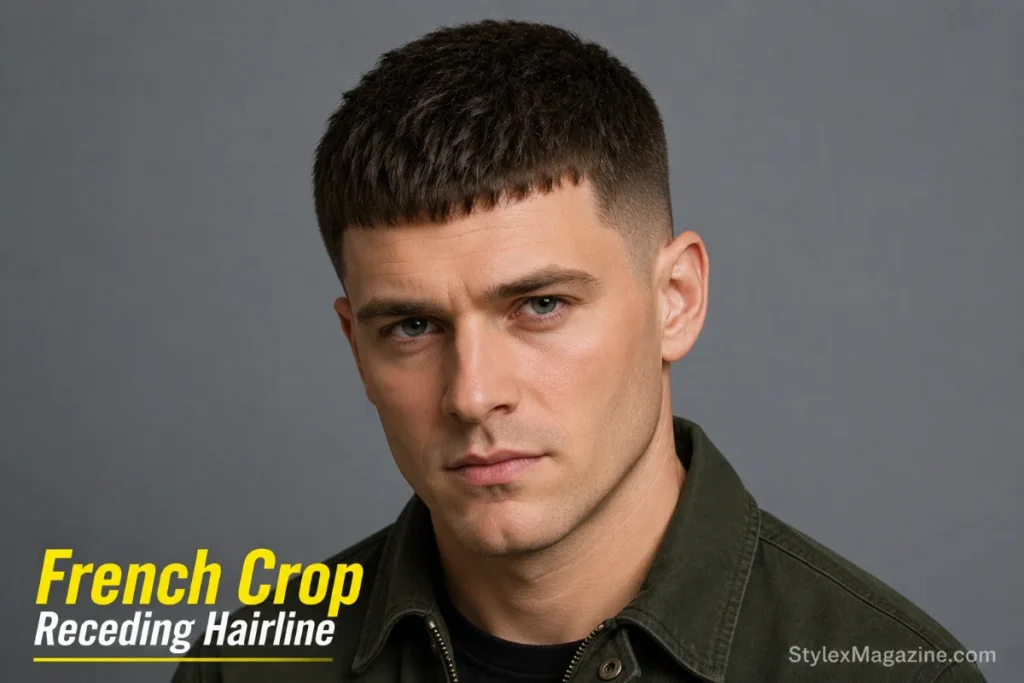
Similar structure to the textured crop but with a heavier, blunter fringe and slightly cleaner lines. Best at early to moderate recession when density still supports the forward fall. Zayn Malik wore a sharp French crop with a low fade that became one of his most replicated looks clean, textured, and fringe-forward.
Styling tip: Blow-dry forward on low heat, finish with a light styling cream to keep the fringe in place without stiffness. The horizontal fringe line sits across the forehead and hides the M-shape rather than fighting it. Every three to four weeks.
7. Caesar Cut
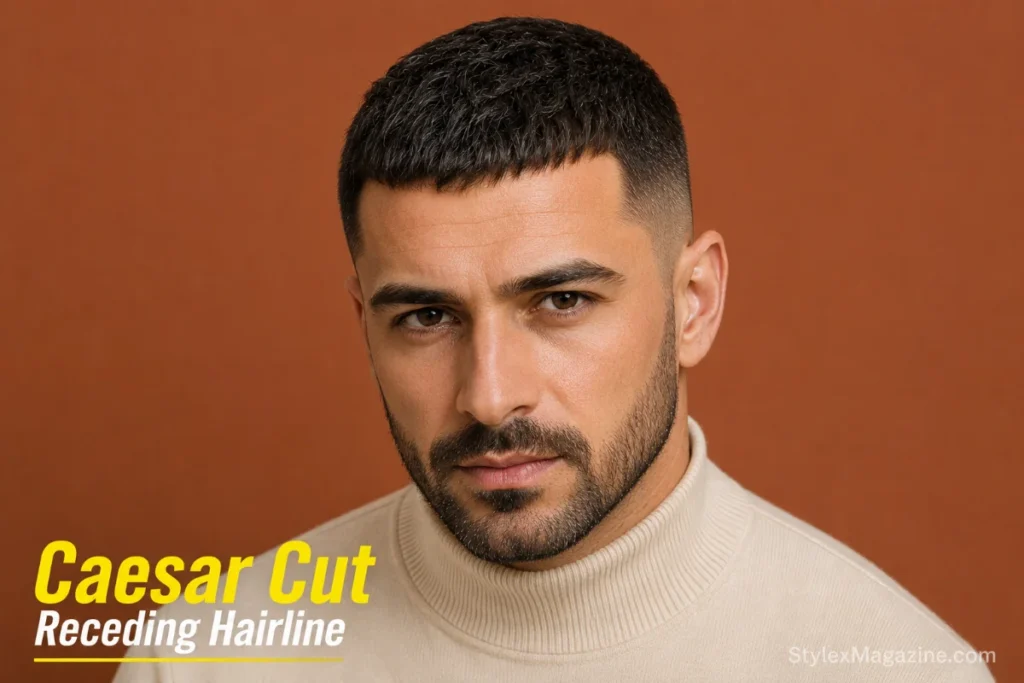
Short blunt fringe brushed forward, paired with a low or mid fade. The horizontal fringe draws the eye across the forehead rather than up to the receding corners. George Clooney wore the Caesar through his ER years and gave it mainstream credibility for oval faces. If your hairline has formed that classic M shape, the Caesar is built for it the straight fringe line cuts across both receding temples at once.
Styling tip: Light styling cream pushed forward with your fingers nothing heavy. Every three to four weeks.
8. Choppy Fringe For Receding Hairline
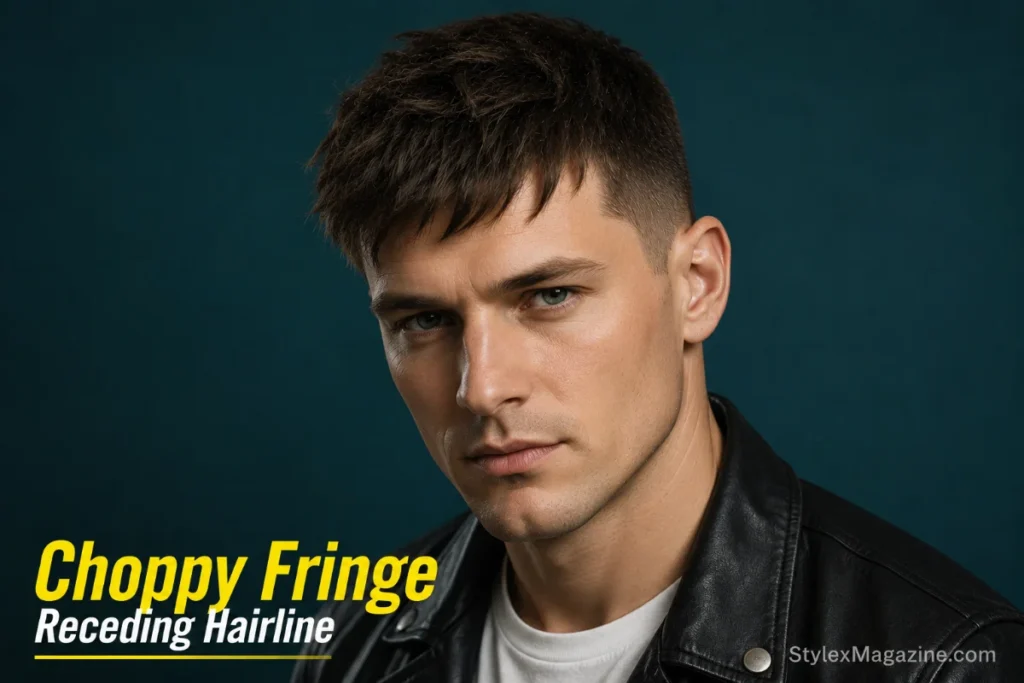
An angular, piece-y fringe that falls forward and slightly to one side. More fashion-forward than the Caesar the uneven lengths create natural movement that distracts from any unevenness in the hairline itself. Robert Pattinson has worn messy, angular fringe variations throughout his career always slightly dishevelled, always deliberate.
Styling tip: Sea salt spray on damp hair for grip, then finger-style the fringe into uneven pieces. Works best on straight to wavy hair. Every three to four weeks.
9. Modern Crop with Disconnected Fringe
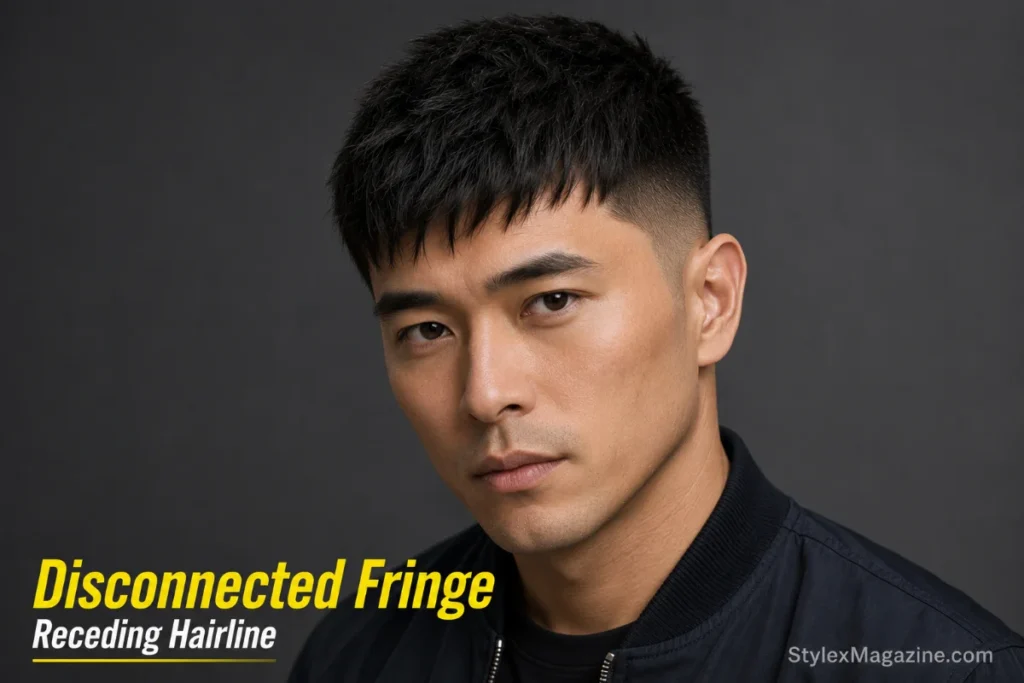
A cropped top with a fringe that sits slightly longer than the rest, creating a deliberate disconnect. This variation adds an editorial edge to the standard crop. The disconnected length at the front gives more coverage over the temples than a uniform crop can.
Styling tip: Texture powder at the roots for lift, then matte clay through the fringe to separate the strands. Requires a barber who understands precision. Every three to four weeks.
Volume Styles That Work with Early Recession
Height and lift at the front shift the focal point upward, away from the temples. These cuts only deliver results when front and mid-scalp density still exist. If the hairline has receded past the point where you can build volume at the front, skip to the short cuts above.
10. Textured Quiff For Receding Hairline
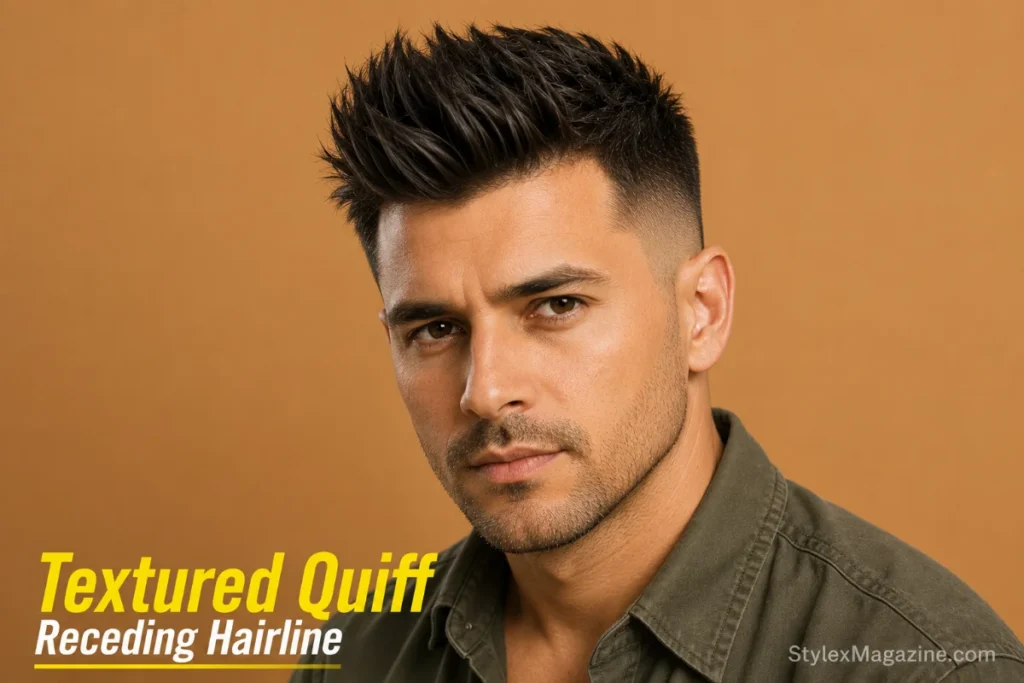
Volume at the front, short faded sides. The height redirects attention upward and away from the receding corners. Zayn Malik’s textured quiff with a disconnected undercut became the most searched men’s hairstyle during his solo career and it worked precisely because the upward volume drew the eye away from his natural hairline.
Styling tip: Blow-dry with a round brush, finish with a matte clay. Requires medium density through the front. A strong receding widows peak hairstyle when the V-shape is genetic rather than advanced. Every three to four weeks.
11. Mini Pompadour
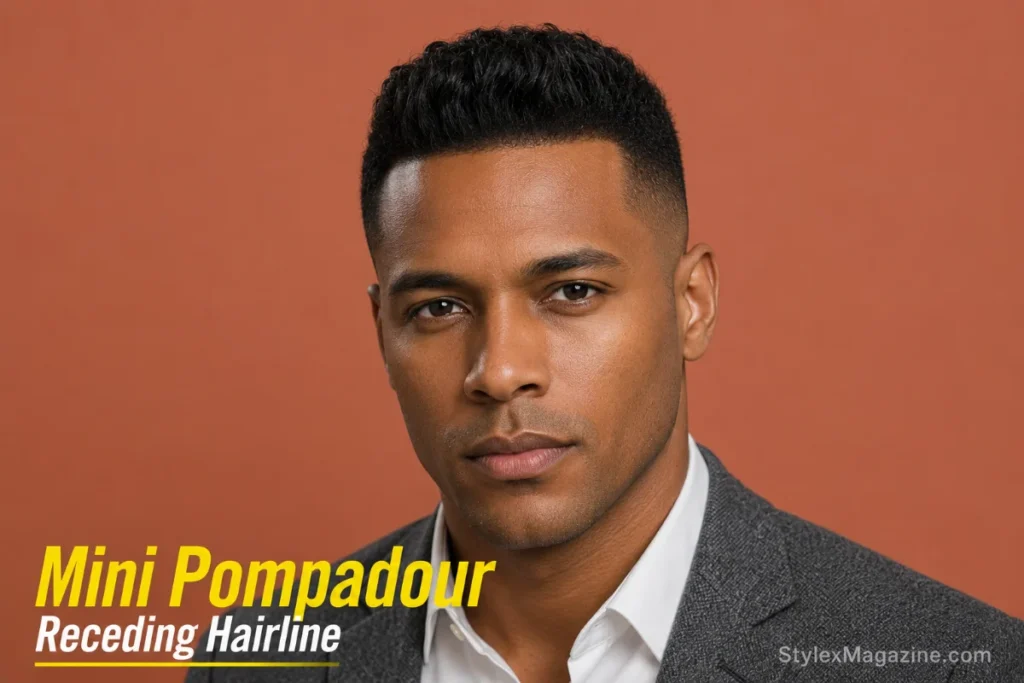
A shorter, less dramatic pompadour just enough lift at the front to create the impression of a fuller hairline without the exaggerated height. Bruno Mars built his signature look around the pompadour, though his version carries more height than you need for recession scale it down.
Styling tip: Blow-dry upward from the roots, finish with a medium-hold matte paste. Works best on oval and square faces. Every three to four weeks. Needs daily styling commitment.
12. Faux Hawk
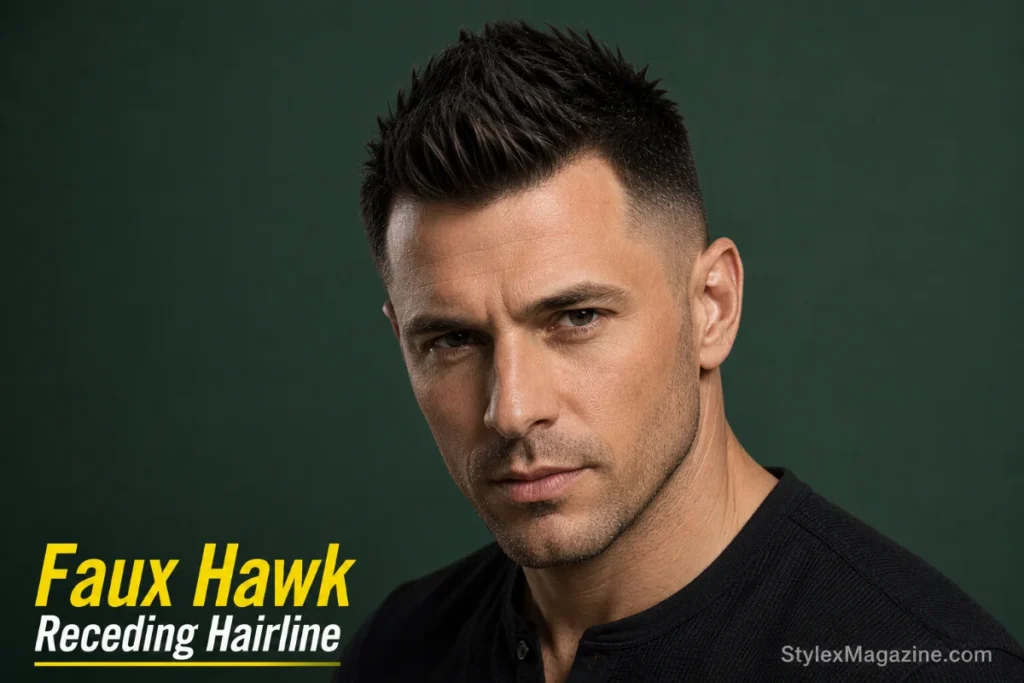
Short sides with a slightly longer central ridge styled upward. The vertical strip through the centre of the head pulls the eye to the midline, away from the receding temples on either side. David Beckham popularised the faux hawk during the 2002 World Cup his version was bleached and bold, but the structure works just as well understated.
Styling tip: Matte paste pushed upward through the centre, fingers pressed inward from both sides to form the ridge. Every three weeks. One of the bolder hairstyles for men with a receding hairline you need to own the sharpness.
Best Structured Styles for a Receding Hairline
Parted and swept styles redirect attention laterally across the top rather than toward the temples. They rely on enough mid-scalp density to hold a part, so they suit early to moderate recession rather than advanced.
13. Side Part For Receding Hairline
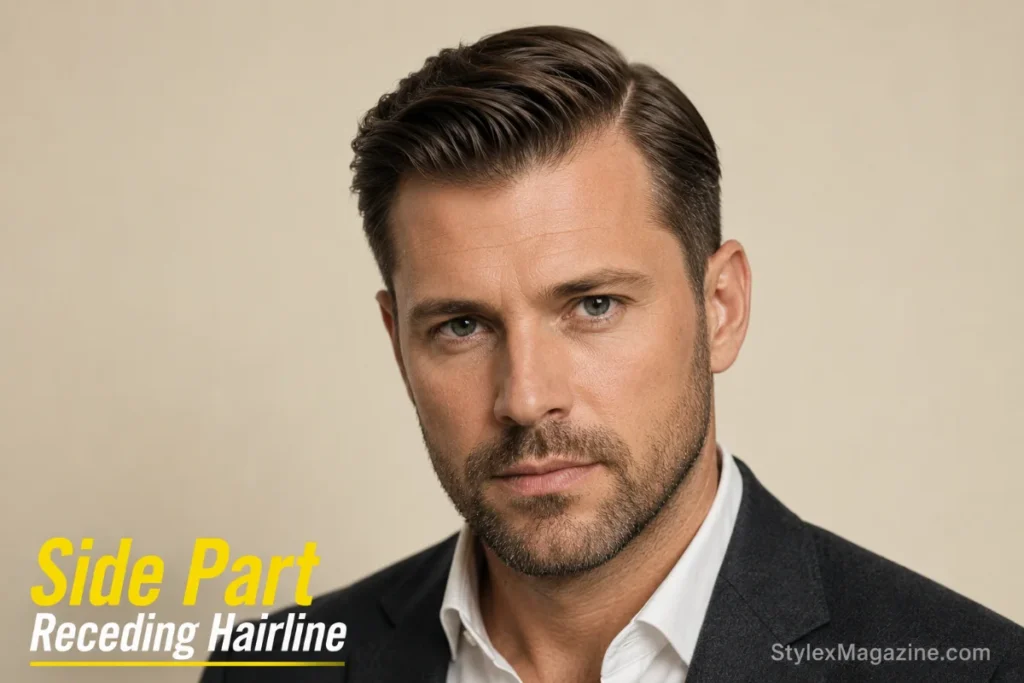
A structured part placed at the natural break above the temple, with hair swept to one side. The weight on the parting side covers the receding corner on that side. Jon Hamm wore the side part through every season of Mad Men a reminder that this cut has carried men through decades of style shifts without ever falling out of favour.
Styling tip: Light pomade on damp hair, comb into place, let it air dry. Avoid a hard razor part it creates a visible line of scalp that draws the eye to what you are trying to disguise. Every four to five weeks.
14. Modern Comb Over
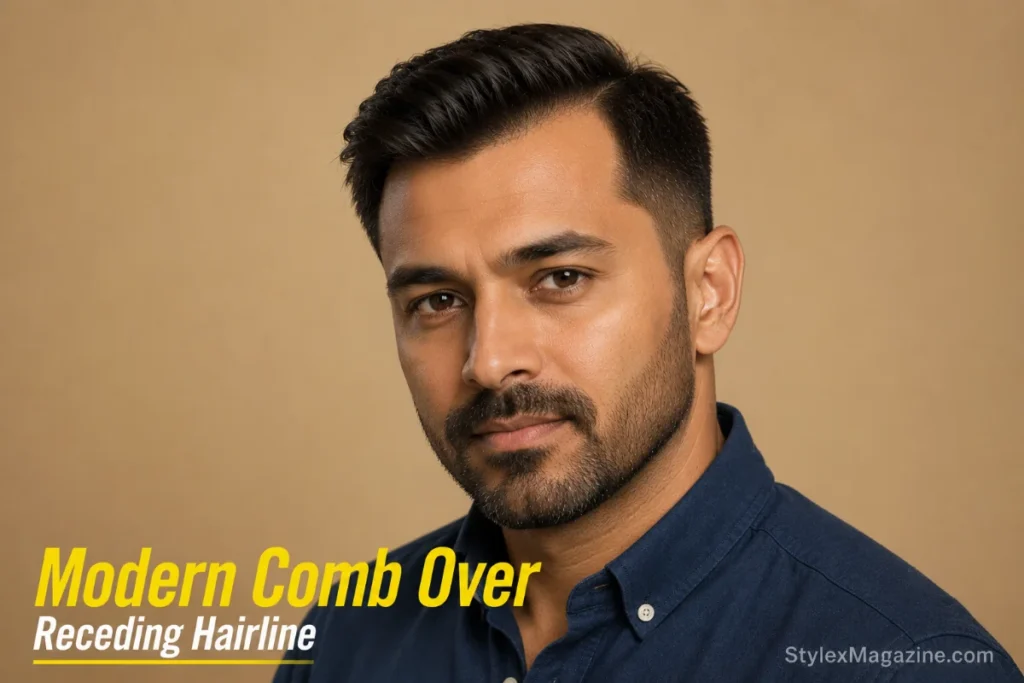
The modern comb over receding hairline version has nothing in common with the dated cliché. Short, textured, swept to one side. It uses the recession line as a natural starting point for the sweep, which makes the whole style look intentional rather than compensatory. David Beckham’s recent comb over variations use a soft side sweep with a taper structured without being rigid.
Styling tip: Lightweight cream on towel-dried hair, swept to your natural fall side with a wide-tooth comb. Every three to four weeks.
15. Slick Back
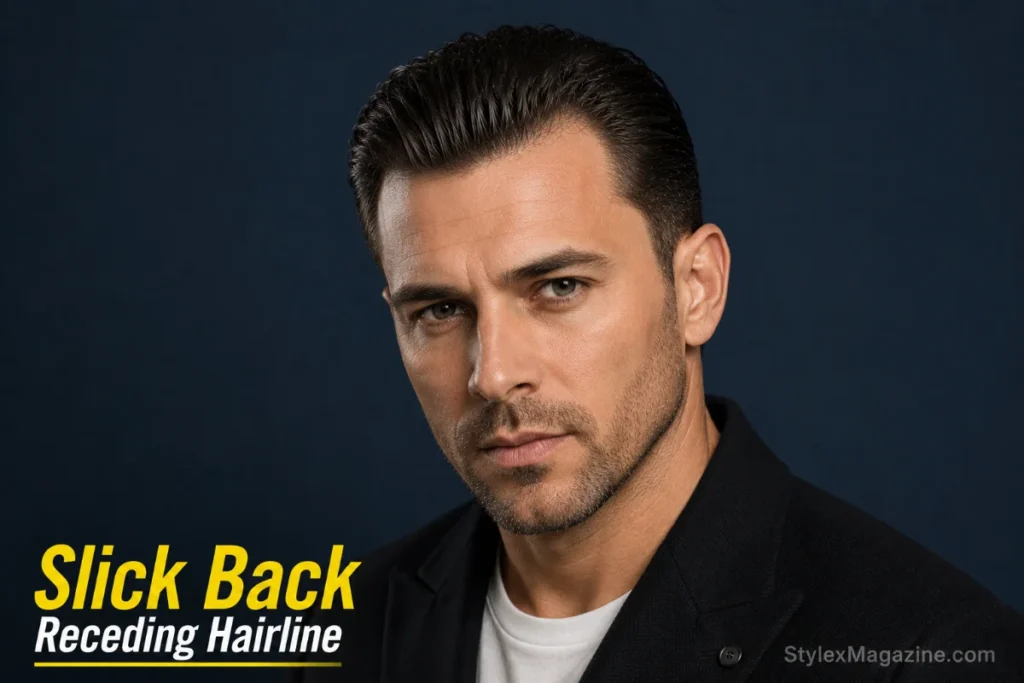
Hair swept back off the forehead with a matte finish. Only works at early recession when the hairline has not moved far enough to fully expose the temple hollows. Brad Pitt has worn slicked-back variations from Fight Club through to his current press appearances always with enough front density to hold the sweep.
Styling tip: Matte pomade on damp hair, swept back with your fingers never a comb, and never a shiny finish. A high-shine product on a receding hairline separates strands and shows more scalp between them. Every four to five weeks.
Best Fades for a Receding Hairline
A fade is a side treatment, not a standalone cut it pairs with any style above. But the fade level you choose changes how visible the recession looks. The wrong fade draws attention to the temples. The right one pulls focus elsewhere.
16. Low Fade
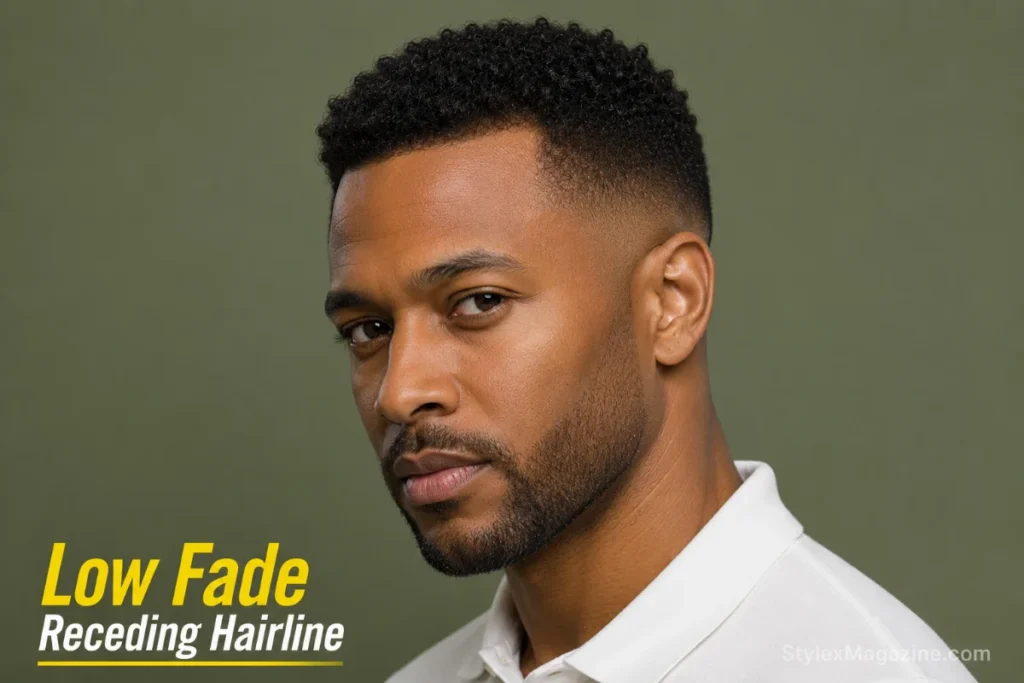
A low fade receding hairline starts just above the ears. The subtle transition keeps the sides quiet, letting the top do the work. Drake has built his entire grooming identity around low and mid fades — the gradient stays low enough that the temples never become the focal point. Unlike a skin fade which can spotlight temple recession by pulling the eye upward along the gradient a low fade blends gently enough that the temples stay out of focus.
Styling tip: The fade does the work — keep the top styled forward or textured. Every two to three weeks.
17. Taper Fade For Receding Hairline
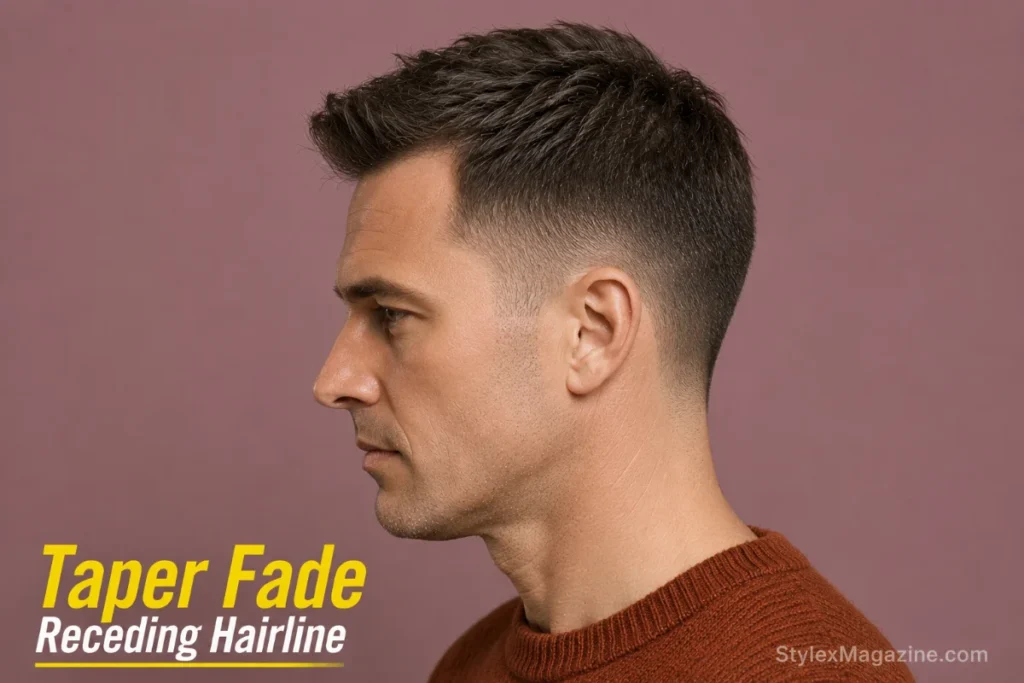
Gradual length reduction from top to neckline, no skin showing. The softest option. Works when you want a clean outline without the sharpness that comes from exposed skin. Ryan Reynolds keeps a clean taper on nearly every red carpet tight enough to look sharp, soft enough to grow out without looking neglected.
Styling tip: Minimal product the taper is the style. A touch of texture powder if you want lift on top. The most forgiving fade on missed barber visits — still looks clean at four weeks. Every three to four weeks.
18. Drop Fade
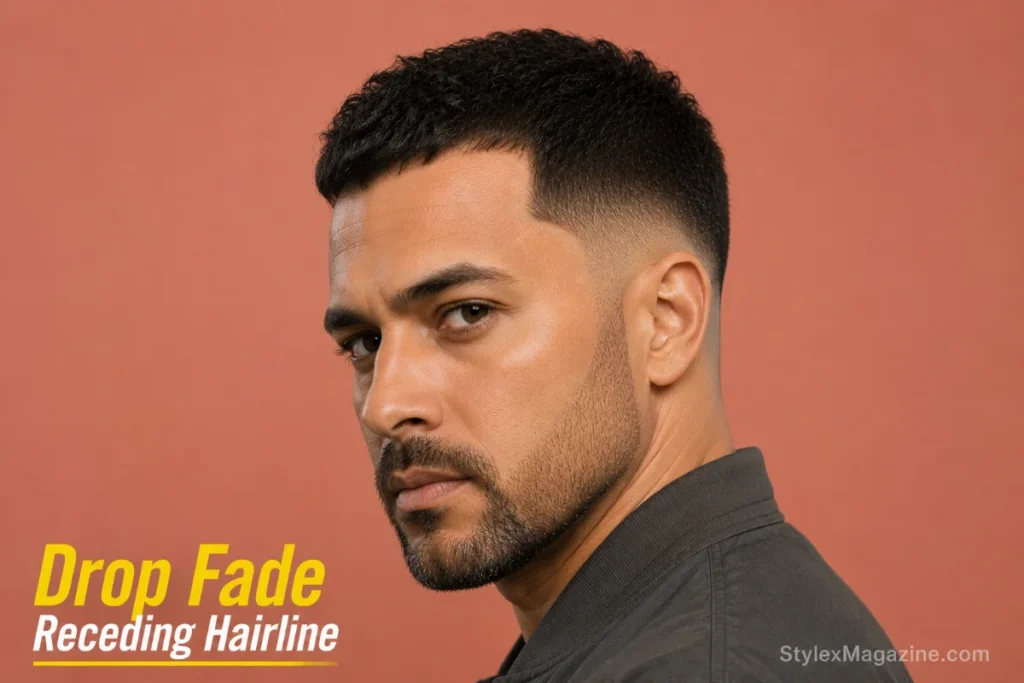
The fade line curves down behind the ear instead of following a straight horizontal path. This arc shape complements the natural curvature of a receding hairline rather than cutting against it. Travis Kelce wears drop and burst fade variations that follow the ear’s curve the shape keeps the sides interesting without competing with the top.
Styling tip: Let the fade do the visual work on the sides and focus product on the top style you pair it with. Pairs well with textured crops and quiffs. Every two to three weeks.
Do Longer Styles Work with a Receding Hairline?
Longer styles carry the highest risk because length amplifies the difference between dense and sparse areas — thick sections look thicker, thin sections look thinner. These work under specific conditions, and both need honest caveats.
19. Wolf Cut
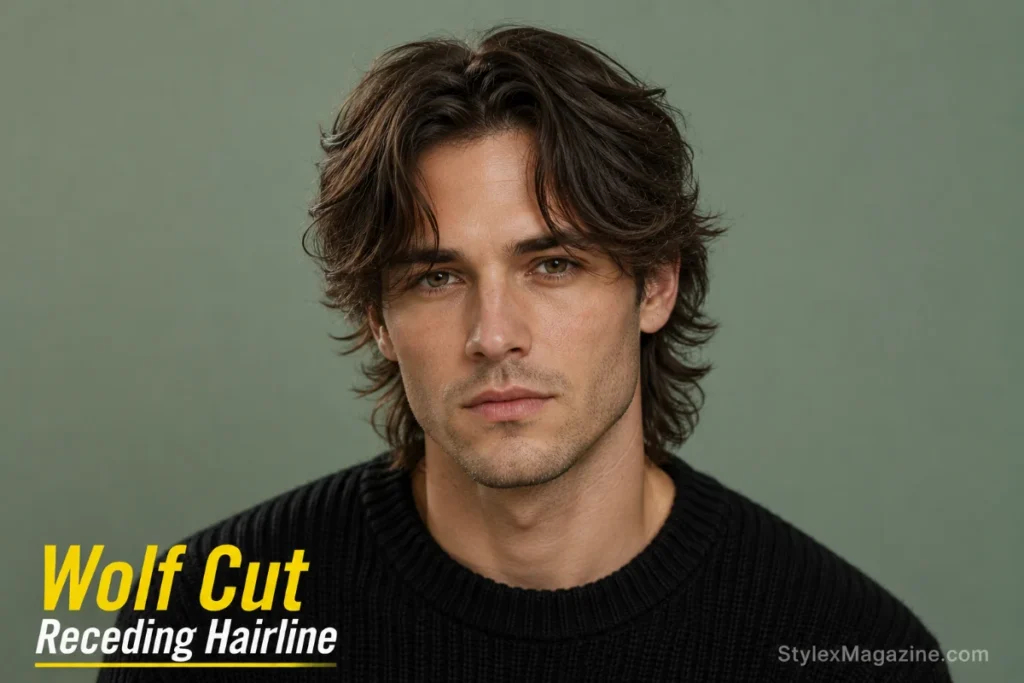
Choppy, layered, centre-parted with length at the sides and back. The curtain-style fringe can cover receding temples if front density is still decent. Once the temples go thin, this cut exposes more than it conceals. Timothée Chalamet’s layered, tousled variations show how messy length can look editorial rather than neglected but he has the density to hold it.
Styling tip: Sea salt spray on damp hair, air dry, then scrunch. Works best on wavy or curly hair where the texture fills gaps naturally. Every five to six weeks. Not for advanced recession the length works against you past a certain point.
20. Modern Mullet For Receding Hairline
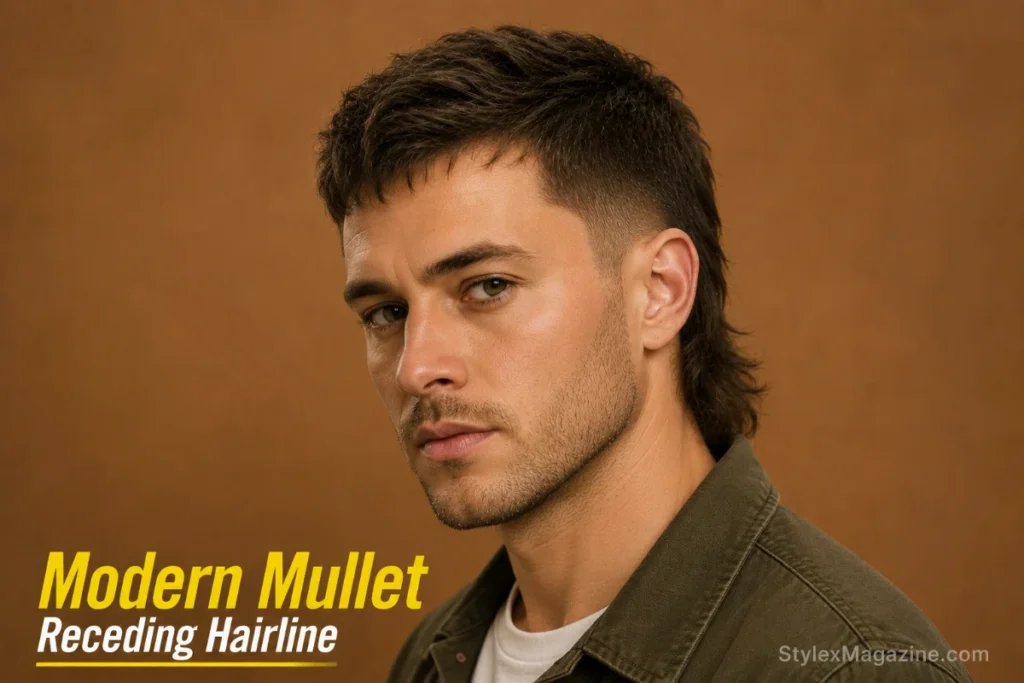
Short and textured on top, longer at the back and sides. The weight at the back draws the eye rearward, away from the front hairline. Barry Keoghan has worn the modern mullet at major events cropped and textured at the front, length at the back, always paired with a fade to keep the sides clean.
Styling tip: Matte clay through the textured top, leave the back to fall naturally. Pair it with a low fade or taper a mullet with overgrown sides and a receding front looks careless rather than intentional. Every four to five weeks. A confidence cut you need to own it fully or it works against you.
When Should You Shave It Off?
When shorter cuts can no longer disguise the pattern. Three markers signal that a clean shave will look stronger than the best short haircut:
A #3 guard buzz still shows patchy density at the front. Your barber spends more time on the illusion than the cut itself. Every photo from every angle shows the recession pattern regardless of the style.
The clean shave removes the problem entirely no length variation, no thinning to disguise. A bare scalp with a well-groomed beard looks strong and deliberate. Without facial hair, a narrow jaw can feel exposed, so grow at least a heavy stubble to anchor the lower face.
If the recession has progressed to crown thinning or a bald patch meeting the receding front, the problem has moved beyond hairline styling into broader coverage territory covered in our balding men’s guide.
Which Haircut Matches Your Face Shape?
Recession changes your face shape visually. A round face with temple recession starts looking longer. An oblong face gets even more elongated. The right cut counterbalances what the recession does to your proportions.
| Face Shape | What Recession Does | Best Cuts | Avoid |
|---|---|---|---|
| Oval | Minimal disruption — stays balanced | Most styles work: textured crop, side part, quiff, crew cut | Overly tight buzz if skull shape is uneven |
| Round | Opens the forehead, adds vertical length | Quiff, crew cut, faux hawk, textured crop — anything with height | Buzz cut alone — removes the vertical emphasis your face needs |
| Square | Strong jaw holds the look; recession thins the upper face | Buzz cut, Caesar, crew cut, low fade — clean and angular | Long floppy fringe that fights the angular bone structure |
| Oblong / Rectangle | Adds more perceived length — needs horizontal counterbalance | Caesar, French crop (horizontal fringe shortens the face), side part | Quiff or pompadour — adds height you do not need |
| Diamond / Heart | Narrow chin plus recession creates top-heavy look | Textured crop, low fade with soft taper, side part | Skin fade with long top — maximises width at the widest point |
For men with a big forehead combined with recession, the Caesar cut and French crop outperform everything else. The horizontal fringe shortens the visible forehead while the forward direction conceals the hairline. Avoid anything that sweeps hair back it extends the forehead visually.
What Haircuts Should You Avoid with a Receding Hairline?
Any cut that widens the visible difference between dense areas and thin areas makes recession harder to disguise. Five combinations do the most damage.
Long hair swept straight back. Pulls everything away from the temples and puts the full M-shape on display. The further back the styling direction, the more visible the recession becomes.
High-shine product on thinning hair. Gel and wet-look finishes separate strands and show more scalp between them. Matte clay, texture powder, or dry paste close the visual gaps. This single product swap makes more difference than changing the cut.
High skin fade with a long top. The sharp jump from bare skin to length on top makes thinning areas look even sparser by comparison. A low or mid taper creates a gentler transition that keeps the eye from travelling up to the temples.
Centre part with recession at both temples. Frames the M-shape symmetrically. The eye goes straight to both receding corners. An off-centre part or forward fringe breaks the symmetry.
Heavy, flat, unstyled length. Weight without texture pulls thin hair down and exposes the scalp beneath. Length only works with layers and movement. Flat and heavy is the enemy.
What Should You Tell Your Barber?
Name the cut, state where your recession is, and tell them whether you want to work with it or disguise it. That gives them everything they need.
If you want to disguise it: “I want a textured crop with the fringe brought forward to soften my hairline. Keep the sides at a 1 or 2 guard and blend up into the length on top.”
If you want to own it: “Take it down to a [number] guard all over. Even, clean buzz. No fade, no taper.”
If you want their advice: “My temples are receding what do you recommend that works with the shape I have? I am open to going shorter.”
Bring a reference photo. It removes ambiguity faster than any verbal description. And state your maintenance window — if you visit every five to six weeks, a style that needs a two-week fade refresh will never look right past the first appointment.
FAQ
Can a receding hairline grow back?
Not on its own. Finasteride and minoxidil can slow or partially reverse early-stage recession, but styling is the immediate fix. See a dermatologist if the progression is rapid.
Does hair texture change which cuts work for a receding hairline?
Yes. Curly and wavy hair naturally fills gaps and adds volume, which means styles like the textured crop and wolf cut hold up longer into recession. Straight, fine hair shows scalp faster and performs better with tighter cuts buzz, crew, or Caesar.
How often should I visit the barber if I have a receding hairline?
Every two to four weeks depending on the style. Fades need the most frequent upkeep (every two to three weeks). Textured crops and crew cuts hold shape for three to four weeks. A buzz cut you can maintain at home between visits.
Can a beard help disguise a receding hairline?
A well-groomed beard shifts the focal point of the face from the forehead to the jawline. The fuller the beard, the stronger the effect. Even heavy stubble adds enough weight to the lower face to draw attention downward and away from the hairline.
What products work best for styling a receding hairline?
Matte clay and texture powder outperform everything else. Both add grip and volume without shine. Avoid gel, pomade, or anything that creates a wet finish shine separates strands and shows more scalp. Apply to towel-dried hair and style forward or to the side.

Other Articles
20 Oval Face Shape Haircuts for Men In 2026.

No Comment! Be the first one.