
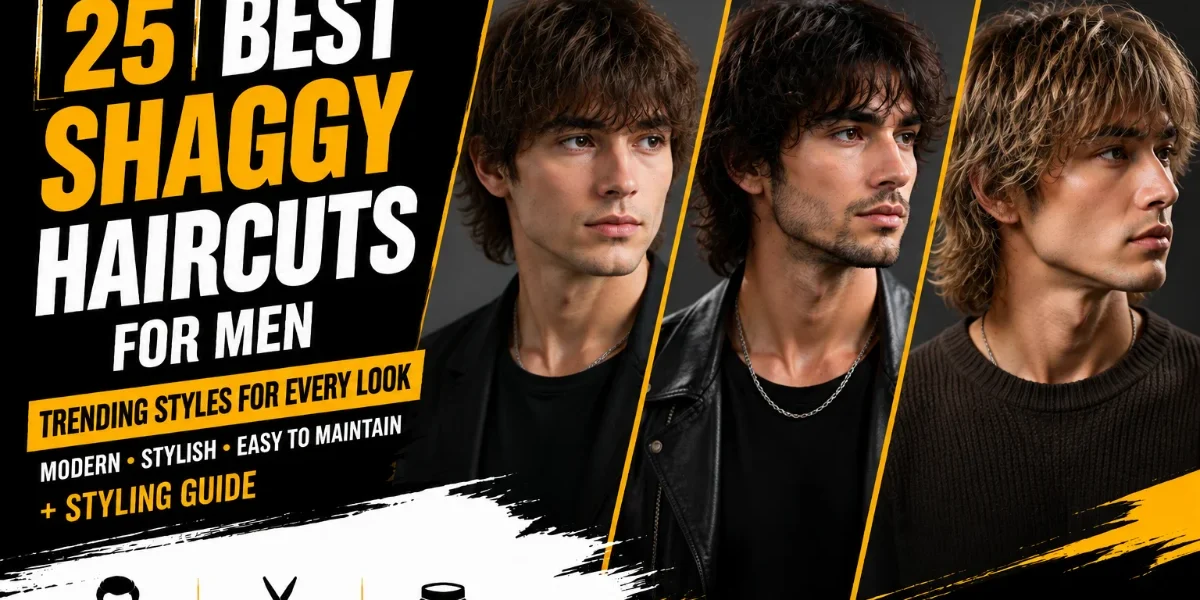

Quick Answer: A shag haircut is a layered, textured cut with choppy ends, crown volume, and a feathered finish. The shag cut works on straight, wavy, and curly hair at any length. The layered structure creates natural movement without heavy daily styling, making shaggy haircuts a top request at barbershops in 2026.
A men’s shag haircut stacks shorter layers at the crown over progressively longer layers below, with weight removed from inside the cut and feathered ends throughout. That construction is what separates a shag from grown-out hair. The texture is built into the cut, not left to chance.
New York hairstylist Paul McGregor created the original around 1969, cutting it on Jane Fonda for Klute. The version men ask for now is cleaner, adapted for every hair type and workplace, and genuinely low maintenance once the barber gets the shape right. Below are 25 variations, plus what to tell your barber, common mistakes, and maintenance by length.
Best Shaggy Haircuts for Men
Twenty-five shag variations covering every length, hair type, and setting.
1. Classic Shag
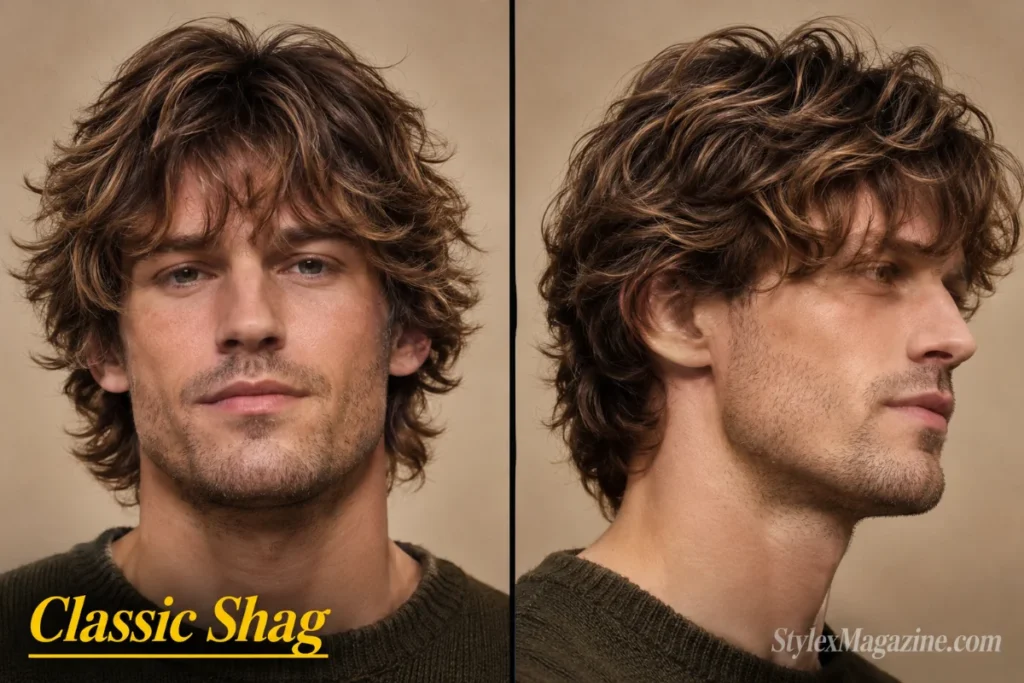
The original 1970s blueprint. Heavy crown layering, feathered ends around the ears, length settling at the collar. The fringe sits full and brushes the brow. Oval and oblong faces wear this well. Wavy or thick hair fills out the layers without product. Rough-dry with fingers, skip the brush, and work a light texture cream through the mid-lengths.
2. Modern Shag
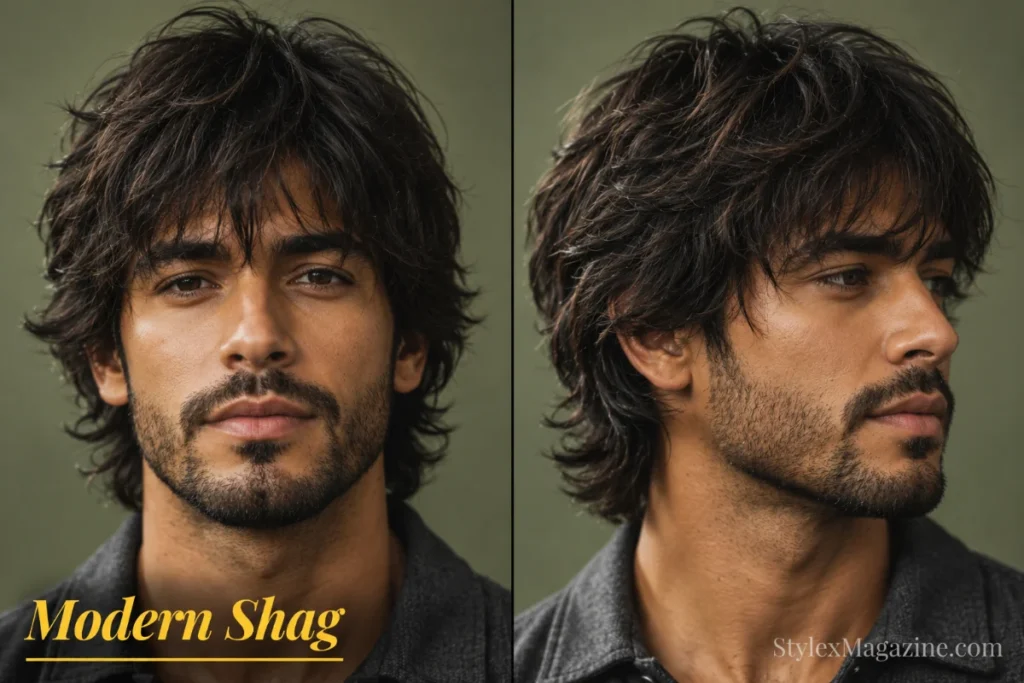
The modern shag haircut tightens the classic proportions, cleans up the ear line, and softens the fringe. Length stops above the collar. Works from a weekend brunch to a Monday meeting. Suits oval, square, and heart-shaped faces, though most shapes work with the right fringe and layering adjustments (see haircuts by face shape for specifics). Blow-dry loosely head tipped forward, finish with matte paste through the ends.
3. Short Shag
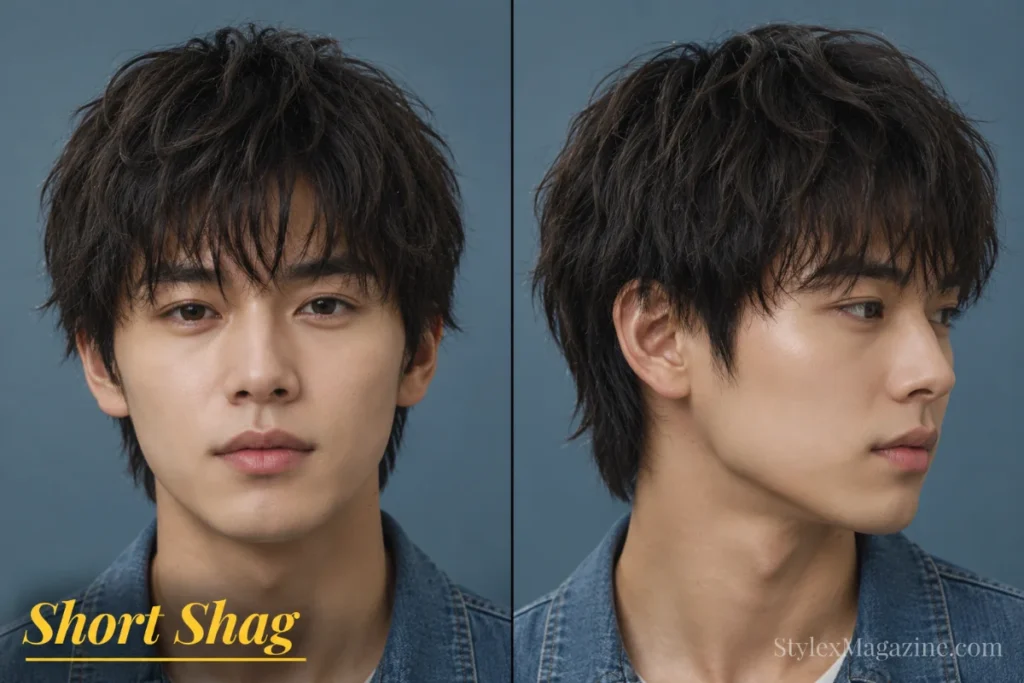
Choppy layering compressed into a cropped length. Two to three inches on top, broken mini fringe, soft sides. A low maintenance shaggy haircut that works as an entry point for men testing the look. Also suits boys and teens wanting a textured style without long-hair commitment. Most face shapes handle it well. Towel dry, scrunch in matte clay, push pieces in slightly different directions.
4. Medium Shag
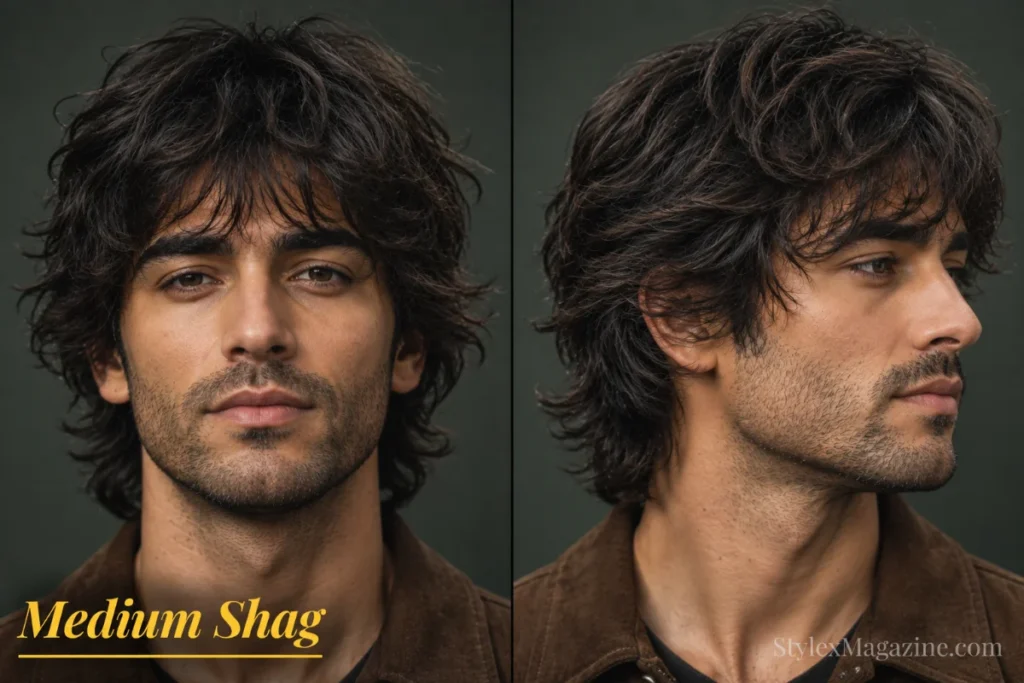
The sweet spot. Layered length covers the top of the ears and grazes the collar, giving enough hair for full shag movement without long-hair upkeep. Layers stack from the crown down. The fringe can sweep sideways or sit forward. The most-requested shag length for good reason. Air dry most of the way, rough-dry the roots for lift, rake styling cream through with fingers.
5. Long Shag
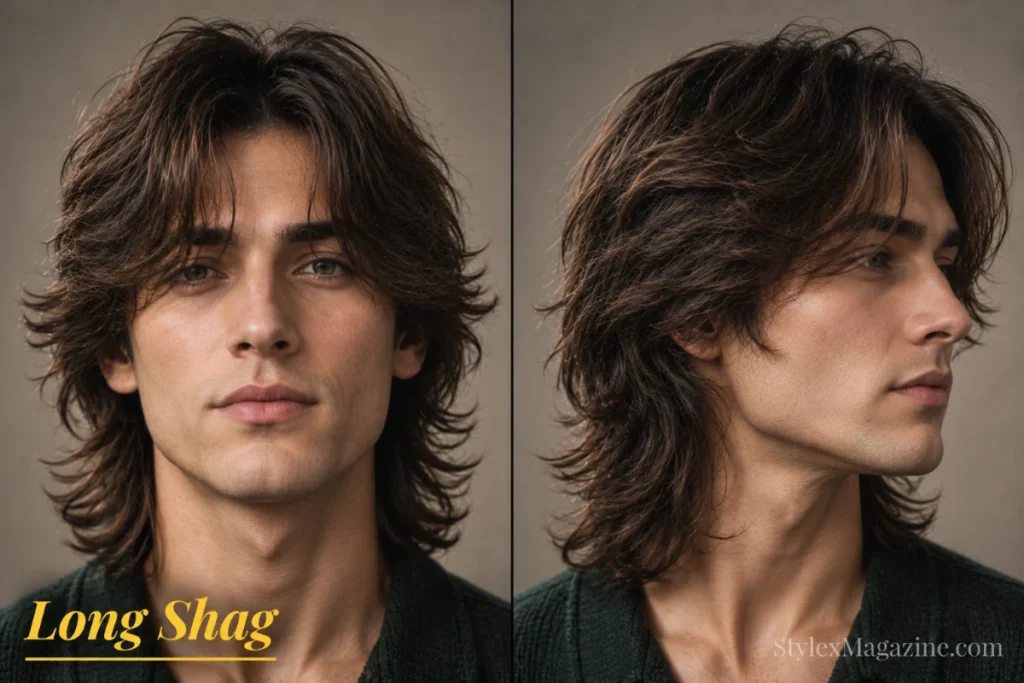
Shoulder-length layered shape with feathered face-framing pieces and loose, lived-in ends. The layering prevents the flat, triangular look that ruins unlayered long hair. Needs hair density to carry the length. Fine hair tends to look stringy past the collar. Condition regularly, air dry with sea salt spray scrunched through.
6. Shaggy Fade Haircut
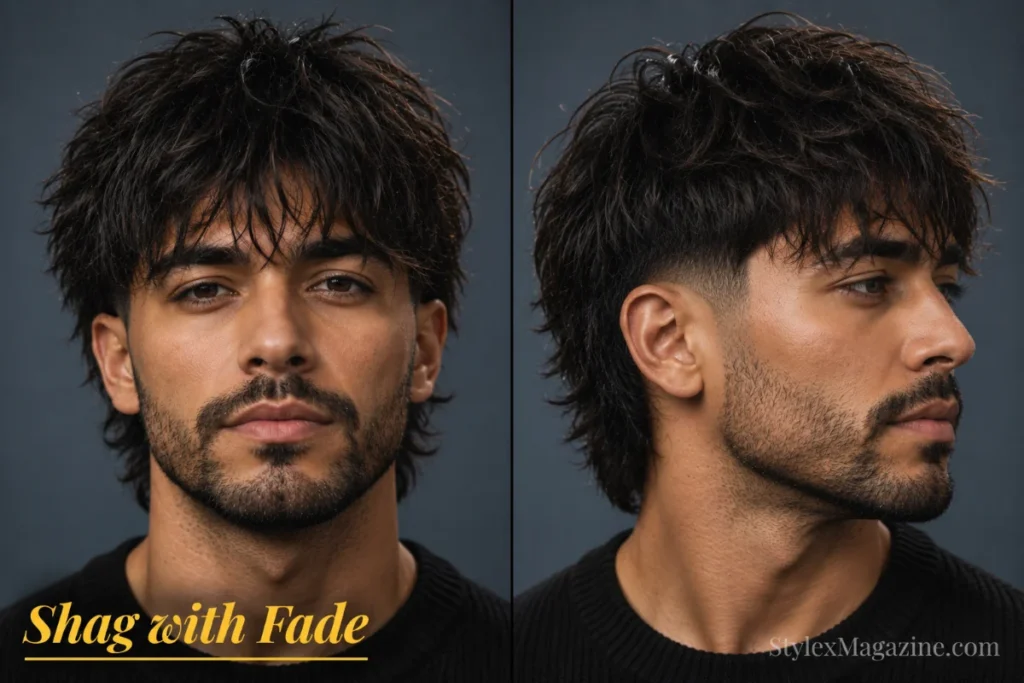
The shaggy fade haircut pairs a choppy, textured top with a low or mid fade on the sides. Clean, modern sides while the layered top handles all the personality. This hybrid works for men who want shag texture without committing to length around the ears. Most face shapes suit it. A light styling clay on the layers, faded edges provide the structure. The most popular mens shaggy haircuts in barbershops right now.
7. Shag with Taper
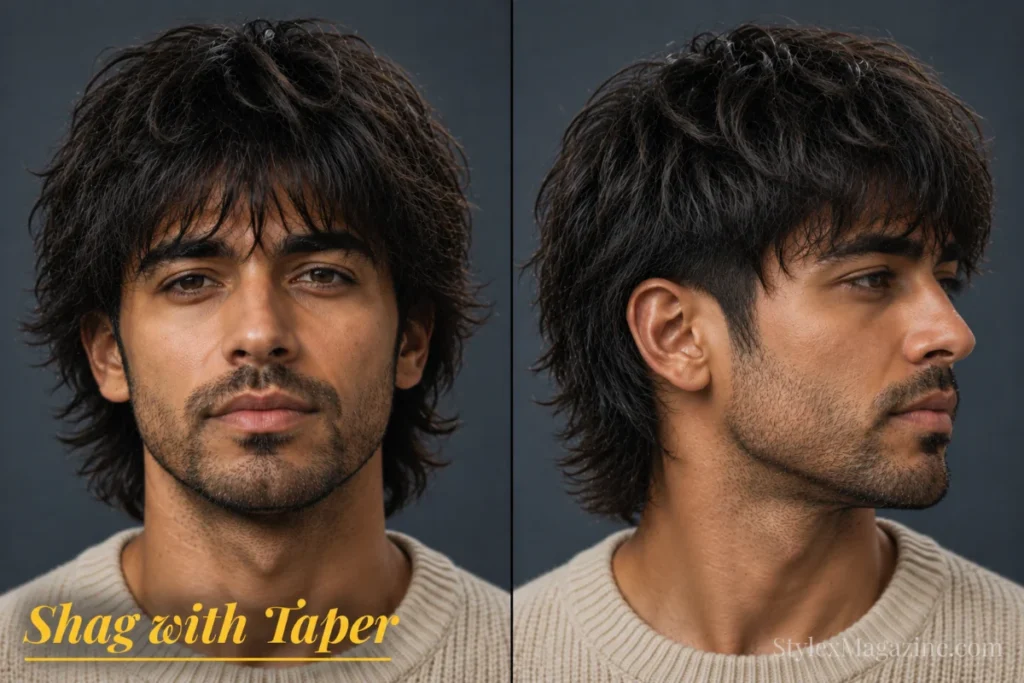
Choppy layers through the top and crown, gradually tightening around the ears and neckline for a cleaner perimeter. The taper civilizes the shag just enough for conservative workplaces without killing the life up top. I steer working professionals toward this variation more than any other. A touch of texturizing powder at the roots for lift, tapered edges handle the polish on their own.
8. Curly Shag
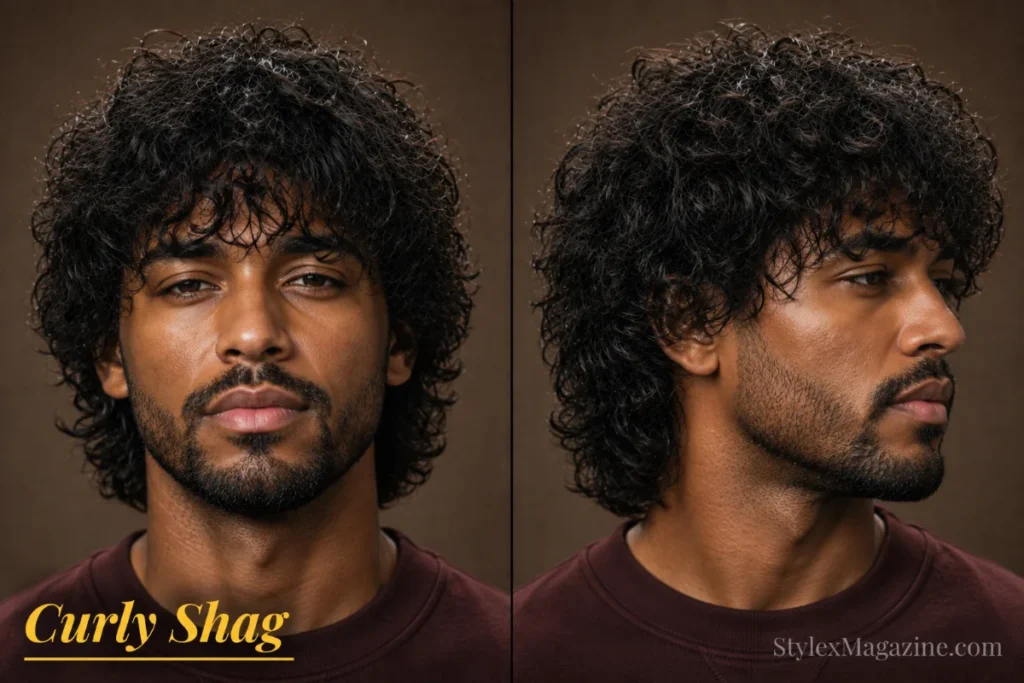
Shapes natural curls into rounded, graduated layers that stack without the pyramid effect unlayered curls create. Interior weight removal lets curls spring into their pattern with even volume from crown to nape. Cut dry or nearly dry since curl shrinkage makes wet-cut shags unpredictable. Square and heart-shaped faces benefit most. Curl cream on damp hair, diffuse on low heat. If you wear your curly hairstyles longer, the shag grows into a flowing shape without an awkward stage.
9. Wavy Shag
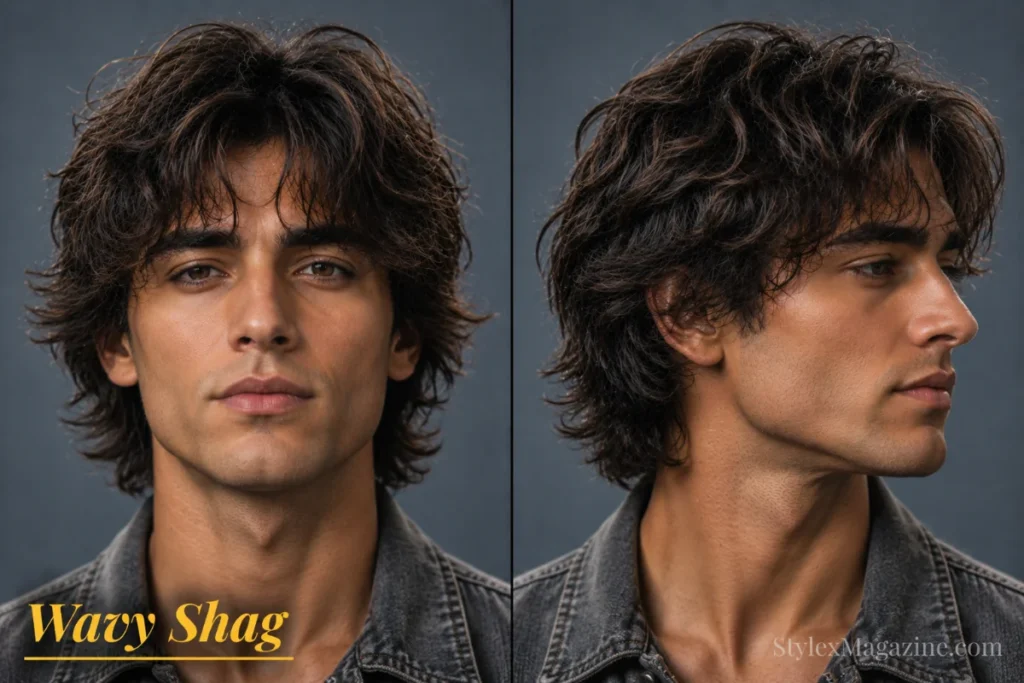
The easiest hair-type match for a shag cut. Layers release the wave from its own weight, and the wave fills the layers with body. Each amplifies the other. Oval and heart faces get the most balanced look. Many barbers consider wavy hair the ideal shag texture because the bends catch and hold the natural texture the cut creates. Mist damp hair with sea salt spray, scrunch upward, air dry untouched.
10. Shag Haircut for Straight Hair
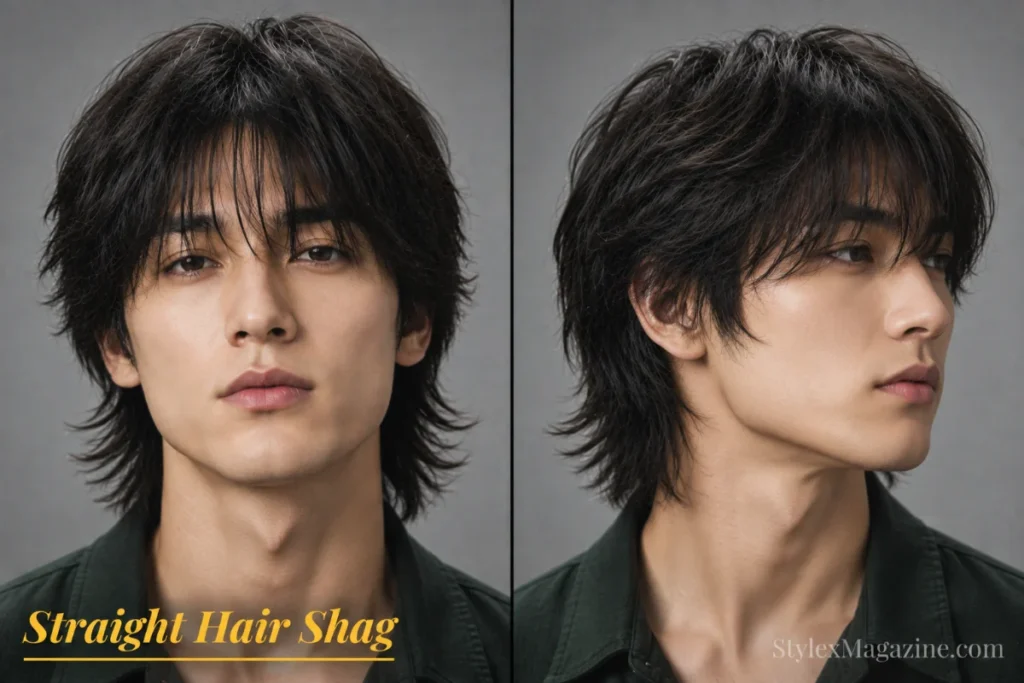
The shag haircut for straight hair relies entirely on cutting technique. Razor work and deep point-cutting carve visible separation into the ends, so layers show clearly instead of collapsing into a flat curtain. The finish sits between sleek and undone. Blow-dry with fingers, tip your head side to side, then break up the ends with texture powder at roots and matte paste at tips.
11. Choppy Shag
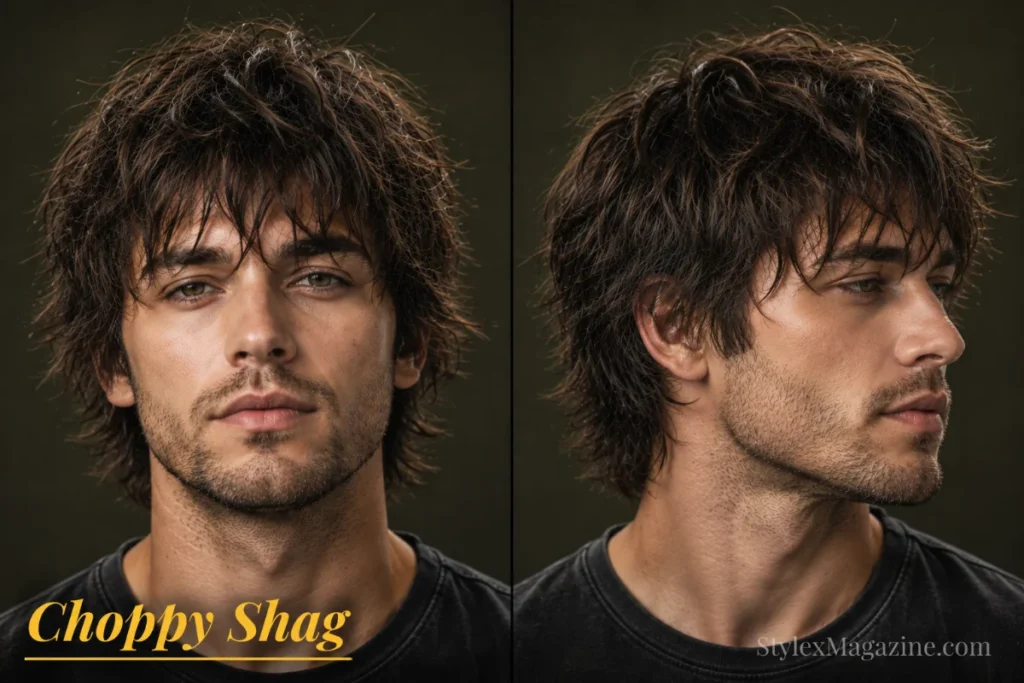
Aggressive point-cut steps that stack in defined pieces rather than soft feathering. Punk-leaning edge. The boldest short-to-medium shag variation. Works best on medium to thick hair. Diamond and heart-shaped faces benefit from the angular texture around the crown. Medium-hold matte clay through dry hair piece by piece, pinching ends to exaggerate the definition.
12. Textured Shag
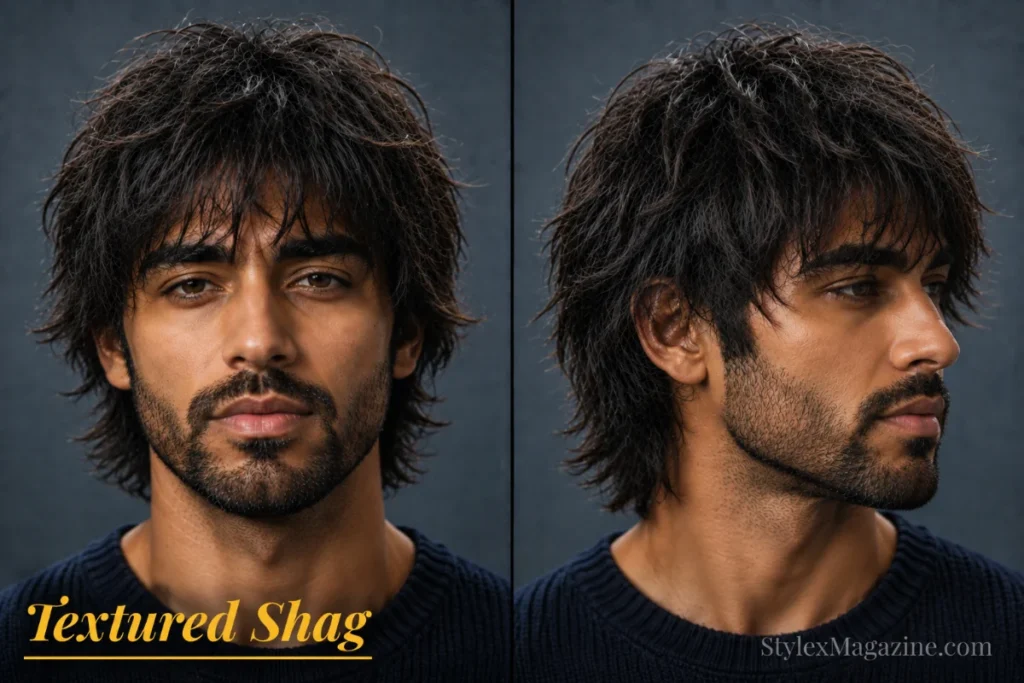
The textured shag should look broken up through the top, pieces falling naturally instead of sitting in one block. The rough, deliberately uneven finish works best with matte product, sea salt spray, or natural wave. One rule: keep shine away. Shiny product turns it from lived-in to greasy instantly. Oval and square faces suit this well. Air dry, pinch pieces apart with a small amount of clay.
13. Messy Shag
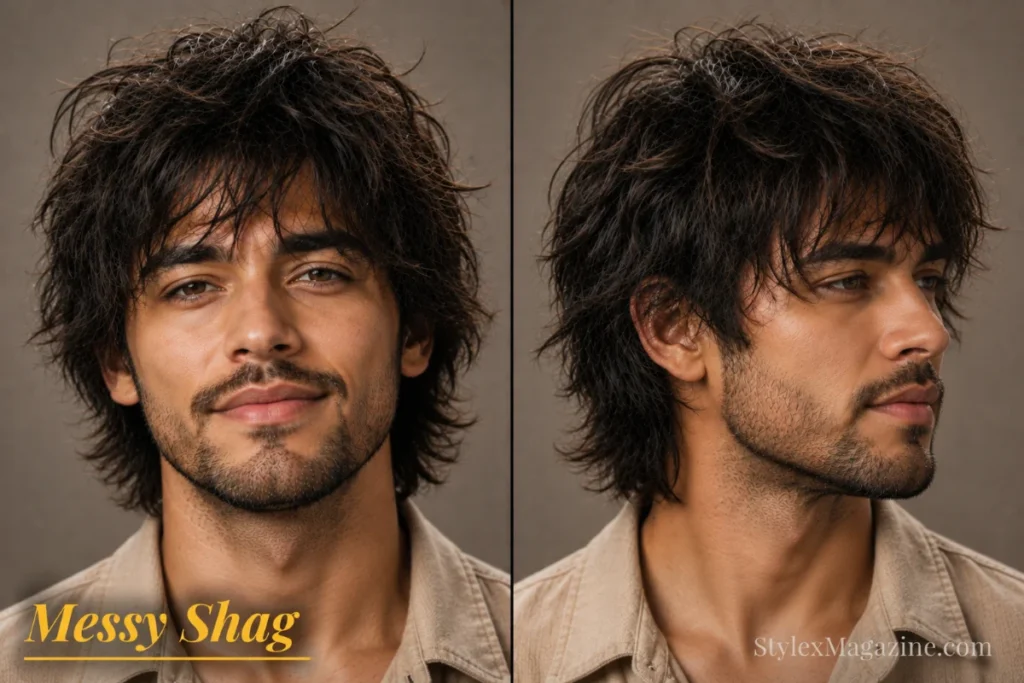
Deliberately undone, layers tossed in mixed directions, slept-on finish. The part most people miss: the cut underneath is precise. The disorder holds a flattering shape because the layering was mapped carefully at the chair. Suits round and square faces. Shake it out with fingers after towel drying, light dry texturizing spray only if the hair needs grip. For men who want fully undone, tousled styles beyond the shag family, messy hairstyles for men covers the full range.
14. Shaggy Mullet
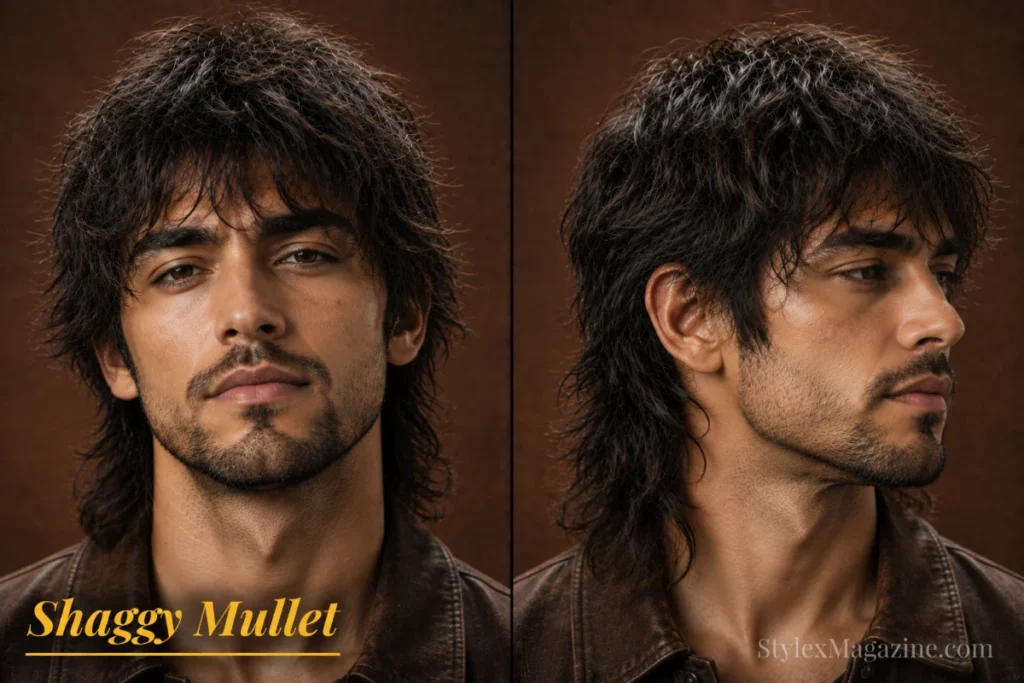
The shaggy mullet softens the traditional mullet’s hard front-to-back contrast by running choppy layers through the entire cut. The longer back connects to the top instead of hanging off it like a separate haircut. Fringe stays textured and forward. Suits oval and square faces well. A strong pick for teens and younger men who want retro edge with modern wearability. Matte paste through top and fringe, back falls naturally.
15. Shaggy Wolf Cut
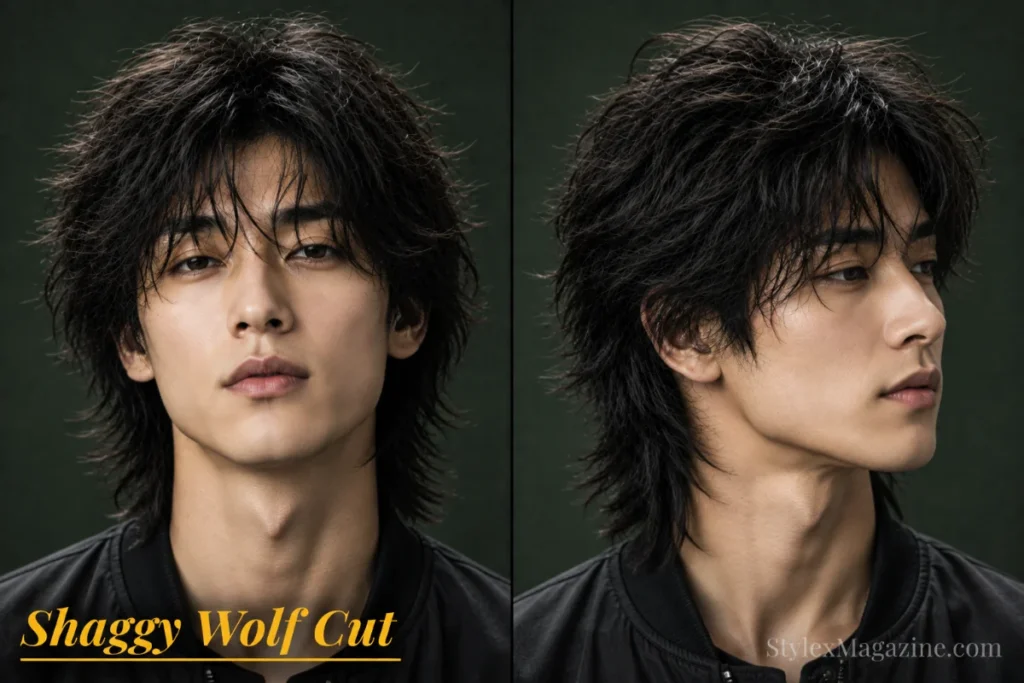
Short, voluminous crown layers with a noticeably longer back. The contrast between the airy top and the heavier back gives a wild, untamed character. Oval and diamond faces carry this shape best. Among the most requested youth cuts since 2024. Thick and wavy hair suit it. Blow-dry the crown upside down for maximum lift, define the back and ends with light texture spray.
16. Curtain Shag
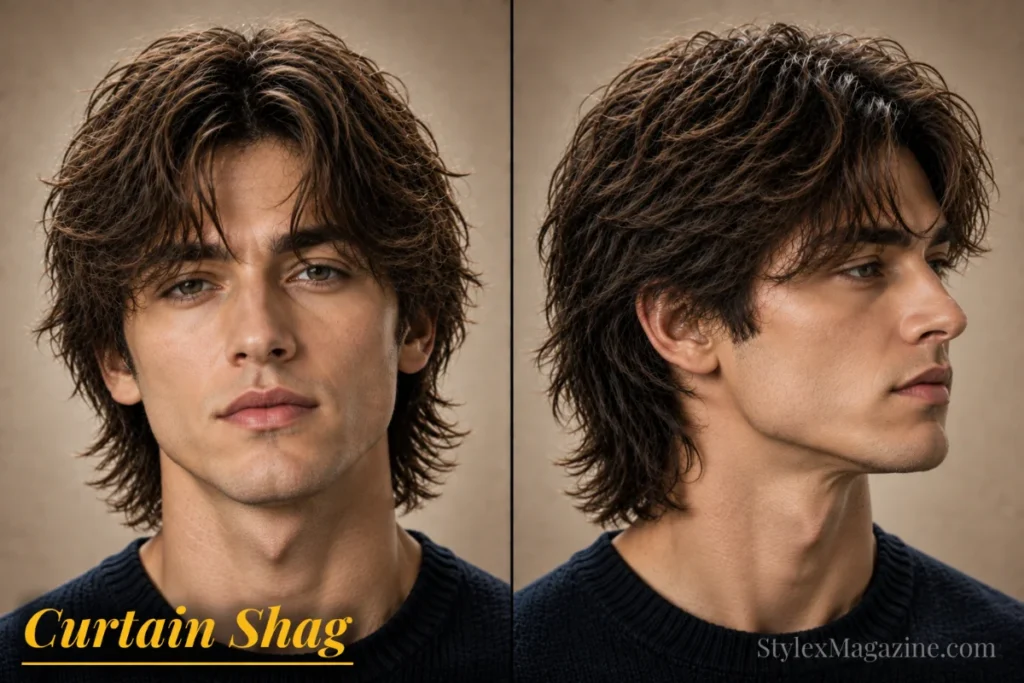
Center-parted fringe falling to each side of the face, blended with shaggy layers through the rest. The center split lengthens the face and softens the forehead. Works across most face shapes but particularly flatters round and square. Popular with boys and teens for its easy, face-framing shape. Blow-dry the front away from the part with a round brush, rake a small amount of leave-in conditioner through the lengths for soft hold.
17. Korean Shag
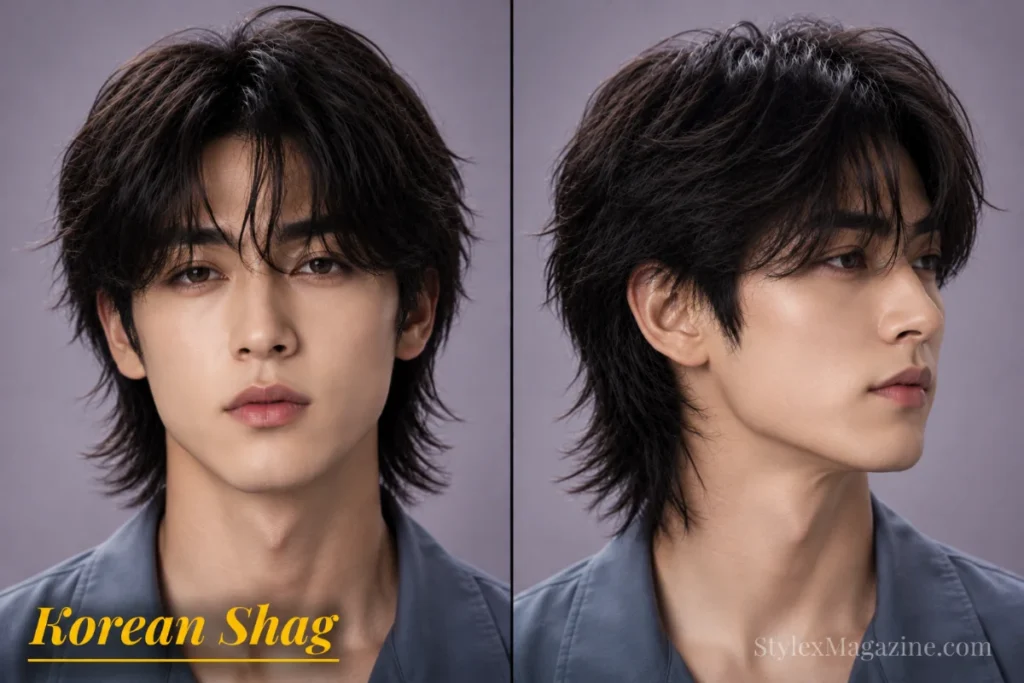
Soft, uniform waves built into the layered structure, producing the airy, full volume that defines current K-style looks. Gives straight, dense hair the bend it needs to fill the layers. The fringe stays full and slightly see-through. Light cream or small amount of styling clay on damp hair, air dry. Suits oval, heart, and diamond faces particularly well.
18. 70s Rock Shag
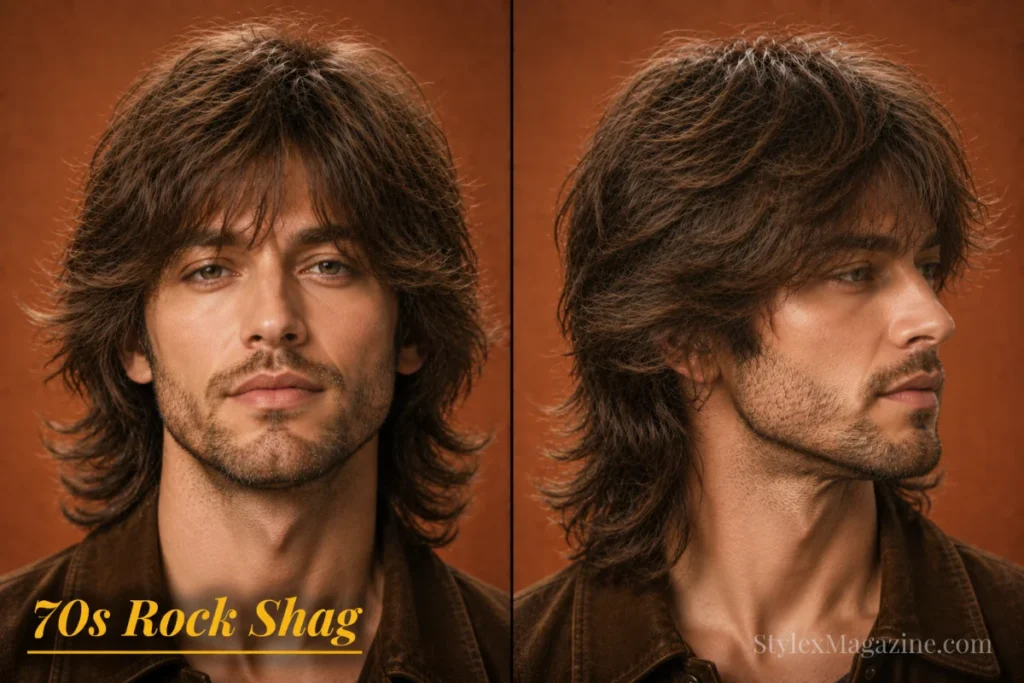
Full revival. Dramatic feathering, heavy brow-length fringe, rounded crown volume. Channels Jagger and Bowie without apology. Layers sit shorter and denser at the crown than modern versions, creating that unmistakable rounded, rock-and-roll top. Blow-dry upside down for height, shake everything into place, resist the urge to neaten with a comb.
19. Shag with Bangs
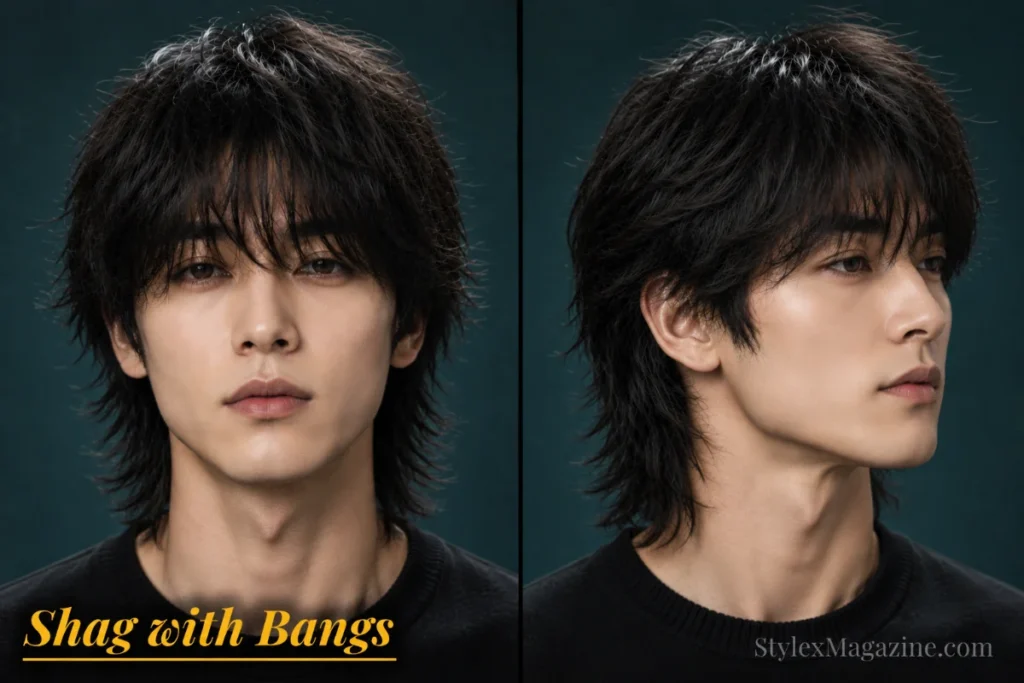
Heavy, broken-up fringe falling to the brow while shorter layers move through the rest. The eye-skimming front adds focus and frames the face, and the texture prevents it from looking like a solid block. Works on straight, wavy, or thick hair. A good option for boys wanting a bold, face-framing shaggy haircut. Blow-dry fringe forward, define pieces with light paste.
20. Shag with Beard
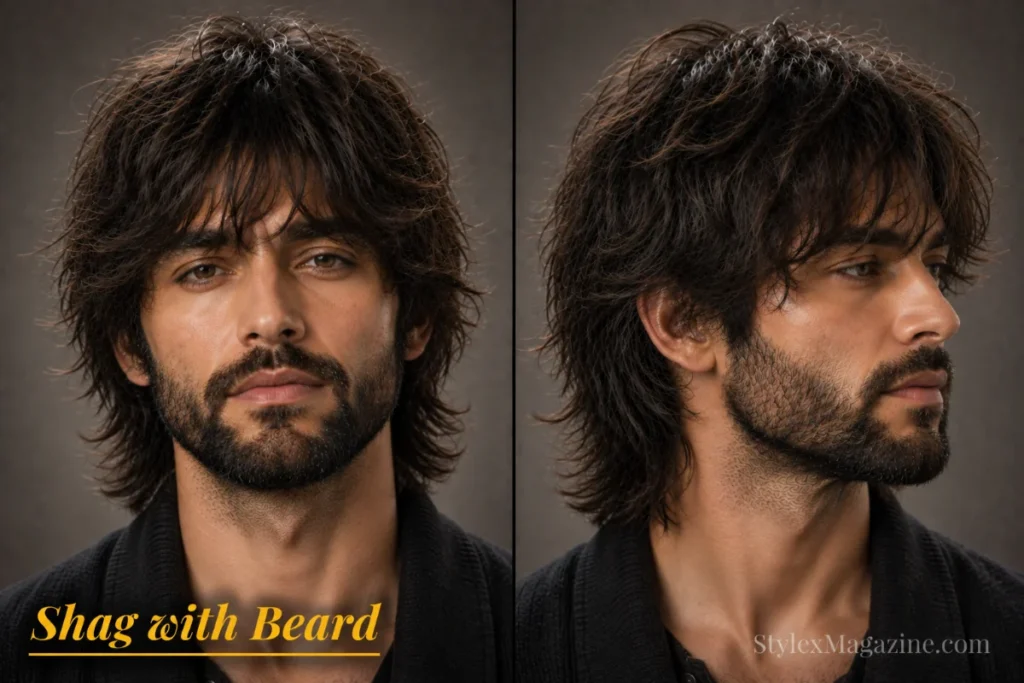
Loose layered top paired with structured facial hair. The beard anchors the shag’s softness, adds jawline definition, keeps the overall look masculine. Works particularly well on round and oval faces where the beard adds structure the shag softens. Keep the sideburn transition blended so the two connect rather than sit as separate zones. A lightweight smoothing balm for the hair, beard trimmed at cheek lines, beard oil daily.
21. Thick Hair Shag
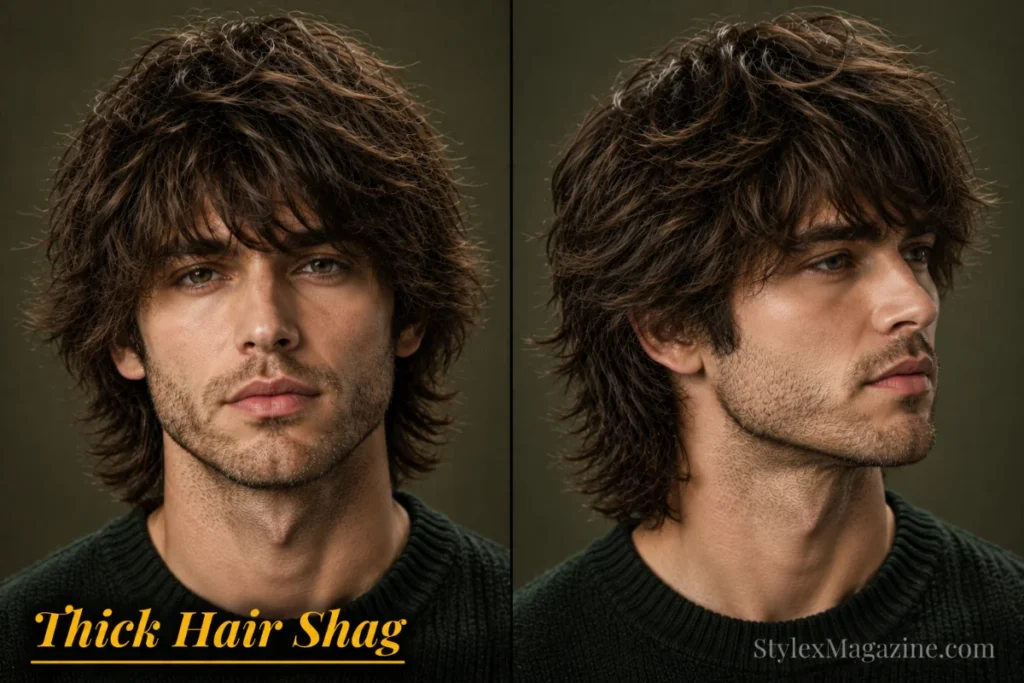
Deep interior layering strips weight out of dense hair, turning bulk into controlled, directional volume. Without the layers, thick hair at shag length balloons outward. With them, it moves. Ends stay point-cut so the density tapers visually. Ask for weight removal through the interior, not thinning shears on the surface. Surface thinning causes frizz and puff within a week.
22. Fine Hair Shag
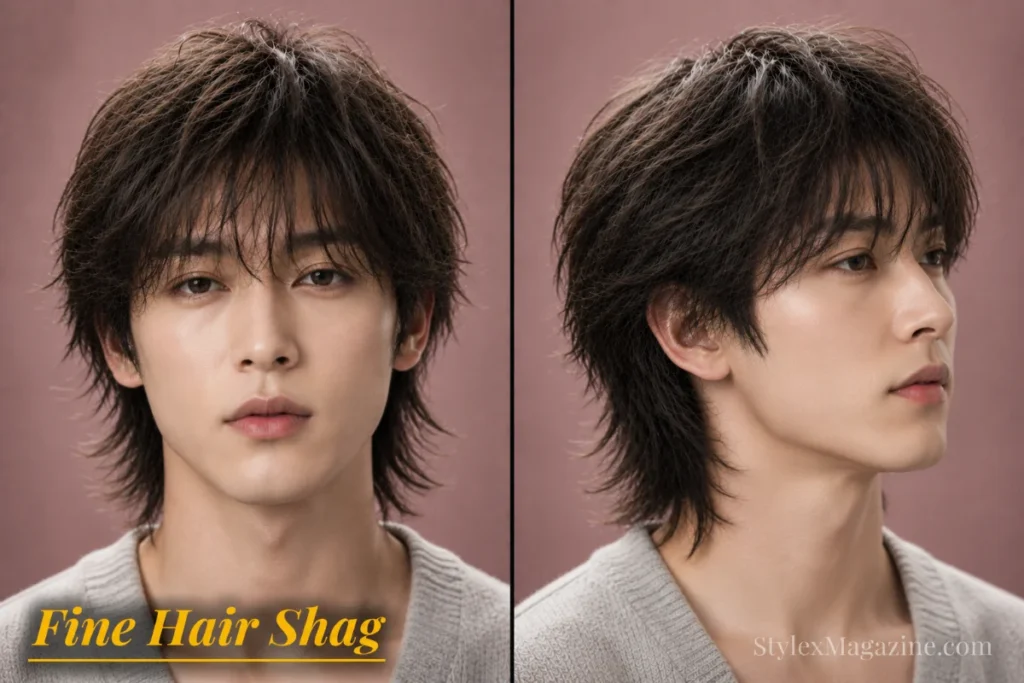
Longer, softer layers with minimal thinning preserve every bit of the hair’s density while still adding shape. Shorter crown layers create lift at the root that gives the appearance of fullness. Feathered ends disguise how little bulk the hair carries. Blow-dry head flipped forward, volumizing texture spray at roots. Over-layering fine hair exposes the scalp, so name your density concerns before the cut begins. If you work with thin straight hair, short-to-medium shag lengths perform better.
23. Surfer Shag
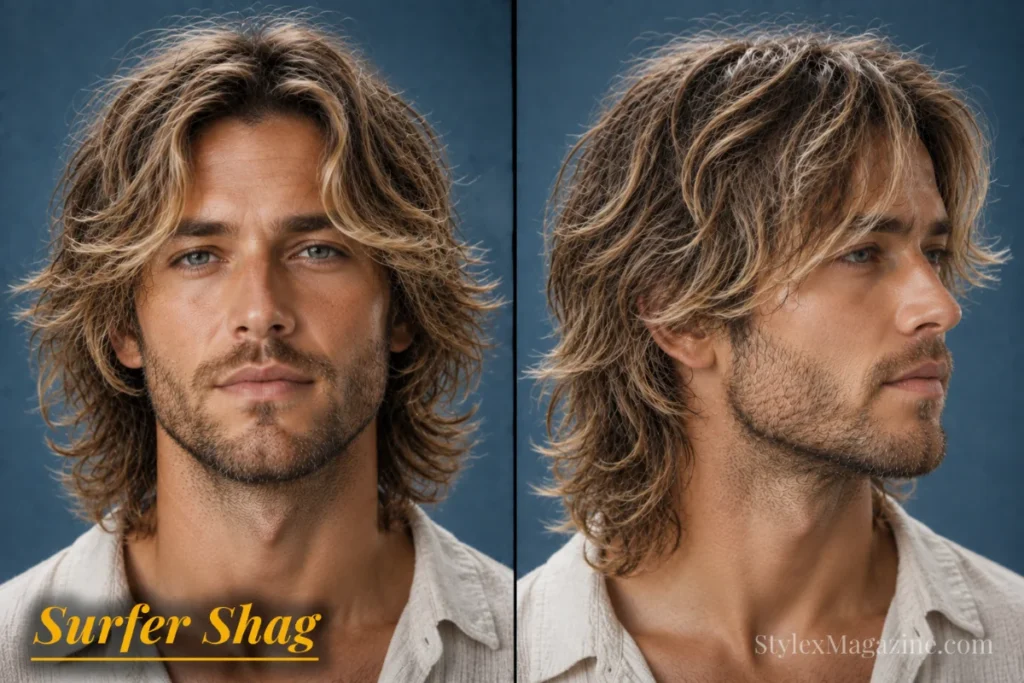
Salt-and-sun aesthetic. Tousled beachy layers, natural-looking lightened ends, loose fringe pushed off the face. The texture looks ocean-made even when it isn’t, thanks to choppy cuts and salt spray standing in for the real thing. Sea salt spray into damp hair, air dry completely, rough up once with fingers. This variation crosses into its own territory. A dedicated surfer haircut for men guide covers the full range of beach-inspired cuts.
24. Shaggy Crop
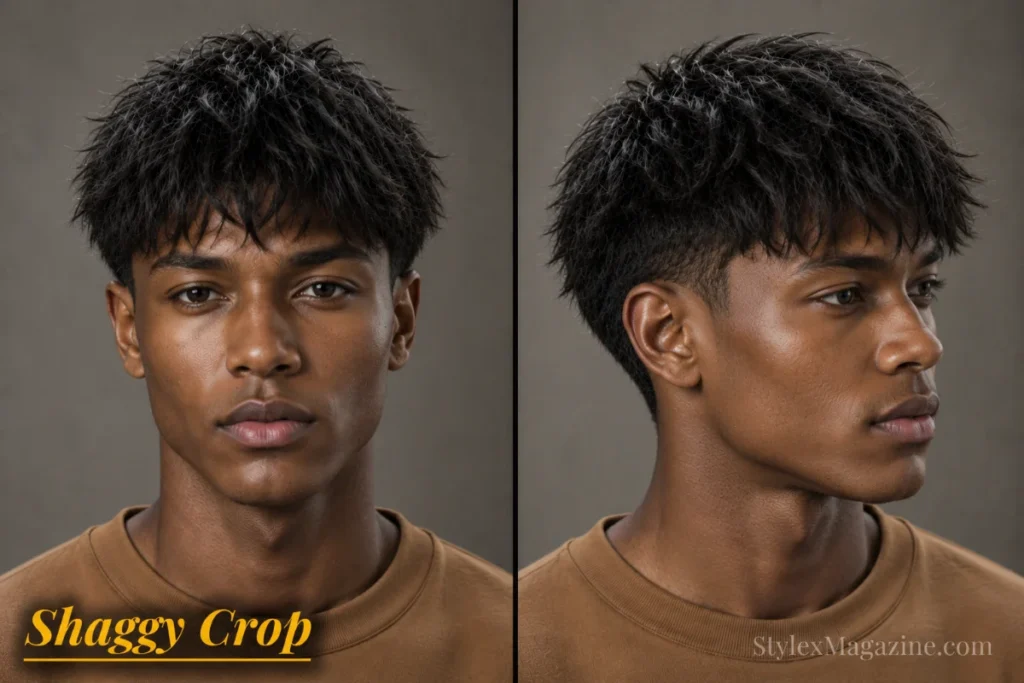
Borrows the French crop’s compact frame and roughens it up. Sharp blunt fringe replaced with a broken, textured one. Choppy layers through the short top. Sides stay neat but scissor-soft rather than faded. Suits square and oval faces. Texture in the tidiest possible package. One of the best low maintenance shaggy haircuts for men who want minimal daily effort. Matte clay in small pinches, fringe pushed forward and slightly off-line.
25. Shaggy Undercut
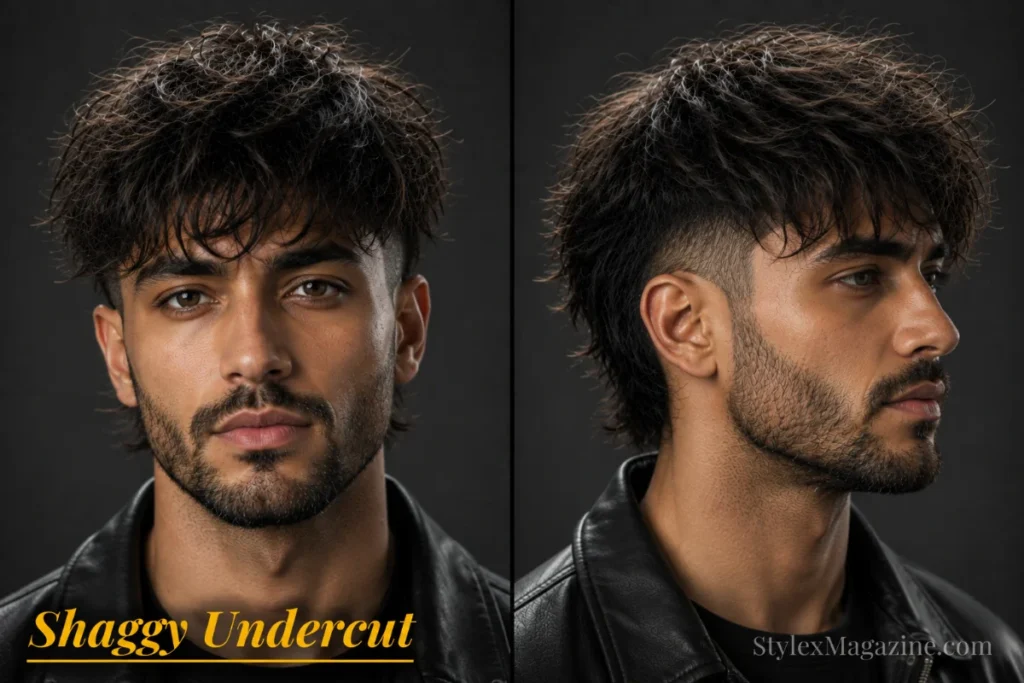
Buzzed or closely cropped sides with full, textured shag layers on top. The contrast between tight sides and the loose, layered crown creates a sharp silhouette for both casual and semi-formal settings. The top needs to connect to the sides through a gradual transition, not a hard disconnect. If the top is too long and the sides too tight, the two halves look like separate haircuts. Suits oval, diamond, and square faces. Towel dry the top, lift with fingers, then pinch a small amount of styling clay through the layers for definition.
Shag vs Wolf Cut vs Mullet: What’s the Difference?
All three share layers and texture, but they distribute weight and length in completely different ways.
| Shag | Wolf Cut | Mullet | |
|---|---|---|---|
| Layer distribution | Even all around | Crown-heavy, long back | Short front, long back |
| Silhouette | Rounded, soft | Wild, top-heavy | Front-to-back contrast |
| Length sweet spot | Any | Medium to long | Medium to long |
| Best hair type | All types | Thick, wavy | Straight, wavy |
| Trim frequency | 6-8 weeks | 6-8 weeks | 4-6 weeks |
| Vibe | Relaxed, textured | Rebellious, bold | Retro, statement |
The shag distributes layers evenly, so the entire cut moves as one shape. The wolf cut front-loads volume at the crown and lets the back run longer. The mullet drops the back dramatically while keeping the front structured. If you are trying a layered, textured cut for the first time, start with a standard shag. You can push the proportions toward wolf cut territory later.
How to Ask Your Barber for a Shag Haircut?
Name the specific variation, bring a reference photo that matches your hair texture, and set three length boundaries before scissors touch hair.
- Name the variation and the era. “Modern shag,” “70s shag,” “shaggy crop,” or “curtain shag” narrows it immediately. Just saying “shaggy” covers fifty years of hair history.
- Bring a photo of someone with your hair type. A shag on thick wavy hair looks nothing like the same cut on fine straight hair.
- Set three length anchors. Fringe (brow, eye, or cheekbone), ears (covered, half, or exposed), and back (above collar, at collar, or past). These three points define the entire shape.
- Describe layering intensity. Soft blended feathering or choppy visible steps. Soft layering grows out gracefully. Choppy stays bolder but needs more frequent upkeep.
- Ask for point-cutting and razor work. The shag’s broken, feathered finish comes from how the ends are cut. Blunt-cut layers sit as solid shelves instead of feathered movement.
“I want a modern medium shag. Fringe to the eyebrow, ears half-covered, back touching the collar. Soft feathered layers, not choppy. Point-cut the ends and remove weight through the interior so it moves without ballooning at the sides.”
That sentence gives your barber enough to work with on the first visit.
What Goes Wrong with Shaggy Haircuts?
Most bad shags fail in the chair, not in the styling routine.
- Over-thinning the sides. A barber thins the surface to “lighten it up,” and the client leaves with sides that puff out like cotton within a few days. Weight removal should always happen deep inside the cut, not on the surface layer. I’ve fixed more shags ruined by surface thinning than any other single mistake.
- Cutting a blunt fringe. A solid-block fringe fights the shag’s entire premise. The fringe needs broken-up, wispy texture that blends into the rest of the layers. A hard straight line across the forehead turns a shag into a bowl cut with extra steps.
- Using shiny product. Pomade, gel, or anything with visible gloss makes shaggy hair look greasy and flat. Matte is the only finish that works. The shag needs grip and texture, not a sealed, reflective surface.
- Confusing grown-out hair with a shag. A shag has layers placed with intent and weight removed from specific zones. Skipping three months of appointments produces a shapeless mass that sits heavy around the ears and flat on top. If you are growing out a buzz cut, crew cut, or crop and want a shag as your transition target, book a shaping appointment once you have three inches on top. A barber can start building the layered framework while the rest catches up.
- Trimming the fringe too short. A shag fringe sits heavier and longer than a standard fringe. Cutting it back to eyebrow-neatness every few weeks slowly converts the shag into a generic layered cut. Let the front live between the brow and the lashes, trim the rest around it.
How Often Should You Trim a Shag Haircut?
Short shags need reshaping every 4-5 weeks. Medium shags every 6-8. Long shags can stretch to 10 weeks before the shape collapses.
| Short Shag | Medium Shag | Long Shag | |
|---|---|---|---|
| Full reshape | Every 4-5 weeks | Every 6-8 weeks | Every 8-10 weeks |
| Crown refresh (optional) | Not needed | Midpoint (week 3-4) | Midpoint (week 4-5) |
| Daily styling time | 2-3 minutes | 3-5 minutes | 5-7 minutes |
| Key products | Matte clay, texture powder | Sea salt spray, light cream | Leave-in conditioner, cream |
| Grow-out tolerance | Low (loses shape fast) | Medium (softens gradually) | High (grows out naturally) |
Signs it’s time: fringe drops into your eyes, layers lose definition, sides start to balloon outward. If only the crown feels flat but the rest looks good, ask for a crown layer refresh instead of a full reshape. Ten minutes of point-cutting at the crown restores most of the volume.
Washing and conditioning: Shampoo two to three times per week with a gentle formula to preserve the natural oils that help the texture hold. Condition every wash. Layered, feathered ends dry out faster than blunt-cut hair, so a lightweight leave-in conditioner twice a week keeps them soft. Fine hair does better with volumizing formulas; thick and curly hair benefits from richer conditioners.
Heat and color care: If your shag involves highlights, a perm, or regular blow-drying, add a heat protectant before the dryer and a conditioning treatment once a week. Point-cut, razored ends show damage faster than blunt cuts.
FAQs About Shaggy Haircuts for Men
Should you wash your hair before a shag haircut appointment?
Show up with clean, product-free hair. Buildup from wax, clay, or dry shampoo changes how the hair sits and hides its natural fall pattern. Your barber needs to see the real texture and density to place layers correctly.
Can a barber fix a bad shag without cutting it all short?
In most cases, yes. If the issue is over-thinning, the barber can reshape the remaining length by adjusting the layer pattern and letting thinned sections fill in over 4-6 weeks. If the fringe was cut too short, the rest of the cut can be trimmed to rebalance while the front grows.
Does a shag haircut work with glasses?
Frames sit right where the shag’s fringe and side layers live, so the pairing matters. Thicker frames handle a heavier, textured fringe well. Thinner wire frames pair better with a softer, wispier fringe that does not compete for attention.
Can you tie a shag back for sports or the gym?
Medium and long shags pull into a low bun or half-up style with a few shorter face-framing pieces escaping at the front. Short shags stay loose, so a headband or sweatband keeps the fringe off the face during workouts. Avoid tight elastic bands that crease and break the feathered ends.
Can you perm straight hair to create shag texture?
A loose body wave or digital perm adds the natural bend that straight hair lacks for a shag. The perm gives layers something to hold onto, so the cut stays fuller between trims. Ask for a wave pattern rather than tight curls, and schedule the perm before the shag cut so the barber layers around the new curl pattern.

25 Best Messy Hairstyles for Men In 2026
20 Best Caesar Haircuts For Men In 2026.
No Comment! Be the first one.