
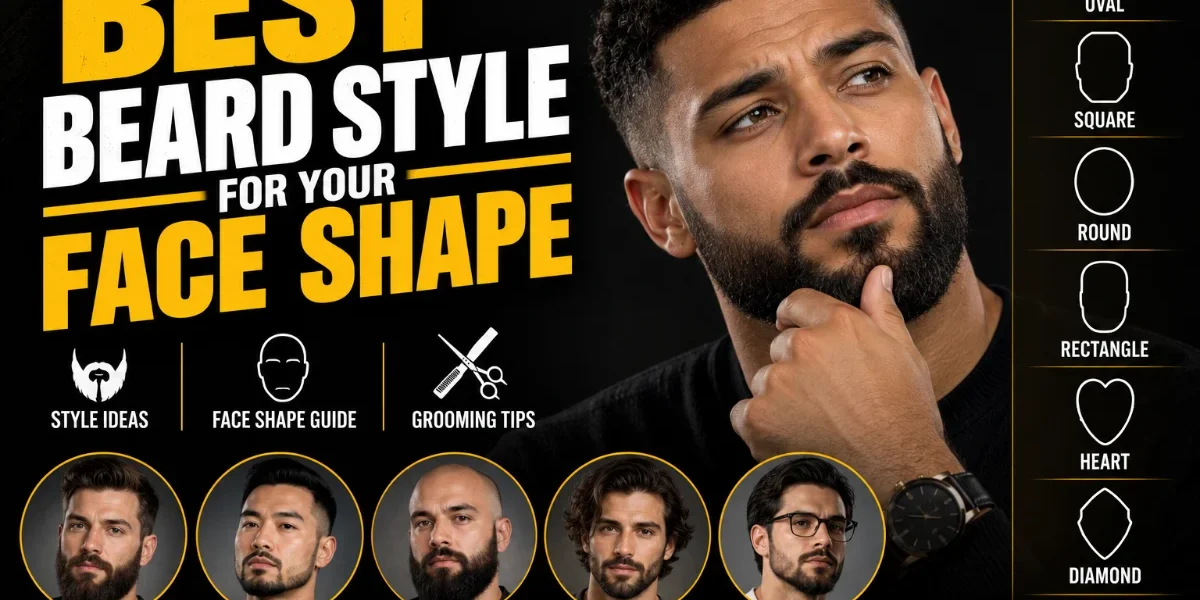

Quick Answer: Every beard recommendation works toward one aim: moving your face closer to oval proportions. Round faces need chin length. Square faces need softer edges. Oblong faces need side width. Heart and diamond faces need jaw volume. The table below matches each face shape to the beard styles that balance it.
| Face Shape | Best Styles | Avoid | Goal |
|---|---|---|---|
| Oval | Almost anything: full beard, stubble, short boxed | Extremely bushy or formless growth | Maintain balance |
| Round | Goatee, Van Dyke, anchor, ducktail | Full round beards, mutton chops | Add chin length, create angles |
| Square | Circle beard, rounded full beard, Balbo | Sharp angular beards, chin straps | Soften angles |
| Oblong | Full beard (wide sides), mutton chops, stubble | Long goatees, pointed chin styles | Add width, reduce length |
| Heart | Full beard, Garibaldi, Balbo, beardstache | Pointed goatees, soul patch | Build jaw volume |
| Diamond | Full stubble, rounded beard, chin beard | Wide sideburns, heavy cheek growth | Balance cheekbones |
| Triangle | Short stubble, narrow goatee, clean-shaven | Full wide beard, heavy sideburns | Reduce jaw width |
The difference between a beard that sharpens your face and one that throws it off balance is face shape. The same full beard that makes one man look like a leading character makes another look heavier than he is. The same goatee that elongates a round face will overlengthen an already narrow one.
One principle runs through every recommendation on this page: use the beard to push your proportions toward oval. Oval is the most visually balanced face shape, and every adjustment below works toward that single target. In the chair, I see men with perfectly good beards that fight their face shape rather than working with it. The fix is almost always the same: adjust one variable (chin length, side volume, or edge shaping) and the entire face sharpens.
How Do You Find Your Face Shape?
Stand in front of a mirror with your hair pulled back and look at the overall outline. Compare three things: forehead width vs jawline width, face length vs face width, and jaw angle (sharp or soft). That tells you your shape. If you want precision, the face shape calculator uses your measurements to identify your exact shape.
- Oval: Slightly longer than wide, balanced proportions, gentle jaw curve.
- Round: Equal length and width, full cheeks, soft curved jawline.
- Square: Strong angular jaw, wide forehead, even proportions.
- Oblong: Noticeably longer than wide, similar forehead and jaw width.
- Heart: Wider forehead, narrower chin, sometimes a widow’s peak.
- Diamond: Prominent cheekbones, narrower forehead and jawline.
- Triangle: Widest at the jaw, narrower forehead.
Most men fall somewhere between two shapes. Pick the closest match and use the recommendations as a starting guide. If you sit between round and oval, lean toward the round advice. The recommendations for the more challenging shape will always improve balance more than the advice for the easier one.
Best Beard Styles for Oval Face
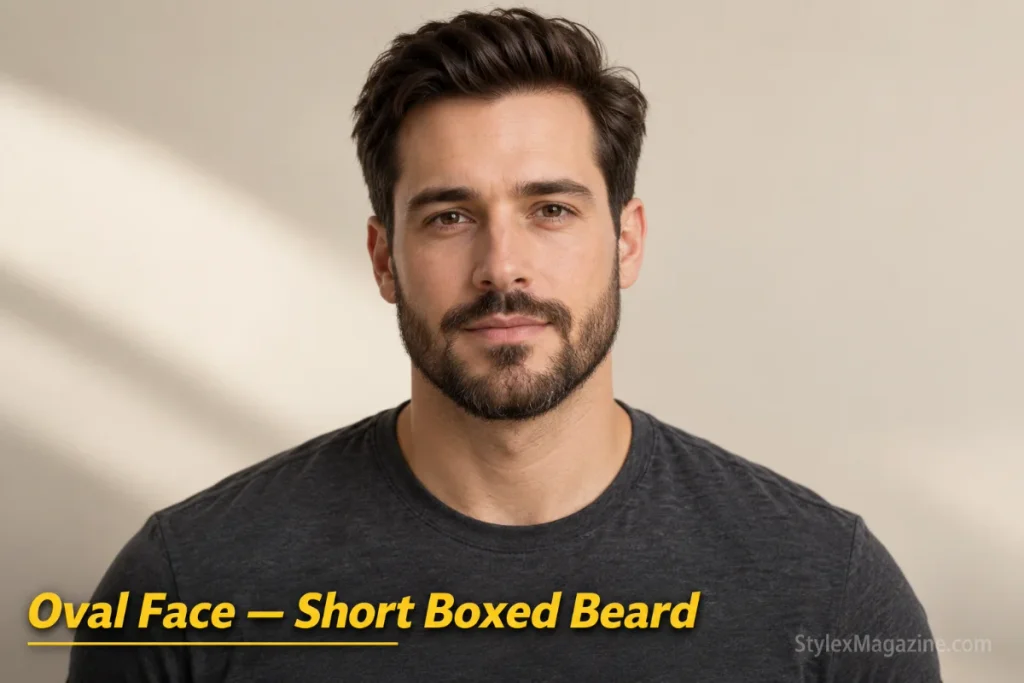
You have the most freedom of any face shape. Balanced proportions mean almost any beard style works without creating imbalance.
Wear:
Full Beard at any length. Keep it groomed with a defined neckline and the oval shape does the rest. See the full beard styles guide for shape variations.
Short Boxed Beard at guard 3-5. Clean defined edges, easy for daily wear, works in any setting.
Heavy Stubble at guard 1-2. The lowest-maintenance option that still adds jaw definition.
Anchor or Balbo. Character-adding styles that work on oval faces because the proportions can absorb anything.
Skip: Unkempt, shapeless growth. Oval faces look sharpest with a defined outline. Unmanaged growth wastes the advantage this face shape gives you.
Tell your barber: “I have an oval face, so I have flexibility. Keep it shaped and groomed with a clean neckline.”
Best Beard Styles for Round Face
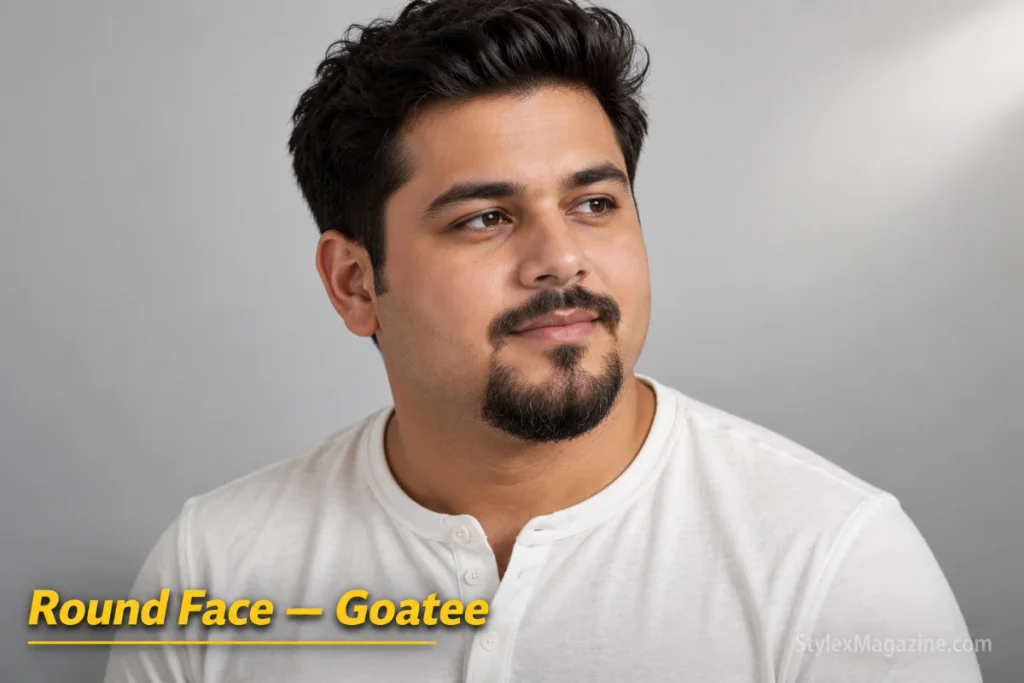
Your beard needs to add vertical length and sharp angles. Keep the sides tight, the chin longer, and avoid anything that adds horizontal width.
Wear:
Goatee with clean cheeks. The single most effective style for round faces. Chin hair only, no side coverage, maximum vertical pull. Guard 3-4 at the chin.
Van Dyke. A pointed chin beard and disconnected mustache create a strong downward visual line. See the Van Dyke beard guide for 15 variations.
Anchor Beard. Pointed chin with a soul patch and thin jawline trace. Angular definition that round faces lack naturally.
Ducktail. A full beard tapered to a point at the chin. Side coverage stays tight while the chin extends. Strong for round-faced men who want more coverage than a goatee.
Skip: Full round beards with equal length everywhere. Mutton chops or heavy sideburns. Both add horizontal width exactly where a round face already has too much.
Tell your barber: “I have a round face. Keep the chin longer, the sides tight, and the edges angular.”
Neckline: Set slightly lower than standard to stretch the lower face vertically.
Best Beard Styles for Square Face
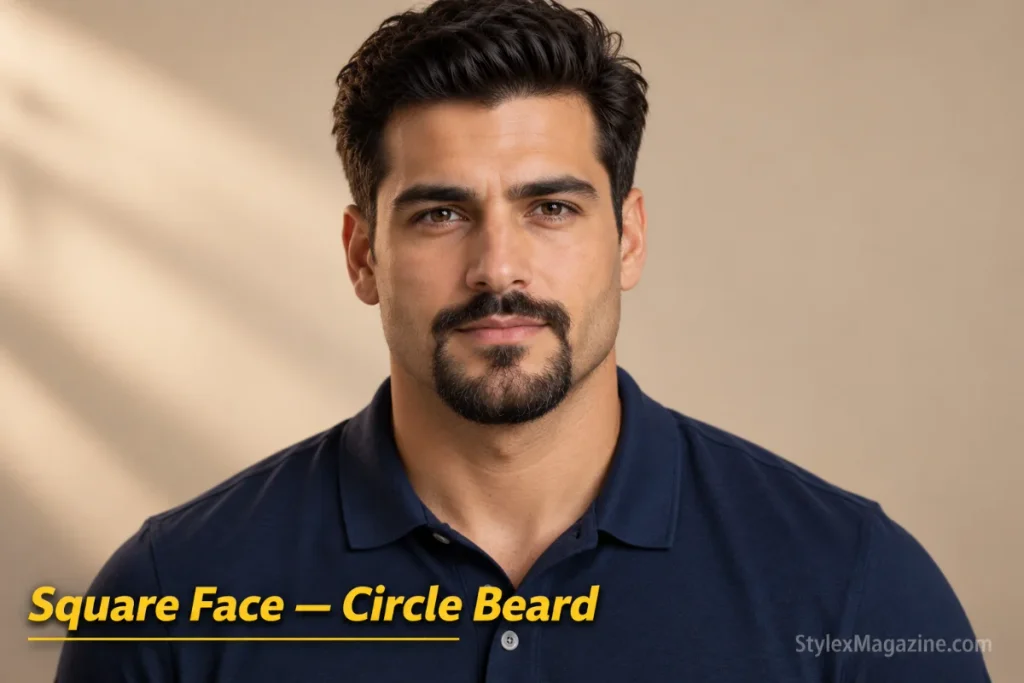
Your jawline is already strong. The beard should soften the angles, not sharpen them. Rounded shapes work. Boxy shapes do not.
Wear:
Circle Beard. A rounded goatee connected to a mustache. The curves counterbalance the sharp jaw angles. The goatee styles guide covers circle beard variations in full.
Rounded Full Beard at guard 4-6. Let it grow full but shape it with rounded edges, not sharp lines. Round the corners where the jawline meets the chin.
Balbo. A floating mustache and chin beard with no sideburns. Draws attention to the center of the face rather than the wide jaw.
Short Stubble at guard 1-2. Preserves the jaw’s natural strength while softening the hard-edged blocky look.
Skip: Sharp angular beard lines that mirror the jaw. Chin straps (they trace the already-prominent jawline and make it look wider). Heavy sideburns.
Tell your barber: “I have a square face. Round the edges, soften the corners, no sharp lines.”
Best Beard Styles for Oblong Face
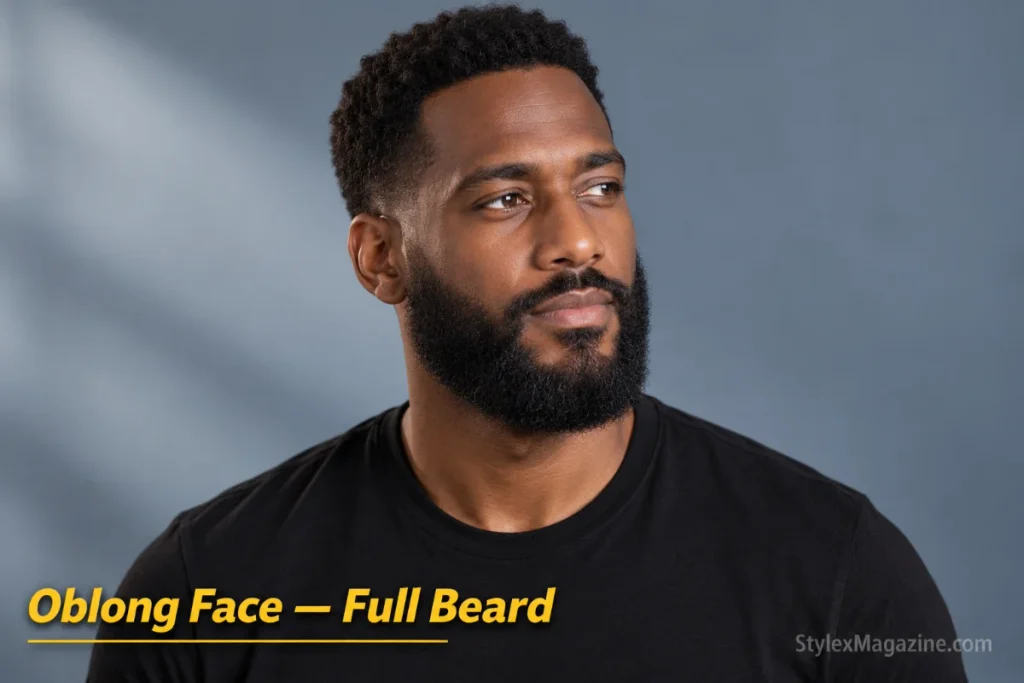
The opposite of a round face: you need width, not length. Fuller sides, shorter chin, and styles that add horizontal emphasis.
Wear:
Full Beard with Strong Sides. Let the sides grow fuller while keeping the chin trimmed shorter. The horizontal volume at the cheeks creates the width this face shape needs.
Mutton Chops. Wide sideburns that add pronounced horizontal width. Bold but highly effective for narrow faces. See the mutton chops styles guide for variations.
Short Boxed Beard with full sides. Unlike on round faces, oblong faces benefit from allowing the sides to grow fuller.
Short Stubble. Uniform stubble prevents the beard from adding vertical length while maintaining a groomed look.
Skip: Long goatees. Pointed chin styles. Ducktails. Anything that extends the chin downward adds more length to an already long face.
Tell your barber: “I have a long face. Keep the sides fuller, the chin shorter, and add width.”
Neckline: Slightly higher than standard to visually shorten the face length from below.
Best Beard Styles for Heart Face
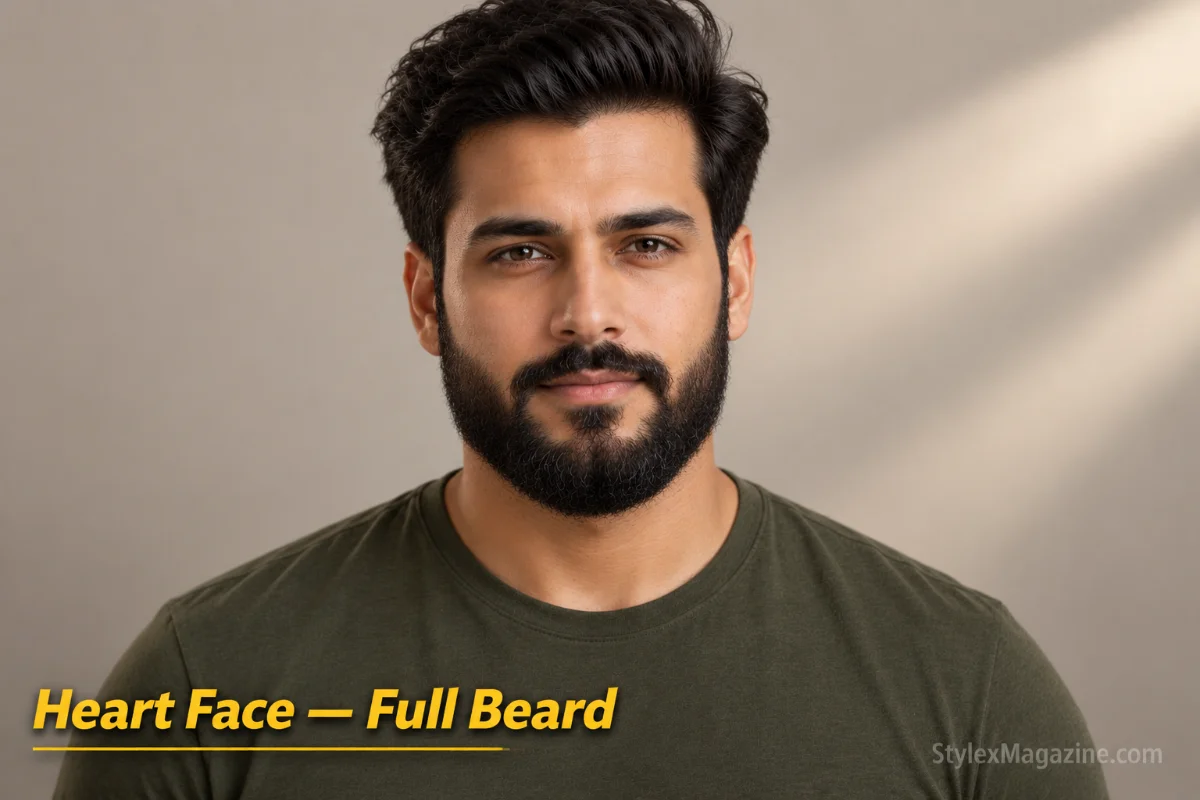
Wide forehead, narrow chin (also called an inverted triangle). The beard must build volume at the jaw to balance the top. Fuller styles that add chin and jaw width work best.
Wear:
Full Beard at guard 4-6. Adds mass across the jaw and chin, creating visual balance with the wider forehead. Keep the cheeks slightly shorter than the chin.
Garibaldi. A full, wide, slightly rounded beard that stops at about 20cm and has a natural rounded bottom edge. The wide base adds noticeable width to the chin area, directly addressing what heart-shaped faces lack.
Balbo. A floating mustache and chin beard. Adds width specifically to the chin while keeping the cheek area clean.
Beardstache. A thick mustache over stubble. Shifts the visual center from the forehead to the mid-face.
Skip: Pointed goatees (narrow the chin further). Soul patches (too minimal to balance the forehead). Styles that draw the chin to a point.
Tell your barber: “I have a heart-shaped face. Build volume at the jaw, keep cheeks moderate, add width at the chin.”
Best Beard Styles for Diamond Face
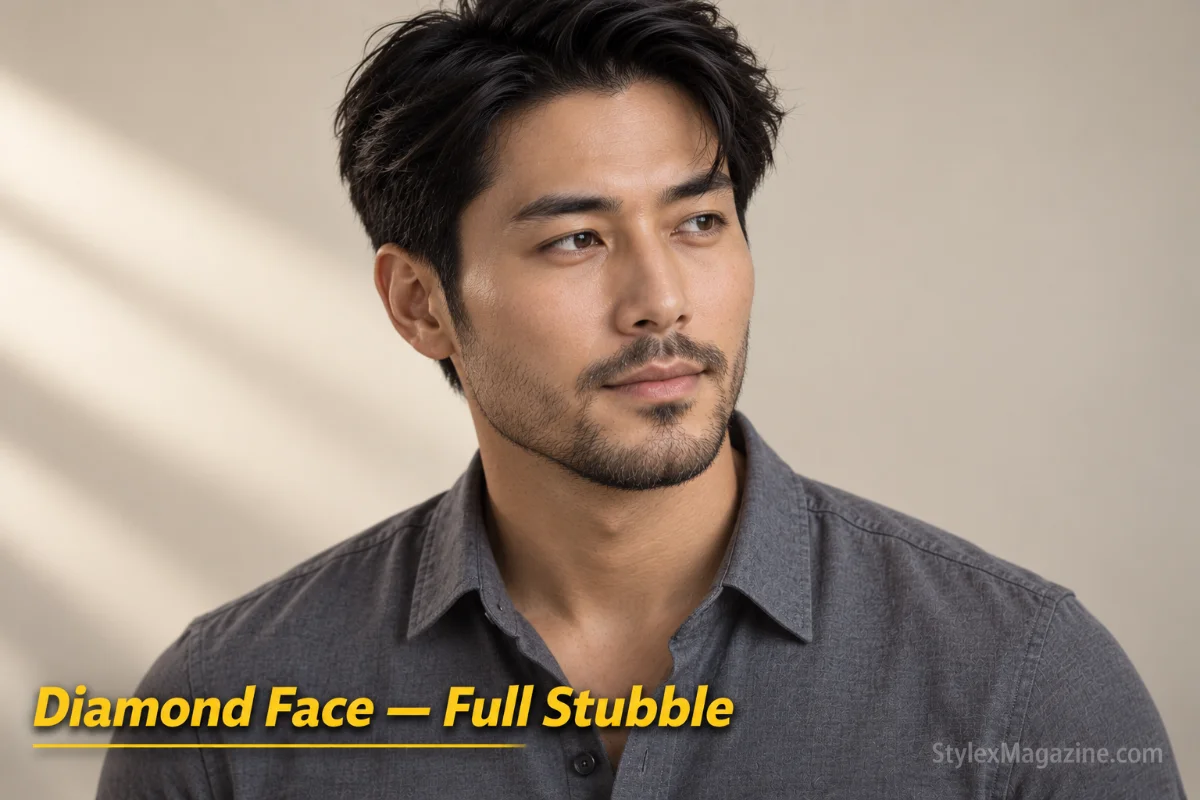
Cheekbones are the widest point. The beard needs to strengthen the jaw without adding more width at the cheeks. Chin-focused styles with minimal cheek coverage.
Wear:
Full Stubble at 5mm. A natural look that subtly enhances the jawline without overwhelming the angular features.
Garibaldi or Rounded Full Beard. The Garibaldi’s wide rounded base builds volume below the cheekbones, balancing the narrow jaw against the prominent cheekbones from below.
Chin Beard with Mustache. Targeted coverage at the chin adds the definition the narrow lower face needs.
Anchor Beard. Creates strong jawline definition that counters the narrow chin.
Skip: Wide sideburns or heavy cheek growth (adds width at the already-widest point). Narrow pointed goatees (emphasize the pointed chin).
Tell your barber: “I have a diamond face. Keep cheeks minimal, build volume at the chin and jaw.”
Best Beard Styles for Triangle Face
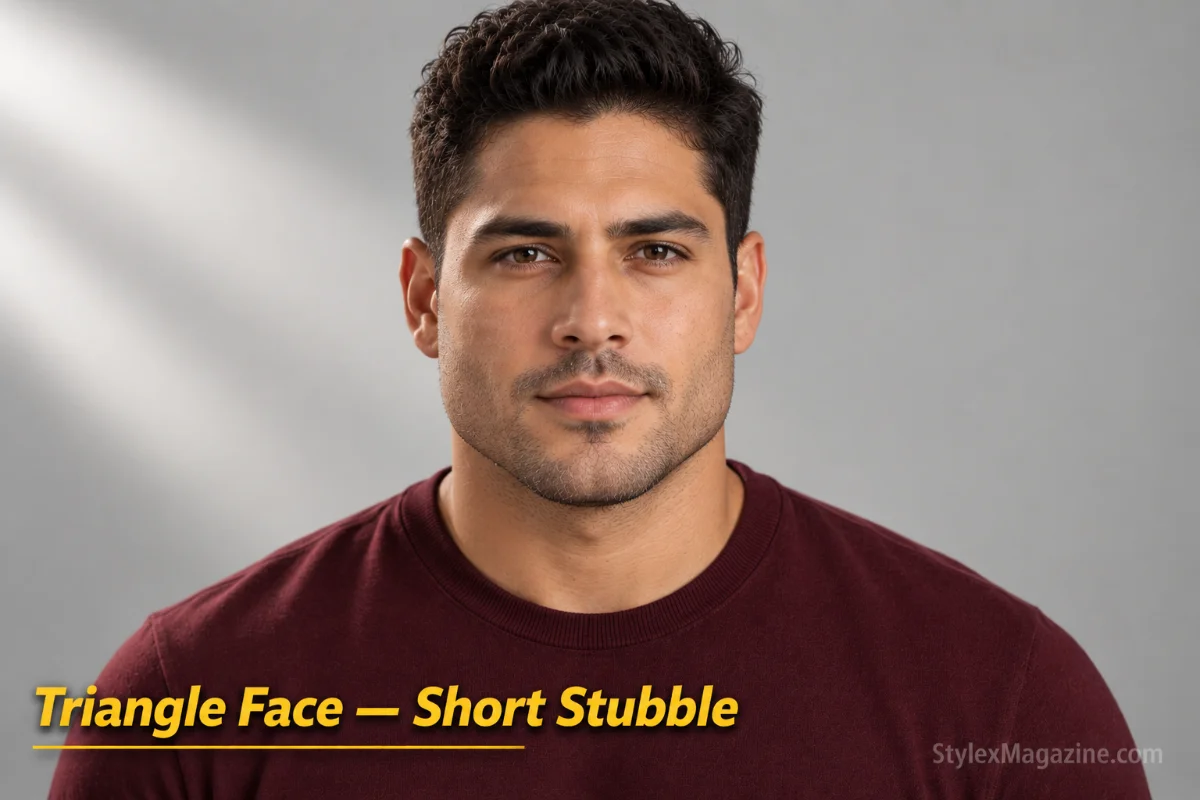
Widest at the jaw, narrower at the forehead. The beard must not add more jaw width. Short, close-trimmed styles or clean-shaven.
Wear:
Short Stubble. Minimal coverage that adds definition without any width to the already-dominant jaw.
Narrow Goatee. Chin-focused, keeps attention central rather than emphasizing lateral jaw width.
Beardstache. A thick mustache with stubble draws the eye upward toward the mid-face, away from the wide jaw.
Clean-Shaven. For triangle faces with a very strong jaw, removing beard coverage entirely is often the most balanced option.
Skip: Full wide beards. Heavy sideburns. Mutton chops. Anything that adds mass at the sides of an already-wide jaw.
Tell your barber: “I have a triangle face. Keep everything close, no width at the sides, draw attention upward.”
What If Your Beard Grows Patchy?
Face shape still matters when your growth is uneven. The principle stays the same: choose a style that pushes your face toward oval proportions, then pick from the options that work within your growth pattern.
Patchy cheeks with a strong chin: any goatee variation, Van Dyke, anchor, or chin strap works regardless of face shape.
Patchy everywhere: stubble at guard 0.5-1 turns thin spots into texture. The shorter the length, the denser it appears.
Dense chin, weak sides: extended goatee or Balbo. Both use the strongest growth zones and shave the weak ones.
For the full patchy beard guide, see the short beard styles article, which covers guard lengths and patchy-friendly variations in detail.
FAQs
What is the most flattering face shape for a beard?
Oval. Balanced proportions mean almost any style works. Square faces are a close second because the strong jawline gives the beard a defined foundation. Every other face shape benefits from strategic style selection to balance its proportions.
Can the wrong beard make your face look worse?
A round beard on a round face adds more roundness. A long goatee on an oblong face stretches it further. A full wide beard on a triangle face exaggerates the jaw’s dominance. The wrong style amplifies whatever imbalance your face shape already has.
Does a beard change your face shape?
The bone structure stays the same. The apparent silhouette of the lower face changes entirely. Density, length, and edge shaping can add visual length, add width, or soften angles depending on how they are applied.
Should the beard and haircut work together?
The haircut frames the skull. The beard frames the jaw. When both work toward the same proportional goal, the effect compounds. A round face benefits from a high fade (adds height) paired with a goatee (adds chin length). Both push the face toward oval from different directions.
How long should I wait before judging if a beard style suits my face?
Four to six weeks of growth before shaping. Most beards look patchy and uneven in the first month. The true density and coverage only become clear after that. Grow the full coverage first, then shape the style around what grew in.
What is the best beard for a double chin?
A beard kept shorter directly under the chin with more length and fullness along the jawline. The sharp jawline coverage draws the eye outward rather than downward. A defined neckline is critical: set it at or slightly above the standard two-finger point so the beard does not blend into the neck and make the area look heavier. A short boxed beard or shaped full beard with a precise neckline are the strongest options.
Can a beard make your face look thinner?
Keeping the sides shorter and the chin longer creates a narrowing, elongating effect. This is the same principle used for round faces: vertical emphasis at the chin, minimal width at the cheeks. A goatee, Van Dyke, or ducktail shaped longer at the chin and tighter on the sides will slim the apparent width of any face.

Other Articles
How to Trim a Beard at Home: Step-by-Step Guide (2026)
15 Best Mutton Chops Beard Styles in 2026
[…] Three things: what beard style suits your face shape, where your neckline should sit, and how often to come back based on your growth speed. A reference photo removes most miscommunication. For specific face shape and style recommendations, see best beard for your face. […]