
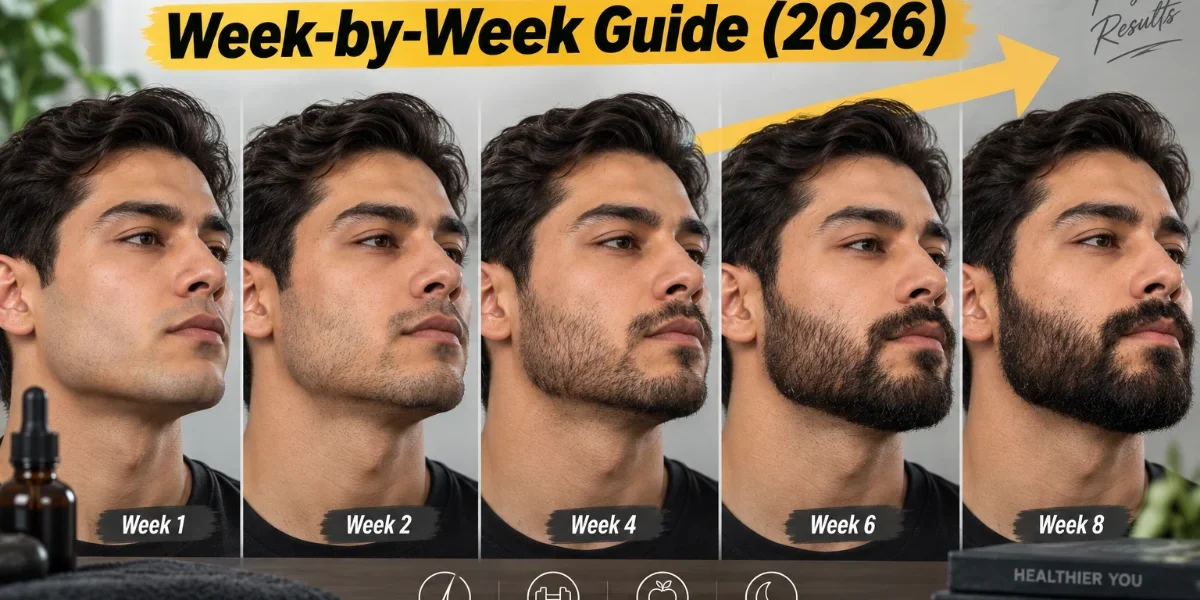

Quick Answer: Stop shaving and give it a minimum of eight weeks before you judge the result. Beard growth rate is genetic and cannot be meaningfully accelerated by any product. What you can control is the itch, the dryness, the flaking, and the neckline. Solving those four things is how men get through the ugly phase that makes most of them quit.
Most men who tell me they cannot grow a beard have never tried for longer than two weeks. They hit the itch, saw the patchiness, and shaved it off. Then they spent the next five years telling themselves their genetics would not allow it.
I have shaped thousands of beards. The pattern is always the same: the beard that looked hopeless at week two looked presentable at week six and looked good at week ten. The men who failed did not lack follicles. They lacked a plan for getting through the weeks where it looks worst.
What Determines Beard Growth?
Genetics and age. Testosterone converts to DHT (dihydrotestosterone), and DHT signals facial follicles to produce thick, pigmented terminal hair instead of the fine, colorless hair you had as a teenager. But the amount of DHT in your system matters less than how sensitive your individual follicles are to it, and that sensitivity is inherited.
Two men with identical hormones can have completely different beards. One fills in at nineteen. The other is still patchy at twenty-five. Neither has a deficiency. Their follicles simply respond differently to the same signal.
Age keeps working in your favor. Beards continue developing through the twenties and into the thirties. Follicles that produced only thin vellus hair (the fine, colorless fuzz) at twenty-two can convert to full terminal growth by twenty-eight. A failed attempt in college is not a permanent verdict.
Beard Growth Stages Week by Week
Days 1 to 7: Stubble
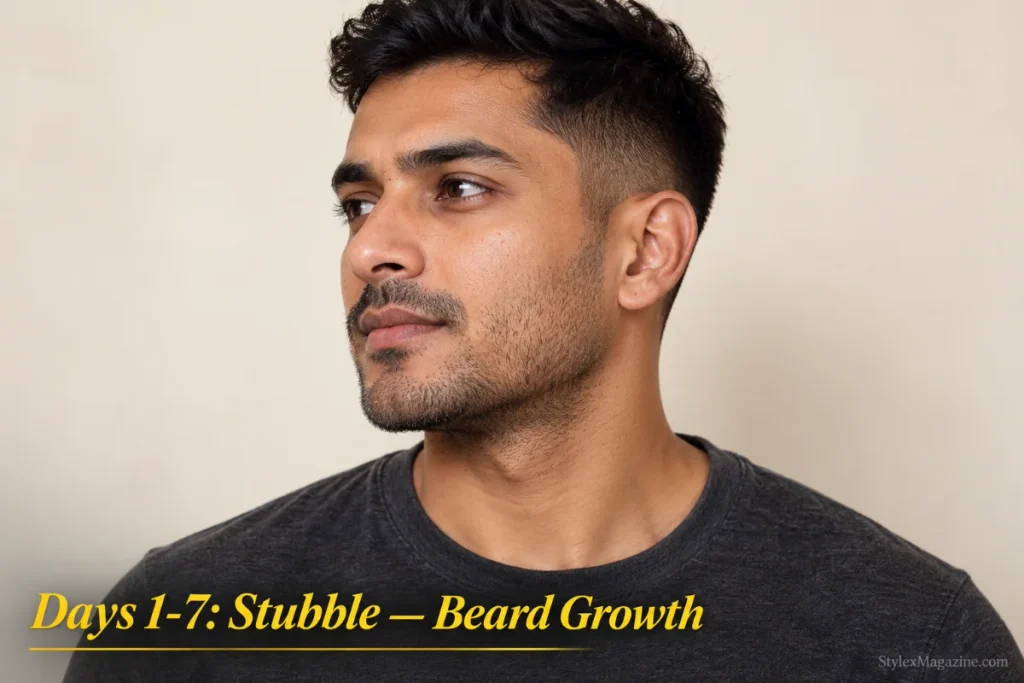
Nothing hurts yet. Light stubble appears. Wash and moisturize your face as normal. If you are prone to ingrown hairs, exfoliate gently once or twice a week during this stage.
Days 7 to 21: The Itch (Where Most Men Quit)
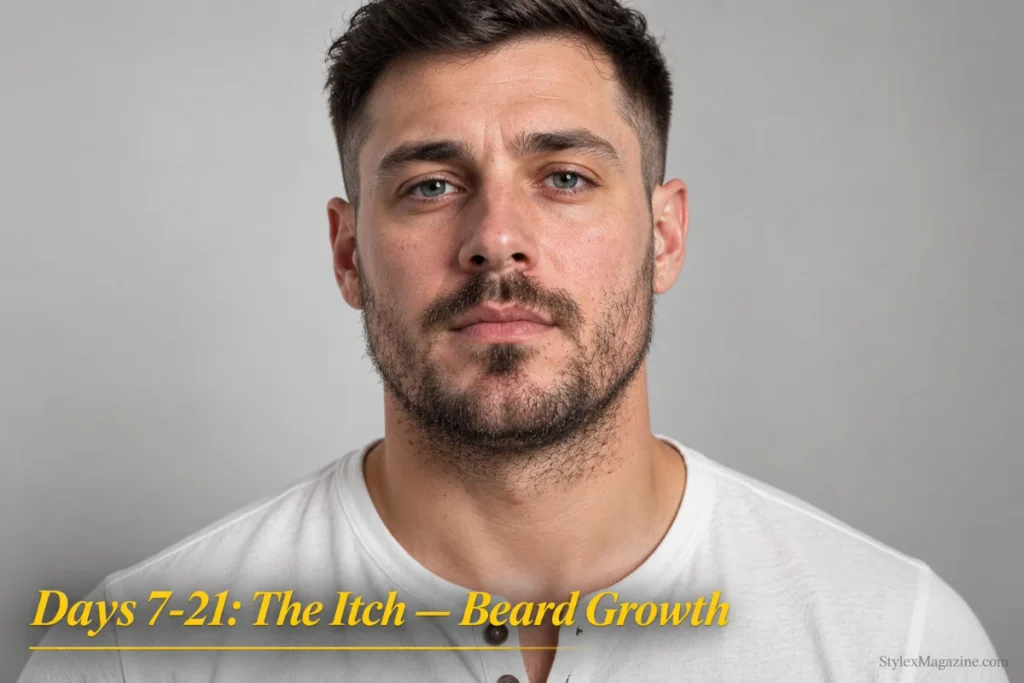
Freshly cut hairs grow out with blunt, sharp tips. As they push through the skin, they scratch and irritate it. At the same time, the growing stubble blocks your regular moisturizer from reaching the skin underneath. So the face gets dry, tight, and flaky at the exact moment the hair starts itching.
This stretch eliminates more beards than genetics ever will. If you get through it, you will grow a beard.
Weeks 3 to 6: The Awkward Phase
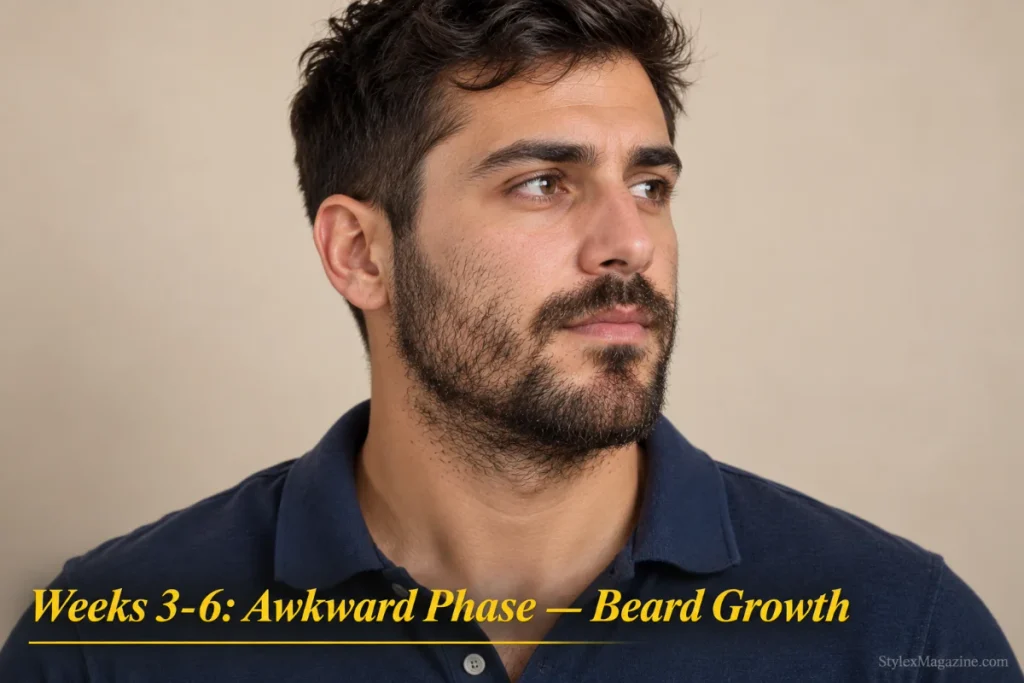
Long enough to look like something, not long enough to have a shape. Resist the urge to even it out. Chasing one side into the other always ends shorter than you started. The only trimming allowed during this phase is cleaning the neckline.
Patchy areas that looked bare at week three often disappear by week six as the surrounding hair grows long enough to lie across them. Judge the beard at eight weeks, not at three.
Week 6 and Beyond: It Is a Beard
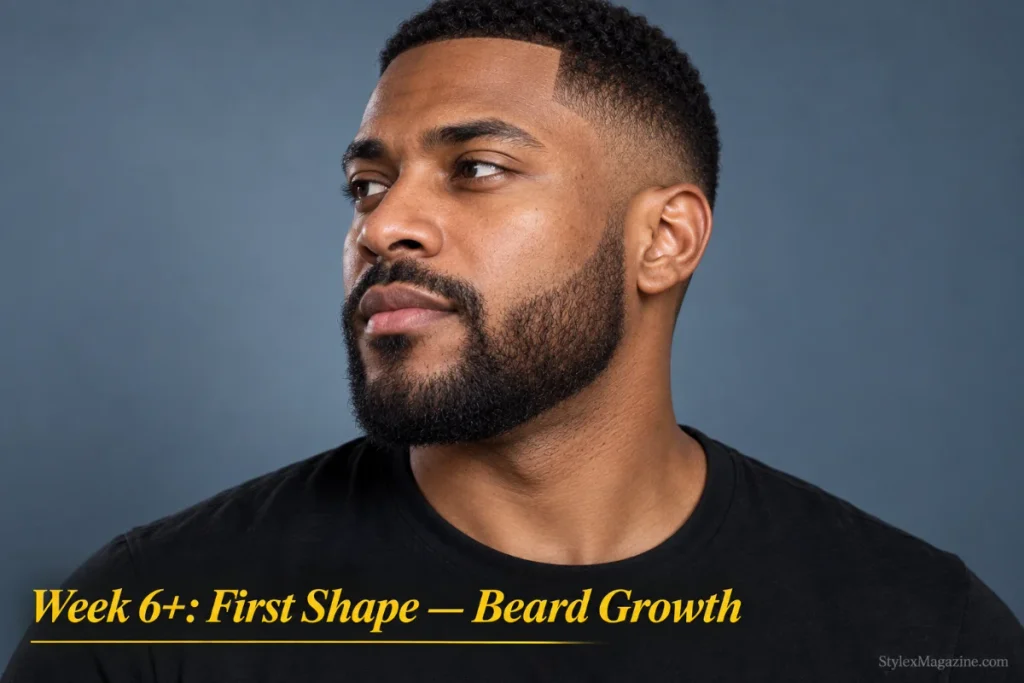
Now it needs a routine. Wash two to three times per week with a beard wash (not head shampoo). Apply beard oil daily to the skin underneath. Brush with a boar bristle brush to distribute oil and train growth direction. At this stage, visit a barber for the first proper shaping.
How Do You Deal with Beard Itch?
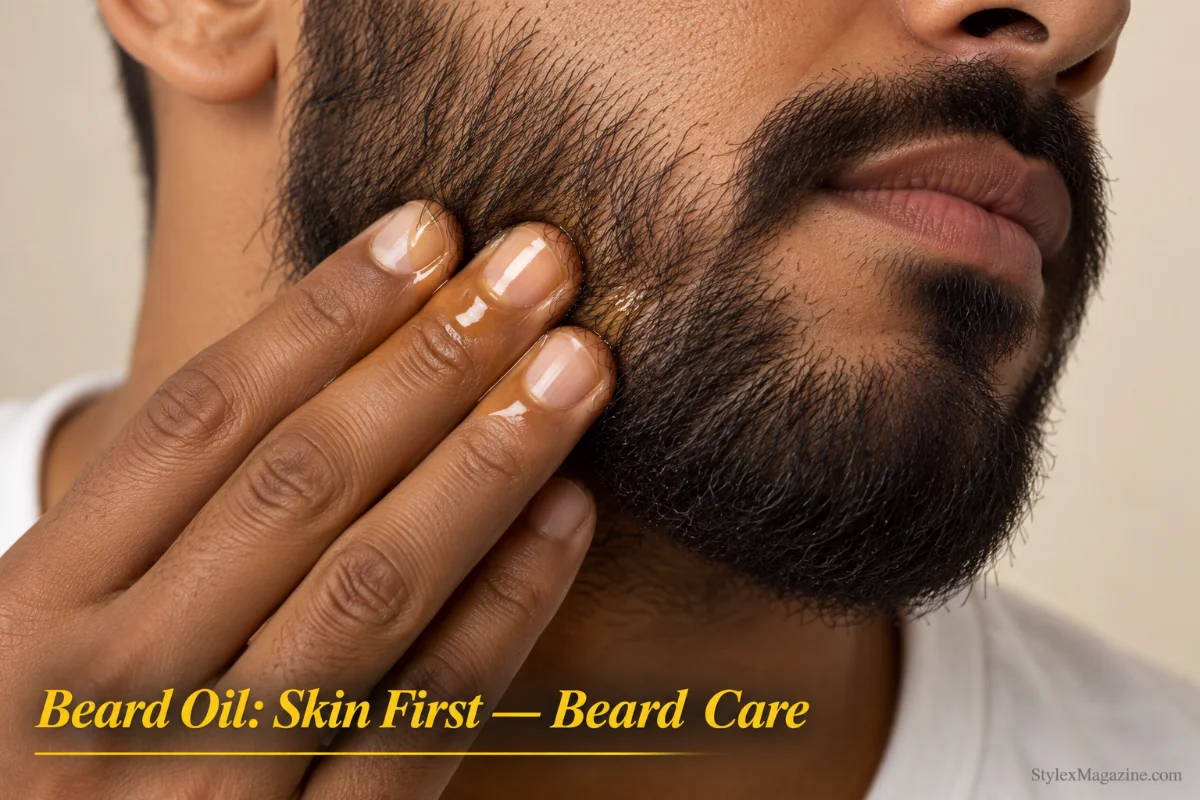
Beard oil on the skin underneath, not on the hair. The itch is a skin problem, not a hair problem. The growing stubble traps dead skin and blocks moisture from reaching the face. The skin dries out, cracks, and itches.
Warm 3-4 drops of beard oil between your palms. Work it into the skin with your fingertips, massaging under the hair. Whatever is left on your fingers, distribute through the hair itself. Do this daily after washing or showering while the hair is still slightly damp.
If oil breaks you out, switch to an unscented beard conditioner or a plain fragrance-free moisturizer. Any of these get moisture to the skin under the hair.
What About Patchy Growth?
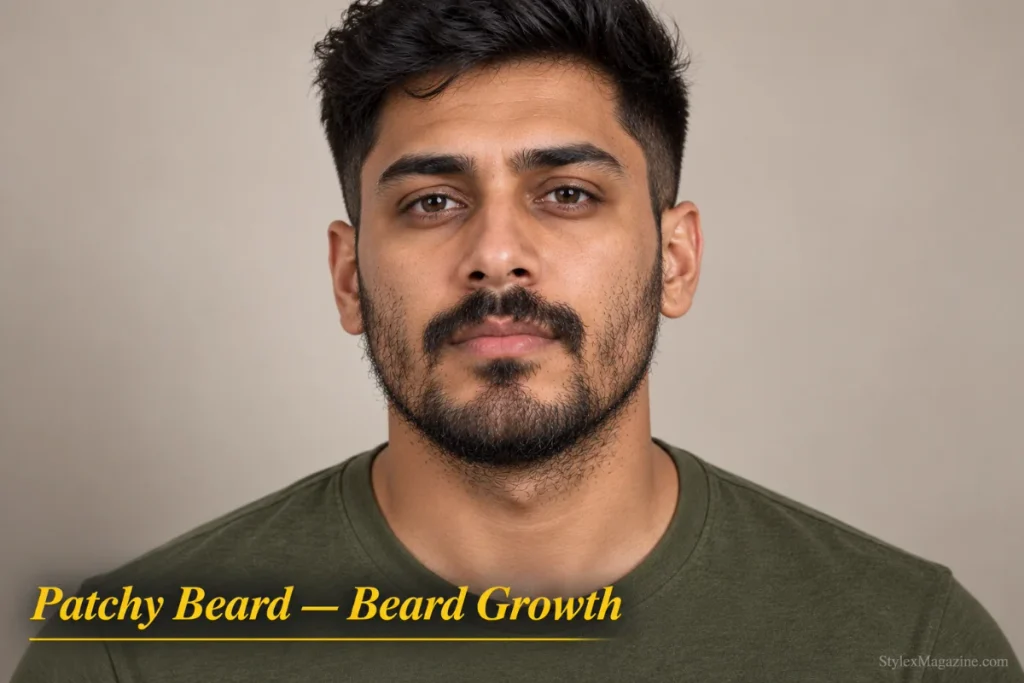
Patchiness is a map of where your follicles are, not a failure. The bare spots on your cheeks are not underperforming. They are places where you do not have the follicle density for full coverage, and no product is going to install new ones.
What often helps is time. Give it a minimum of three months before making any decisions about your beard’s potential. Many patches fill in as dormant follicles enter their growth phase, and longer surrounding hair lies across sparse areas, creating the visual appearance of coverage.
If patchiness persists after three months, choose a style that works with your growth pattern instead of against it. Men with strong chin and lip growth but patchy cheeks are built for goatees, Van Dykes, and anchor styles. The dedicated goatee styles guide and the short beard styles guide both cover patchy-friendly variations in detail.
Do Beard Growth Products Work?
Most do not do what they claim.
Biotin supplements: Help only if you have an actual biotin deficiency, which is uncommon if you eat a normal diet. In healthy men, no strong evidence supports biotin growing more facial hair.
Derma rollers (microneedling): Some evidence exists for scalp hair in combination with minoxidil. For facial hair specifically, the evidence is thin. There is a real risk of irritation and infection if the device is not sterilized properly.
Castor oil, rosemary oil, and “natural growth” oils: These moisturize the skin and condition the hair. That is a genuine benefit. They do not create new follicles or accelerate growth. Rosemary oil has one frequently cited scalp study and nothing comparable for the face.
“Beard growth serums”: Read the ingredients. Almost always a beard oil with the word “growth” on the label, priced higher than a standard oil.
Minoxidil: The honest exception. The most cited study is a 2016 randomized controlled trial of 48 men who applied 3% minoxidil to the face twice daily for 16 weeks. Hair count increased compared to placebo. Hair thickness did not change significantly. More hairs, not thicker ones. It is FDA-approved for scalp hair loss, not facial hair, so facial use is off-label. Skin irritation is common. The gains typically reverse if you stop using it. If you are considering it, talk to a dermatologist first.
What Should You Eat for Beard Growth?
No single food grows a beard. But poor nutrition can slow growth that your genetics would otherwise support. The basics:
Protein: Hair is made of keratin, which is a protein. Eggs, chicken, fish, legumes, and nuts provide the building blocks.
Zinc and iron: Both support hair follicle function. Red meat, shellfish, spinach, and pumpkin seeds are strong sources.
Vitamins A, C, D, and E: Support skin health and the follicle environment. Carrots, citrus, sunlight, and almonds cover these.
Water: Dehydration shows in the skin before anywhere else, and dry skin under a beard accelerates itch and flaking.
Sleep: Seven to eight hours. Blood circulation increases during sleep, sending nutrients to hair follicles. Chronic sleep deprivation measurably reduces testosterone.
Exercise: Regular physical activity, particularly resistance training, supports healthy testosterone levels. Nothing dramatic: consistent movement matters more than heavy lifting.
The point is not to chase a specific food. The point is that a diet and lifestyle that keep you healthy also keep your follicles functioning at their genetic potential.
One note on flaking: the white flakes under a growing beard are beard dandruff (seborrheic dermatitis or dry skin). Washing the beard a few times per week and moisturizing the skin underneath handles most cases. Persistent, red, or painful flaking needs a dermatologist. The full guide on beard dandruff.
How Do You Set Your Neckline?
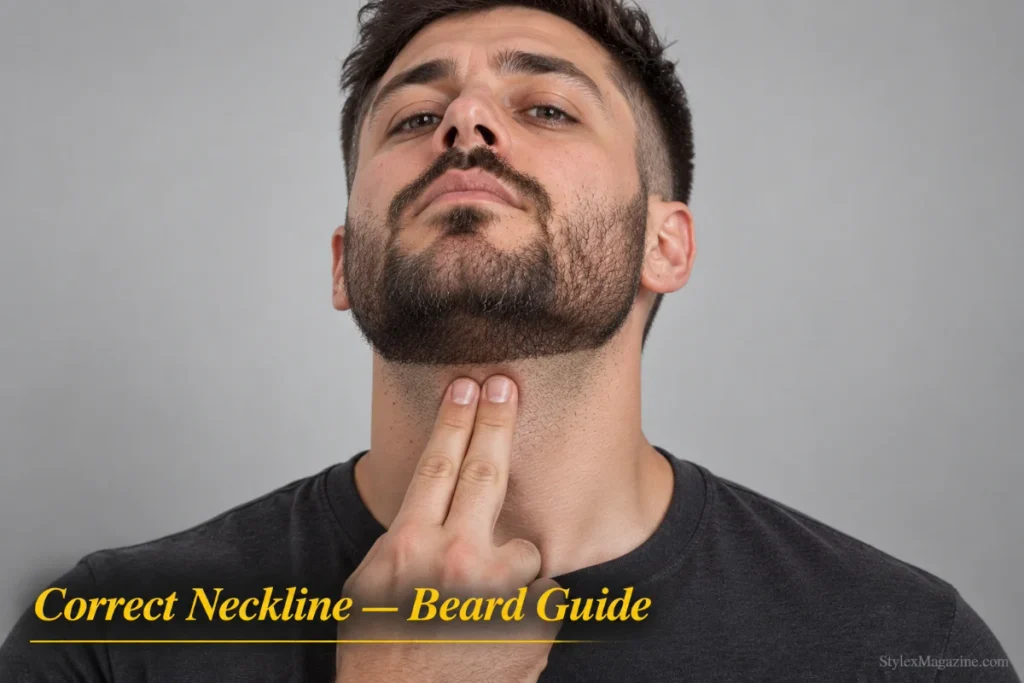
Two finger-widths above the Adam’s apple. That is the center point. From there, follow the natural crease under your jaw, curving up gently toward the back of each ear. Everything below that line gets shaved.
Too high: The beard looks like it is floating on your chin. The jawline disappears and the face looks rounder.
Too low (or not set at all): Neck hair merges with chest hair. The neckbeard.
Cheek lines: Leave them natural in the early stages. Follow the highest point of your natural growth and clean up only the strays above it. A hard-drawn cheek line looks artificial and is difficult to maintain symmetrically.
In the first eight weeks, the neckline is the only line you should be setting. Leave everything else alone.
A note on the mustache: The mustache grows slower than the rest of the beard and sits directly in everyone’s sight line, so the awkward phase feels twice as long. Almost every man has a thinner patch in the center (the philtrum, the groove between your nose and upper lip). It fills visually as the sides grow long enough to reach across. Once the mustache reaches the upper lip and starts getting into food, trim along the lip line only. Leave all other length alone.
When Should You Start Trimming?
Not before week six, and only lightly. The single most common mistake is trimming too early. Men try to even out their beard at week three, so they cut everything down to match the thinnest areas, and the beard stays thin permanently.
At week six, you can start with a light shape: neckline, any wildly long stray hairs, and a very conservative length trim if needed. Real shaping with guard trimmers and scissors starts at week eight or later, ideally with a barber setting the initial shape.
For the full trim and shaping guide, see How to Trim and Maintain a Beard at Home.
What Beard Style Should You Grow?
Grow everything first, then pick the style. A beard at eight weeks shows you what your genetics can do. At that point, choose the style that works with your natural growth pattern and your face shape.
Dense, even growth across the full face: Full beard, short boxed beard, Garibaldi.
Strong chin and lip, patchy cheeks: Goatee, Van Dyke, anchor, Balbo. See the goatee styles guide.
Strong jawline growth, thin cheeks: Chin strap, mutton chops, extended goatee.
Receding hairline or bald head: The beard becomes the primary frame. See bald head with beard styles for 17 combinations matched by face shape.
For matching your beard to your face shape, the best beard for your face shape guide covers all seven shapes with recommended styles and styles to avoid.
FAQs
How long does it take to grow a full beard?
Two to four months for most men to get real coverage. Facial hair grows roughly half an inch per month. The first two weeks are the hardest and the least representative of what your beard will look like. Do not evaluate it before week eight.
Can everyone grow a beard?
Most men can grow some facial hair. The density, coverage, and pattern vary based on genetics. Men with very sparse follicle distribution may not achieve a traditional full beard but can often grow goatee, stubble, or chin-focused styles that look sharp and intentional.
Does shaving make your beard grow back thicker?
No. This is a persistent grooming myth. Shaving cuts the hair at its widest point, so the blunt end feels coarser as it grows back. The hair itself is not thicker, faster, or denser than it was before.
Why does my beard itch so badly in the first two weeks?
Two things happening at once. Freshly cut hairs grow out with blunt tips that scratch the skin as they push through. The growing hair also blocks your regular moisturizer from reaching the face underneath. The skin dries out and itches. Treating the skin under the beard with oil or conditioner stops it.
How often should I wash my beard?
Two to three times per week with a beard wash, not daily. Daily washing strips the natural oils that keep the hair soft and the skin underneath moisturized. Regular head shampoo is too harsh for facial hair.
Is beard oil necessary?
For men past the stubble stage, yes. Once beard hair is long enough to block your regular moisturizer from reaching the face, the skin underneath dries out. That causes itch, flaking, and the wiry texture that makes a beard look unkempt. Oil solves all three. It is not a styling product and it does not affect growth rate.
Does beard oil make your beard grow faster?
No. Beard oil moisturizes the skin and softens the hair. It does not speed up growth or create new follicles. What it does do is prevent the itch and flaking that cause most men to shave during the growing phase. In that sense, it helps you keep a beard, but it does not grow one.

Other Articles

Beard Dandruff: Causes, Treatment & How to Stop It for Good
How to Trim a Beard at Home: Step-by-Step Guide (2026)




Most men reach minimum full beard coverage (20-25mm) in 6 to 8 weeks. A medium-length full beard (40-50mm) takes 3 to 4 months. Longer styles like the Garibaldi or Bandholz take 6 to 12 months. For the full growth process, see how to grow a beard.