
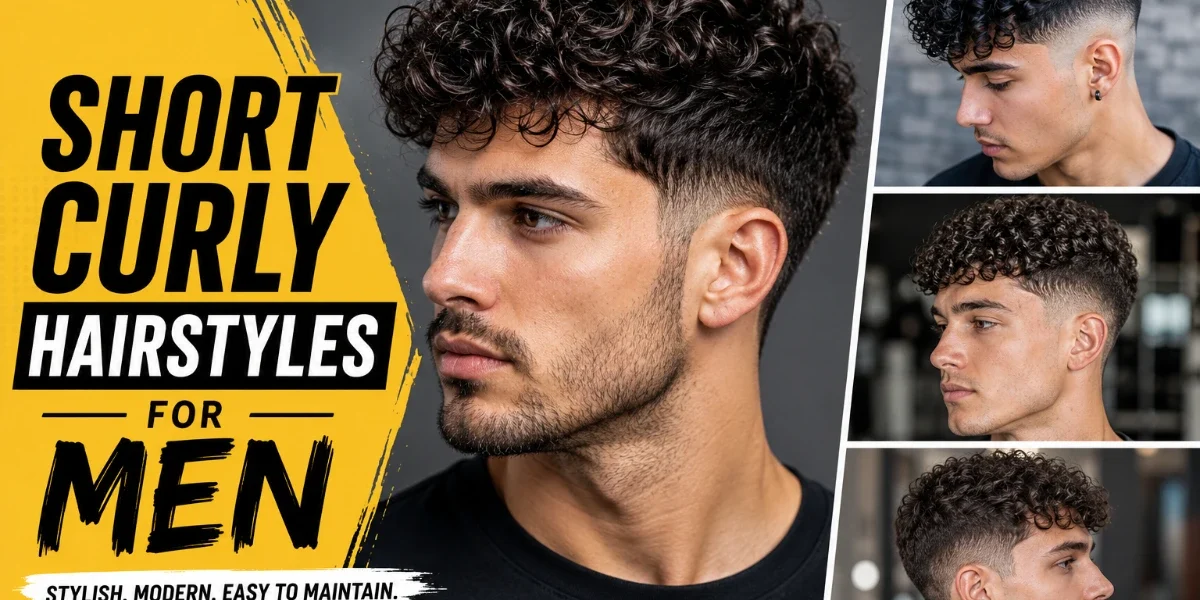

The best short curly hairstyles for men in 2026 include the curly textured crop, low fade with curls, short curly afro, curly fringe, and burst fade curly hair. Each works differently depending on your curl type — loose waves (2B–3A) suit softer styles like the curly quiff, while tight coils (3C–4C) look sharpest with high fades and line-ups.
Short curly hair for men has more range than most realise. The problem is that most style galleries show you 25 pictures and leave you guessing which ones will actually work on your curls. A style that looks clean on 3A spirals might turn into a shapeless mess on 4A coils — and a cut designed for tight texture will fall flat on loose waves.
Every style below is grouped by curl type so you find what fits your hair in seconds, not by scrolling through cuts that were never meant for your texture. Not sure short is right for you? The full curly hairstyles for men guide breaks down medium and long options too.
Which Short Curly Styles Work for Waves and Loose Curls (Type 2B–3A)?
Loose curls and waves hold shape best in styles that use natural movement rather than structure — think soft texture, light product, and minimal fading on the sides.
These cuts work because 2B–3A hair has enough bend to show texture but not enough density to support high-contrast fades or heavy layering. Let the wave pattern do the work.
Short Messy Curls
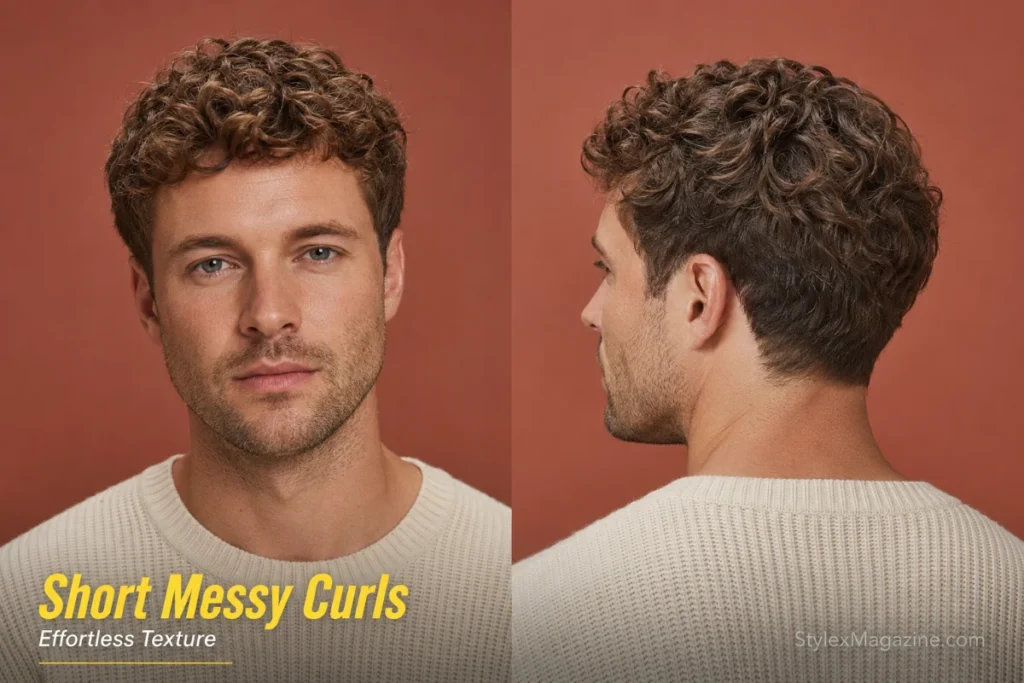
Loose curls styled with a slightly tousled finish, tapered lightly on the sides. This is “The Bear” effect — the style that made short, undone curly hair a search trend through 2025 and into 2026. Apply a sea salt spray to damp hair and air dry. The less you touch it, the better it holds.
Tell your barber: “Scissor cut on top, keep the natural texture, light taper on the sides — no hard lines.”
Celebrity: Jeremy Allen White | Best for: oval, round, heart faces
Trim every 5–6 weeks.
Curly Fringe
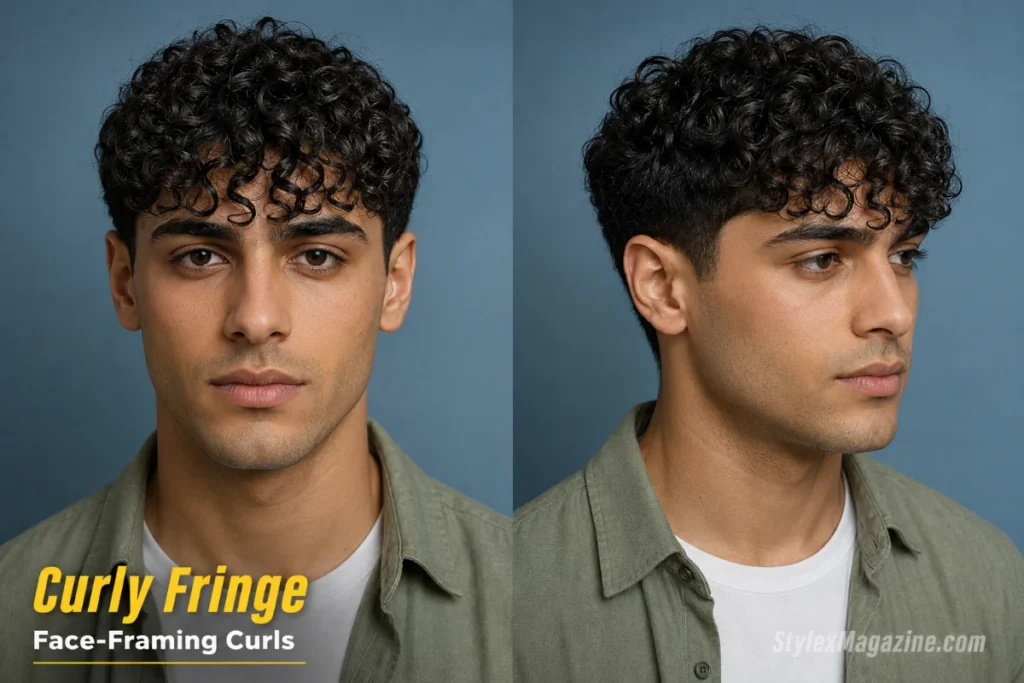
The fringe falls forward onto the forehead, framing the upper face while the sides stay tapered or faded. Chalamet made this the most-searched male curly style for two years running. It works because the forward movement draws attention to the eyes and away from a wider forehead.
Tell your barber: “Leave two to three inches on top, bring the fringe forward, taper the sides — I want the curls to fall naturally, not be styled back.”
A curl cream keeps definition without crunch. Trim every 5–6 weeks.
Celebrity: Timothée Chalamet | Best for: oval, heart faces
Curly Quiff
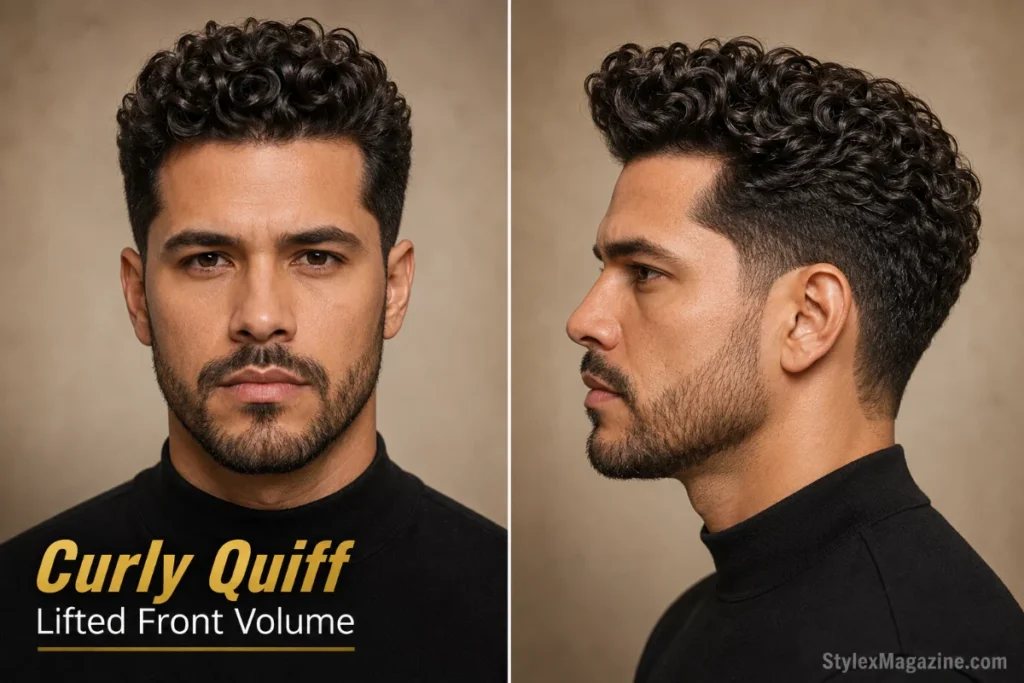
Longer curls on top styled upward and back, with shorter tapered sides. The quiff adds height and works particularly well on square and oval faces because it elongates the profile. Use a medium-hold mousse on damp hair, diffuse upward, then shape with your fingers.
“Keep about three inches on top, taper the sides and back. I’ll style it up and back — cut it so it holds volume at the front.”
Trim every 4–5 weeks.
Celebrity: Kit Harington | Best for: oval, square faces
Tousled Taper Fade
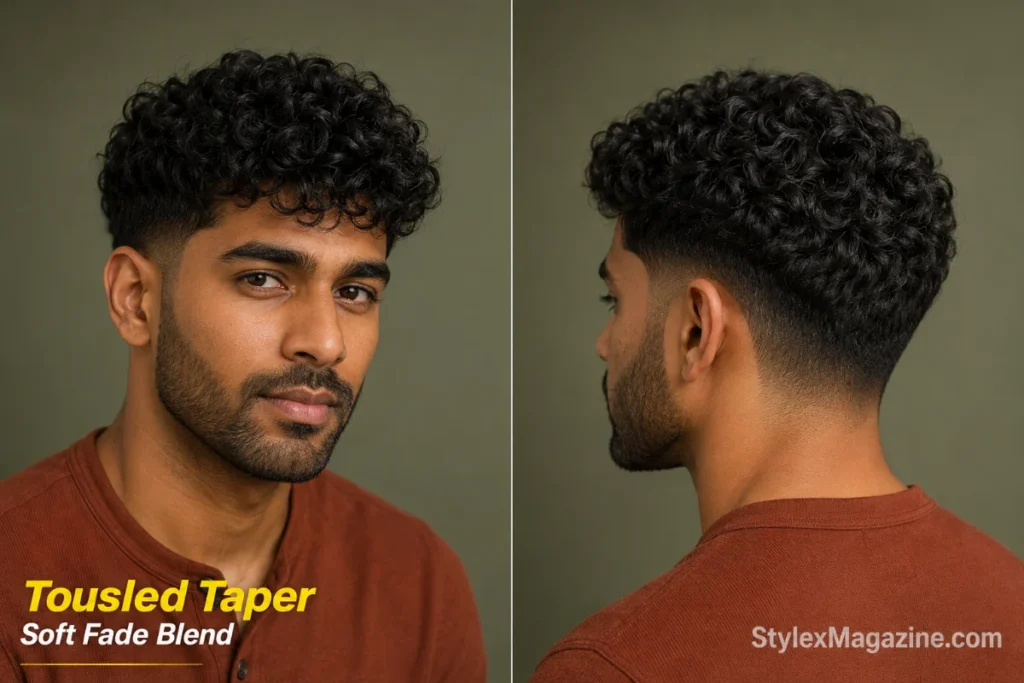
A taper fade on the sides with tousled, finger-styled curls on top. The taper produces a gradual blend rather than a hard contrast, which suits the softer pattern of 2C–3A curls. Pair with a trimmed beard for a balanced frame.
“Taper fade starting just above the ear. Scissor cut the top — follow the curl, don’t thin it out.”
Trim every 4–5 weeks.
Best for: oval, diamond faces | Styling tip: grooming tonic + beard balm
Lived-In Curly Crop
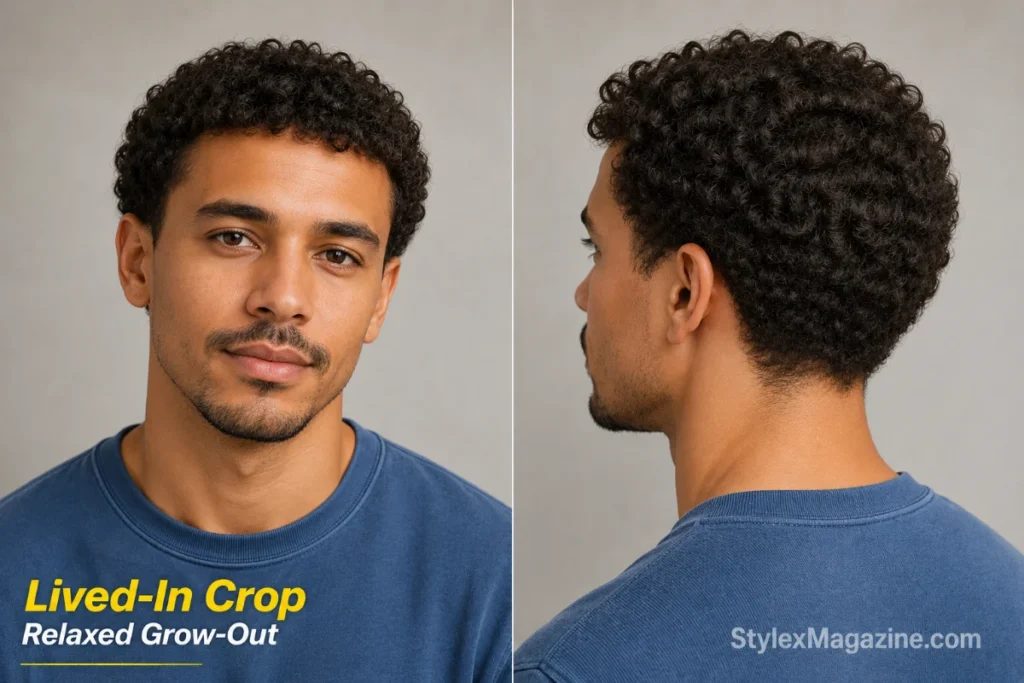
A low-maintenance crop that grows out well between cuts. No fade, no hard lines — the curls sit wherever they fall. Built for men who want to stretch the gap between barber visits without looking neglected. The “lived-in” effect comes from the even length and relaxed movement.
“Even crop, about one and a half to two inches all around. No fade. Let the curls sit where they fall.”
The longest gap of any style here — trim every 6–8 weeks.
Celebrity: Harry Styles | Best for: all face shapes
Short Curly Side Part
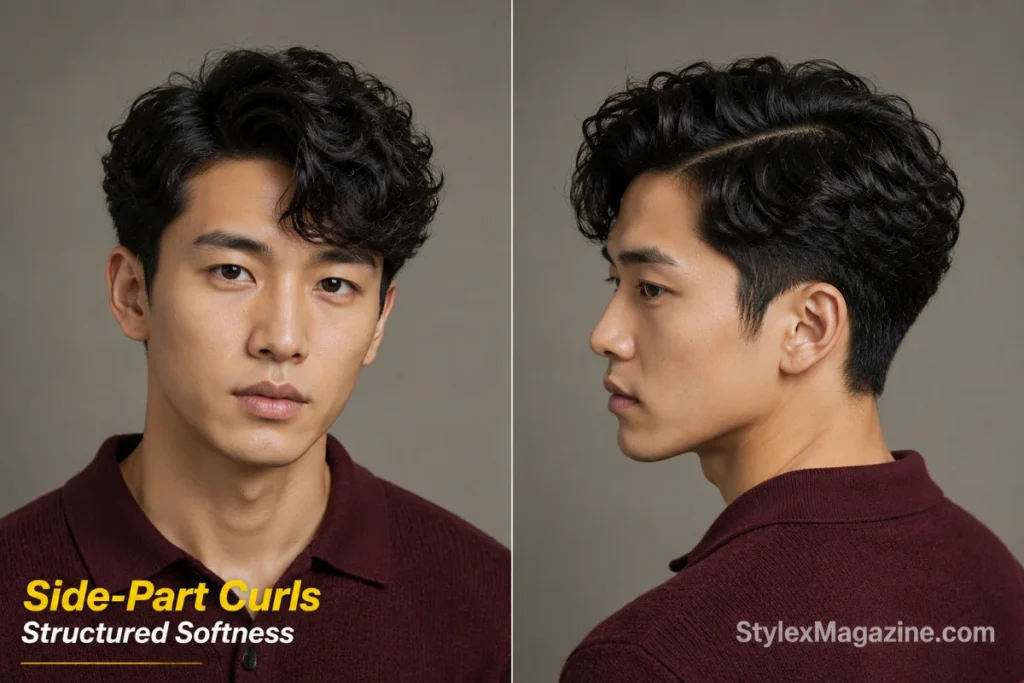
A shaped part with loose curls on top and tapered sides. The part gives structure to an otherwise relaxed texture. For men with oblong faces, the side part breaks up vertical length and introduces width — a combination most other short curly styles miss.
“Part on the left side, scissor cut the top with enough length to hold the curl, taper the sides — no skin showing.”
Trim every 4–5 weeks.
Celebrity: David Corenswet | Best for: oval, oblong faces
Curly Crop for Fine Hair
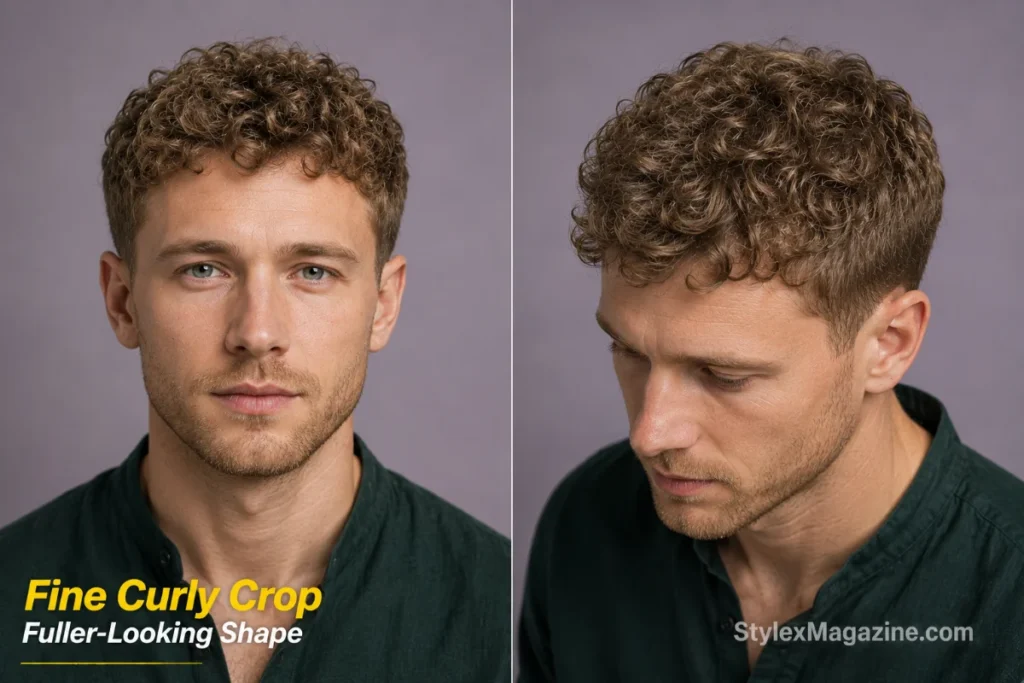
Fine curly hair loses volume fast in aggressive fades. A soft crop with minimal layering and a light taper keeps the hair looking full rather than thin. Keep density on top — avoid thinning shears entirely.
“Short crop, light layers only on the very top. No thinning shears. Taper the sides gradually — I need to keep as much weight as possible.”
Use a lightweight mousse for lift without heaviness. Trim every 5–6 weeks.
Best for: oval, heart faces | Hair type: fine, 2B–3A
Which Short Curly Styles Suit Medium to Tight Curls (Type 3A–3C)?
Medium and tight curls carry volume on their own, so fades create stronger contrast and more impact than they do on looser textures.
Short curly hairstyles for men hit their widest range in this curl category. 3A–3C curls hold shape, respond well to layering, and pair with every fade height from low to skin. The curl density also means styles hold their structure longer between cuts.
Curly Textured Crop
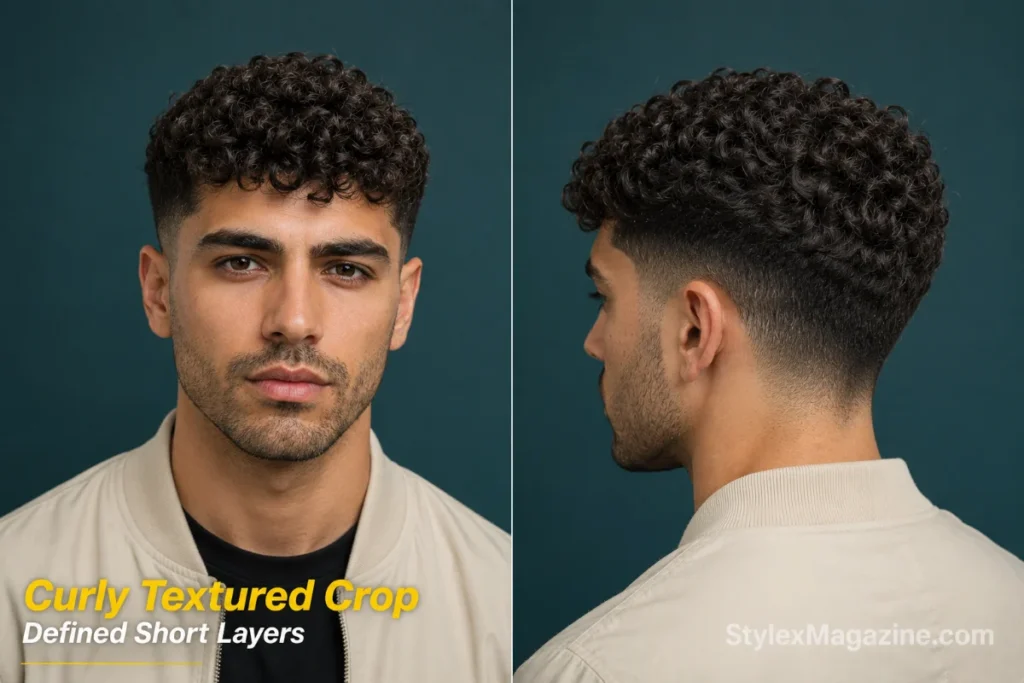
Short on the sides with defined curls kept slightly longer on top. The textured crop is the single most popular short curly haircut in 2026, according to barber search trend data. It works because the short length prevents the triangle shape that 3A–3B curls create when grown out unevenly.
“Textured crop — scissor cut the top to about two inches, low fade on the sides. Cut it dry so we can see where the curls sit.”
Apply a curl-defining cream to damp hair and diffuse on low heat. Trim every 4–5 weeks.
Celebrity: Timothée Chalamet | Best for: oval, round faces
Low Fade with Curls
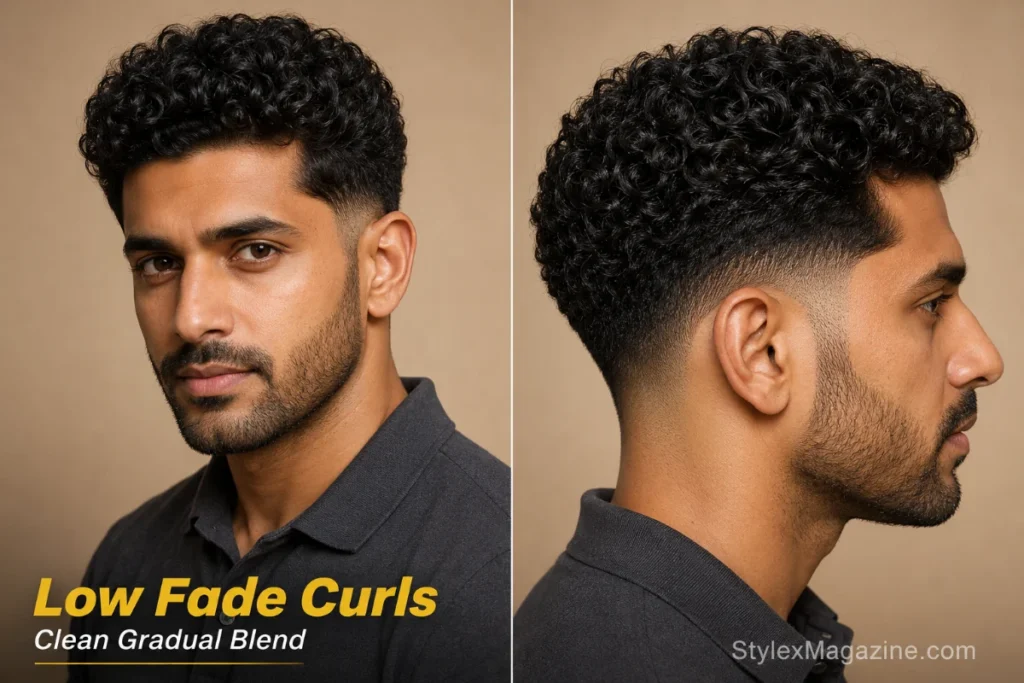
The fade starts just above the ear and blends into fuller curls on top. The low fade is the safest entry point for men with curly hair trying a fade for the first time — it grows out cleanly rather than leaving an awkward line.
“Low fade, blend it gradually. Keep two inches on top and follow the curl pattern — no clipper-over-comb on the curly section.”
Trim every 3–4 weeks.
Celebrity: Dev Patel | Best for: oval, square faces
Mid Fade Curly Top
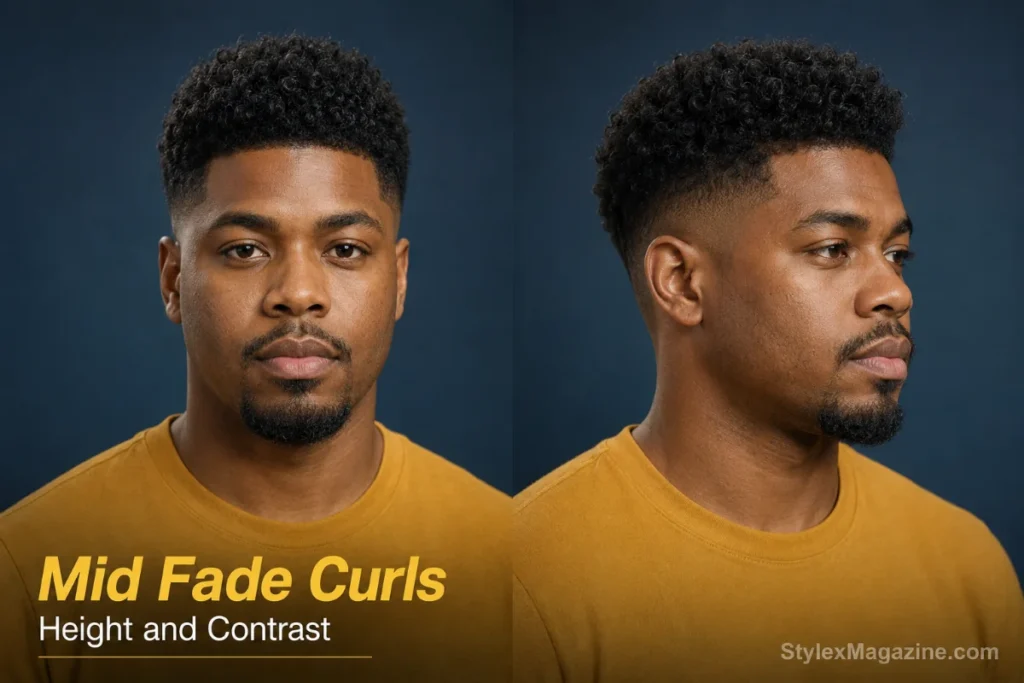
The mid fade starts at the temple line and removes enough side weight to make round faces appear slimmer. The curls on top provide height, adding vertical proportion. Most barbers recommend the mid fade first for round-faced men with curly hair.
“Mid fade starting at the temples. Leave the top natural — I want the curls to have height, not lay flat.”
Trim every 3–4 weeks.
Best for: round, heart faces | Styling tip: curl cream + diffuser
Drop Fade with Curls
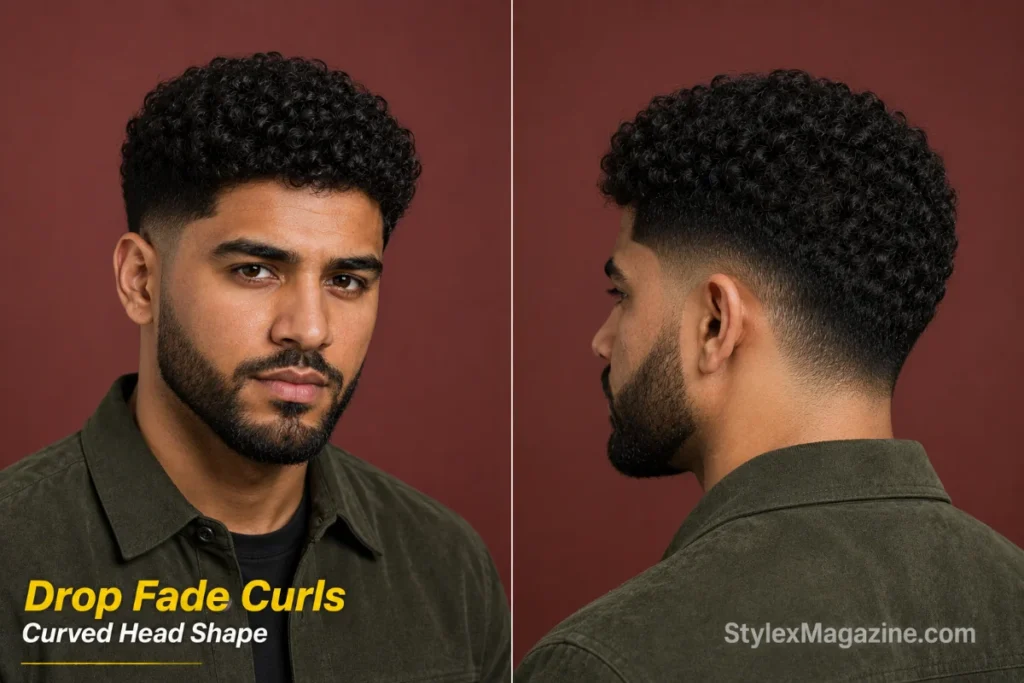
The drop fade curves down behind the ear rather than following a straight horizontal line — a softer shape on curly hair. The curved fade line follows the head’s contour, making the transition from skin to curl less abrupt.
“Drop fade — follow the shape of my head behind the ears. Keep the curls full on top, about an inch and a half to two inches.”
Trim every 3–4 weeks.
Best for: square, oval faces | Styling tip: matte clay for structure
Curly Undercut
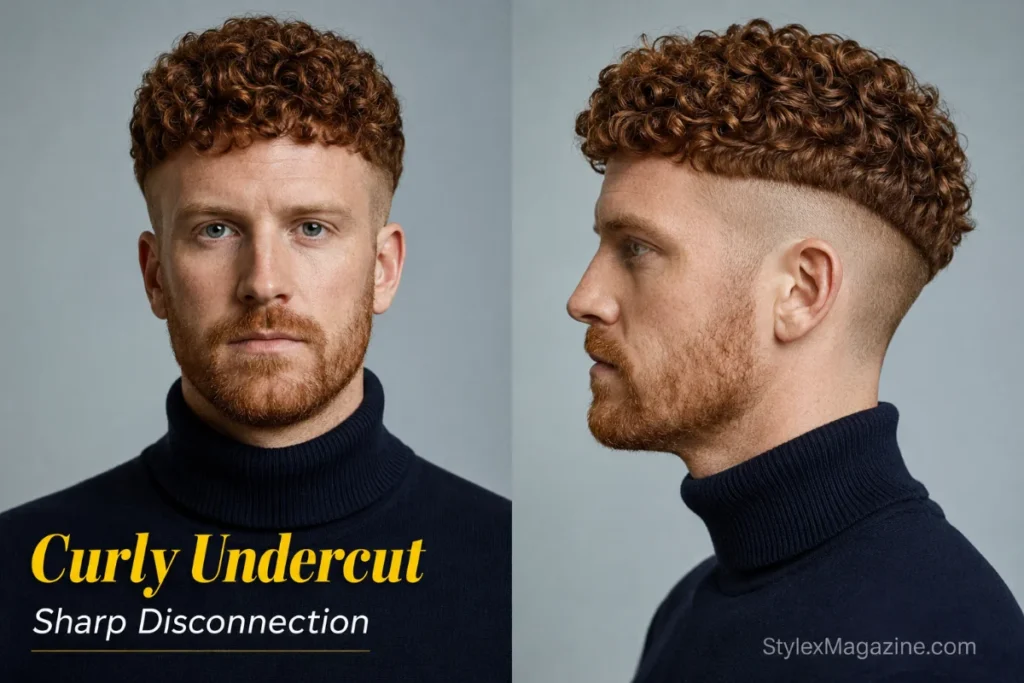
A disconnected contrast between buzzed sides and full curls on top. The undercut creates the highest contrast of any non-fade style. It suits oblong and square faces because the sharp horizontal line at the disconnection adds width.
“Undercut on the sides — number two guard. Leave the top completely natural, three inches minimum. No blending.”
The regrowth line shows faster than a fade. Trim every 3–4 weeks.
Best for: oval, square, oblong faces | Styling tip: matte pomade
Textured Faux Hawk
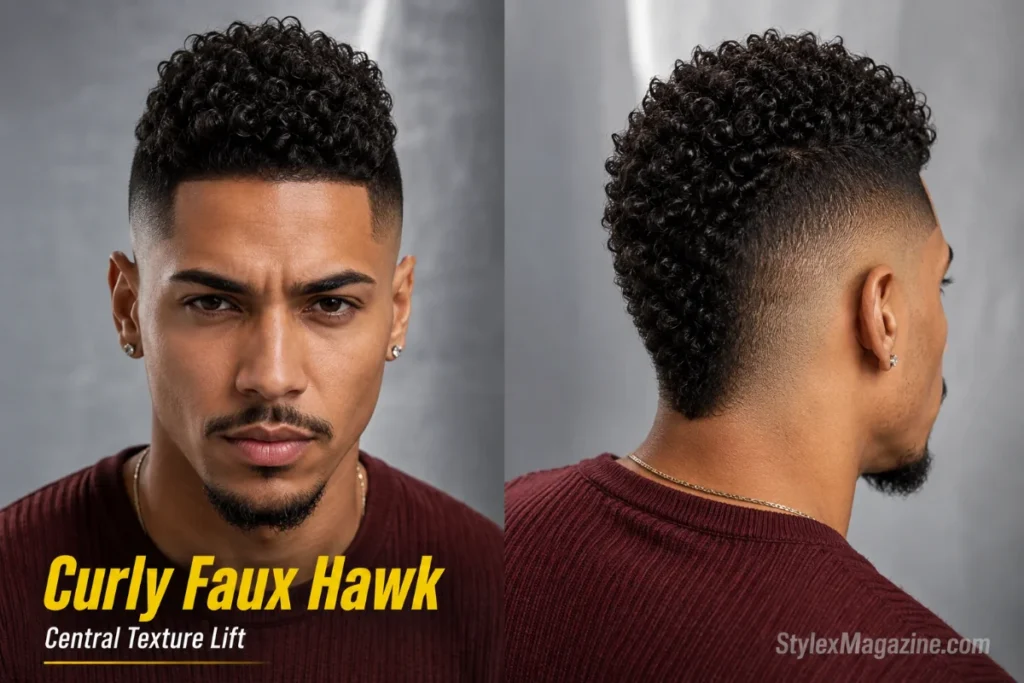
Curls concentrated along the centre of the head with faded sides. Not a full mohawk — the width stays broader and the sides taper rather than shave. The central volume suits diamond and oval faces by adding height without width.
“Mid to high fade on the sides. Keep the centre strip about three inches wide with full curl volume. Taper it narrower toward the back.”
Trim every 3–4 weeks.
Best for: oval, diamond faces | Styling tip: medium-hold matte clay
Curly Caesar Cut
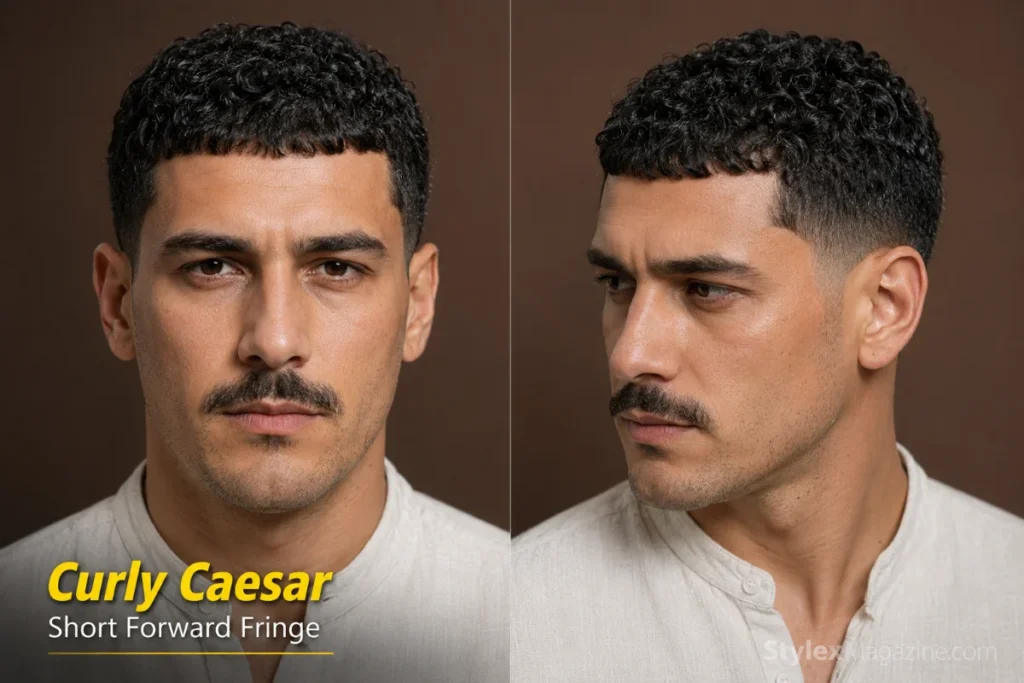
A short, even length all around with a straight-cut fringe. The Caesar cut on curly hair controls unruly 3A–3C curls without flattening the texture. Pair with a low fade for a more modern version.
“Caesar length on top — about half an inch to an inch. Straight fringe line. Optional low fade on the sides.”
The shortest-maintenance option after the buzz cut. Trim every 3–4 weeks.
Best for: square, oval faces | Styling tip: light styling cream
Broccoli Cut
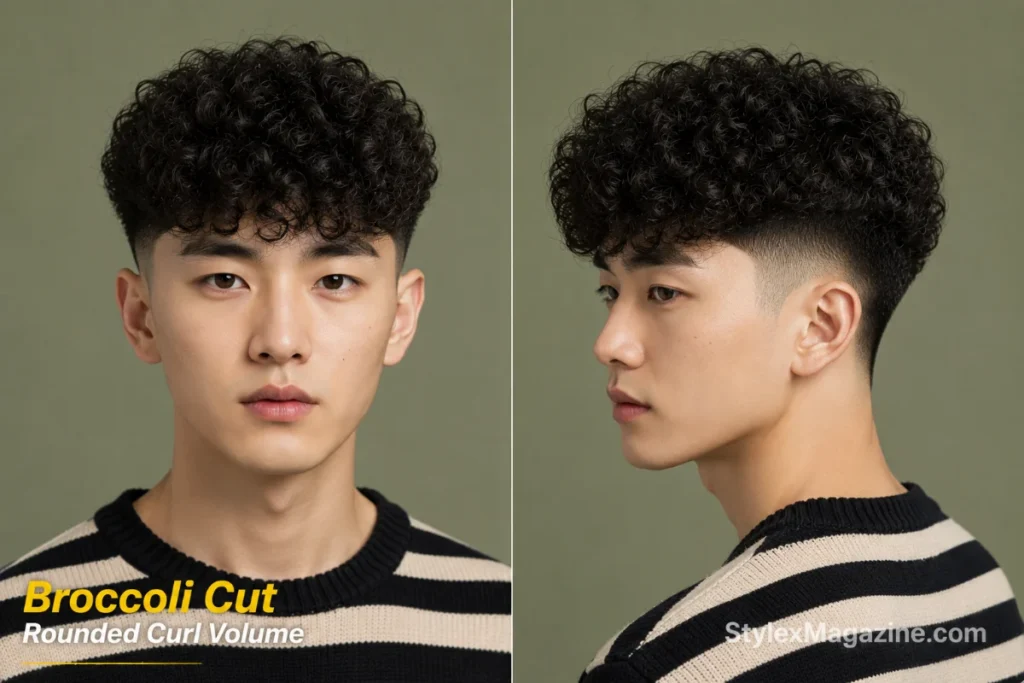
Thick curls on top with high volume, shaped into a rounded silhouette with faded sides. The broccoli cut was the breakout TikTok trend of 2025 and has carried into 2026. The name comes from the shape — round, full, and lifted on top. It requires dense, springy curls to hold the silhouette.
“High volume on top — use scissors, not clippers. Mid to high fade on the sides. I want the top rounded, not flat.”
Scrunch with fingers after applying a styling cream. Trim every 3–4 weeks.
Best for: oval, heart faces | Hair type: 3A–3B with density
Curly Mullet Fade
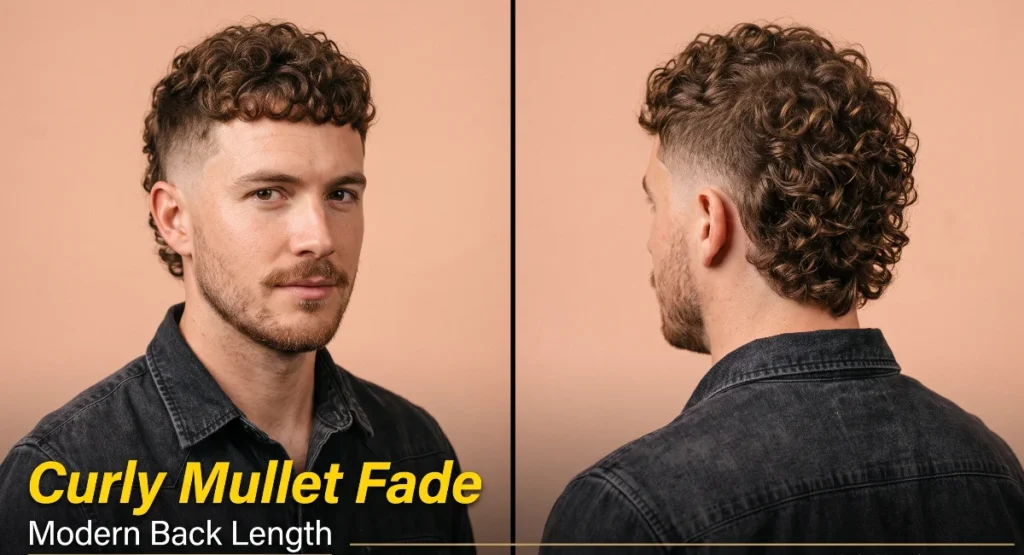
Short curls on top with slightly longer length at the back, faded or tapered sides. The curly mullet fade balances the playfulness of the mullet shape with the structure of a clean fade — keeping it contemporary rather than retro. Multiple trend sources rank the curly taper mullet among the top-requested styles in 2026.
“Taper or mid fade on the sides. Keep the top at two inches, let the back grow about an inch longer than the top. Follow the curl pattern.”
Trim every 5–6 weeks — the longer back buys time.
Best for: oval, square faces | Styling tip: sea salt spray for texture
Which Short Curly Styles Are Best for Coils and Afro Texture (Type 3C–4C)?
Coils and afro-textured hair respond best to structured fades and crisp edges — the tight curl pattern provides volume on top while tapered sides create contrast.
Type 3C–4C hair has the most shrinkage of any curl type — so the style you leave the barber with will look noticeably shorter once it dries fully. A 2019 study published in Proceedings of the Royal Society B found that the shape of the hair follicle — oval rather than round — directly determines curl tightness, with tighter follicle shapes producing coils that shrink up to 70% of their stretched length (Cloete et al., 2019). Understanding this helps you communicate realistic length expectations to your barber.
High Fade with Defined Curls
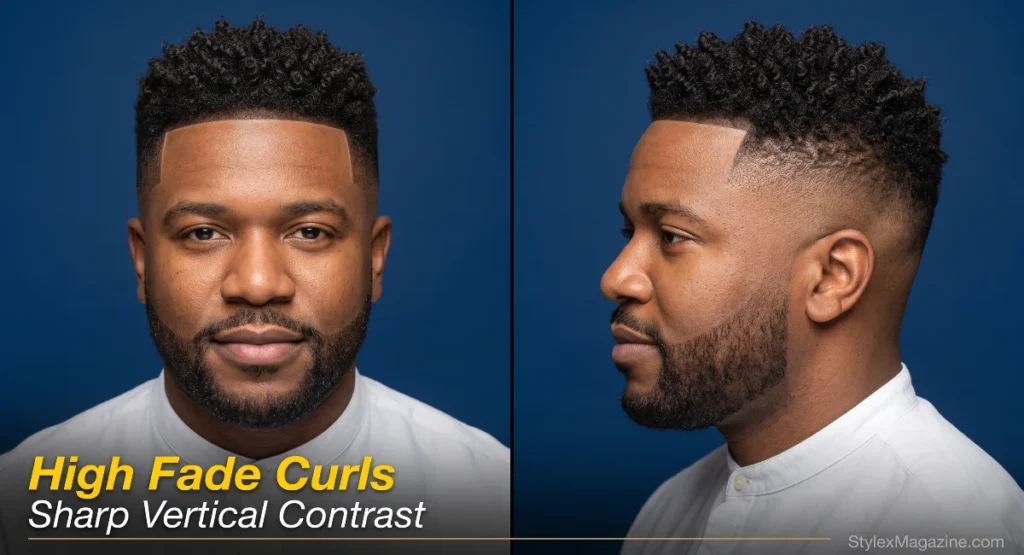
A high fade that starts above the temples with curls concentrated on top. The high contrast draws the eye upward, adding perceived height to rounder face shapes. Use a curl sponge on 4A coils for maximum definition.
“High fade — skin at the temples, blended up to about two inches of curl on top. Line up the hairline and keep the edges sharp.”
Trim every 2–3 weeks. The high fade shows regrowth faster than any other cut here.
Best for: round, oval faces | Styling tip: curl-defining mousse
Burst Fade Curly Hair
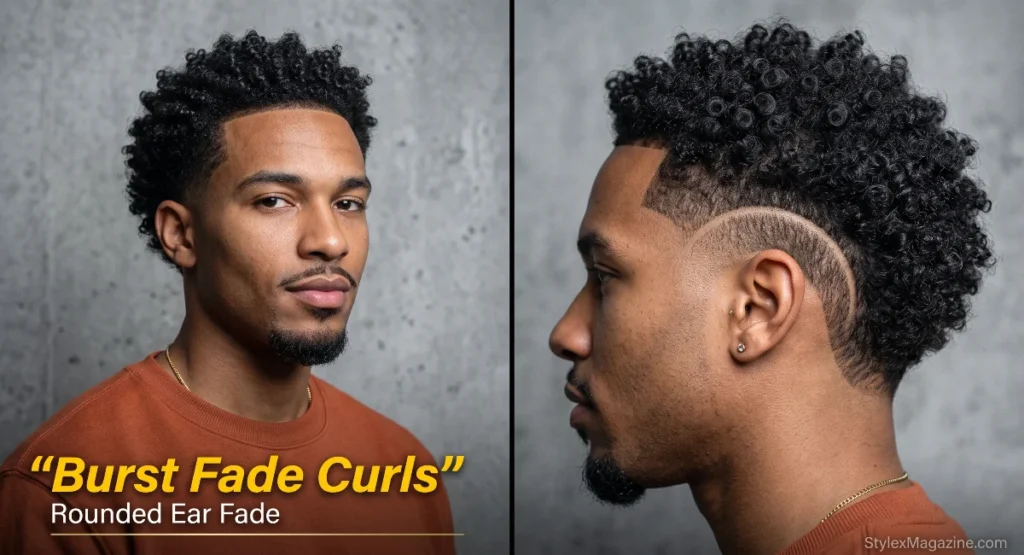
The burst fade curves around the ear in a semicircle, leaving more length at the back than a standard fade. On curly hair, the curved fade line follows the growth pattern rather than cutting against it — producing a rounder, more organic shape.
“Burst fade around the ears. Keep the top and back fuller — I want the fade to curve, not drop straight down.”
Trim every 3–4 weeks.
Best for: oval, diamond faces | Styling tip: medium-hold product for lift
Temple Fade with Line-Up
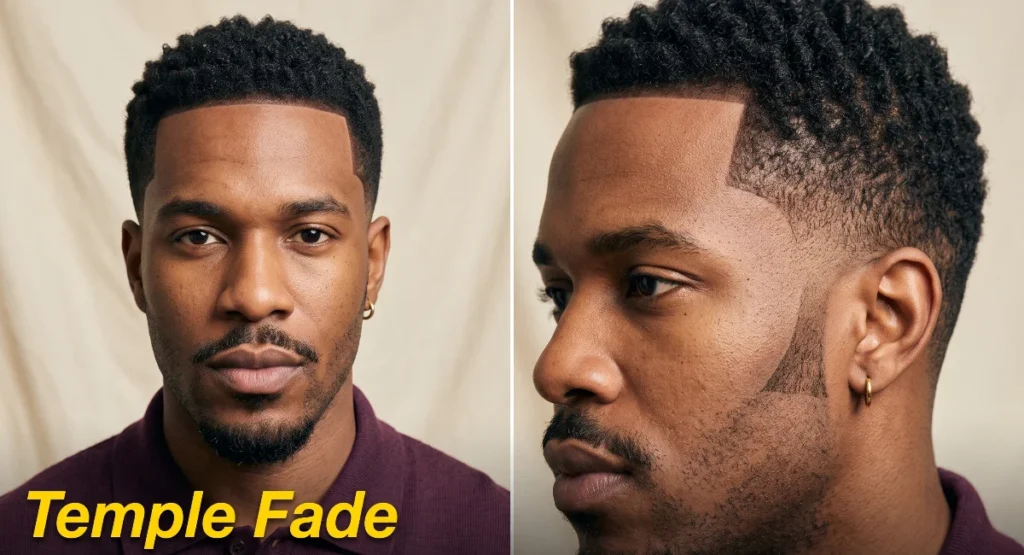
The temples fade to skin while the rest of the hair stays at a consistent short length. The line-up along the hairline, forehead, and temples frames every facial feature. On 3C–4A curls, the line-up does more visual work than the fade itself.
“Temple fade to skin. Clean line-up across the forehead and at the temples. Keep the top even at about one inch.”
The line-up needs maintenance every 2–3 weeks to stay sharp.
Best for: square, heart faces | Styling tip: leave-in conditioner + edge control
Skin Fade Curly Top
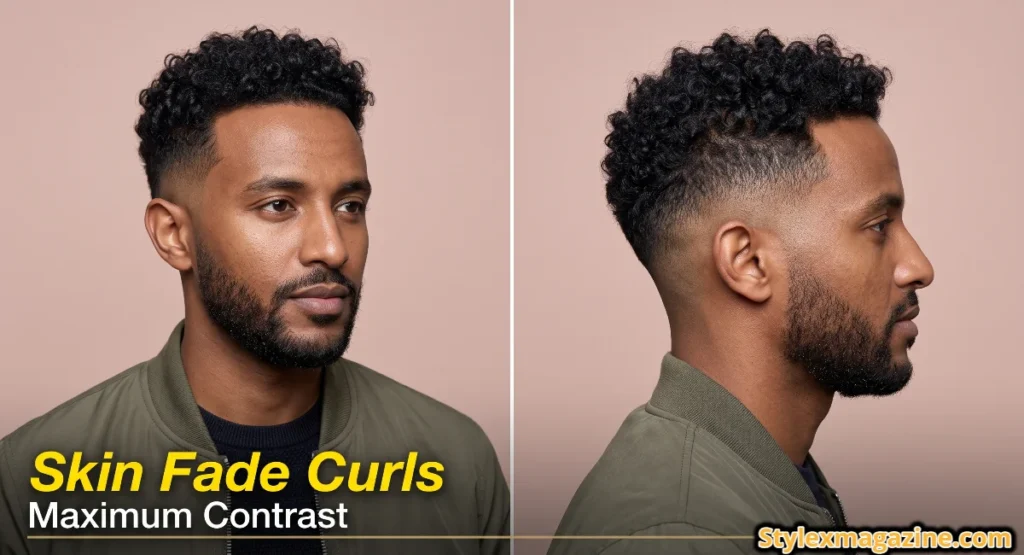
Sides faded down to skin with full curls on top. Maximum contrast. The skin fade is the most dramatic option — it puts all the visual weight on the curls, so your curl definition needs to hold up. Dry, frizzy curls look worse with a skin fade, not better.
“Skin fade on the sides, zero guard at the bottom. Keep the curls defined on top — cut them dry if possible.”
For a detailed comparison of fade levels, match the height to your face shape before committing. Trim every 2 weeks — skin fades show regrowth the fastest.
Best for: oval, round faces | Styling tip: curl butter for moisture
Curly Mohawk Fade
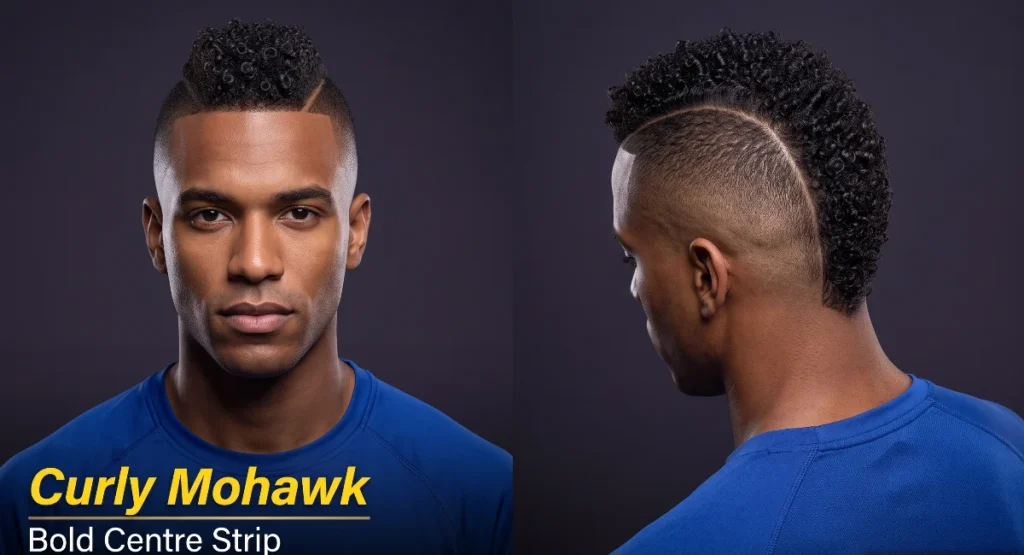
A strip of tight curls down the centre with faded sides. Bolder than the faux hawk, narrower on the sides. The mohawk works on 3C–4A curls because the tight pattern holds the vertical shape without collapsing. Looser curls tend to flop sideways.
“High fade on both sides — keep a two-inch strip of curls down the centre. Line up the edges of the strip so it’s even.”
Trim every 2–3 weeks.
Best for: oval, diamond faces | Styling tip: curl cream + light hold
Short Curly Afro
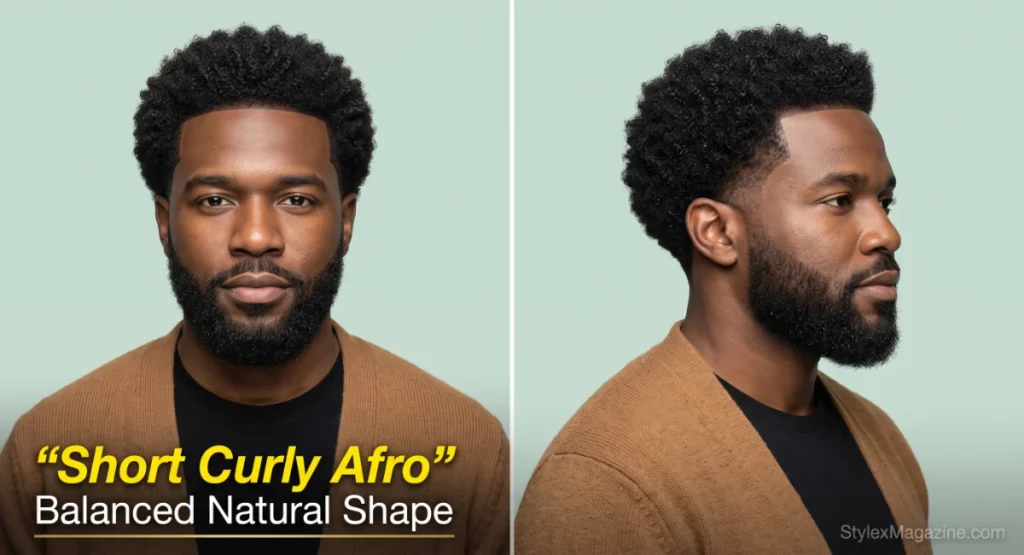
Even length all around, picked out for shape, with a clean edge-up at the hairline. The short afro remains the defining short curly hairstyle for Black men — and the most frequently misjudged. It requires consistent moisture to hold its shape. The American Academy of Dermatology recommends concentrating shampoo on the scalp rather than the hair ends, which is particularly important for afro-textured hair that dries out faster than other types.
“Even shape all around. Clean edge-up at the forehead and temples. Pick it out for volume — no flat top.”
Use a leave-in conditioner or curl butter daily, even on non-wash days. Trim every 3–4 weeks.
Celebrity: Donald Glover, Michael B. Jordan | Best for: round, square faces
High-Top Fade Curly
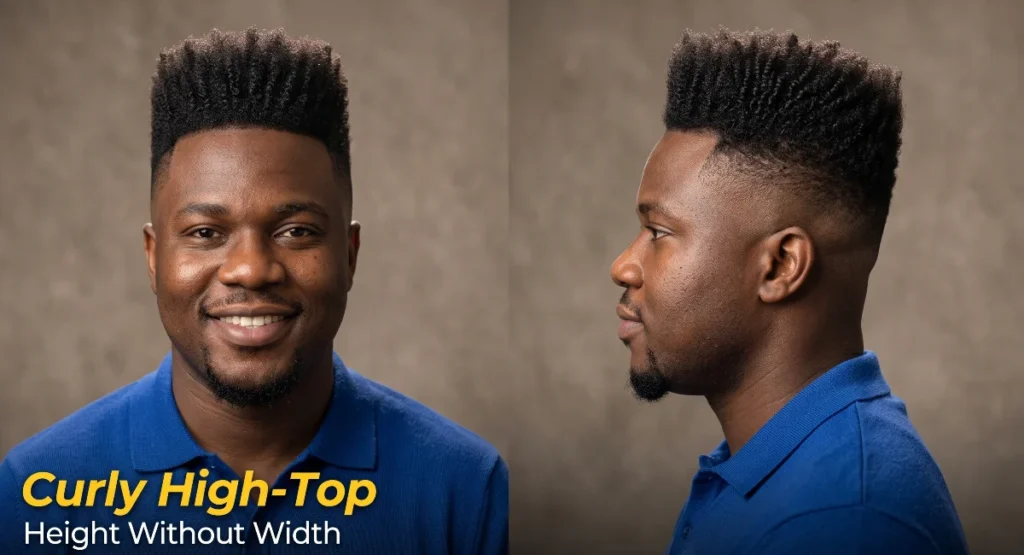
Faded sides with volume concentrated on top in a flat or rounded high-top shape. The high-top fade delivers significant vertical height, making it the strongest face-elongating option for round faces. Apply a twist cream and use a curl sponge to define coils before shaping.
“High fade to skin on the sides. Shape the top flat or slightly rounded — I want height, not width. Define the coils with a sponge.”
Trim every 2–3 weeks.
Best for: round, oval faces | Styling tip: curl sponge + twist cream
Curly Top with Hair Design
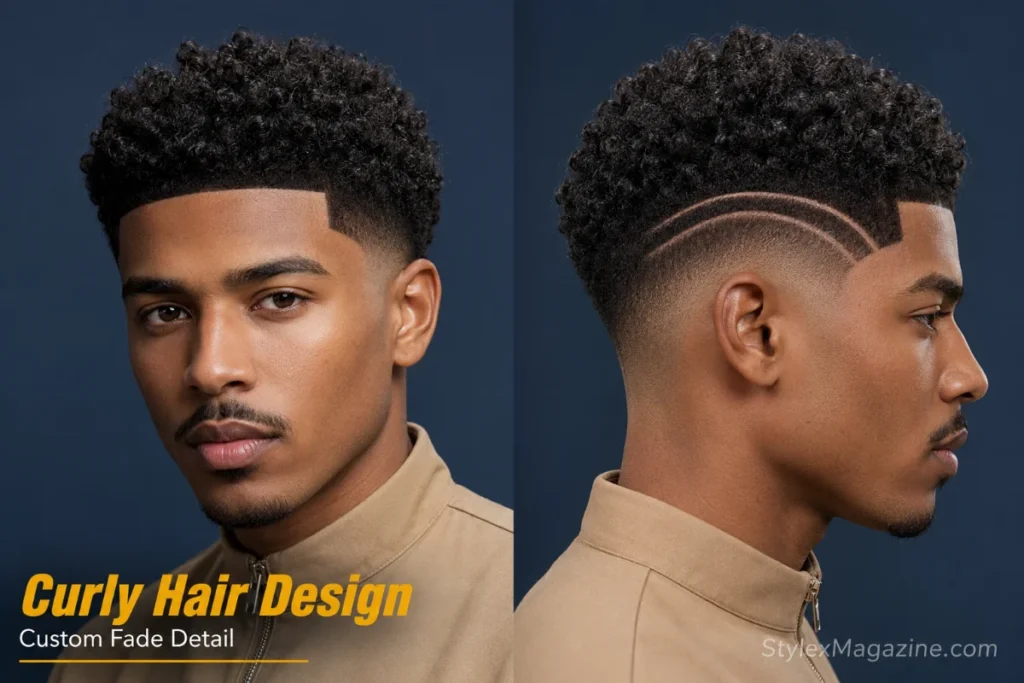
A mid or high fade with a shaved hair design along the fade line or temples. The design brings a personalised element that turns a standard curly fade into a statement cut. Geometric lines, curved patterns, and double-razor parts are the most common options.
“Mid fade with a design along the temple. Keep the curls full on top — the design should frame the curls, not compete with them.”
The design grows out in 1–2 weeks. Full trim every 2–3 weeks.
Best for: any face shape | Styling tip: curl cream for definition
Curly Buzz Cut
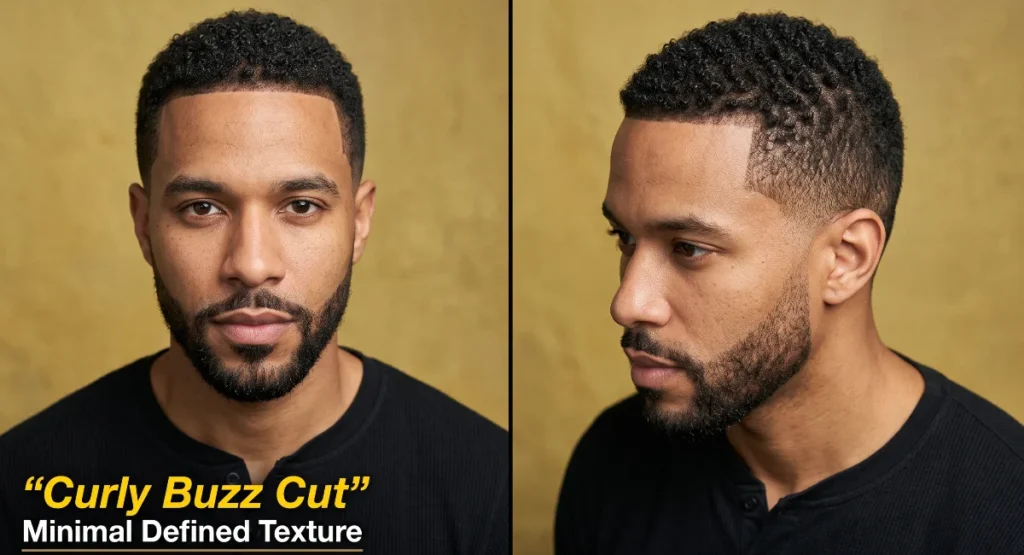
Hair clipped to a uniform short length that still shows the curl pattern underneath. The buzz cut is the lowest-maintenance short curly hairstyle — and on 4A–4C coils, the texture remains visible even at a quarter inch. Add a skin fade or line-up for extra structure.
“Buzz cut, number one or two guard all over. Clean line-up at the hairline. Optional skin fade on the sides.”
Apply a light moisturising oil to prevent scalp dryness. Trim every 2 weeks.
Celebrity: Colin Kaepernick | Best for: all face shapes
Why Does Your Curly Cut Look Different After You Leave the Barber?
Curly hair shrinks as it dries — anywhere from 10% on loose waves to 70% on tight coils. The length you see in the barber’s mirror is not the length you’ll see in your bathroom mirror the next morning.
Nothing frustrates men with curly hair more than this — and almost no barber explains it before cutting. The shrinkage happens because curly hair coils back toward the scalp as it loses moisture. The tighter the curl, the bigger the change.
Here’s the rough shrinkage range by curl type, based on the Andre Walker hair classification system:
- Type 2B–2C (waves): 10–15% shrinkage
- Type 3A–3B (medium curls): 20–30% shrinkage
- Type 3C (tight curls): 30–45% shrinkage
- Type 4A–4C (coils): 50–70% shrinkage
If your barber cuts your hair wet and measures it stretched, you can lose half an inch to a full inch of visible length once it dries. Ask your barber to either cut dry or check the shape after drying before you leave the chair. A curl-aware barber already does this.
How Do You Pick the Right Short Curly Style for Your Face Shape?
Round faces need height on top and tighter sides. Square faces suit softer curls. Oval faces can wear almost anything — and that’s where most men should start if they’re unsure.
Round face: Choose styles that add vertical height and remove width at the sides. The high-top fade, mid fade curly top, and curly quiff all pull the eye upward. Avoid one-length cuts that sit flat — they make round faces look wider.
Oval face: The most balanced face shape. Nearly every style above works. Start with the curly textured crop or short messy curls and adjust from there.
Square face: Strong jawlines pair well with softer textures on top. The curly quiff, low fade with curls, and drop fade offer enough interest without competing with angular features.
Heart face: A wider forehead and narrower chin benefit from styles that add width at the sides or bring hair forward. The curly fringe, broccoli cut, and textured crop all shift volume toward the centre or front of the head.
Diamond face: Similar to heart but with a narrower forehead too. The textured faux hawk and burst fade both add volume along the centre line, which complements the diamond’s natural proportions.
Oblong face: Avoid excessive height on top — it elongates further. The short curly side part and curly undercut add horizontal width. For more options specific to this face shape, the oblong face haircuts guide covers the subject in full.
What Should You Tell Your Barber Before Cutting Curly Hair?
Ask for a dry cut or a dry check before you leave — it’s the single most important request you can make for curly hair.
Most barbers default to cutting wet hair. On straight hair, this works fine. On curly hair, it hides the actual shape, bounce, and shrinkage that only show once the hair dries. A dry cut lets the barber see where each curl falls and how the shape will sit day-to-day.
Beyond that, five things to communicate:
“Cut with my curl pattern, not against it.” Layers that follow the natural curl direction reduce bulk without creating frizz. Layers cut against the pattern create flyaways.
“I want shape, not just shorter.” Most men say “shorter” and the barber takes length off evenly. Curly hair needs sculpting — removing weight in specific spots while keeping volume in others.
“No thinning shears.” Thinning shears on curly hair create uneven wispy sections that frizz out. If your barber reaches for them, redirect to point cutting instead.
“Leave it longer than you think.” Build in room for shrinkage. If you want two inches of visible curl when dry, you might need two and a half inches of wet length depending on your curl type.
“Show me the shape dry before I leave.” Even if the cut is done wet, ask the barber to diffuse a section so you can check the result before walking out.
How Do You Keep Short Curly Hair Looking Sharp Between Cuts?
A sulfate-free shampoo two to three times a week, a leave-in conditioner after every wash, and the right styling product for your specific style — that’s the entire routine.
The American Academy of Dermatology recommends applying shampoo to the scalp rather than the lengths, and using conditioner mainly on the ends. For curly hair, this matters more than for any other type — overwashing strips the oils that keep curls intact, and under-conditioning leads to frizz.
Match your product to your style, not just your hair type:
Curl cream works best for styles with visible curl pattern — the textured crop, low fade with curls, curly fringe. It holds moisture and shape without stiffness.
Matte clay suits structured styles — the faux hawk, undercut, curly quiff. It gives hold and texture with zero shine.
Sea salt spray is built for messy, undone looks — short messy curls, lived-in crop, curly mullet fade. It gives grit and separation.
Mousse adds volume for fine curly hair — the curly crop for fine hair, curly quiff, high-top fade. It lifts without weighing down.
Hair gel works for maximum hold on tight coils — the short afro, curly buzz cut, temple fade. A strong-hold gel keeps coils defined in humidity.
Daily maintenance: Dampen your curls with water or a curl refresh spray each morning. Work product through with your fingers or a wide-tooth comb — never a brush. Air dry when possible, diffuse on low heat when you need speed. A satin or silk pillowcase reduces overnight friction that causes frizz and flattening.
FAQ
Can short curly hair work in a professional office setting?
Every style above works in a professional environment when kept trimmed and well-groomed. The curly textured crop, Caesar cut, and low fade with curls are the three most office-appropriate options because they pair structure with tidy edges.
Does curly hair grow slower than straight hair?
Curly hair grows at the same rate as straight hair — roughly half an inch per month. It appears slower because the coil pattern causes shrinkage, so the visible length gained per month is less than the actual growth.
How do you refresh short curly hair on day two without rewashing?
Spray a light mist of water mixed with a small amount of leave-in conditioner, scrunch the curls upward with your hands, and let them air dry for five to ten minutes. Skip the shampoo — the oils from the previous day actually help definition on day two.
Is a diffuser necessary for short curly hair or can you air dry?
Air drying works for most short curly styles and produces a more natural finish. A diffuser is only necessary when you need volume at the roots — the curly quiff and high-top fade benefit from it, but the lived-in crop and short messy curls look better air dried.
Should you condition curly hair every time you shower, even without shampooing?
Yes. Conditioning without shampooing — called co-washing — adds moisture without stripping natural oils. For 3B and tighter curl types, co-washing between shampoo days keeps curls defined and prevents the dryness that leads to frizz and breakage.

Other Articles
15 Best Long Curly Hairstyles for Men.
20 Oblong Face Shape Haircuts for Men In 2026.
No Comment! Be the first one.